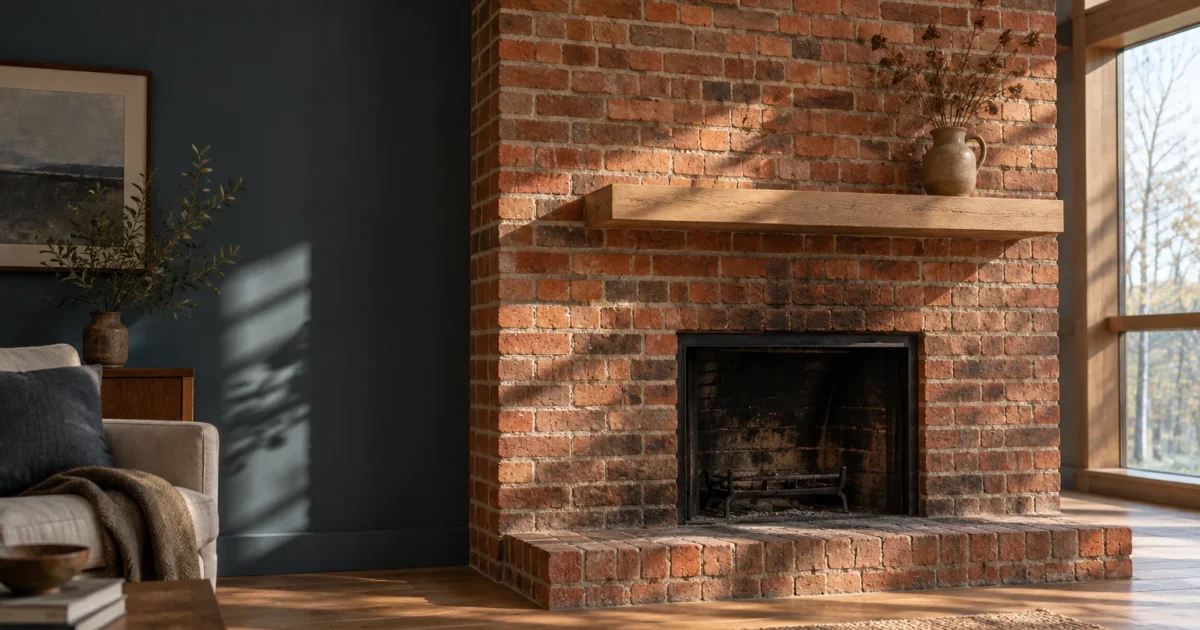
The right paint color instantly updates an outdated brick fireplace without touching a single drop of paint to the masonry. Strategic wall colors balance fiery red or orange undertones and highlight natural architectural texture.
Whether you want to modernize a vintage hearth or create a moody living room retreat, choosing the correct complementary shade makes all the difference. You can completely transform your living space in a single weekend.
This curated guide reveals eleven designer-approved paint colors that bring out the best in natural brickwork while elevating your overall home decor.
Project Overview & Why It Matters
Natural brick serves as an enduring architectural anchor in American living rooms. However, pairing it with the wrong wall shade can make your space feel dated or visually chaotic.
The goal is finding harmony between masonry undertones and your wall surfaces. Highlighting natural brick preserves home value while creating a cohesive focal point.
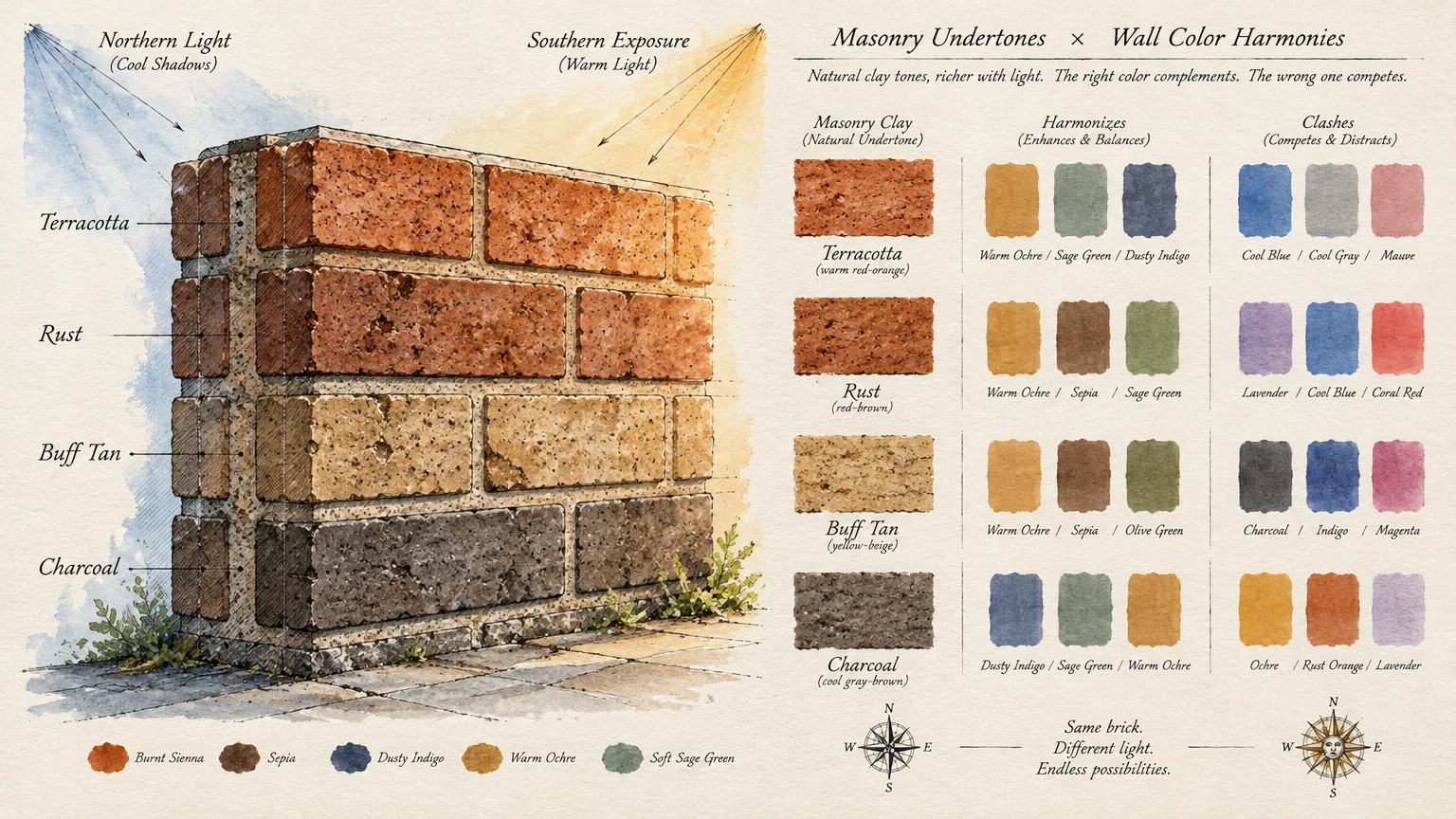
Masonry features complex undertones ranging from rust and terracotta to deep charcoal and buff tan. Evaluating these subtle tones prevents clashing wall colors.
A thoughtfully chosen palette frames your fireplace as an intentional design feature rather than an eyesore. It establishes visual depth across your entire living area.
Room orientation also impacts how paint interacts with brick. Northern light casts cool shadows over warm clay, while southern exposure intensifies fiery orange bricks.
According to the National Association of Home Builders, fireplaces consistently rank among top preferred living room amenities. Protecting this asset with smart styling yields immediate aesthetic dividends.
You do not need expensive masonry work or messy demolition to refresh a room. A few coats of premium paint on surrounding drywall deliver remarkable visual impact for minimal investment.
This project requires no special permits or structural changes. Any homeowner with basic tools can complete the painting process in one weekend.

Tools, Materials, and Prep Checklist
Proper preparation guarantees clean lines and durable paint adhesion near your hearth. Gather your supplies before opening any paint cans.
You need a two-and-a-half-inch angled sash brush for precise cutting around uneven mortar. Expect to spend approximately $14 on a professional-grade polyester brush at The Home Depot.
Pick up a heavy-duty nine-inch roller frame and two microfiber roller covers with a three-eighths-inch nap. These roller supplies cost around $18 total.
Purchase two gallons of premium zero-VOC acrylic latex interior paint in your chosen shade. Budget between $60 and $120 depending on the manufacturer and tier.
Grab a quart of stain-blocking bonding primer for bare drywall or soot-stained patches. Primer costs roughly $18 and ensures uniform color absorption.
Buy wide, delicate-surface painter’s tape designed to stick to porous brick surfaces without lifting dried mortar. Two rolls cost approximately $16.
Purchase trisodium phosphate alternative cleaner, a stiff nylon scrub brush, and two cellulose sponges. These cleaning materials cost about $15.
Protect your flooring and hearth with an eight-ounce canvas drop cloth rather than thin plastic sheeting. Heavy canvas absorbs paint drips and costs around $25.
Keep safety equipment ready, including nitrile gloves, protective safety glasses, and an N95 dust mask. Fireplace soot easily irritates your airways and skin during cleaning.
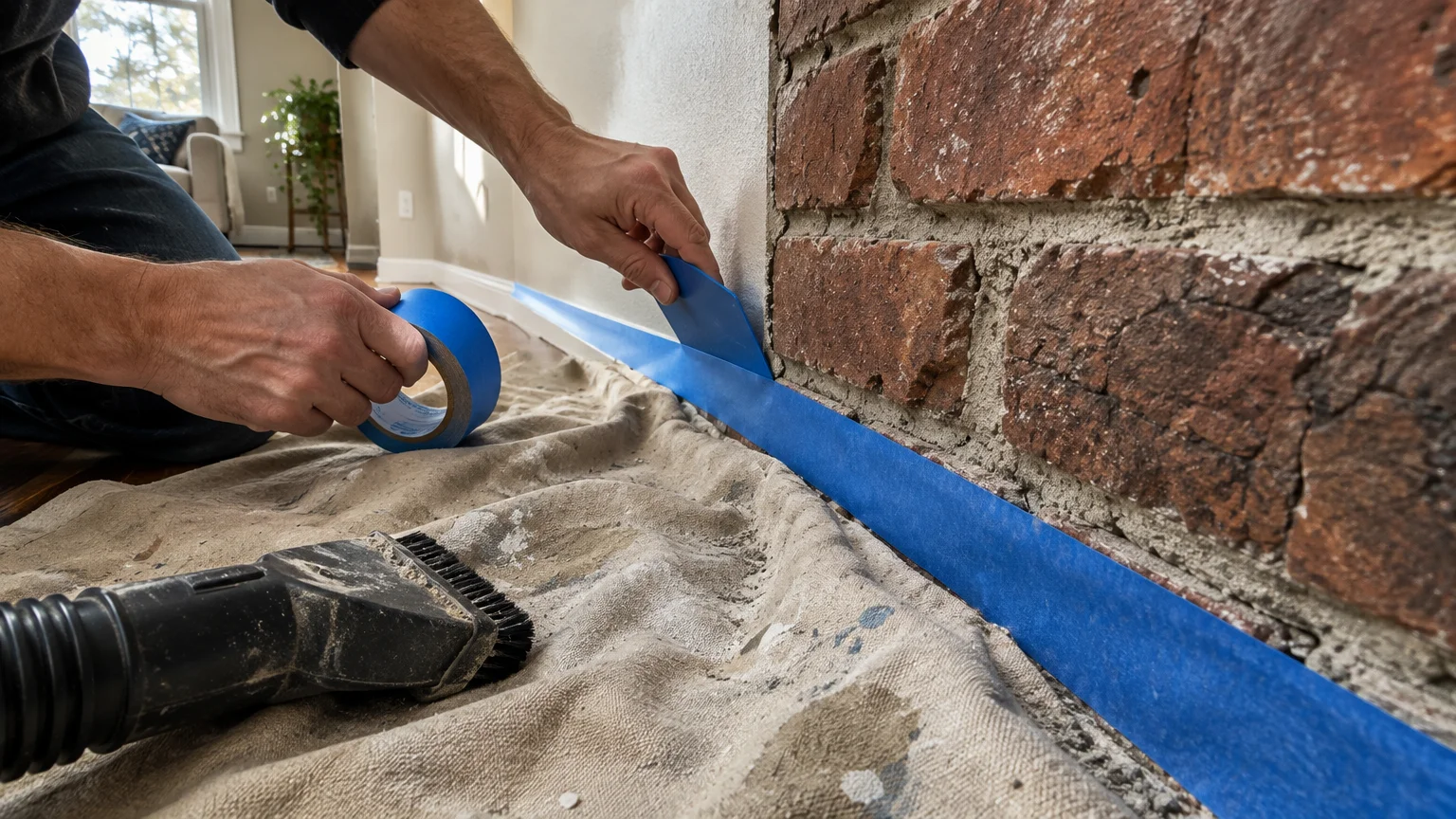
Examine the border where drywall meets your brick mortar joints. Vacuum all loose mortar debris and dust before masking edges with tape.
Step-by-Step Instructions
Careful execution prevents costly mistakes and messy paint seepage into raw brick mortar. Follow these distinct phases for professional results.
Phase 1: Workspace Safety and Surface Cleaning. Clear your mantel shelf completely and move furniture at least six feet away from the workspace. Lay your heavy canvas drop cloth flat across the hearth and surrounding floor.
Mix your TSP alternative with warm water according to label instructions. Wash the drywall around your fireplace to remove greasy soot deposits that hinder paint bonding.
Always wear your safety glasses and gloves when washing walls near the firebox. Allow the drywall to dry completely for at least two hours.
Phase 2: Masking and Priming Drywall Borders. Press delicate-surface painter’s tape directly along the edge where drywall touches rough brick. Burnish the tape edge firmly into mortar textures using a clean putty knife.
Review fire clearance requirements established by the National Fire Protection Association before applying finishes near open hearths. Ensure your combustible wall surfaces meet proper clearances from the firebox opening.
Apply stain-blocking primer over drywall repairs, water rings, or heavy soot marks using your angled brush. Let the primer cure for sixty minutes before applying your topcoat.
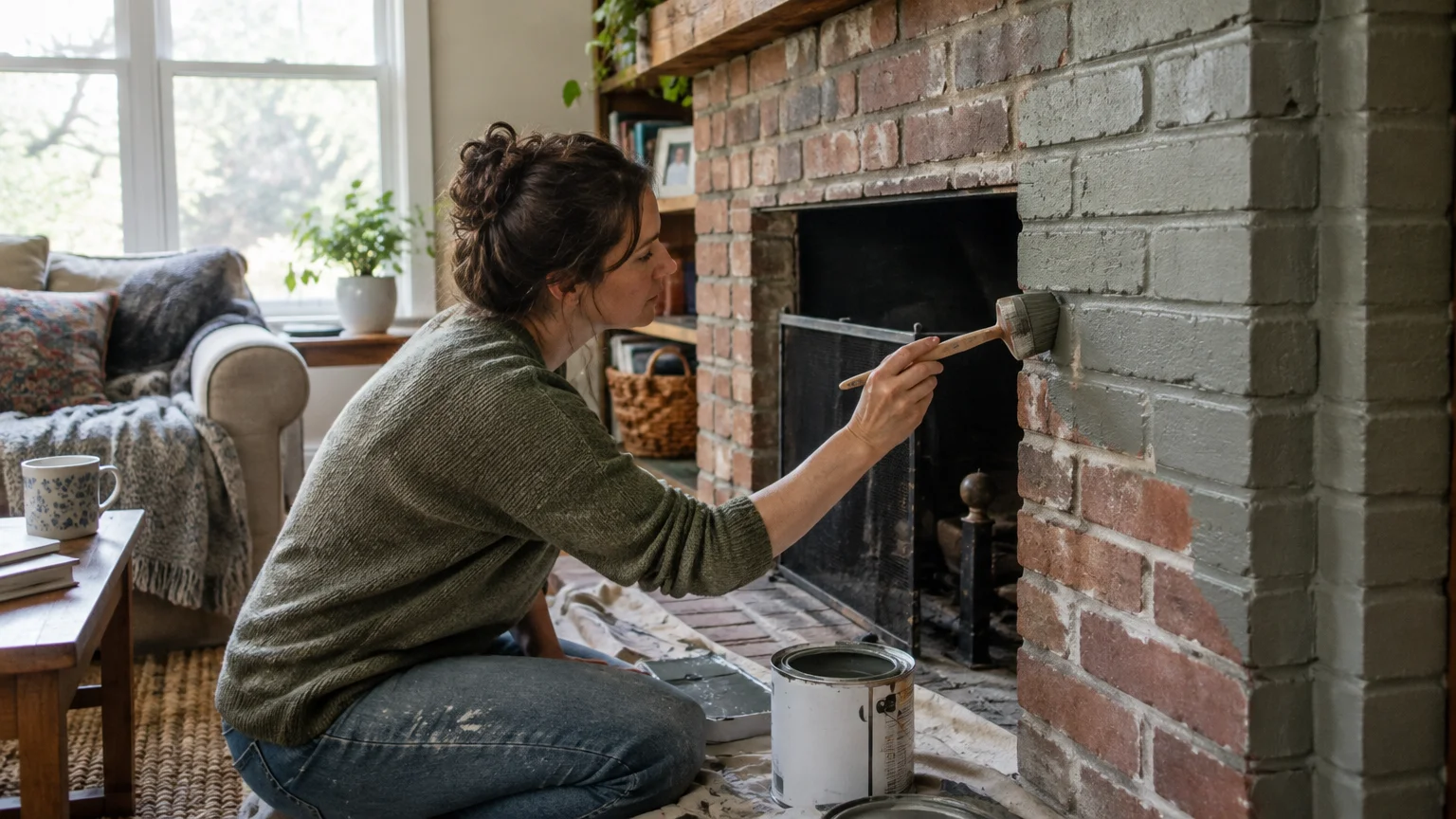
Phase 3: Cutting In and Rolling Field Walls. Cut in along your taped brick line using the angled sash brush. Work in three-foot intervals so you can blend wet edges seamlessly into the rolled field.
Pour your interior paint into a sturdy tray and load your roller evenly. Roll the large drywall surfaces using overlapping vertical passes shaped like the letter W.
Avoid overloading your roller near the brick edge to prevent paint from bleeding beneath the tape. Keep your roller pressure light and steady.
If paint bleeds onto bare brick, address it immediately. Scrub damp paint from porous masonry using a stiff toothbrush dampened with warm water.
Let your first coat dry for four hours before evaluating color saturation. Apply a second thin coat for uniform coverage and rich color depth.
Pull the painter’s tape away at a sharp forty-five-degree angle while the second coat is still slightly tacky. This method ensures crisp lines without tearing dried paint film.
Style & Finishing Touches
Choosing the ideal shade depends on the natural mineral colors baked into your clay bricks. Here are eleven proven paint colors brick fireplace pairings that create magazine-worthy living rooms.
1. Warm Creamy White
Warm creamy whites soften the aggressive contrast between dark red brick and crisp drywall. Shades with warm yellow or beige undertones create a relaxed, timeless ambiance.
Proven shades like Sherwin-Williams Alabaster or Benjamin Moore Swiss Coffee flatter traditional brick patterns. These shades reflect natural sunlight without washing out masonry details.
2. Muted Sage Green
Sage green sits directly opposite red on the color wheel, making it an ideal complementary pairing. The muted gray undertones keep the green from looking garish or loud.
Consider shades like Benjamin Moore Saybrook Sage or Sherwin-Williams Clary Sage. These organic tones soften vibrant orange brick while pairing effortlessly with natural wood mantels.
3. Dramatic Charcoal Gray
Deep charcoal offers a sophisticated, modern backdrop that accentuates the rugged texture of masonry. The dark gray tones temper orange brick colors while adding architectural drama.
Colors such as Sherwin-Williams Iron Ore or Benjamin Moore Kendall Charcoal create high-contrast elegance. Use an eggshell finish to keep charcoal walls from reflecting glare from firelight.
4. Classic Navy Blue
Rich navy blue delivers timeless contrast against weathered red brick. The deep blue base neutralizes fiery orange hues without clashing.
Try Benjamin Moore Hale Navy or Sherwin-Williams Naval for an authoritative, classic aesthetic. These deep blues showcase brass candle sconces and warm hardwood flooring brilliantly.
5. Balanced Greige
Greige combines the warmth of beige with the modern appeal of gray. It serves as an adaptable neutral that flatters multi-toned brick with varied mortar lines.
Prolific shades like Benjamin Moore Revere Pewter or Sherwin-Williams Agreeable Gray bridge traditional and contemporary styles. They reflect daylight softly while keeping the hearth feeling cozy.
6. Earthy Olive Green
Earthy olive green brings rich warmth that complements brown and deep crimson brick varieties. Its yellow-green undertones harmonize with the natural minerals found in fired clay.
Sherwin-Williams Rosemary and Benjamin Moore Peale Green provide lush, grounding presence. These moody greens enhance traditional brick fireplaces in craftsman and bungalow homes.
7. Soft Moody Teal
Soft moody teal combines green and blue tones to produce a distinctive, designer-grade look. It highlights warm brick accents while keeping the room serene.
Benjamin Moore Aegean Teal and Sherwin-Williams Still Water offer rich color without feeling overwhelming. They complement both vintage red brick and modern mid-century hearth designs.
8. Velvet Matte Black
Matte black creates an uncompromising, striking focal point in modern industrial and transitional spaces. It visually recedes, allowing the brickwork texture to take center stage.
Benjamin Moore Onyx or Sherwin-Williams Tricorn Black frame red brick with razor-sharp definition. Balance these saturated dark walls with light textiles and warm ambient lighting.
9. Dusty Terracotta
A dusty terracotta wall color creates an intentional monochromatic envelope around red and orange brick. This tonal approach blurs harsh lines and unifies the entire room.
Sherwin-Williams Cavern Clay and Farrow & Ball Red Earth wrap living spaces in comforting warmth. They flatter rustic, rough-faced bricks with irregular clay textures.
10. Cool Slate Gray
Cool slate gray balances brick fireplaces featuring strong orange or red colorations. The cool undertones temper the fireplace heat visually, resulting in a balanced space.
Look toward Benjamin Moore Stonington Gray or Sherwin-Williams Amherst Gray for crisp, cool balance. These hues modernize 1970s and 1980s brick hearths instantly.
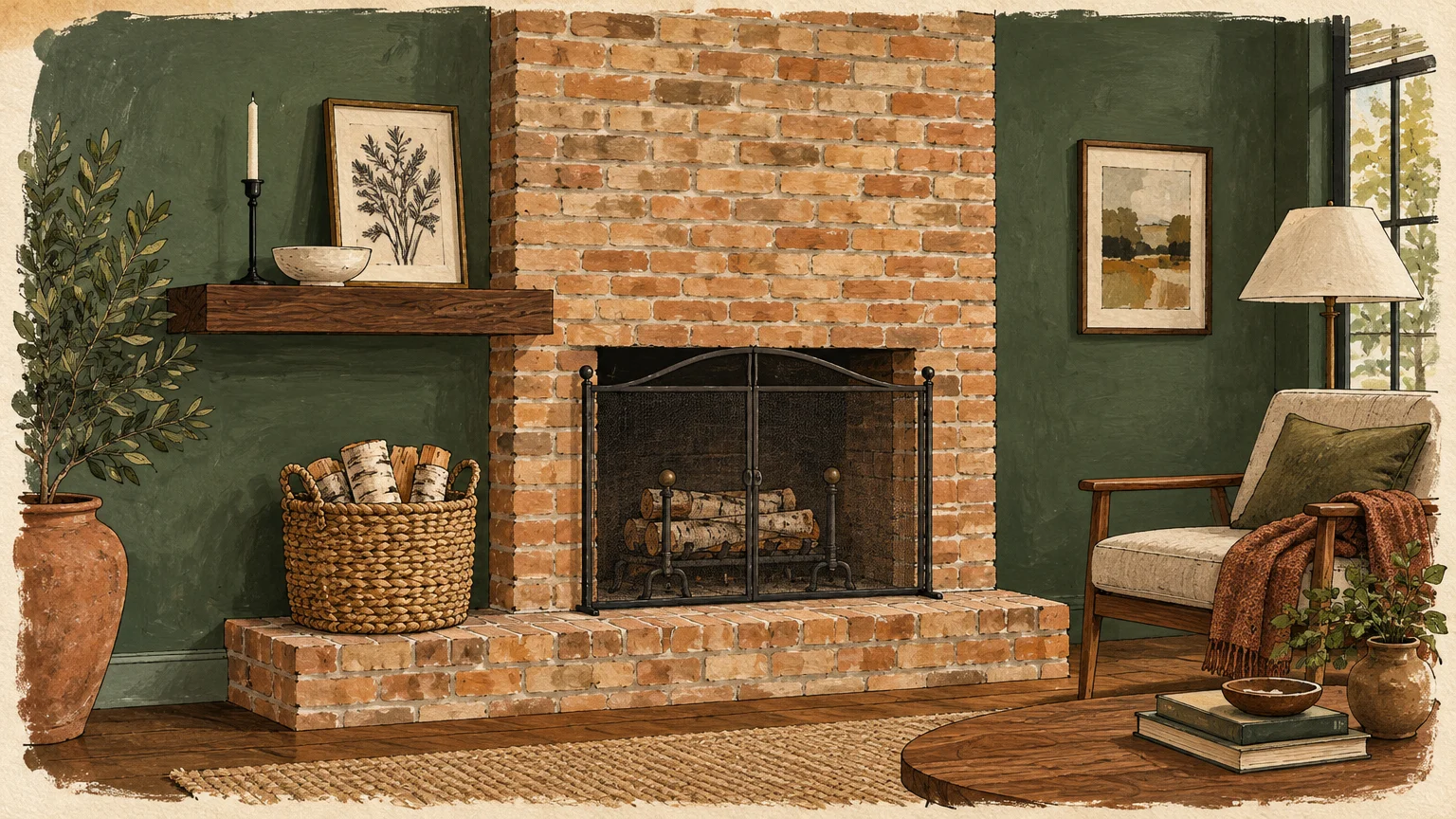
11. Deep Forest Green
Deep forest green envelops your fireplace in historic elegance and rich saturation. It grounds large spaces while making red brick pop with understated beauty.
Benjamin Moore Essex Green and Sherwin-Williams Jasper deliver stunning depth. These shades pair magnificently with dark wood mantels and traditional brick fireplaces.
Fireplace Decor and Styling Upgrades
Enhance your newly painted space by refreshing your fireplace decor. A chunky reclaimed wood mantel introduces warm organic texture against painted drywall.
Layer framed artwork, ceramic vases, and metallic candleholders across the mantel shelf. Varying heights creates visual movement and draws the eye upward.
Consider installing dimmable wall sconces flanking the fireplace for flexible evening illumination. Warm 2700K lighting flatters both your brickwork and wall paint.
Swap out an outdated brass fire screen for a clean-lined matte black standing screen. This minor change modernizes the entire hearth assembly for under $100.
Maintenance & Long-Term Care
Regular maintenance preserves your paint finish and prevents soot discoloration over time. Wipe the painted drywall near the firebox twice per heating season.
Use a soft microfiber cloth lightly misted with warm water and mild dish soap. Never use abrasive scouring pads that can burnish matte or eggshell paint.
Inspect the seam where drywall meets masonry annually for settling cracks. Thermal expansion from regular fireplace use can cause minor hairline gaps.
Fill small expansion gaps with paintable acrylic latex caulk designed for interior trim. Touch up the caulked lines using leftover wall paint.
Have your chimney inspected annually by a certified professional from the Chimney Safety Institute of America. Clean flues prevent smoke rollout that stains adjacent painted walls.
Keep leftover paint stored in a climate-controlled area for future touch-ups. Label each paint can with the color formula and room name.
FAQ
What sheen should I use on walls next to a brick fireplace?
Eggshell or satin sheens perform best next to brick fireplaces. They provide enough washability to clean soot while minimizing surface glare.
Flat finishes show scuffs easily, while high-gloss sheens highlight drywall imperfections. Eggshell offers the ideal balance of beauty and durability.
How do I determine the undertone of my fireplace brick?
Hold white printer paper against your brick in natural daylight. The neutral background reveals whether the masonry leans toward red, orange, pink, or brown.
Compare several paint sample swatches against different bricks across the facade. Brick coloring often varies significantly across individual units.
Should I paint the brick itself or just the surrounding walls?
Painting surrounding walls updates the space without permanently altering the brick masonry. Painting natural brick is irreversible and requires ongoing maintenance.
Preserving raw brick retains architectural character and appeals to future home buyers. Wall paint provides an easier, low-risk design refresh.
Do I need heat-resistant paint on walls adjacent to the firebox?
Standard acrylic latex wall paint works well on drywall surrounding zero-clearance inserts and standard masonry fireboxes. Drywall surfaces rarely reach temperatures exceeding 150 degrees Fahrenheit.
If you paint metal surrounds or areas within the direct firebox perimeter, use specialized high-heat paint. Always verify clearances with manufacturer guidelines.
What colors make red brick look less orange?
Cool blue-gray and muted charcoal tones visually counteract orange undertones in brick. These cool hues neutralize warmth rather than exaggerating it.
Avoid paints with strong yellow or peach undertones, which amplify orange hues. Stick to neutrals with balanced green, blue, or violet bases.
Takeaway & Next Steps
Refreshing the wall color around your brick fireplace elevates your entire living area without the permanence of painting masonry. The right shade transforms the hearth into an architectural showpiece.
Start by ordering peel-and-stick paint samples from reputable retailers to test undertones under your home’s unique lighting conditions.
Next, wash the drywall around your fireplace with TSP alternative to prepare the surface for optimal paint adhesion.
Finally, pick up your painter’s tape and application tools to tackle the transformation over a single weekend.
Share your finished fireplace makeover photos with our home improvement community or subscribe below for weekly remodeling tips and design inspiration.