
You can buy a premium mattress and install blackout blinds, yet poor bedroom paint choices will quietly sabotage your rest. Repainting your space with restorative tones resets your sleep cycle and calms your nervous system.
Certain stimulating pigments trigger alertness and elevate mental tension when you try to unwind. Correcting these bedroom paint mistakes turns an agitated space into a peaceful personal sanctuary.
Swapping colors that hurt sleep for soothing alternatives requires only basic supplies and a free weekend. This guide shows you which colors disrupt slumber and how to repaint your room for deeper rest.
Project Overview & Why It Matters
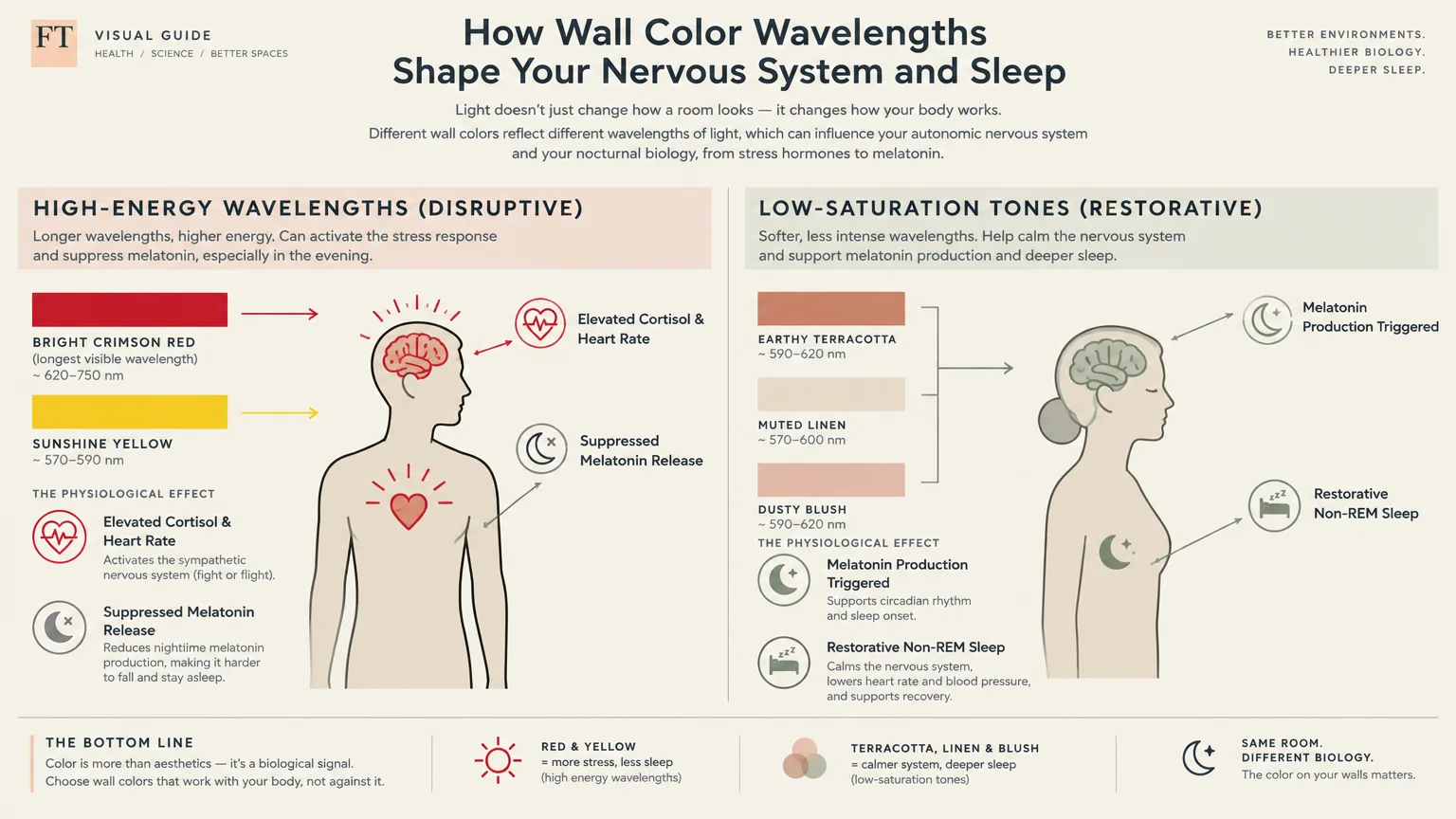
Your bedroom walls dominate your visual field every evening before you turn off the lights. The wavelengths of light bouncing off wall surfaces directly influence your autonomic nervous system.
High-energy hues prompt your brain to release cortisol, the hormone responsible for waking up and managing stress. Conversely, low-saturation hues encourage melatonin production, signaling to your body that sleep is imminent.
Repainting eliminates subtle sensory friction that prevents you from reaching deep, restorative non-REM sleep. A fresh coat of calming paint also refreshes your walls, masks imperfections, and modernizes your home.
Many homeowners accidentally choose energetic shades from tiny paint swatches without testing them under nighttime lighting. Before picking up a brush, you must understand how specific hues disrupt your nocturnal biology.
Here are the seven worst bedroom colors sleep researchers and interior designers urge homeowners to avoid.
1. High-Energy Crimson and Vibrant Red
Bright crimson red carries the longest wavelength in the visible light spectrum. This intense wavelength actively stimulates your brain, elevates heart rates, and increases respiration.
Surrounding your bed with fire-engine red puts your body into a low-grade state of alert. While red adds drama to dining rooms, it directly counters the physical calmness required for bedtime.
Red walls also increase ambient heat perception, which disrupts the body’s natural need to cool down before sleeping. This elevated temperature sensation causes restlessness and frequent midnight waking.
If you love warm tones, substitute aggressive reds with earthy terracotta, muted clay, or dusty blush. These subdued alternatives provide cozy warmth without triggering cardiovascular alertness.
2. Intense Sunshine Yellow
Sunshine yellow radiates warmth and optimism, which makes it ideal for home offices and breakfast nooks. However, intense yellow stimulates your analytical left brain and sparks daytime energy.
When you try to wind down, vibrant yellow walls mimic bright morning sunshine. This visual trickery confuses your circadian rhythm and delays the natural release of melatonin.
Vibrant yellow creates high visual vibration under warm bedside lamps. This sensory agitation strains optic nerves and makes mental relaxation harder to sustain.
Instead of bright yellow, choose soft parchment, creamy almond, or muted linen. These gentle alternatives preserve ambient lightness without overstimulating your brain before bed.
3. Glossy Jet Black
Moody dark bedrooms remain popular in architectural magazines, but deep black walls frequently backfire. Pure black absorbs all ambient light during the day, making your bedroom feel claustrophobic and gloomy.
At night, glossy black paint reflects glare from reading lamps and smart devices into harsh focal points. These sharp light contrasts strain your retinas and keep your mind constantly processing high-contrast shadows.
Waking up in a pitch-black room can also blunt morning cortisol awakening responses, leaving you groggy for hours. Your brain needs progressive daylight exposure to establish healthy circadian rhythms.
If you crave moody drama, avoid stark black and choose velvety midnight navy or deep forest green. Always specify an ultra-flat or matte finish to eliminate harsh, wakeful reflections.
4. Saturated Tangerine and Neon Orange
Bright orange blends the cardiovascular stimulus of red with the cognitive arousal of yellow. Paint manufacturers classify vibrant orange as a social, hunger-stimulating hue perfect for lively dining spaces.
In a bedroom, saturated orange keeps your senses active and prevents mental decompression. Staring at bright orange walls before bed makes relaxing nearly impossible.
Neon tones also amplify reflections from streetlamps and hallway nightlights. This luminous bounce penetrates your eyelids and fragments your light sleep stages.
You can achieve comfortable warmth by shifting toward muted apricot, weathered peach, or soft rust. These grounded tones soften visual impact while keeping the room approachable and serene.
5. Cold, Stark Commercial White
Many homeowners assume crisp commercial white is the safest, most neutral bedroom paint choice. In reality, bright untinted white acts like an institutional lightbox when illuminated by artificial bulbs.
Stark white features a high Light Reflectance Value that amplifies blue-spectrum wavelengths from electronic screens and lamps. This intense bounce light strains your vision and signals to your internal clock that it is noon.
Clinical whites also expose every drywall flaw, joint seam, and shadow imperfection. The resulting sterile ambiance prevents your room from feeling like an intimate, protective sanctuary.
Swap clinical white for warm alabaster, gentle ivory, or soft chalk. Gentle off-whites diffuse indoor lighting evenly across drywall, creating a restful ambiance that eases evening transitions.
6. Heavy Industrial Charcoal
Dark charcoal gray seems like an understated modern neutral, yet it often drains emotional energy. Cool, heavy charcoal reflects zero warm light, creating an environment that feels sterile, damp, and unwelcoming.
Research indicates that unyielding dark gray spaces elevate feelings of lethargy without encouraging true physiological relaxation. Waking up surrounded by gloomy slate can leave you feeling unrefreshed each morning.
Charcoal also emphasizes dust particles and scuff marks, adding subtle visual disorder to your sleeping quarters. Cluttered or scuffed walls unconsciously increase baseline anxiety levels before bed.
Instead of cold charcoal, paint your walls in warm greige, pale pewter, or misty silver. These balanced tones provide contemporary sophistication while preserving ambient daylight and a tranquil evening mood.
7. Vivid Electric Purple
Electric purple, magenta, and bright violet rank high among the colors that hurt sleep. Vivid purples have high energetic frequencies that stimulate creative brainstorming and active problem-solving.
When your mind needs to rest, purple stimulates vivid cognitive processing and irregular dream patterns. Creative stimulation belongs in craft studios, not directly above your headboard.
Deep purple can also read as cold and moody in rooms that lack southern sunlight. This chilliness makes your bedroom feel uninviting during late evening hours.
If you prefer romantic hues, transition to soft lavender with heavy gray undertones or muted lilac. A desaturated lavender lowers pulse rates and creates an ethereal, spa-like atmosphere.
Tools, Materials, and Prep Checklist
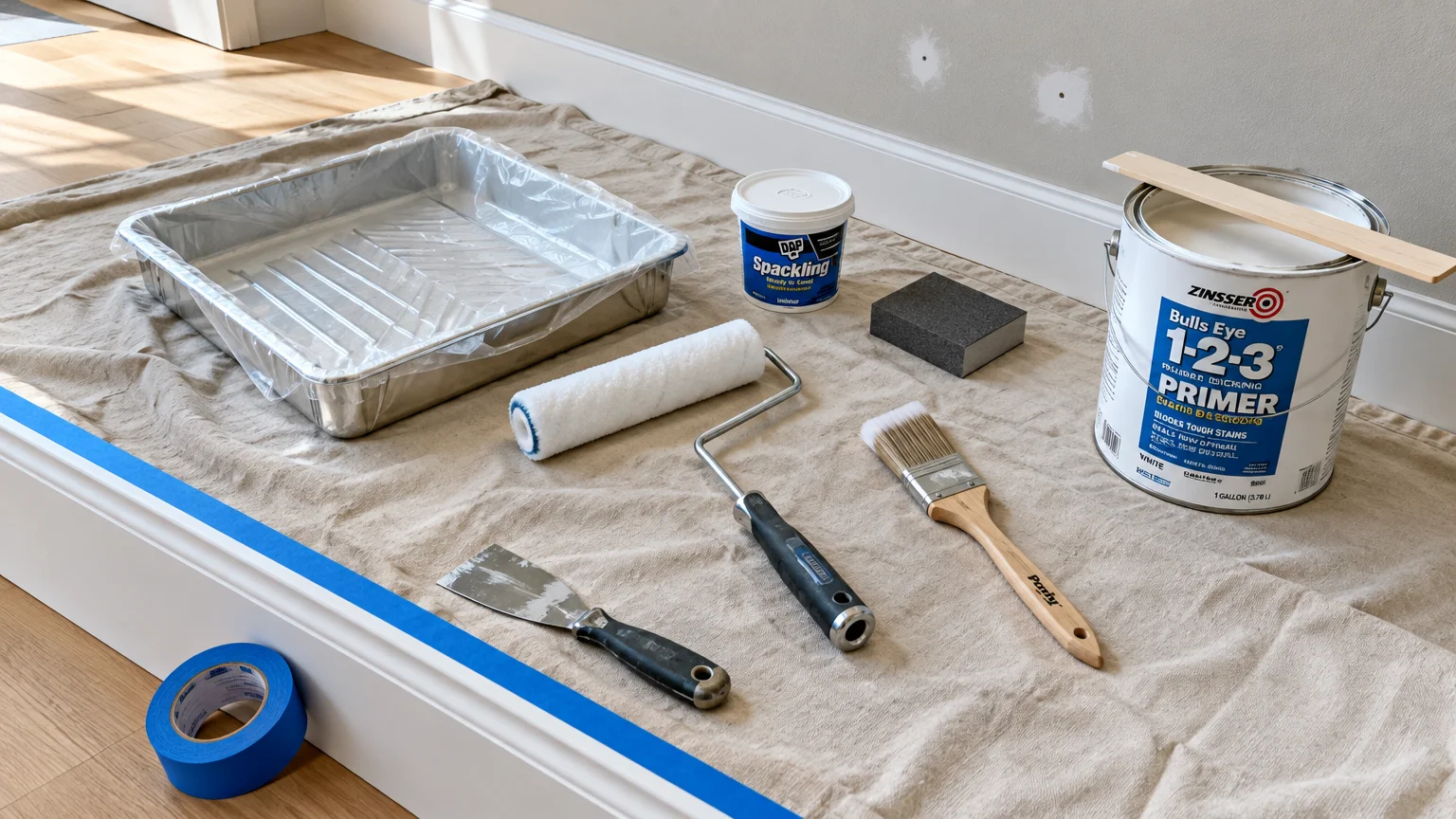
Repainting over aggressive hues requires correct tools to prevent color bleed and ensure even coverage. Standard bedrooms measuring twelve by twelve feet require two gallons of finish paint and one gallon of primer.
Purchase a high-hiding stain-blocking primer to cover saturated reds, deep blacks, or vibrant oranges. Using regular paint without a dedicated base coat forces you to apply three or four unnecessary topcoats.
Pick up premium synthetic sash brushes measuring two and a half inches for precise perimeter cutting. For walls, equip yourself with a nine-inch roller cage, a three-eighths-inch nap roller sleeve, and an extension pole.
Stock your workstation with medium-grit sanding sponges, painter tape, patching compound, and a sturdy putty knife. Heavy canvas drop cloths protect hardwood and carpet far better than slippery plastic sheeting.
Review the chemical ratings on your paint cans before purchasing finishes. The U.S. Environmental Protection Agency recommends zero-VOC or low-VOC formulations to protect your indoor air quality while you sleep.
Select premium latex paint from established manufacturers such as Sherwin-Williams or Benjamin Moore for superior pigment density. High-solids paint flows smoothly and delivers true color depth in fewer passes.
Gather painter goggles, nitrile gloves, and an N95 dust mask for sanding drywall compound safely. Proper protective gear shields your lungs and eyes from fine gypsum particles during prep work.
Basic supplies generally cost between one hundred and two hundred dollars depending on brand tiers. Investing in trade-grade rollers and angled brushes guarantees clean lines and streak-free wall finishes.
Step-by-Step Instructions
Phase 1: Room Preparation and Surface Cleaning. Move your bed and nightstands to the room center and cover them with clean canvas drop cloths.
Wash down greasy fingerprints and dust along baseboards using warm water and mild dish detergent. Paint fails to adhere properly to dirty drywall, resulting in bubbling and peeling edges down the road.
Phase 2: Patching and Surface Smoothing. Inspect the walls under bright raking light for nail holes, gouges, and drywall cracks.
Press lightweight spackling paste into every flaw using a flexible putty knife, then allow it to cure. Sand the patches smooth with a fine-grit sanding sponge until the repair feels flush with the surrounding wall.
Wipe all drywall dust from the walls using a slightly damp microfiber rag. Residual gypsum dust acts as a barrier that prevents primer from bonding to your drywall.
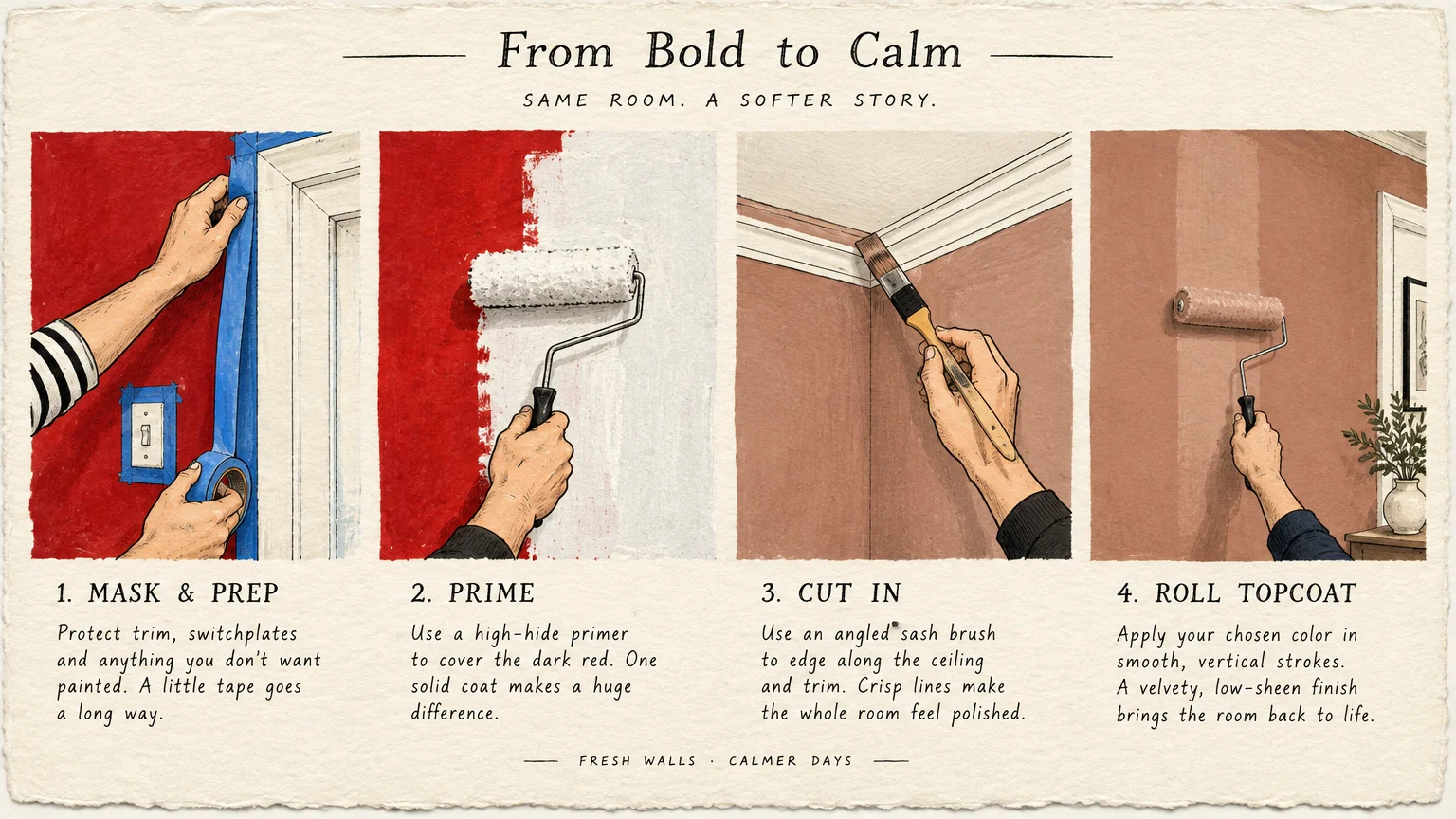
Phase 3: Taping and Masking. Apply professional painter tape along door casings, floor trim, and window sills.
Press the tape edges down firmly using a clean putty knife or plastic burnisher. Creating a tight physical seal prevents wet paint from bleeding beneath the masking edge.
Phase 4: Applying Stain-Blocking Primer. Open your primer, stir thoroughly for two minutes, and pour paint into your tray.
Cut in the room borders with your sash brush, then roll the large wall fields in uniform patterns. A gray-tinted primer works best when covering bright red, neon yellow, or charcoal walls.
Allow the primer to dry for at least two hours before evaluating the opacity. If dark pigment still bleeds through the primer film, apply a second thin coat over stubborn areas.
Phase 5: Rolling the Relaxing Bedroom Colors. Cut in the perimeter with your chosen relaxing bedroom colors using confident, long strokes.
Roll paint in gentle W-shaped or V-shaped patterns to distribute the product evenly across each drywall section. Overlap wet edges consistently to avoid creating visible flashing lines under light.
Phase 6: Second Coat and Clean Edges. Allow the first layer to dry for four hours under proper cross-ventilation.
Apply your second coat to achieve flawless color depth and wipe away roller lap marks. Peel the painter tape away slowly at a forty-five-degree angle while the second coat remains slightly damp.
Style & Finishing Touches
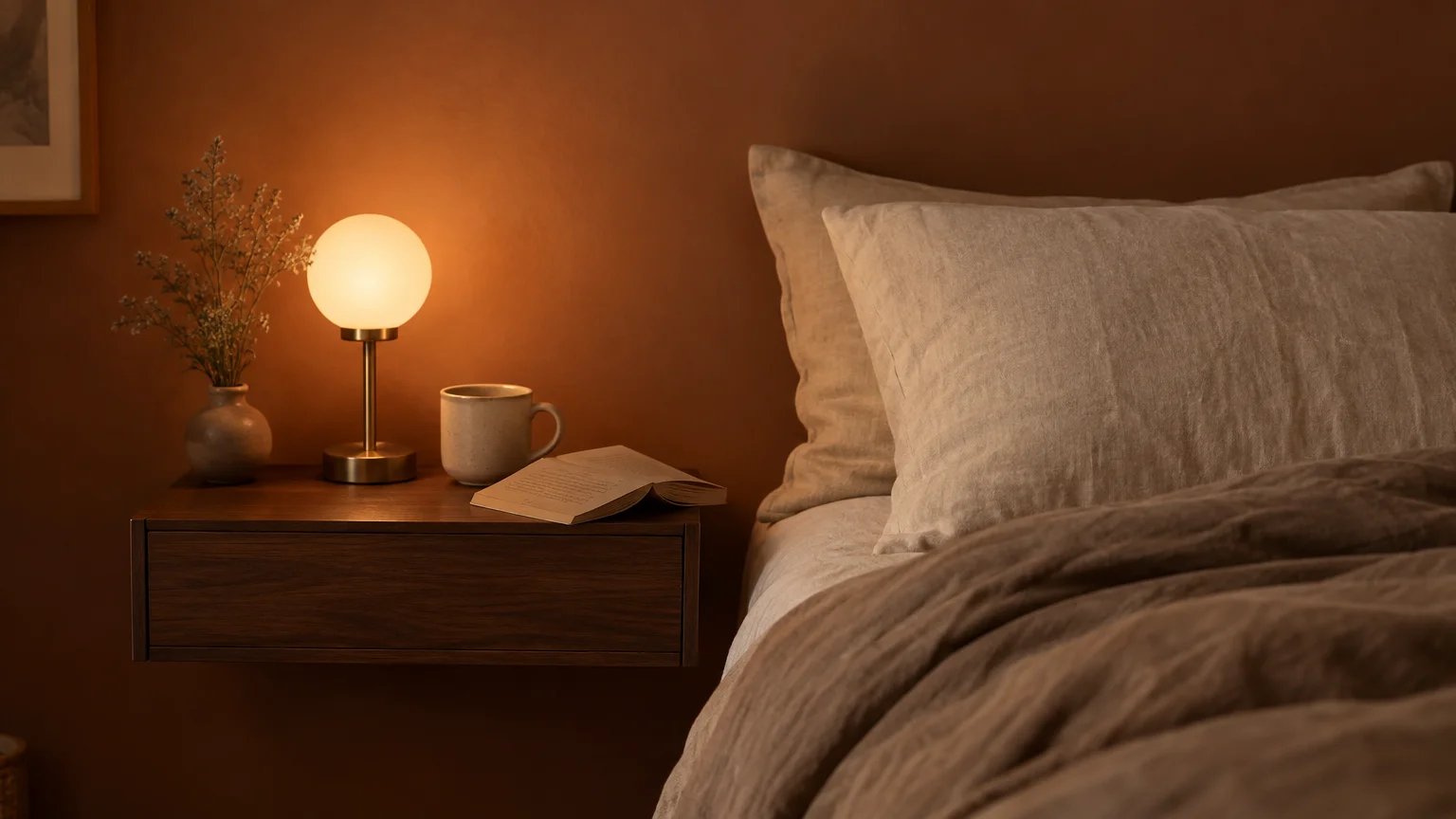
Selecting the right hue is only half the battle; sheen choice dictates how soft your bedroom feels. Semi-gloss paints reflect harsh light glare, so choose matte or eggshell sheens for master sleeping spaces.
Muted slate blues and sage greens rank consistently among the best colors for sleep. These soothing nature-inspired pigments decrease heart rates and create a calm atmosphere that invites deep slumber.
Pair your tranquil wall color with layered bedding crafted from breathable natural linen or washed cotton. Monochromatic neutral duvets soften room transitions and prevent visual clutter from disturbing your gaze before sleep.
Replace harsh cool-white lightbulbs with soft-white LED bulbs rated between 2200K and 2700K. Warm light harmonizes with relaxing bedroom colors and signals your body to prepare for nocturnal rest.
Hang blackout curtains mounted close to the ceiling to block early morning street lamps and dawn light. Matching your drapery color closely to your new wall hue creates an unbroken, envelope-like sense of security.
Incorporate matte wooden furniture or brushed brass hardware rather than polished chrome. Muted accents reduce specular highlights, keeping your room visually quiet and comforting.
Maintenance & Long-Term Care
Allow fresh bedroom paint to cure completely for thirty days before washing or scrubbing wall surfaces. While paint dries to the touch within hours, full chemical curing requires weeks to harden against scuffs.
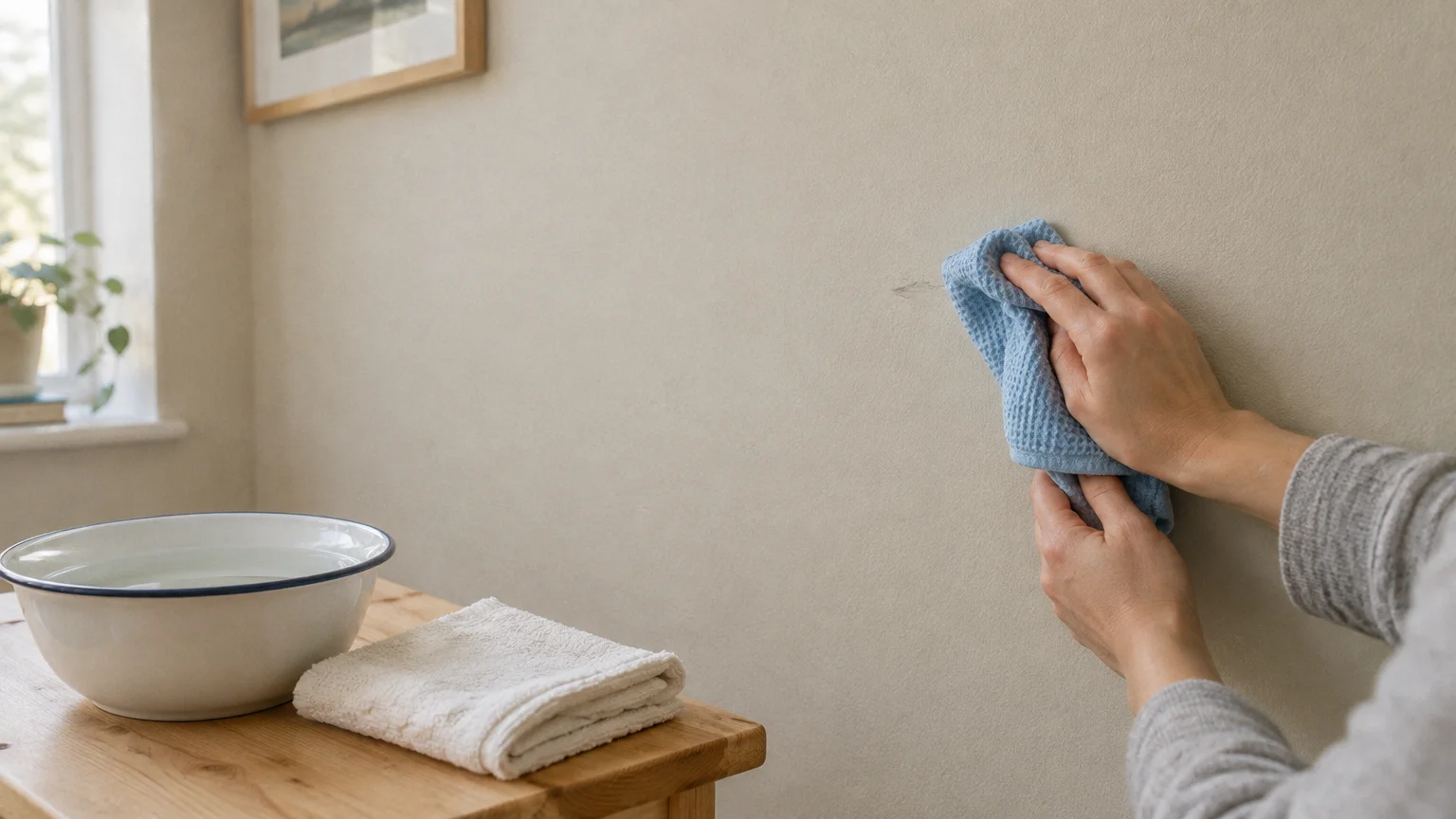
Clean scuff marks gently using a soft microfiber cloth dampened with warm water and mild soap. Avoid abrasive scrub sponges or harsh chemical degreasers, which quickly burnish low-sheen eggshell and matte finishes.
Store remaining wall paint in tightly sealed metal or plastic cans inside a temperature-controlled closet. Extreme attic heat or freezing basement temperatures ruin the chemical binders and emulsifiers in water-based latex paint.
Label each paint container with the room name, finish type, paint formula, and purchase date. Keeping accurate records makes quick weekend touch-ups effortless when moving furniture or hanging new picture frames.
Inspect corners and baseboards seasonally for hairline settling cracks or peeling caulk. Sealing minor drywall gaps promptly preserves your clean paint finish and keeps drafty air out.
FAQ
Can accent walls use stimulating colors without hurting sleep?
Painting an accent wall in bold red or yellow behind your headboard minimizes daytime impact. However, saturated tones still reflect stimulating light into the room, so muted earth tones remain safer options.
How many coats of primer do you need to hide bright red or black?
Covering dark or high-chroma pigments typically requires one heavy coat of tinted stain-blocking primer. Once primed, two standard topcoats of high-quality latex paint will deliver complete, streak-free color coverage.
Which paint sheen works best for a restful bedroom environment?
Flat, matte, and eggshell sheens deliver the most restful visual results for modern bedrooms. These low-luster finishes absorb intrusive lamp reflections and hide minor drywall defects far better than satin or semi-gloss.
How quickly can you safely sleep in a freshly painted bedroom?
You can sleep in the room after twenty-four hours if you applied zero-VOC latex paint. Always maintain open windows and active fan ventilation during the first day to flush out residual paint moisture.
Why does cold stark white cause sleep disruptions?
High Light Reflectance Value white bounces ambient lamp light and screen glare aggressively throughout the room. This amplified brightness mimics midday sunshine, delaying your body’s natural melatonin release before bedtime.
Takeaway & Next Steps
Transforming your bedroom paint mistakes into a restful haven enhances your nightly recovery and elevates morning energy. Eliminating aggressive reds, neons, and stark whites removes unconscious visual friction from your evening routine.
First, evaluate your current wall color under both natural daylight and your bedside lamps tonight. Second, visit your local home improvement center to collect paint swatch cards in muted blues, greens, and greiges.
Third, test sample pots directly on your walls to see how relaxing bedroom colors react to your lighting. A single weekend of painting will deliver years of tranquil evenings and deeply restorative sleep.
Have you transformed your bedroom into a peaceful retreat? Share your paint project photos with our community or subscribe below to receive our weekly home renovation guides.