Investing in the right home furnishings protects your budget while transforming your living space into an enduring showcase. True design classics do not depreciate like standard retail items; instead, they anchor your home and retain substantial secondary value.
Savvy homeowners look beyond temporary showroom trends toward storied pieces engineered with exceptional craftsmanship. Choosing verified heirloom assets guarantees durable functionality and shields your household equity against fast-furniture turnover.
This comprehensive guide highlights twenty proven investment pieces that elevate daily living while securing outstanding resale potential across decades of ownership.
Project Overview & Why It Matters
Mass-produced furniture often ends up in municipal landfills within a few years of purchase. In contrast, acquiring investment furniture secures tangible equity for your household.
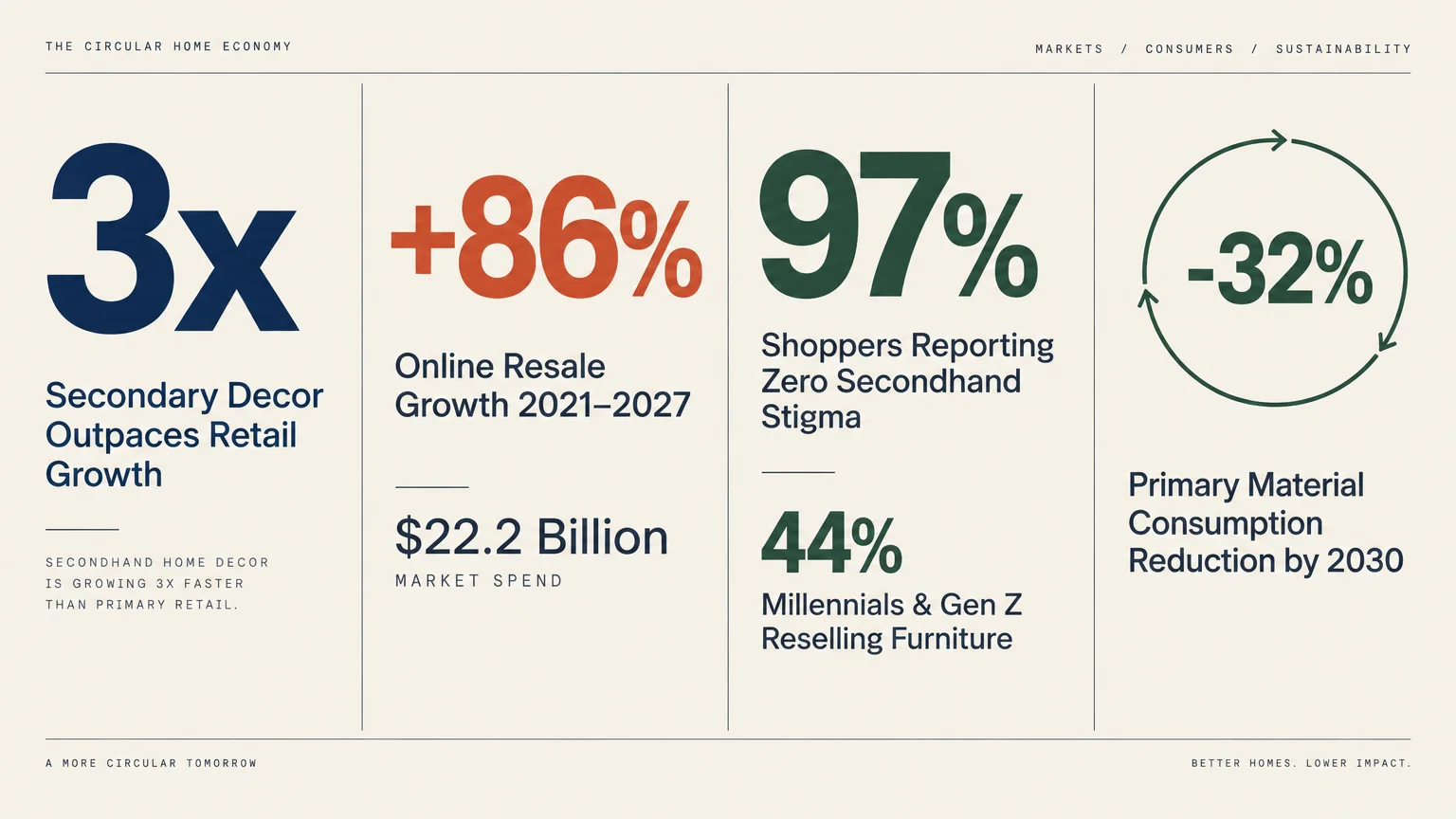
According to the Chairish Home Furnishings Resale Report, home furnishings is the fastest-growing resale category across consumer goods. Secondary home decor outpaces traditional retail growth by 3x as homeowners prioritize enduring quality.
Market projections indicate online resale will grow 86% between 2021 and 2027. This rapid acceleration accounts for an estimated $22.2 billion in five-year consumer spend.
Consumer sentiment has evolved alongside these impressive market numbers. An overwhelming 97% of shoppers report there is no longer any stigma associated with buying secondhand furniture.
In fact, 86% of consumers say they actively enjoy hunting for vintage, antique, and pre-owned furnishings. Buying pre-owned iconic furniture pieces has become a badge of discernment rather than a financial compromise.
Generational buying habits confirm that secondary value retention drives modern purchasing decisions. A notable 44% of Millennials have already resold furniture pieces to fund lifestyle transitions.
Similarly, 44% of Gen Z shoppers anticipate reselling their home furnishings in the coming years. Younger generations view their interior decor as dynamic financial assets rather than permanent, sunk costs.
Environmental responsibility provides another compelling reason to choose timeless furniture over fast alternatives. Adopting a circular economy for furniture and home goods could reduce primary material consumption by 32% by 2030.
When you furnish your living room with authenticated design classics, you preserve planetary resources and capture long-term equity. These investment pieces withstand family life, residential moves, and shifting aesthetic cycles with timeless grace.
Tools, Materials, and Prep Checklist
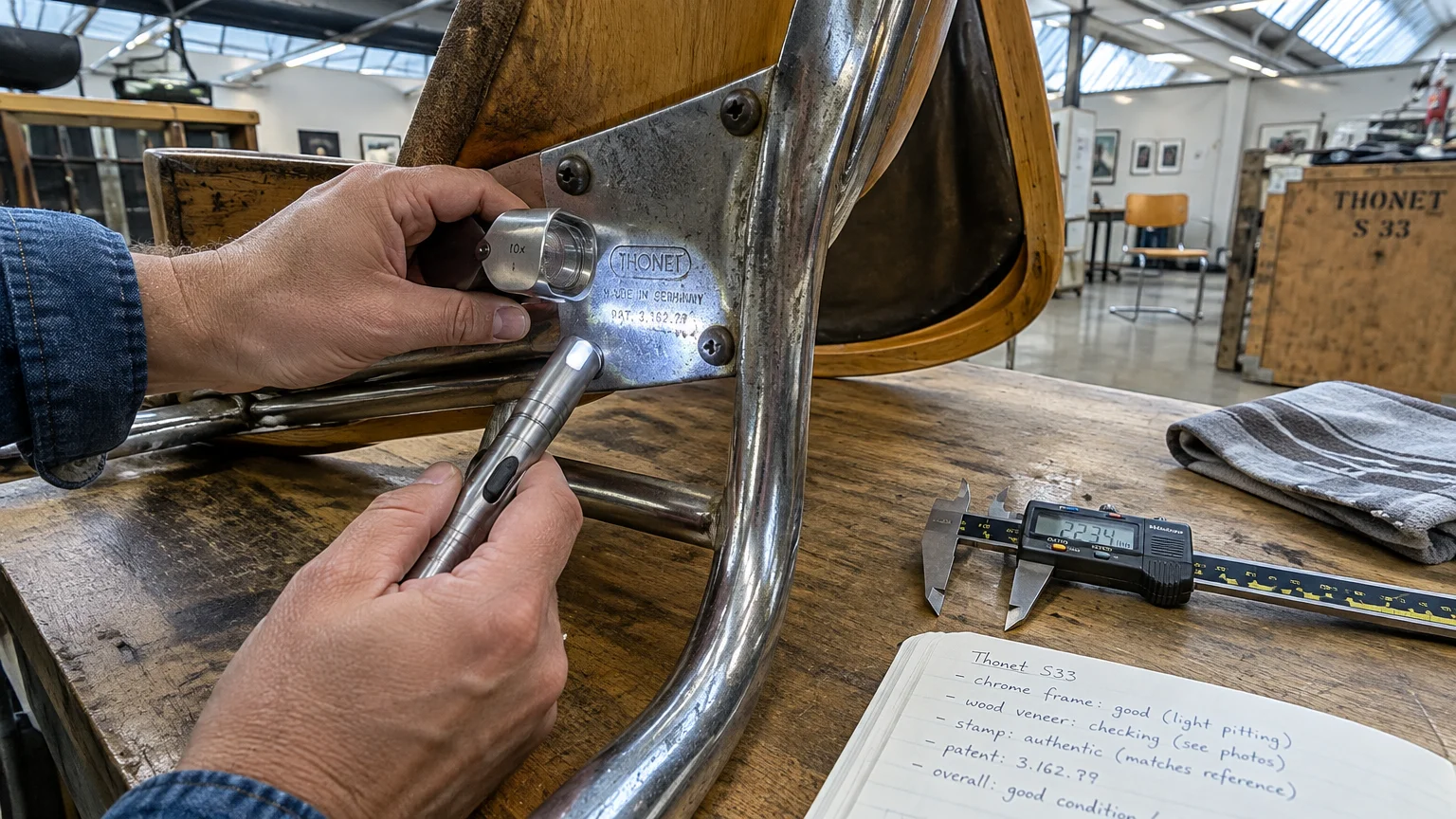
Evaluating potential heirloom acquisitions requires specialized inspection tools before you commit funds. Pack these reliable supplies whenever you tour estate sales, antique galleries, or regional design auctions.
Jeweler Loupe: A 10x magnification loupe helps you examine maker marks, foundry stamps, and subtle wood grain patinas. These optical details distinguish licensed originals from mass-produced modern counterfeits.
UV Blacklight Torch: Ultraviolet light instantly reveals modern synthetic adhesive repairs, altered upholstery foam, and touched-up finishes. Hidden repairs often compromise the long-term resale value of delicate vintage surfaces.
High-CRI LED Flashlight: High-color-rendering lighting exposes hairline frame cracks, veneer checking, and genuine aniline leather wear. Natural light inspection prevents expensive surprises once pieces arrive inside your home.
Digital Caliper: Precision calipers measure tubular steel wall thickness and frame joints against authentic factory manufacturing tolerances. Discrepancies of a single millimeter often expose unauthorized reproduction frames.
Retractable Steel Tape: A standard tape measure verifies precise architectural heights, widths, and seating clearances against licensed factory catalogs. Accurate dimensions protect you from purchasing altered or cut-down vintage furniture.
Transporting these physical investments requires proper handling materials to prevent costly damage to fragile finishes and joinery. Stock your vehicle with protective gear before collecting delicate design assets.
Heavy Moving Blankets: Thick quilted cotton blankets safeguard delicate bentwood edges, lacquer coatings, and polished chrome from transport friction. Plan on using at least two blankets per seating piece.
Foam Corner Protectors: High-density foam cushions vulnerable tabletop edges without leaving adhesive residue on vintage finishes. They protect delicate corners through narrow stairwells and tight entry doors.
Archival Cotton Gloves: Soft cotton gloves prevent natural skin oils from etching vintage art glass or unsealed metal frames. Always wear them when inspecting or moving collectible lighting fixtures.
Prep Guidance: Measure interior door frames, elevators, and stairwells before purchasing to ensure oversized statement sofas fit seamlessly. Confirming transit clearances prevents structural stress during residential installation.
Step-by-Step Instructions
Curating a home filled with high-performing investment furniture requires a structured, multi-phase methodology. Follow these professional sourcing, verification, and placement protocols to build lasting equity.
Phase 1: Verifying Mid-Century Modern Seating and Tables
1. Eames Lounge Chair and Ottoman: Designed in 1956 by Charles and Ray Eames, this seating set remains the gold standard of investment furniture. In designer surveys by 1stDibs, it ranked as the #1 iconic vintage seating piece, backed by 23% of designers.
A new licensed version from Herman Miller costs between $6,500 and $9,000 depending on wood veneer and leather selections. In Europe, authorized editions produced by Vitra retail between €5,500 and €8,000+.
Secondary market values range from €2,500 ($2,700) to €12,000+ ($13,000+) based on production era, Brazilian rosewood veneer, and leather condition. Look for black-and-silver rectangular Herman Miller medallion labels under the seat shell.
2. Barcelona Chair: Designed in 1929 by Ludwig Mies van der Rohe, this architectural icon defines modernist luxury. A brand-new licensed original from Knoll retails between $6,460 and $7,560+.
Secondhand authenticated Knoll editions hold exceptional secondary value, starting around £2,469 (~$3,100) and climbing higher for matched pairs. Inspect the polished chrome frame for Mies van der Rohe’s stamped signature and the KnollStudio emblem.
Verify that the upholstery consists of individual leather panels cut, hand-welted, and hand-tufted from a single hide. Replicas typically feature cheaper glued seams and inferior piping along cushion borders.
3. Wassily Chair (Model B3): Designed in 1925 by Marcel Breuer, this tubular steel masterpiece transformed modern furniture manufacturing. Authenticated new productions from Knoll retail between $4,834 and $7,270.
Genuine Knoll productions feature Marcel Breuer’s signature stamped into the base of the tubular frame alongside an individual serial number. Inspect the continuous steel tubing for smooth, seamless bends lacking rough crimping or weld seams.
4. Noguchi Coffee Table: Conceived between 1939 and 1944 and commercially introduced in 1948 by Isamu Noguchi, this table merges organic sculpture with functional stability. Current retail prices from Herman Miller range between $3,195 and $3,495.
Authentic modern tables feature Isamu Noguchi’s signature etched cleanly on the edge of the ¾-inch plate-glass top. Additionally, check for a matching authentication medallion attached to the underside of the interlocking hardwood base.
5. Marcel Breuer Cesca Chair: Designed in 1928, the Cesca chair pioneered cantilevered tubular steel seating paired with traditional woven cane inserts. Authenticated Knoll editions maintain brisk demand across vintage design exchanges.
Examine the underside of the beech seat frame for stamped manufacturer logos and ensure the cane weave remains taut. Avoid examples with split cane or frame rust, which can require costly restoration.
Phase 2: Sculptural Silhouettes and Modular Lounging
6. Togo Fireside Chair: Designed in 1973 by Michel Ducaroy for Ligne Roset, the Togo redefined low-slung, ergonomic lounging. New retail prices start at $3,420 for single chairs and reach $5,660+ for premium leather editions.
Original 1970s and 1980s multi-piece Togo sets regularly command over $10,000 on curated resale platforms. Chairish resale data highlights Ligne Roset as one of the fastest-moving brands showing rapid year-over-year secondary growth.
Authenticate genuine Togo seating by checking for the woven fabric Ligne Roset label sewn securely into the pleated base seams. Verify that the multiple densities of polyether foam retain their responsive rebound.
7. Vladimir Kagan Serpentine Sofa: Designed in 1950, this curved sculptural sofa holds the #2 spot in designer rankings, backed by 13% of surveyed professionals. Its undulating form floats effortlessly in open-concept living rooms.
Verify original Vladimir Kagan seating by inspecting the custom internal hardwood frames and searching for historic workshop tags. The unique organic shape commands premium resale prices among high-end interior designers.
8. Kaare Klint Safari Chair: Designed in 1933, this Danish classic secured the #3 ranking among iconic seating choices with 8% of designer votes. The chair uses clever tension straps that tighten automatically when occupied.
Inspect the ash or smoked oak frame and original canvas or leather sling components for authentic Rud. Rasmussen maker stamps. Its glueless, knockdown joinery represents an engineering triumph that appeals to serious collectors.
9. Hans Wegner Wishbone Chair (CH24): Introduced in 1950, this steam-bent dining chair features an iconic Y-shaped backrest and hand-woven paper cord seat. Continuous production by Carl Hansen & Søn guarantees reliable liquidity.
Inspect the underside of the rear rail for the stamped Carl Hansen maker mark and verify the hand-woven cord geometry. The unvarnished paper cord develops a beautiful, authentic patina through decades of daily family use.
10. Florence Knoll Sofa: Designed in 1954, Florence Knoll’s architectural seating embodies clean geometric proportions and enduring mid-century restraint. Supported by an exposed square steel frame, it anchors living rooms with tailored authority.
Examine the lower perimeter steel frame for stamped KnollStudio marks and confirm high-density foam cushion resiliency. Its timeless profile pairs effortlessly with both minimalist architecture and layered eclectic collections.
11. Classic Chesterfield Leather Sofa: Deep button-tufting, rolled arms, and hand-applied nailhead trim make the Chesterfield a permanent design institution. Well-maintained vintage examples in burnished top-grain hide gain character as they age.
Check for solid kiln-dried hardwood framing, eight-way hand-tied coil springs, and individual brass tacking along the arm fronts. Heavy solid timber frames provide lasting structural durability that cheap commercial reproductions cannot match.
Phase 3: Curating Iconic Lighting Sculptures
12. Murano-Glass Pendants and Chandeliers: In the 9th Annual 1stDibs Interior Designer Trends Survey, Murano glass ranked as the #1 iconic vintage lighting choice, capturing 27% of designer votes. These fixtures bring artisan character to formal dining rooms.
Hand-blown on the Venetian island of Murano, authentic fixtures feature pontil marks on the glass base and delicate artisan variations. Always hire a licensed electrician to inspect vintage wiring and install support boxes capable of bearing substantial glass weight.
13. Isamu Noguchi Akari Light Sculptures: Noguchi’s Akari lanterns ranked #2 in iconic lighting popularity among global design professionals, securing 16% of designer preferences. Handcrafted from washi paper harvested from mulberry bark, each lantern diffuses soft illumination.
Authenticate genuine Akari lamps by locating Noguchi’s red sun-and-moon graphic stamp printed on the bottom rim of the paper shade. Inspect the delicate paper skin for tears, water spotting, or improper wire frame mounting before buying.
14. Castiglioni Arco Floor Lamp: Designed in 1962 by Achille and Pier Giacomo Castiglioni for Flos, the Arco lamp solved the challenge of overhead dining illumination. It features a massive solid white Carrara marble base weighing roughly 140 pounds.
Check the extendable stainless steel telescopic arch and spun aluminum shade for authentic Flos production stamps. The marble base includes a beveled hole engineered specifically to accept a broom handle for safe two-person lifting.
Phase 4: Modern Classics, Daybeds, and Heritage Case Goods
15. LC4 Chaise Longue: Designed in 1928 by Le Corbusier, Pierre Jeanneret, and Charlotte Perriand, this adjustable lounger mimics natural reclining ergonomics. Authenticated licensed productions from Cassina feature stamped signatures and individual serial numbers.
Inspect the adjustable chrome cradle and leather or cowhide mattress straps to ensure tight, reliable mechanical support. The self-locking friction mechanism allows custom reclining angles without mechanical gears.
16. Eero Saarinen Tulip Dining Table: Designed in 1957 to clear away the visual clutter of traditional table legs, Saarinen’s cast-aluminum pedestal table remains timeless. Produced by Knoll with marble, laminate, or wood tops, genuine Tulip tables maintain steady resale value.
Confirm authenticity by locating the Knoll nameplate underneath the tabletop and checking for the cast Knoll logo inside the pedestal base. Heavy cast-aluminum bases prevent tipping, even with dense, solid-slab marble tops.
17. Baker Furniture Dining Tables and Credenzas: Resale data highlights Baker Furniture as one of the fastest-moving secondary brands showing exceptional buyer demand. Baker’s mid-century case goods feature solid mahogany, exotic burl veneers, and flawless hand-rubbed finishes.
Examine the interior of top drawers for metal Baker Furniture emblems and inspect dovetail joinery for tight, hand-finished craftsmanship. These heirloom dining tables routinely appreciate as pristine vintage hardwood supplies become increasingly scarce.
18. Henredon Heritage Cabinets and Credenzas: Established as an American benchmark of cabinetmaking, vintage Henredon case goods continue to command premium prices on secondary marketplaces. Henredon also ranks among the fastest-moving resale brands nationwide.
Henredon collections showcase rich walnut veneers, solid brass hardware, and intricate geometric panel detailing. Look for branded brass medallions or hot-stamped burn marks inside drawers to distinguish authentic Henredon pieces from commercial copies.
19. Ethan Allen Solid Wood Case Goods: Ethan Allen represents another top-performing resale brand highlighted in national resale reports for strong secondary demand. Vintage solid maple, cherry, and oak dressers provide indestructible construction that outlasts modern particleboard furniture.
Inspect back panels for branded factory stamps and confirm that drawer slides operate smoothly without structural sagging. Solid timber drawers assembled with authentic dovetail joints can be refinished across multiple generations.
20. Ralph Lauren Home Leather Club Chairs: Renowned for heirloom leather and classic tailoring, Ralph Lauren Home furnishings hold exceptional resale value. Ralph Lauren also ranks among the top brands showing the highest year-over-year resale demand.
Their hand-burnished leather club chairs represent blue-chip investments that anchor eclectic interior schemes. Check beneath seat cushions for authentic woven fabric manufacturer tags and verify heavy solid hardwood inner construction.
Style & Finishing Touches
The 9th Annual 1stDibs Interior Designer Trends Survey, surveying 468 professionals for 2026, reveals powerful shifts in how homeowners decorate. Designers report surging demand for collectibles from the 1920s to 1950s, especially Art Deco and Bauhaus pieces.
Pre-1920s antiques are also regaining market momentum among luxury collectors. Conversely, designer interest in 1970s furnishings has begun to decline across high-end residential interior projects.
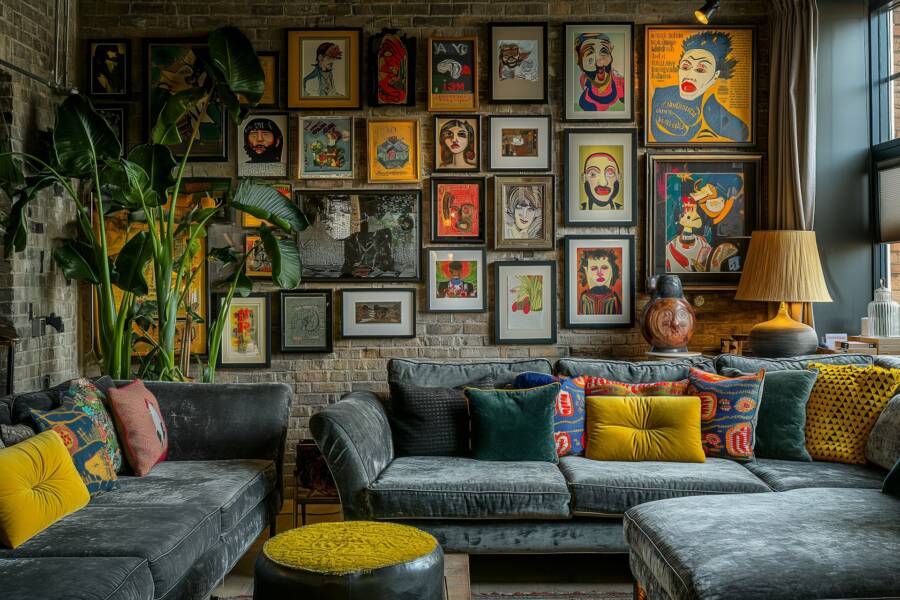
Maximalism (39%) and eclecticism (38%) stand out as the dominant interior design styles requested by homeowners today. Strict minimalist rooms are giving way to layered, personalized spaces filled with historic character.
Furthermore, chocolate brown (33%) reigns as the top interior color choice among design professionals. This rich, grounding hue creates an ideal backdrop for displaying iconic furniture and decor classics.
Anchor your primary living area with warm chocolate brown walls to make chrome and steel frames stand out dramatically. The cool reflective surfaces of a Wassily or Barcelona chair create striking visual contrast against warm, earthy walls.
Mix sculptural seating curves with clean architectural case goods to master the eclectic aesthetic. Pair the flowing form of a Vladimir Kagan Serpentine Sofa with a structured, geometric Henredon credenza.
Balance heavy American hardwood pieces by suspending delicate, airy lighting overhead. An organic Noguchi Akari pendant softens the substantial proportions of a solid Baker mahogany dining table.
Maintenance & Long-Term Care
Preserving your investment furniture requires disciplined maintenance protocols to prevent premature surface wear. Proper conservation ensures your pieces command maximum resale value when you decide to adjust your layout.
Treat full-grain aniline leather on Eames, Barcelona, and Chesterfield seating with pH-balanced, wax-free leather conditioners every six months. Conditioning preserves natural moisture and prevents unsightly surface cracking along tension points.
Never apply silicone sprays, heavy saddle soaps, or harsh petroleum cleaners to vintage leather upholstery. These commercial compounds clog microscopic pores and accelerate leather deterioration over time.
Clean tubular chrome and mirror-polished steel frames using soft microfiber towels dampened with mild dish soap and distilled water. Dry the metal immediately with a separate clean cloth to eliminate water spotting and mineral deposits.
Avoid abrasive metal polishes on original vintage chrome plating to protect delicate protective layers. Aggressive buffing can strip thin chrome down to bare nickel, drastically reducing collector market value.
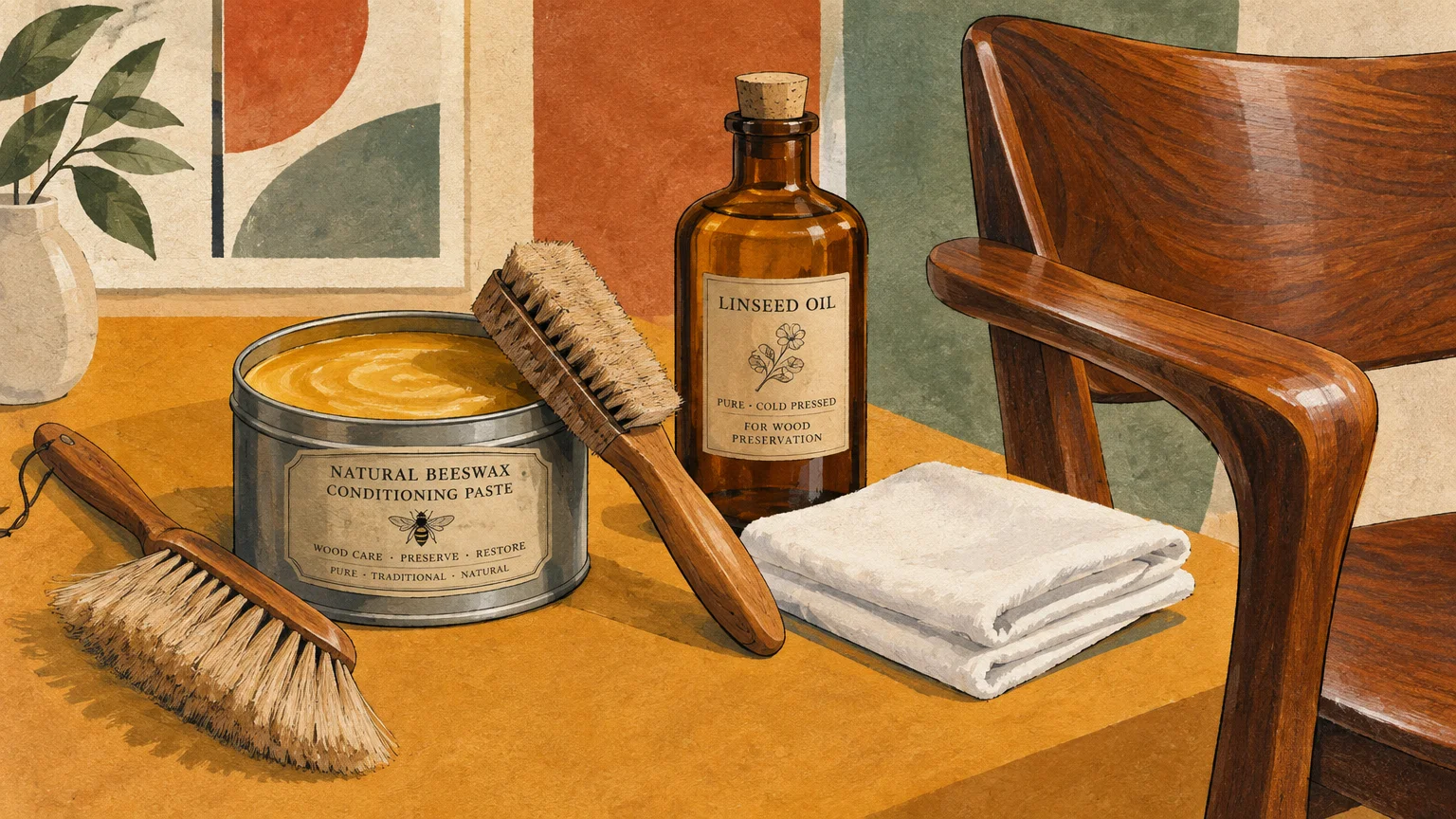
Condition solid wood case goods from Baker, Henredon, and Ethan Allen twice a year using pure paste wax or beeswax polish. Always apply wax in the direction of the wood grain and buff gently with lint-free flannel.
Dust delicate Japanese washi paper on Noguchi Akari lamps using a soft goat-hair makeup brush. Never apply damp cloths or liquid sprays to paper shades, as moisture causes irreversible water staining and paper sagging.
Clean Murano glass chandeliers using soft microfiber gloves and ammonia-free glass cleaner sprayed directly onto the cloth. Spraying cleaners directly onto the fixture can penetrate brass sockets, creating dangerous electrical shorts.
FAQ
How do I confirm an Eames Lounge Chair is genuine rather than a reproduction?
Inspect the underside of the molded plywood seat shell for official manufacturer labels from Herman Miller or Vitra. Genuine modern versions feature five legs on the chair base and four legs on the ottoman, all set at gentle angles.
Authentic vintage shells measure roughly 32 inches in height and feature exposed cast-aluminum spacers connecting the backrests. Counterfeits frequently display incorrect proportions, visible screw heads on shell exteriors, or non-functional mechanical reclining levers.
Does reupholstering an iconic vintage piece damage its resale value?
Reupholstering can reduce secondary market value if you discard rare original factory coverings or use inappropriate modern textiles. However, replacing severely degraded, unusable foam with archival materials preserves the underlying structural frame.
If reupholstery becomes necessary, source licensed textiles directly from original manufacturers like KnollTextiles or Maharam. Retain all original manufacturer labels and document the restoration process to provide provenance for future buyers.
Why are heritage case goods from Baker and Henredon surging in secondary demand?
Baker and Henredon represent exceptional benchmarks of twentieth-century American cabinetmaking, featuring solid hardwoods, exotic burl veneers, and hand-fitted dovetail joinery. Producing equivalent craftsmanship with premium timber today carries astronomical retail costs.
Secondary market buyers recognize that vintage Baker and Henredon pieces offer superior durability compared to mass-market particleboard case goods. Their solid wood construction can be cleaned, conditioned, and refinished across generations.
What makes tubular steel Bauhaus designs like the Wassily Chair appreciate over time?
Bauhaus designs engineered by Marcel Breuer and Mies van der Rohe represent foundational milestones in modern architectural history. Their minimalist geometry transcends passing interior fads, allowing them to integrate into both historic and contemporary spaces.
Continuous licensed production by Knoll maintains global collector interest and clear resale price benchmarks. Authentic examples with stamped signatures and verified serial numbers consistently attract competitive secondary bidding.
Which iconic lighting fixtures hold the greatest long-term value?
Hand-blown Murano-glass chandeliers and Isamu Noguchi Akari paper light sculptures hold the highest value retention and designer demand. In recent designer surveys, Murano fixtures captured 27% of designer votes, while Akari lamps secured 16%.
Both lighting styles function as legitimate art installations within residential interiors. Their handmade fabrication methods ensure that supply remains limited compared to mass-produced stamped-metal lighting fixtures.
Takeaway & Next Steps
Investing in timeless furniture and decor classics protects your household budget against fast-furniture depreciation. You elevate daily living comfort while building a versatile collection of physical assets that maintain real financial value.
By learning to authenticate construction markings, joinery details, and licensed manufacturer stamps, you shop secondary marketplaces with confidence. These twenty classics anchor your home with enduring beauty while reinforcing a more sustainable, circular design economy.
Begin by evaluating your existing furniture to identify fast-furniture pieces ripe for replacement with verified heirloom classics. Upgrading room by room allows you to invest deliberately in authenticated pieces without straining your annual budget.
Next, set up automated search alerts on curated resale platforms like Chairish and 1stDibs for specific target models. Tracking sold listings helps you establish realistic price expectations before attending local estate sales or auctions.
Finally, assemble your home inspection kit with a jeweler loupe, digital caliper, and high-CRI flashlight. Inspecting joinery and hardware in person ensures every acquisition delivers lasting structural integrity and resale potential.
Have you scored a verified design classic at an estate sale or antique market? Share your project photos with our editorial team or subscribe for weekly renovation ideas and expert sourcing strategies.