

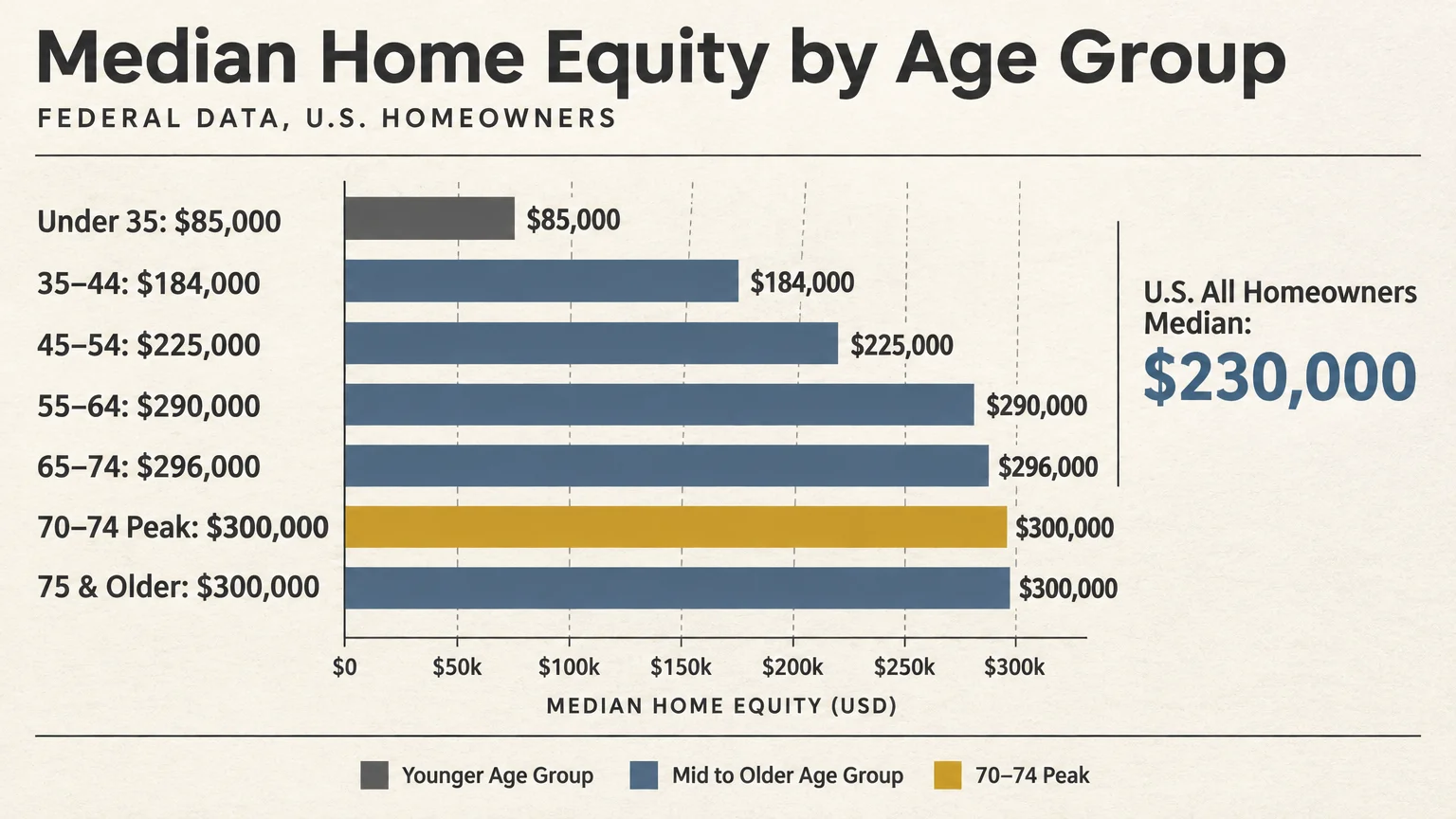
At 72, your home likely represents the single largest pillar of your financial security. Federal data shows homeowners aged 70 to 74 hold a median of $300,000 in home equity—peaking higher than younger age groups.
Knowing exactly where you stand helps you turn housing wealth into safer, easier everyday living. Whether you own free and clear or carry a remaining balance, you can benchmark your position today and plan strategic whole-home upgrades with confidence.
Compare your numbers against national retiree benchmarks, audit your property systems, and decide how to put your equity to work.
Project Overview: Benchmarking Home Equity at 72 and Why It Matters
Home equity equals your primary residence’s market value minus any mortgages or home equity lines of credit. Tracking that number at 72 gives you a clear baseline before you plan remodeling projects or adjust your retirement cash flow.
Because your house doubles as both shelter and stored capital, understanding your standing protects your independence. You gain the clarity needed to fund practical layout improvements without jeopardizing your long-term budget.
Where Home Equity at 72 Stands Today
According to the Federal Reserve’s 2025 Survey of Consumer Finances, released October 9, 2026, homeowning families headed by someone aged 65 to 74 hold a median home equity of $296,000. Their mean, or average, home equity reaches $443,500 in 2025 dollars.
Data from the U.S. Census Bureau’s 2025 Survey of Income and Program Participation narrows that age bracket even further. Released July 15, 2026, the report shows median home equity peaking at $300,000 for homeowners aged 70 to 74.
That 70-to-74 benchmark sits notably above the $277,000 median for all homeowners aged 65 and older. It also outpaces the $220,000 median across all U.S. homeowners in the same Census dataset.
Property values among older owners often reflect long-term ownership in established neighborhoods. Based on 2024 American Community Survey 1-year estimates, the median home value for owners aged 65 and older is $339,600—just $21,000 below the $360,600 national owner-occupied median.
Average Home Equity by Age
Looking at average home equity by age reveals how decades of principal payments and appreciation compound over time. Homeownership rates also climb steadily with each passing decade in the 2025 Survey of Consumer Finances.
Homeowners under 35 hold a median equity of $85,000 and a mean of $134,100, with 35.6% owning a home. By ages 35 to 44, homeownership jumps to 61.2%, pushing median equity to $184,000 and the mean to $275,400.
Between ages 45 and 54, ownership rises to 69.8%, while median equity reaches $225,000 and mean equity climbs to $370,500. Homeowners aged 55 to 64 reach a 73.6% ownership rate, holding $290,000 at the median and $446,300 on average.
For the 65-to-74 bracket that includes age 72, homeownership stands at 79.8% alongside $296,000 in median equity and $443,500 at the mean. Homeowners 75 and older reach an 82.3% ownership rate with $300,000 in median equity and a $497,200 average.
Across all U.S. homeowners combined, the ownership rate sits at 65.6%, with $230,000 in median equity and $380,400 at the mean. High-value homes pull every age group’s average well above its median.
In fact, the ICE Mortgage Monitor reported on November 9, 2026, that a record 2.4 million mortgage holders now carry $1 million or more in equity. Comparing yourself to the median gives you a far more realistic yardstick than the mean.
Retiree Net Worth and Housing Wealth in Retirement
Your home equity forms a vital slice of overall retiree net worth, though its exact share depends on your broader savings. In the 2025 Survey of Consumer Finances, all families aged 65 to 74 hold a median net worth of $431,300.
Their mean net worth reaches $1,897,600, skewed upward by top-tier investment portfolios. Families aged 75 and older hold the highest median net worth of any bracket at $504,900, alongside a $1,962,200 mean.
By comparison, all U.S. households hold a median net worth of $215,900 and a mean of $1,241,500.
Census Bureau Wealth of Households data reports $426,700 in median wealth for householders aged 70 to 74—2.1 times the $204,900 national median—falling to $336,000 at 75 and older.
The gap between owning and renting remains dramatic across retirement. Analysis from the National Association of Home Builders on November 18, 2026, shows U.S. homeowners hold a $458,900 median net worth—roughly 43 times the $10,600 median net worth of renters.
Primary residences account for over one-quarter of total U.S. household assets, totaling $47.2 trillion in aggregate value.
Among households aged 65 to 74, the median share of wealth held in home equity ranges from 40% for the lowest-income tier to 15% for the highest-income tier.
For households aged 75 and older, that share spans 62% to 16% across income groups.
Aggregate housing wealth for seniors aged 62 and older surpassed $15 trillion for the first time in Q2 2026, reaching a record $15.34 trillion according to the NRMLA/RiskSpan Reverse Mortgage Market Index.
Nationally, Federal Reserve Financial Accounts data shows total owners’ equity in household real estate hit $35.8 trillion in that same quarter. Housing wealth in retirement clearly underpins stability for millions of families.
Mortgage-Free Ownership vs. Carrying a Balance at 72
You do not need a zero balance to stand on solid ground at 72. September 2026 data from the National Association of Home Builders shows 58% of homeowners aged 65 to 74 own free and clear, up from 41% for ages 55 to 64.
Across all homeowners aged 65 and older, 2024 American Community Survey figures confirm that 63.7%—or 18,833,872 households—carry no mortgage at all. Still, 10,731,833 older households continue paying a mortgage or home equity loan.
Q3 Advisors tabulations of the 2025 Survey of Consumer Finances (October 26, 2026) show 43.1% of homeowners aged 65 to 79 carried a mortgage or HELOC, up from 41.1% in 2022. The median balance among mortgaged 65-plus households is $114,000.
Even with a loan, older borrowers generally maintain substantial cushions. Cotality reported on September 10, 2026, that mortgaged homeowners hold an average of $310,000 in housing wealth at a 44% loan-to-value ratio, with only 2.1% underwater.
ICE Mortgage Monitor adds that mortgaged owners collectively held $17.5 trillion in equity in the third quarter of 2026. That translates to an average of $204,000 in tappable equity above a standard 20% equity cushion.
Tools, Materials, and Prep Checklist for Your Home Equity Audit
Treat your financial and physical home review like a weekend workshop project. Gathering the right records and inspection tools upfront prevents surprises when you price whole-home upgrades or talk with lenders.
Financial and Valuation Records
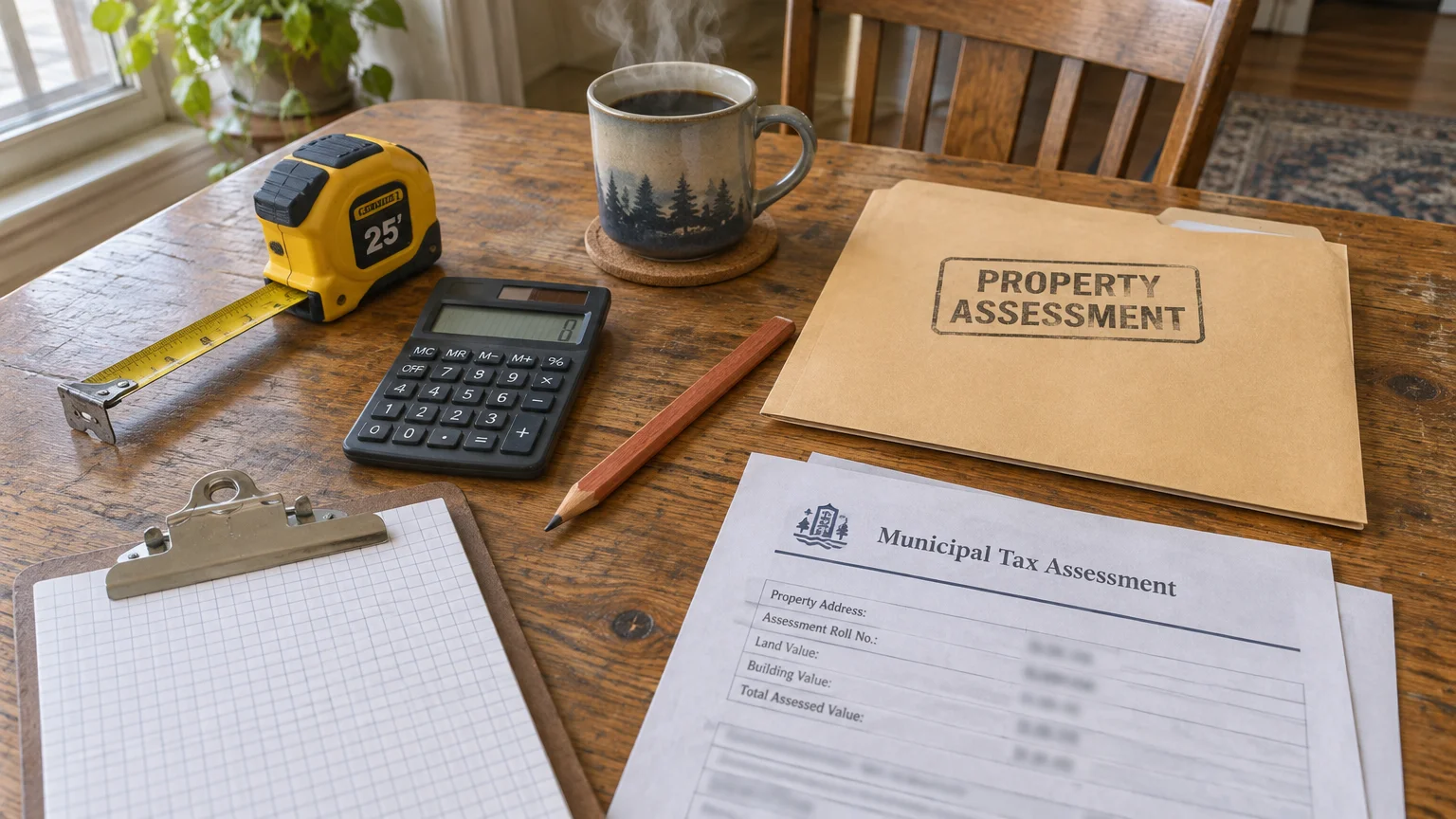
Pull your latest mortgage statement, any open HELOC summary, and your current property tax assessment. Having exact payoff numbers eliminates guesswork when calculating your true loan-to-value ratio.
Locate your homeowners insurance declarations page to verify your dwelling coverage matches current rebuilding conditions. Add a recent credit report to your folder, since standard national equity rate benchmarks assume a 620 or higher FICO score and an 80% loan-to-value ceiling.
Collect recent neighborhood sale sheets for homes with similar square footage, lot size, and bedroom counts. Pairing local comparable sales with your retirement income and expense ledger anchors your renovation budget in reality.
Physical Inspection Tools and Supplies
Assemble a basic inspection kit from your garage or a home center such as The Home Depot before walking your rooms. Pack a reliable tape measure, a bright LED flashlight, a handheld moisture meter, and a plug-in GFCI outlet tester.
Bring a clipboard, graph paper, and painter’s tape to mark clearances or future grab-bar locations directly on walls. A simple carpenter’s level also helps you spot sloped thresholds and uneven patio transitions that create trip hazards.
Observe a strict safety rule during your walk-through: never climb extension ladders onto the roof or haul yourself into tight attic hatches alone. Leave high-altitude and crawlspace inspections to a partner or a licensed home inspector.
Whole-Home Systems Prep
Walk every primary living area—entryways, kitchen, main-floor bath, hallways, and laundry zone—during daylight and again after dark. Note tight turns, dim switches, slippery surfaces, and doorways that impede smooth movement.
Check the label inside your main electrical panel, the manufacture date on your water heater, and service tags on your heating and cooling equipment. Catching aging mechanical systems early stops you from spending equity on finishes right before a major system fails.
Step-by-Step Instructions to Calculate Your Standing and Leverage Equity
Once your records and inspection notes sit on the table, follow a three-phase process to see where you stand and plan smart improvements. Take each phase slowly so your numbers stay accurate and your living spaces stay safe.
Phase 1: Calculate Your Net Equity and Tappable Cushion
Start by estimating your home’s conservative fair market value using recent comparable sales in your immediate neighborhood. Avoid relying solely on automated online valuations that ignore your home’s interior condition or deferred maintenance.
Subtract every dollar you owe on primary mortgages, second liens, and home equity lines of credit. The remainder represents your net home equity—the figure you can compare directly against the $300,000 median for ages 70 to 74.
Next, divide your total loan balances by your estimated home value to find your loan-to-value ratio. To find your tappable equity, multiply your home’s market value by 80% and subtract your remaining loan balances from that number.
Keeping at least a 20% equity cushion shields you against local price dips and qualifies you for standard lender terms. Remember that mortgaged borrowers nationwide average $204,000 in tappable equity above that 20% buffer.
Troubleshooting tip: if your neighborhood comps sit far below the $339,600 median value for older homeowners, do not stretch your equity estimates upward. Hire an independent, state-licensed appraiser before applying for financing or signing major remodeling contracts.
Phase 2: Match Your Project Scope to the Right Funding Path
Before borrowing against your home equity for seniors, review your liquid cash reserves. Paying cash for modest safety and lighting updates keeps your monthly housing costs low when borrowing rates sit near multi-year highs.
When larger layout changes require financing, compare current benchmarks carefully. On November 19, 2026, Mortgage Research Center figures via Fortune put national averages at 8.100% for a HELOC, 8.324% for a 10-year home equity loan, and 8.345% for a 15-year home equity loan.
Bankrate’s November 18, 2026, lender survey puts the average home equity loan rate slightly higher at 8.70%. A fixed-rate home equity loan locks in predictable monthly payments, whereas a HELOC offers flexible draws with a variable rate.
If you consider a traditional cash-out refinance instead, compare those figures against Freddie Mac’s Primary Mortgage Market Survey from November 19, 2026. Freddie Mac puts the 30-year fixed-rate mortgage average at 7.28% and the 15-year fixed average at 6.66%.
Homeowners aged 62 and older can also evaluate an FHA-insured Home Equity Conversion Mortgage, commonly called a HECM reverse mortgage. For 2026, the FHA HECM lending limit—the maximum claim amount—stands at $1,249,125, up 3.25% from 2025.
A HECM converts housing wealth into a credit line, tenure payments, or lump sum without monthly principal and interest bills. You must complete mandatory HUD-approved housing counseling and stay current on property taxes and homeowners insurance.
Financial safety warning: never commit to a loan payment that forces you to skip prescriptions, defer home maintenance, or drain emergency savings. Always stress-test your budget against higher property taxes and utility bills before signing closing papers.
Phase 3: Scope Whole-Home Upgrades, Permits, and Pro Help
Aging-in-place upgrades require meaningful capital, so plan your scope before demo day. A June/July 2026 Urban Institute study found that homeowners aged 65 to 74 who completed accessibility upgrades in the prior two years had a median outlay of $36,500.
Divide your wishlist into essential functional upgrades—like main-floor bathing, widened traffic paths, and updated wiring—and optional cosmetic refreshes. Focus your equity dollars on layout adjustments and mechanical systems that add daily comfort and protect resale value.
Check with your city or county building office before moving walls, altering plumbing drains, or upgrading your electrical service. Following standards published by the International Code Council ensures your contractor pulls required permits and passes every municipal inspection.
Unpermitted remodeling creates serious safety hazards and stalls future home sales or estate transfers. Keep signed inspection sign-offs inside your financial folder alongside your warranty paperwork.
Know when to call licensed professionals instead of tackling heavy work yourself. Hire licensed electricians for service panels and dedicated appliance circuits, licensed plumbers for shower pan waterproofing and drain slopes, and structural contractors for load-bearing walls.
Troubleshooting tip: if contractor bids come in well above your target budget, phase the project over two years rather than cutting safety corners. Complete electrical, plumbing rough-ins, and in-wall blocking first, then schedule cabinetry and cosmetic finishes later.
Layout Adjustments and Finishing Touches That Protect Housing Wealth
Smart remodeling uses your equity to remove everyday friction without making your house look sterile or institutional. Blending universal design principles with clean, timeless finishes keeps your home inviting for guests and future buyers alike.
Budget-Friendly Updates That Deliver Daily Relief
Start with hardware and lighting changes that improve comfort across every room for minimal outlay. Replace round doorknobs with brushed-nickel or matte-black lever handles that open easily with an elbow or closed fist.
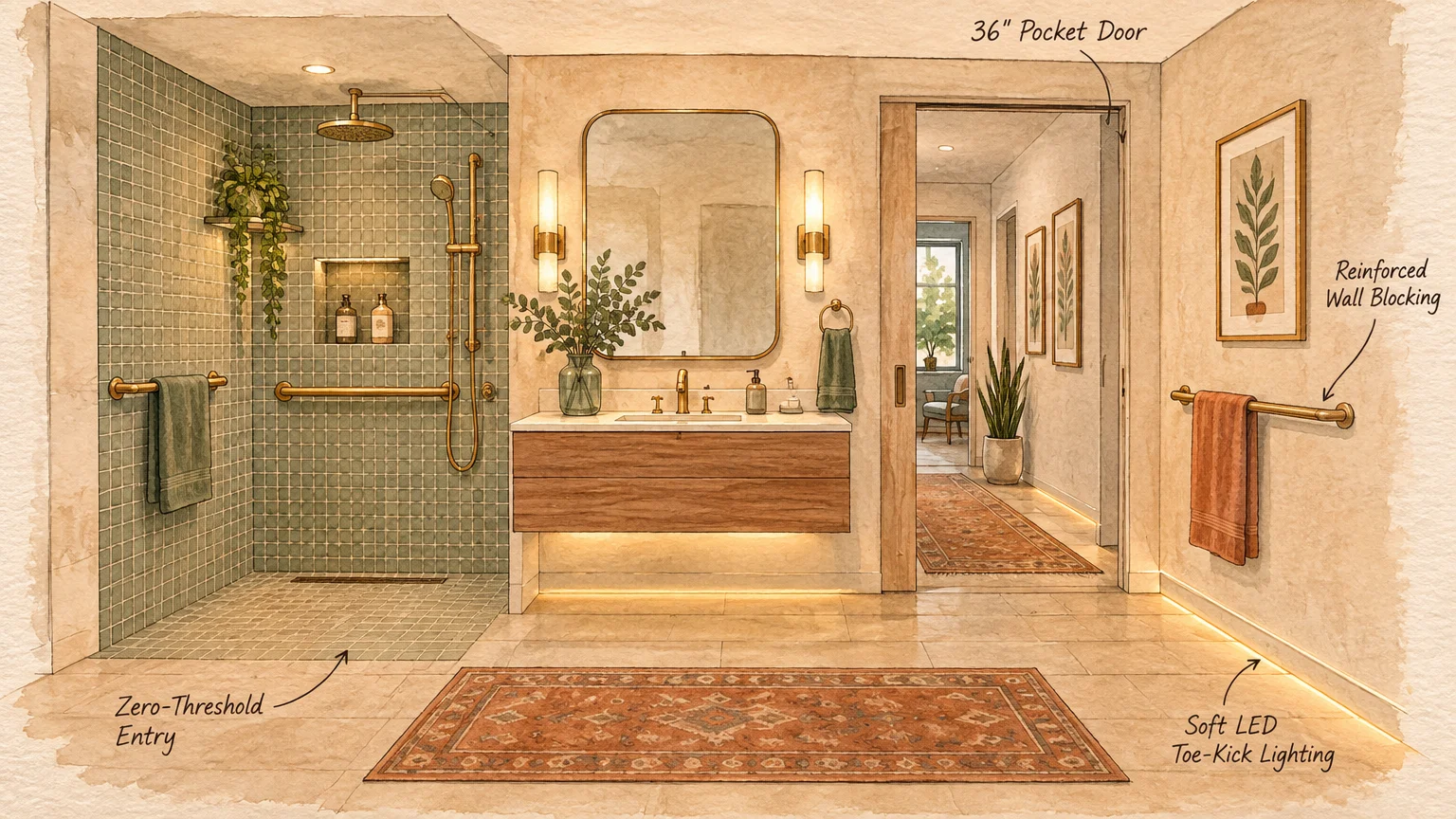
Swap narrow toggle light switches for wide rocker paddles and add motion-activated nightlights along hallways and bathroom toe-kicks. Install slip-resistant threshold ramps where hardwood meets tile or carpet so rolling carts and walkers glide smoothly.
Brighten work zones by placing warm, high-CRI LED fixtures under kitchen cabinets and over bathroom mirrors. Reducing shadows and harsh glare immediately lowers eye strain and prevents missteps.
Mid-Range Layout and System Improvements
When your equity supports a mid-sized project, target your primary bathroom and laundry workflow first. Replace high-walled tub-shower combos with low-threshold or curbless showers outfitted with handheld slide-bar sprayers and built-in bench seating.
Ask your contractor to install solid wood blocking between wall studs around the toilet and shower before closing the drywall. Even if you do not mount grab bars today, hidden blocking lets you anchor heavy-duty supports securely whenever needed.
Relocate stacked or front-loading laundry appliances from dark basement stairs into a main-floor hall closet or mudroom. Include a waterproof floor drain pan, braided stainless steel supply hoses, and easy-reach quarter-turn shutoff valves.
Whole-Home Remodels and Design Palettes
For larger equity-funded renovations, open tight interior sightlines and widen key doorways for effortless circulation. Pair soft, warm-neutral wall paints with contrasting trim and distinct stair nosing so depth changes stand out clearly.
Choose continuous, low-maintenance flooring such as matte-finish porcelain tile, engineered hardwood, or commercial-grade luxury vinyl plank across main living spaces. Eliminating thick, plush rugs and abrupt floor height changes creates a calm, cohesive aesthetic.
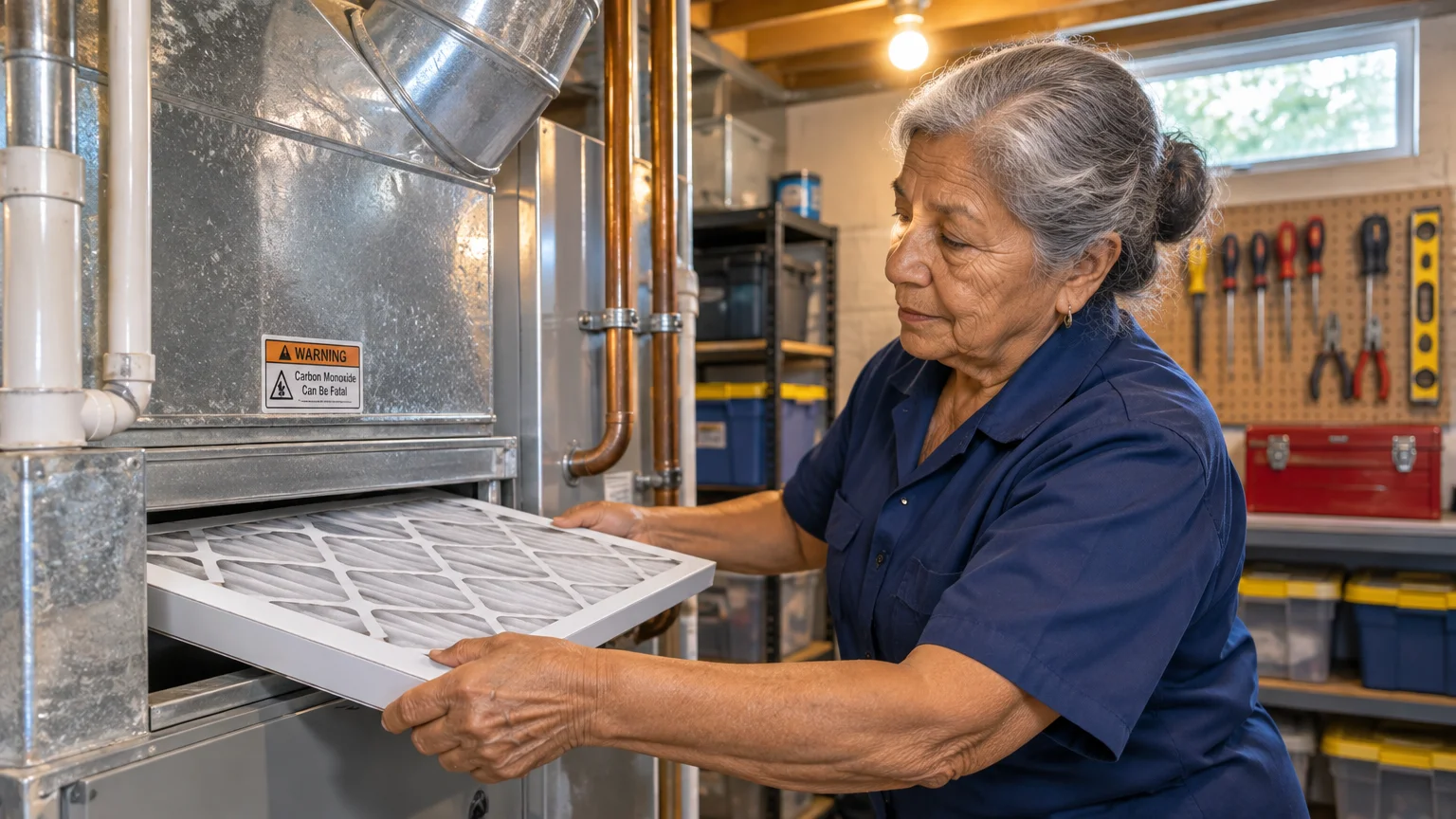
Upgrade aging furnaces and air conditioners to quiet, multi-stage systems or zoned heat pumps paired with large-display thermostats. Consistent indoor temperatures and cleaner filtered air elevate everyday comfort while signaling strong mechanical care to future appraisers.
Home Maintenance and Long-Term Care for Your Equity
Building $300,000 or more in home equity takes decades, yet neglected upkeep can chip away at that value surprisingly fast. A disciplined maintenance routine keeps repair bills predictable and protects your property’s market appeal.
Seasonal Property Upkeep That Preserves Market Value
Clean gutters and downspouts each spring and autumn so rainwater drains cleanly away from your foundation walls. Standing water near footings causes basement dampness, cracked slabs, and costly structural repairs.
Schedule annual service checks for your HVAC equipment and flush sediment from your tank water heater to extend system lifespan. Test smoke detectors, carbon monoxide alarms, and GFCI outlets twice a year alongside your clock adjustments.
Inspect exterior steps, concrete walkways, and deck railings after winter freezes to catch heaving pavers or loose fasteners early. Hiring a trusted handyman service for seasonal ladder work protects your joints and keeps your exterior crisp.
Tax Rules, Insurance, and Estate Stewardship
Review your homeowners insurance policy annually to verify that replacement-cost limits reflect current local labor and material rates. Staying properly insured is vital whether you own outright, pay a HELOC, or hold a HECM reverse mortgage.
If your long-term plan includes downsizing to a smaller home or single-level condo, review federal capital gains rules first.
Under IRS Section 121 in IRS Topic No. 701 (updated October 13, 2026), sellers who owned and lived in their primary home for at least 24 months of the preceding five years qualify for major relief.
Single filers can exclude up to $250,000 of capital gain from a qualifying sale, while married couples filing jointly can exclude up to $500,000.
Keep receipts for permanent capital improvements—such as roof replacements, layout remodels, and system upgrades—because they raise your tax basis.
If you plan to age in place permanently, consider how estate rules treat housing wealth. Homes passed to heirs at death generally receive a stepped-up tax basis equal to fair market value on the date of death, eliminating capital gains tax on lifetime appreciation.
Frequently Asked Questions About Home Equity at 72
What is the average and median home equity at 72?
Census Bureau data places median home equity at $300,000 for homeowners aged 70 to 74. Federal Reserve figures for the broader 65-to-74 group show a $296,000 median and a $443,500 mean, or average, in 2025 dollars.
Is it normal to still have a mortgage at 72?
Yes—carrying a balance into your seventies is common. While 58% of homeowners aged 65 to 74 own free and clear, 43.1% of owners aged 65 to 79 hold a mortgage or HELOC, with a $114,000 median balance among mortgaged 65-plus owners.
How much of my retiree net worth should be tied up in housing?
There is no single rule, and ratios vary widely by income. Among households aged 65 to 74, home equity makes up a median of 40% of net worth for the lowest-income group and 15% for the highest-income group.
Focus on maintaining enough liquid savings to cover daily living, medical needs, and home upkeep without feeling house-rich and cash-poor.
Should I use a HELOC, home equity loan, or reverse mortgage for renovations?
Your best fit depends on cash flow and timeline. HELOCs averaged 8.100% and 10- to 15-year home equity loans averaged 8.324% to 8.345% in mid-November 2026, requiring steady monthly payments.
An FHA-insured HECM reverse mortgage—capped at $1,249,125 in 2026—avoids monthly principal and interest bills while requiring HUD-approved counseling plus ongoing tax and insurance payments.
How much do aging-in-place upgrades typically cost at this age?
Costs vary sharply based on whether you adjust hardware or reconfigure whole rooms. Urban Institute research reports that homeowners aged 65 to 74 who completed accessibility upgrades over a two-year span posted the highest median outlay of any group at $36,500.
Takeaway and Next Steps
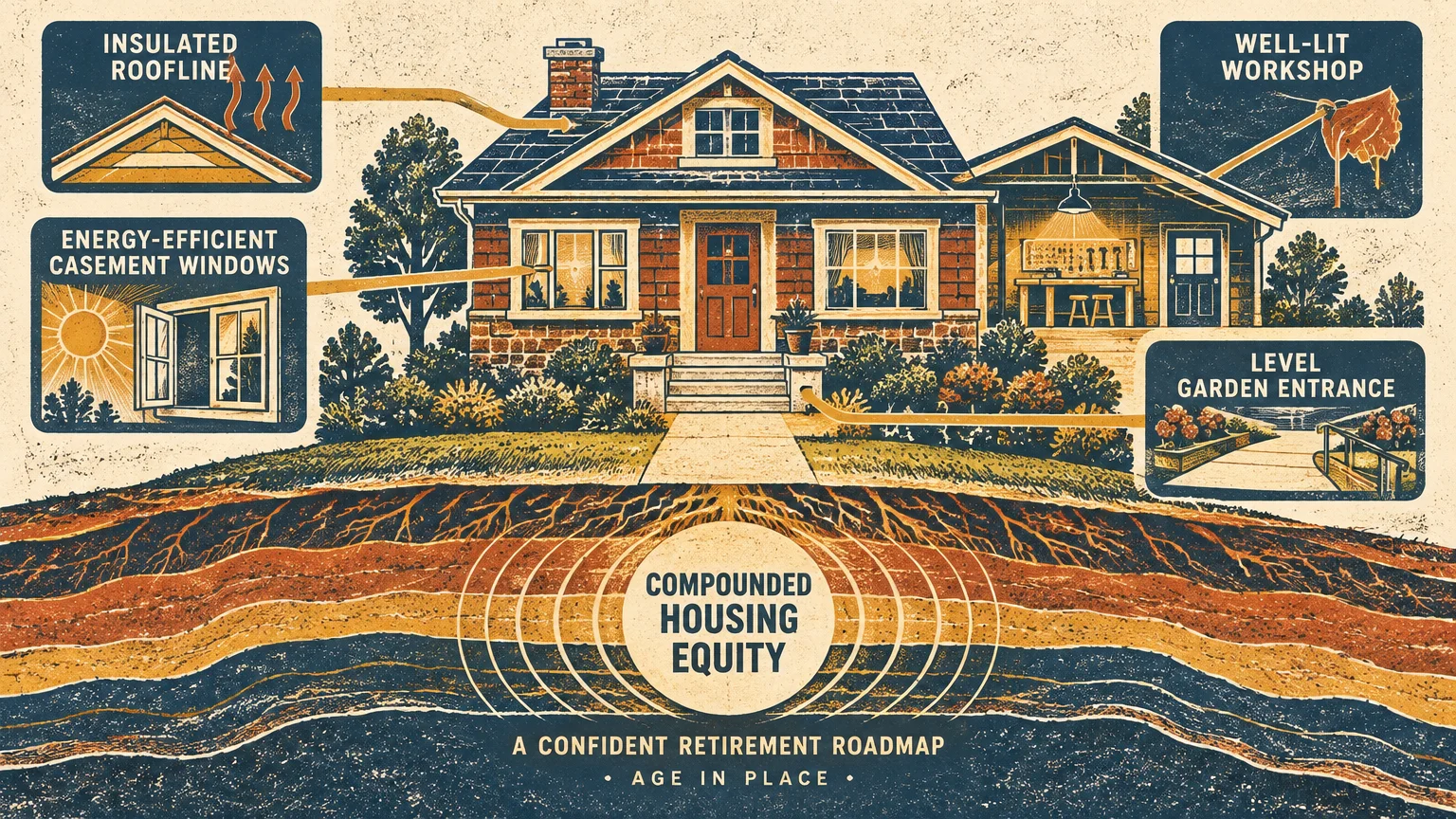
At 72, holding $296,000 to $300,000 in home equity puts you right alongside national retiree benchmarks. Treating that equity as a practical tool lets you tailor rooms, mechanical systems, and lighting for safer decades ahead.
Action 1: Audit your exact equity position. Gather your mortgage statements and local comparable sales today to calculate your net equity, loan-to-value ratio, and tappable cushion.
Action 2: Walk your home with a layout checklist. Measure main-floor doorways, test lighting levels, and inspect major mechanical tags so you prioritize high-impact safety upgrades over pure cosmetics.
Action 3: Vet funding and licensed pros before starting work. Meet with a HUD-approved counselor or fee-only financial planner if borrowing equity, and secure three permitted contractor bids for structural, electrical, or plumbing updates.
Have you recently completed a main-floor bath refresh, lighting upgrade, or layout project using your home equity? Share your project photos with our community, or subscribe to our newsletter for weekly, step-by-step renovation ideas built for everyday living.