Smart vegetable garden planning saves you months of frustration, stunted harvests, and wasted seedlings. Putting the wrong neighbors side by side invites shared blights, aggressive runners, and chemical warfare right beneath your mulch.
Knowing the plants not to grow together protects your yield and keeps your backyard beds looking sharp. You can spot and fix common companion planting mistakes in a single weekend using simple barriers.
Follow these seven pairings to separate right now, along with practical garden layout tips, containment steps, and seasonal care strategies that boost curb appeal.
Project Overview & Why It Matters
Reworking your garden layout eliminates costly gardening mistakes before planting day arrives. Instead of cramming every favorite crop into one crowded border, you create organized beds that look intentional from the back patio.
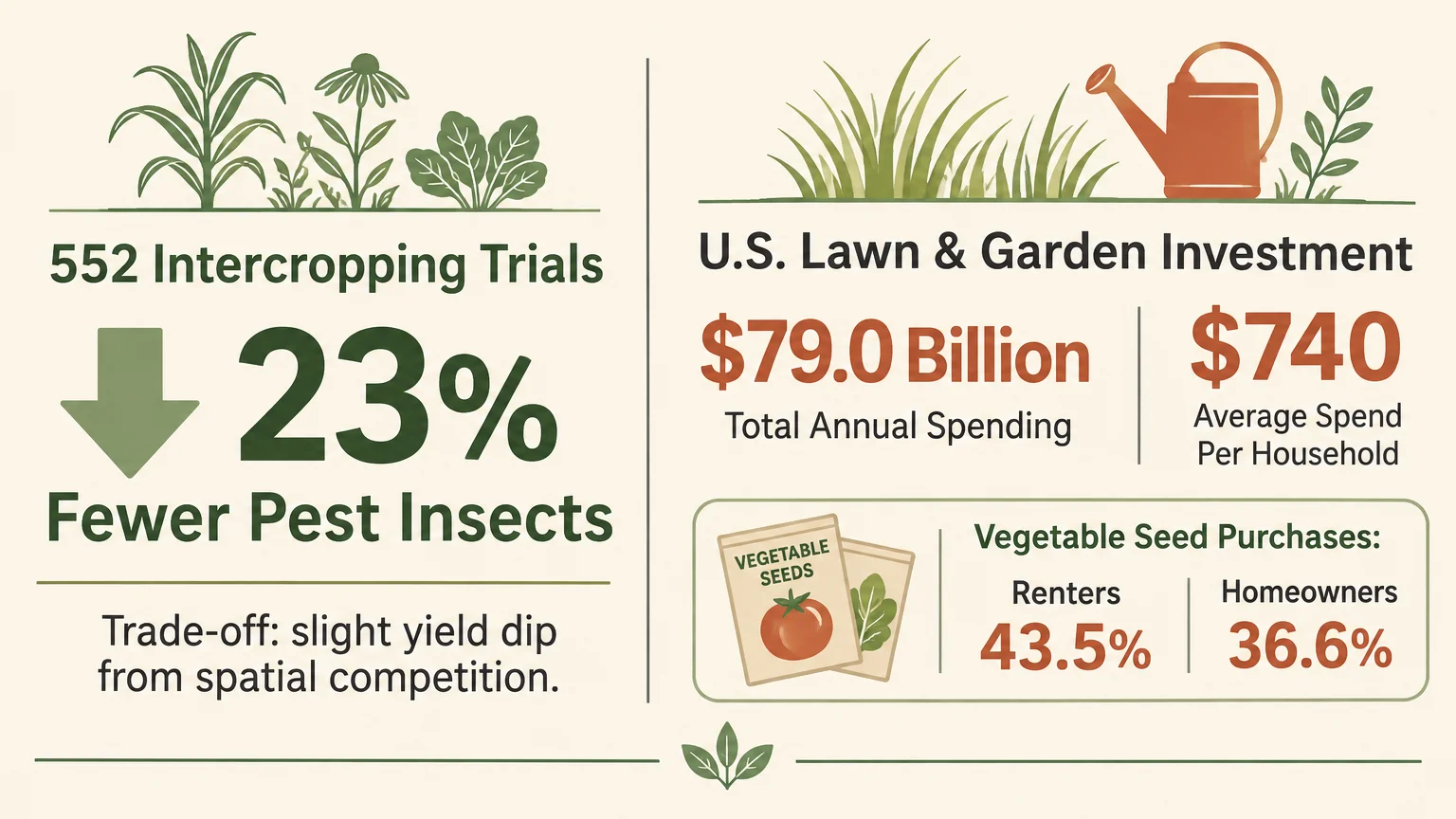
Homeowners are investing heavily in smarter outdoor spaces right now. According to the National Gardening Association, 79.2% of U.S. households took part in lawn and garden activities in 2025, down from 84.1% in 2024—about 4.5 million fewer households.
Even with fewer participants, total U.S. lawn and garden spending reached an all-time high of $79.0 billion, up 13.5% year-over-year. Average spending per gardening household climbed 18.3% to a record $740, according to the 2026 National Gardening Survey published May 19, 2026.
Small-space efficiency matters for every type of grower, too. Modern Sprout’s August 2026 Home Growing Report shows renters out-purchase homeowners in vegetable seeds (43.5% versus 36.6%) and herb seeds (32.7% versus 22.0%).
When every square foot counts, you cannot afford folklore. Washington State University (WSU) Extension and University of Arizona Cooperative Extension note that many popular companion charts come from gardening folklore rather than controlled, repeatable trials.
Science still proves that plant diversity helps. University of Minnesota (UMN) Extension notes that planting three or more species together generally reduces pest pressure better than single-crop rows.
A 2011 meta-analysis of 552 intercropping experiments by Letourneau et al. found that diverse plantings averaged 23% fewer pest insects. However, main-crop yields dipped slightly because of competition for space.
That is why your layout should focus on proven biological conflicts rather than myths. Separating allelopathic plants, shared disease hosts, shared insect magnets, and invasive perennials protects your budget and delivers cleaner, healthier beds.
Tools, Materials, and Prep Checklist
Gathering your layout gear ahead of time turns a messy weekend chore into a smooth outdoor upgrade. Most items are easy to reuse across every growing season.
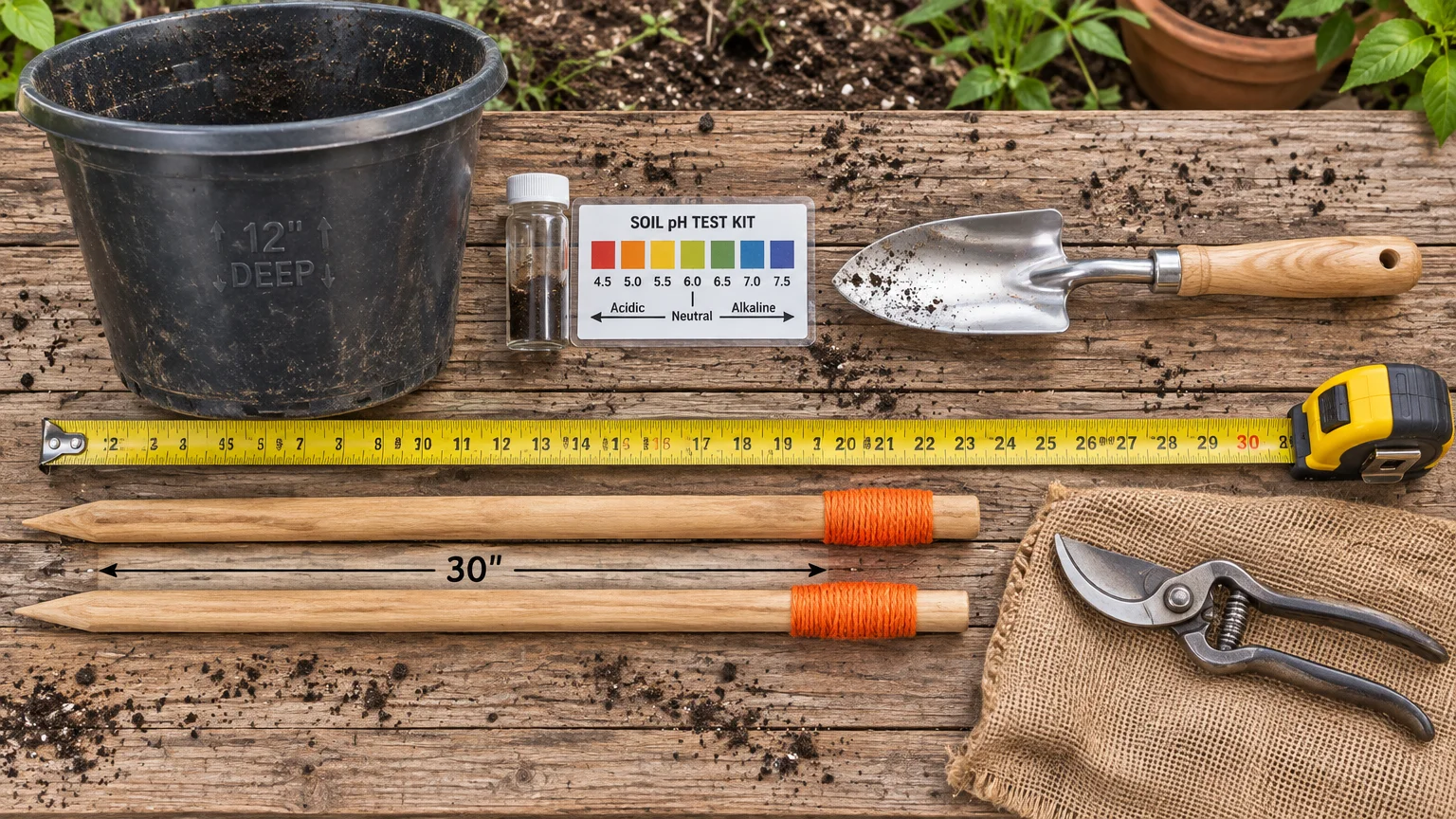
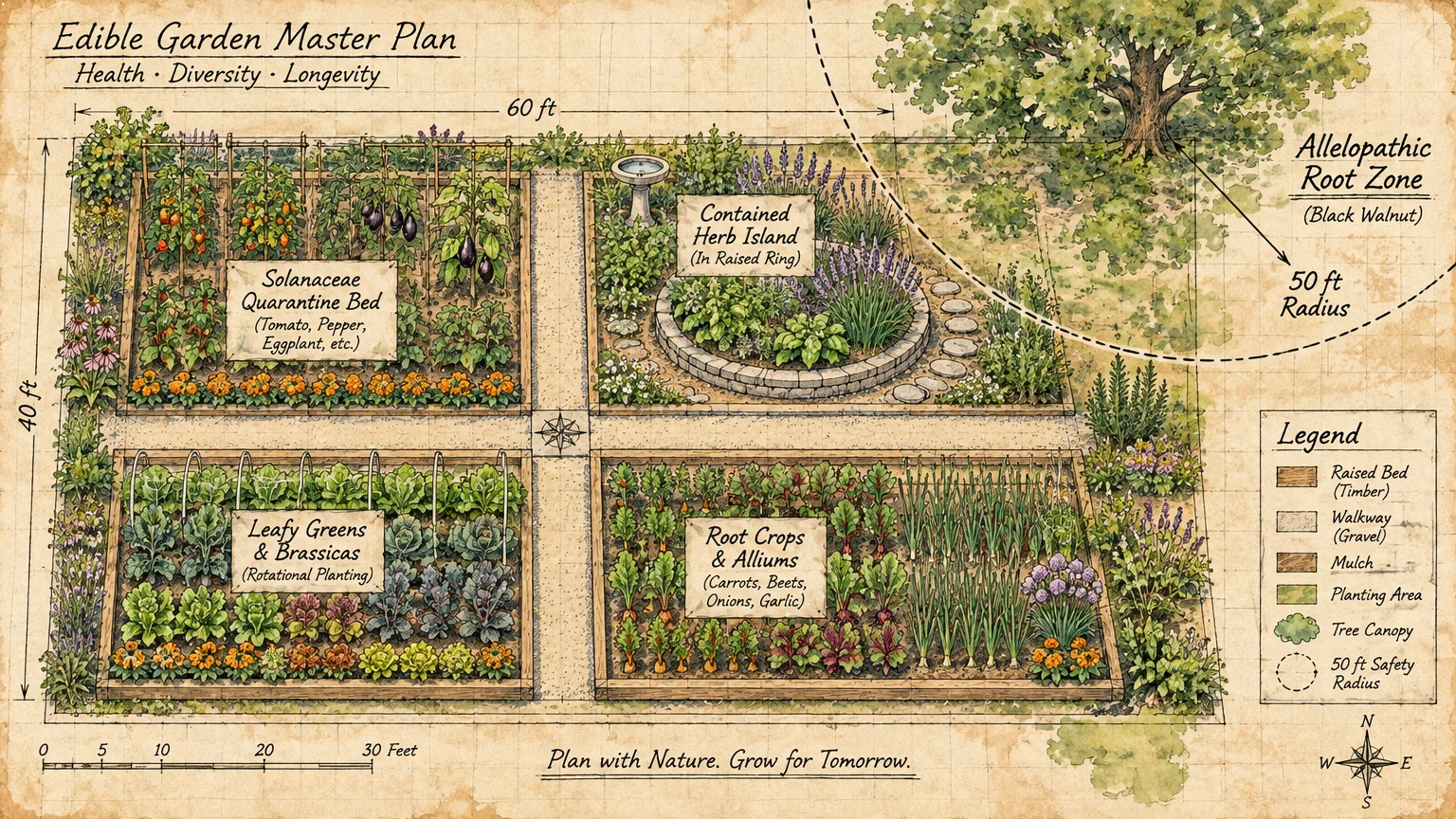
Long tape measure and wooden stakes with mason twine: You need enough length to map a 50- to 60-foot radius around large trees and mark crisp 30-inch-wide walkways between beds.
In-ground root barriers or large nursery pots: Choose rigid edging or heavy plastic pots deep enough to extend 10 to 12 inches below soil level for containing aggressive herbs.
Soil pH test kit or extension soil mailer: Checking soil acidity helps you identify neutral-to-alkaline beds (pH 7 to 9) where certain soilborne fungi thrive.
Raised bed framing materials: Pick rot-resistant cedar or galvanized steel panels for patio-facing borders, or build budget-friendly beds with untreated pine boards and thick cardboard pathways.
Garden spade, hand trowel, and bypass pruners: Keep sharp, clean tools ready for trenching root barriers, lifting sunken pots, and removing diseased leaves before spores spread.
Finished compost and clean potting mix: Stock enough fresh organic matter to top off separated beds and fill standalone patio planters for mint, fennel, and strawberries.
Gloves, eye protection, and utility flags: Wear sturdy boots and gloves while digging, and mark any buried sprinklers or shallow landscape lighting wires before you break ground.
Step-by-Step Instructions
Phase 1: Check Your Zone and Map Bed Distances
Start your vegetable garden planning by checking your local climate zone on the USDA Plant Hardiness Zone Map. The USDA Agricultural Research Service (ARS) and Oregon State University’s PRISM Climate Group released this update on November 15, 2023.
Based on 1991–2020 extreme minimum winter temperatures from 13,412 weather stations—up from 7,983 stations in 2012—the map uses 10°F zones and 5°F half-zones. Roughly half of the U.S. shifted to a warmer half-zone.
Next, walk your property with a clipboard and sketch every shade tree, lawn border, and existing bed. Note where water pools and which beds receive full afternoon sun.
Use West Virginia University (WVU) Extension’s spacing benchmark as your baseline rule. Plant crops with known detrimental relationships at least two to three rows apart, or separate them into distinct raised beds divided by 30-inch aisles.
Phase 2: Separate These 7 Plants You Should Never Plant Next to Each Other
1. Black Walnut and Nightshades (Tomatoes, Potatoes, Peppers, Eggplants)
Mature black walnut trees look majestic in a backyard, yet they wage silent chemical warfare underground. Purdue University Extension and Penn State Extension (updated February 16, 2026) report that black walnut (Juglans nigra) and butternut (Juglans cinerea) produce juglone.
Juglone is an allelopathic chemical that blocks plant respiration in sensitive neighbors. The compound exists throughout the entire tree, with the highest concentrations packed inside buds, nut hulls, and roots.
Wisconsin Horticulture, Kansas State University Extension, and Cornell Cooperative Extension note that the toxic zone typically spans a 50- to 60-foot radius from a mature trunk. That danger zone expands each year and can reach 80 feet.
Wisconsin Horticulture warns that yellowing, wilting, and death in tomatoes, potatoes, eggplants, and peppers can strike within a few days of transplanting. Cornell Cooperative Extension notes sensitive plants may be injured or killed within one to two months.
Even if you cut the tree down, juglone persists in the soil as old roots decay. Measure well past the drip line before staking out a new nightshade bed.
2. Tomatoes and Potatoes
Grouping tomatoes and potatoes together seems logical since both belong to the Solanaceae family, yet it creates a fast-moving disease corridor. UMN Extension, Purdue Extension, Cornell Cooperative Extension, and Virginia Tech Extension identify both crops as primary hosts for late blight (Phytophthora infestans).
Virginia Tech Extension (January 2026) explicitly lists tomato and Irish potato as incompatible neighbors. This destructive water mold favors cool, damp weather between 60°F and 70°F, according to UMN Extension.
Wind and rain splash carry microscopic spores straight from infected potato foliage onto nearby tomato leaves. Once late blight gains a foothold in a shared bed, both crops suffer simultaneously.
Michigan State University (MSU) Extension warns that aggressive strains such as US-22 can infect and kill plants within 10 days. Keep potatoes in a dedicated bed at the opposite end of your garden from tomato trellises.
3. Strawberries and Nightshades (Tomatoes, Potatoes, Peppers, Eggplants)
Tucking strawberries along the sunny edge of a tomato bed is one of the costliest gardening mistakes a homeowner can make. Penn State Extension (March 2026), NC State Extension, UC IPM, and University of Connecticut (UConn) IPM (July 2026) warn against pairing these crops.
Strawberries (Rosaceae) and nightshades share high susceptibility to Verticillium wilt (Verticillium dahliae and V. albo-atrum). Once this soilborne fungus enters a bed, removing it takes years of patience.
UConn IPM (July 2026) notes that Verticillium microsclerotia survive in soil for 10 to 15 years. The pathogen favors temperatures from 55°F to 85°F and thrives in neutral-to-alkaline soils measuring pH 7 to 9.
UC IPM reports yield losses up to 25% in susceptible potatoes and recommends rotating at least 3 years away from peppers, tomatoes, eggplants, and strawberries. Cornell Vegetables advises an even stricter 4- to 5-year rotation for Verticillium wilt.
Give your strawberry patch a permanent, isolated home in clean raised beds or hanging porch baskets. Never plant strawberries where nightshades grew in recent seasons.
4. Sweet Corn and Tomatoes
Planting tall sweet corn right behind your tomato cages creates a textbook pest bridge. Utah State University (USU) Extension, Wisconsin Horticulture, Penn State Extension, Oklahoma State University Extension, and Virginia Tech Extension confirm that corn earworm and tomato fruitworm are the exact same caterpillar (Helicoverpa zea).
Adult moths have a 1- to 1.5-inch wingspan and prefer laying eggs on fresh green corn silk. Purdue Extension and UMaine Extension note that each female lays several hundred eggs, which hatch in just 2 to 10 days.
Wisconsin Horticulture observes that late in summer, once corn husks dry and lose appeal, Helicoverpa zea migrates directly onto neighboring tomatoes and snap beans. One crop effectively raises the pest wave that ruins the next.
USU Extension reports that larvae feed for 10 to 14 days—tunneling into multiple tomato fruits—before burrowing 2 to 5 inches into soil to pupate. Place your sweet corn block far away from fruiting tomatoes, and inspect silks and green fruit weekly.
5. Fennel and Nightshades (Plus a Cross-Pollination Note for Dill)
Feathery bronze or green fennel looks stunning near a patio, yet its roots do not play nicely with vegetable neighbors. University of Arizona Cooperative Extension notes that fennel (Foeniculum vulgare) releases allelopathic chemicals that slow the growth of nightshade crops.
Virginia Tech Extension (January 2026) lists fennel directly as incompatible with tomatoes. Placing fennel next to tomato stakes can leave your vines spindly and unproductive all summer.
Keep fennel isolated in a decorative border pot or an outer perennial bed well away from tomatoes, peppers, and eggplants. You will still attract beneficial pollinators without stunting your main harvest.
If you save herb seeds, keep flowering fennel away from dill as well. Both herbs belong to the Apiaceae family and will cross-pollinate if they bloom at the same time, producing unreliable seed.
6. Sunflowers and Potatoes
Bordering a potato patch with cheerful sunflowers looks like a magazine cover, yet underground chemistry works against your tubers. Penn State Extension (September 2026) classifies sunflowers (Helianthus spp.) as allelopathic plants that release growth-suppressing compounds in home gardens.
University of Arizona Cooperative Extension warns against planting sunflowers with potatoes because those compounds inhibit full potato development. Virginia Tech Extension (January 2026) likewise lists sunflower as incompatible with Irish potato.
Fortunately, you do not have to banish sunflowers from your yard. A Cooperative Extension Ask Extension response (April 2024) explains that sunflower allelopathy stays confined to the specific soil bed where the plants grow.
Those compounds will not jump across a 30-inch aisle into neighboring raised beds. Grow sunflowers in dedicated border beds or along a back fence, separate from root crops.
7. Mint and Neighboring Herbs or Vegetables
Dropping a single nursery pot of mint into a mixed herb border quickly turns into a yard takeover. University of Georgia CAES Extension (September 2025) identifies mint (Mentha spp.) as the most invasive culinary herb and warns against planting it unconfined.
Its underground rhizomes race beneath mulch and choke out slower neighbors like thyme, parsley, and lettuce. Toronto Master Gardeners notes that mint is hardy to Zone 5 or lower and grows 60 cm (about 24 inches) or taller without regular trimming.
University of Georgia CAES Extension specifies that any in-ground root barrier must extend 10 to 12 inches deep into the soil. Shallow plastic lawn edging simply will not stop spreading mint runners.
For cleaner containment inside an existing bed, Purdue Extension recommends sinking a large pot with drainage holes into the soil. Leave 1 to 2 inches of rim above ground level so surface runners cannot leap over the edge.
Illinois Extension recommends placing mint inside a slightly smaller liner pot nested inside that sunken outer pot. That double-pot setup makes lifting and inspecting roots effortless.
Phase 3: Install Barriers, Check Safety, and Troubleshoot
Safety callout — locate utilities before trenching: Before digging 10- to 12-inch trenches for mint barriers or raised bed frames, contact Call 811 to mark underground gas, electric, and water lines. Never guess where utility conduits sit beneath turf.
If incompatible plants already share a bed this season, you do not need to rip everything out blindly. Focus on slowing disease transmission and managing airflow until fall cleanup.
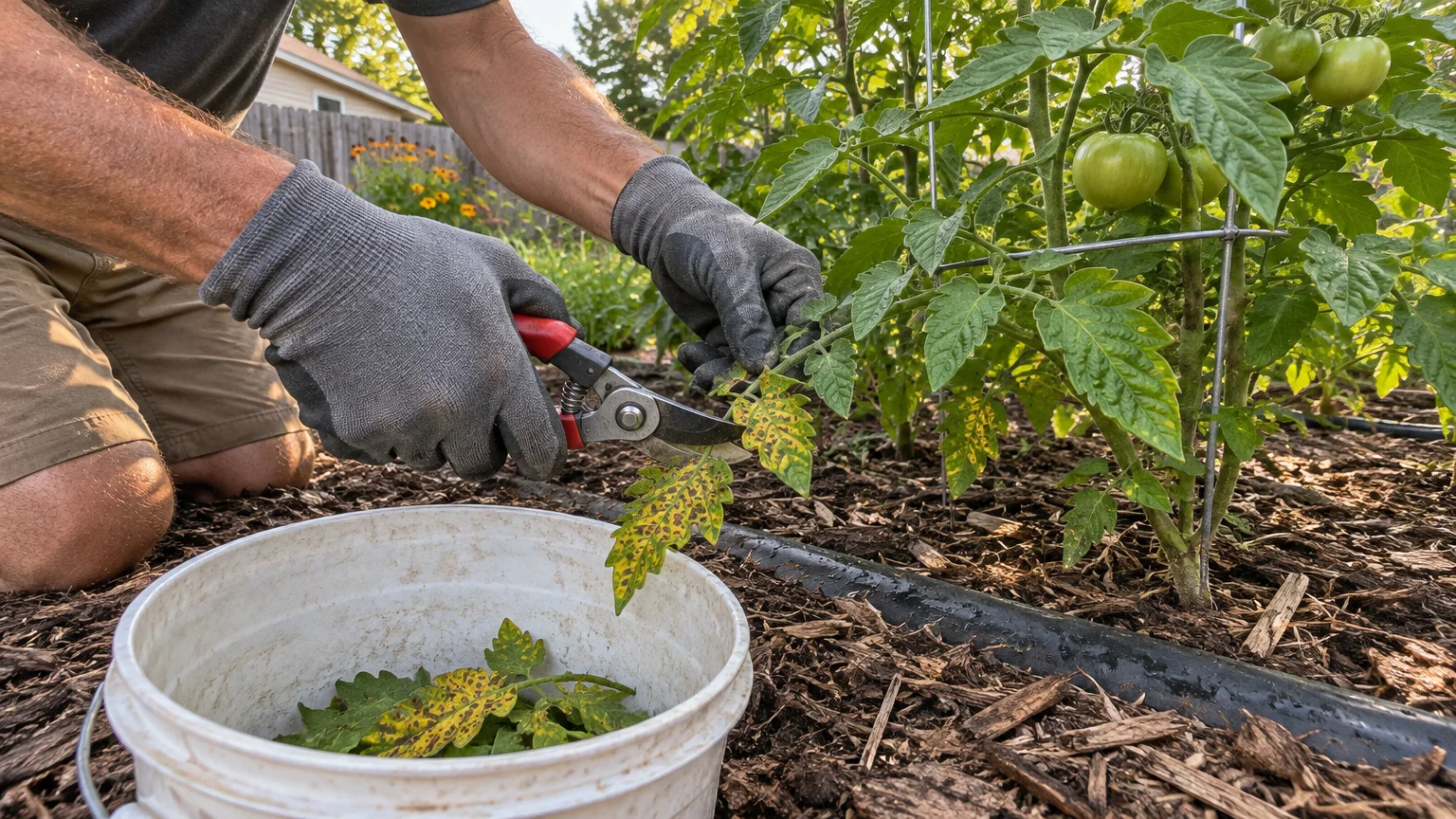
When tomatoes sit too close to potatoes, prune lower tomato leaves for better ventilation and switch from overhead sprinklers to ground-level watering. Bag and trash any spotted foliage right away instead of tossing it into your compost bin.
If nightshades sit near a black walnut tree and show sudden wilt, transplant young starts into clean, bottom-lined containers immediately. Know when to call a professional, too: hire a certified arborist for mature black walnut work or major root pruning.
Style & Finishing Touches
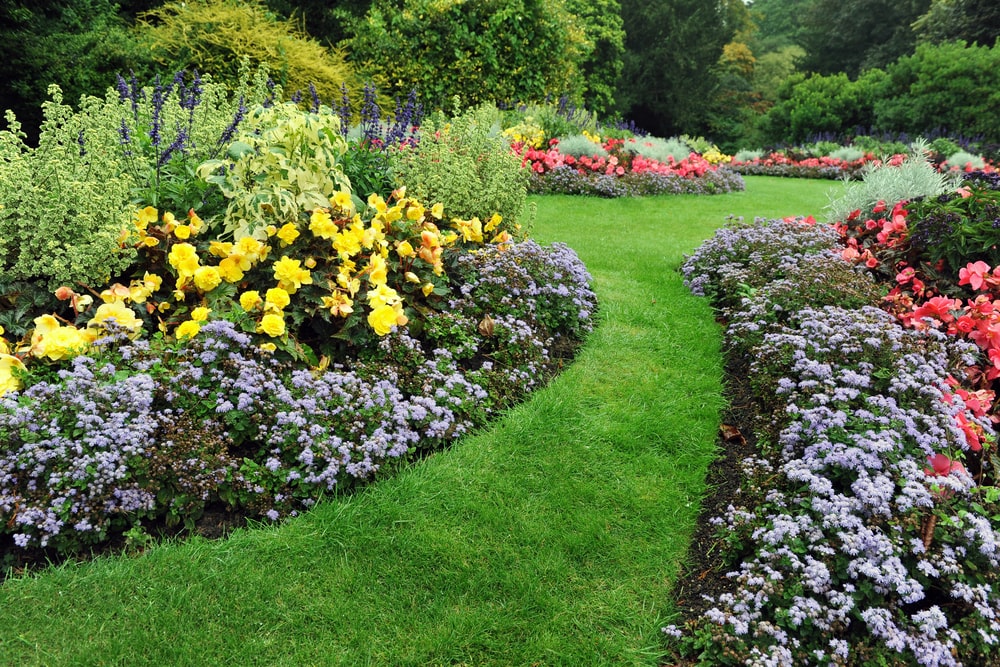
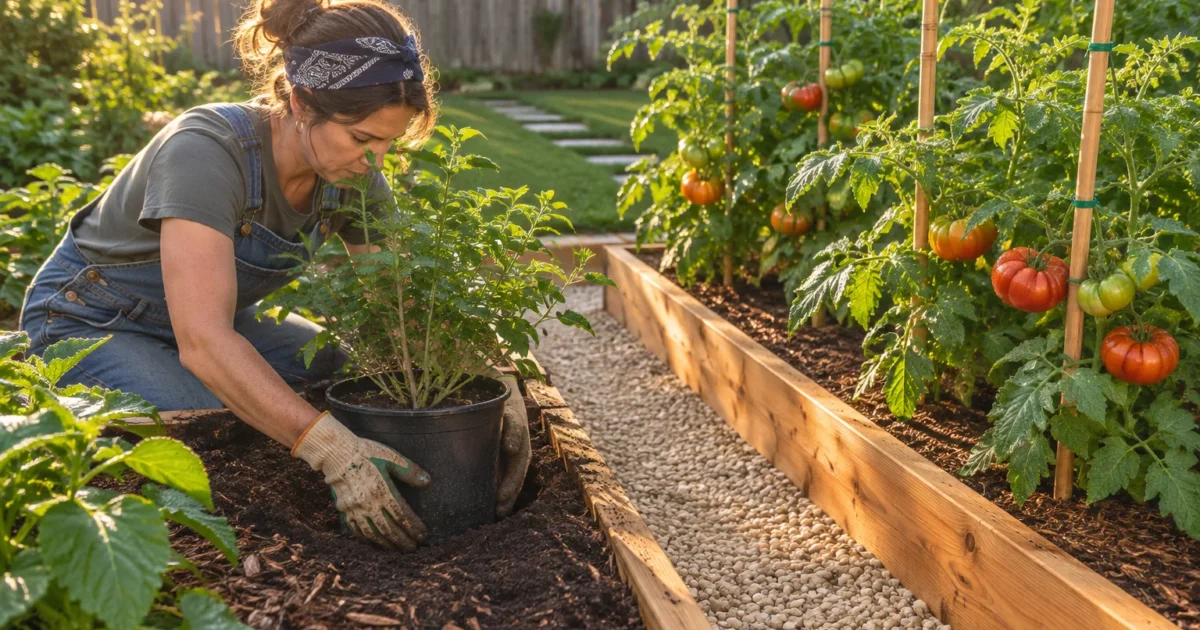
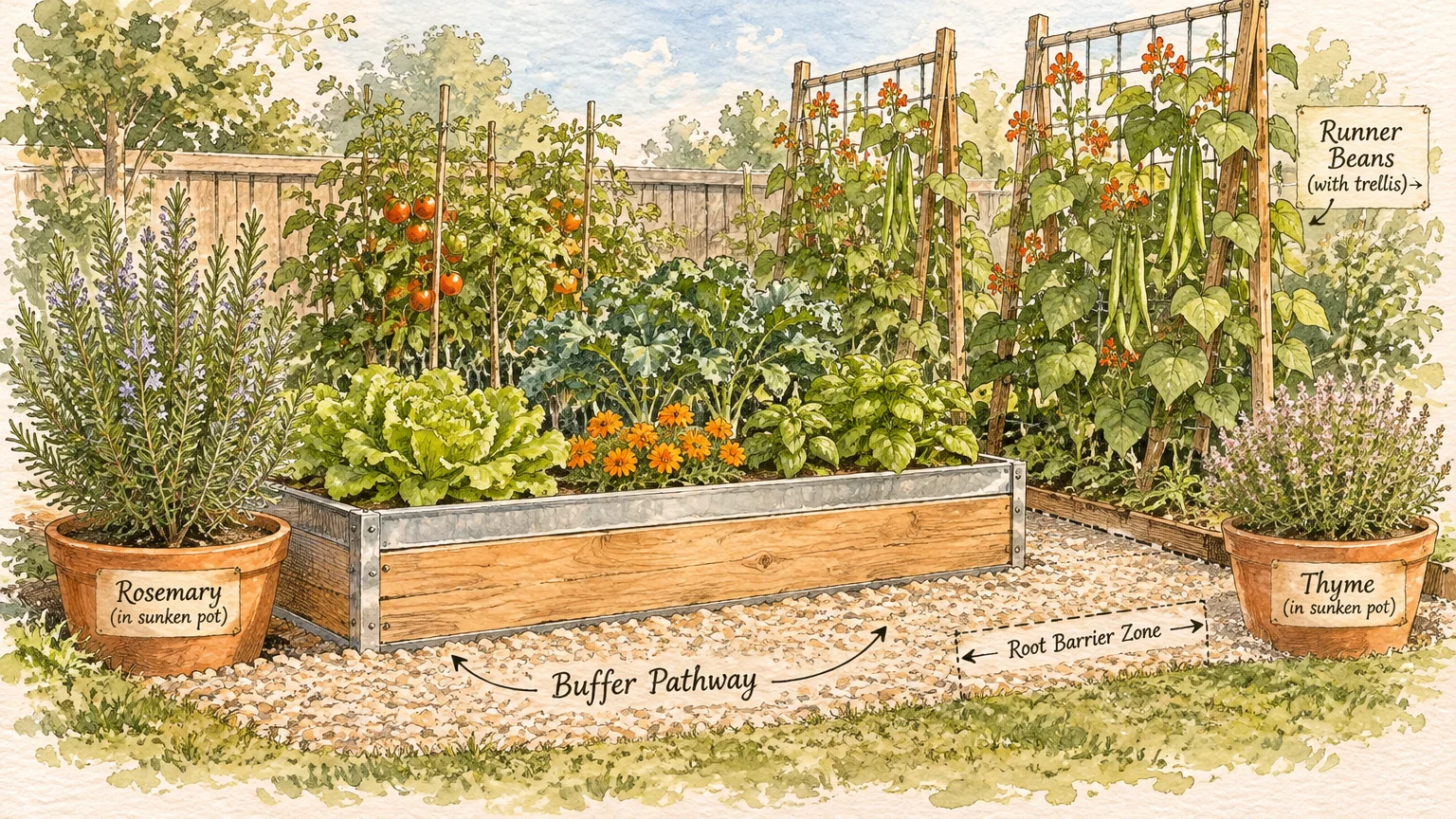
Fixing companion planting mistakes gives you an easy excuse to upgrade your yard’s visual structure. Clean geometric raised beds and crisp gravel walkways immediately turn scattered rows into an architectural focal point.
Use 30-inch aisles covered in crushed limestone, decomposed granite, or brick pavers between beds. Those wider walkways give you wheelbarrow clearance while physically blocking sunflower allelopathy from reaching adjacent potato beds.
Build cohesive color palettes around safe pairings instead of forcing incompatible plants together. Bright orange marigolds and lush green sweet basil frame tomato trellises beautifully while keeping fennel and corn elsewhere.
For a budget-friendly refresh, sink dark nursery pots with 1 to 2 inches of rim showing inside a dark bark-mulched herb bed to tame mint. Surround the border with flat river stones so the exposed pot rim blends naturally into the landscape.
If your budget allows a higher-end patio upgrade, move strawberries, bronze fennel, and culinary mint into matching glazed ceramic or powder-coated metal planters. Grouping containers by height along a sunny deck railing keeps runners contained and adds instant curb appeal.
Maintenance & Long-Term Care
Long-term success depends on tracking where each plant family grows from year to year. Sketch a quick bed map every spring and store it with your garden tools so you never repeat old placements.
University of Illinois Extension, Iowa State University Extension, and University of Saskatchewan recommend waiting at least 3 to 4 years before planting vegetables from the same botanical family in the same bed. Iowa State advises waiting 5 years or longer whenever space allows.
Stay proactive with sunflower beds each autumn. The April 2024 Ask Extension guidance notes that cutting and composting sunflower plants and roots in the fall allows natural decomposition and winter rain to break down most allelopathic toxins before spring.
Check your contained mint once every spring or fall. Following Purdue Extension’s routine, lift sunken pots annually to snip any wandering rhizomes poking through drainage holes or creeping over the rim.
Practice strict sanitation between beds during weekly pruning. Wipe shears with rubbing alcohol after trimming tomatoes, potatoes, or strawberries so you never carry blight or Verticillium spores from one bed to the next.
Watch soil chemistry closely if Verticillium wilt has ever appeared on your property. Test beds periodically and avoid over-liming soils into the pH 7 to 9 range where microsclerotia thrive.
FAQ
Should you really never plant onions next to beans or peas?
WVU Extension (August 2025), University of Arizona Cooperative Extension, and Virginia Tech Extension (January 2026) list onions and alliums as incompatible with beans and English peas because onions can stunt bean growth. Separating them by two to three rows is an easy precaution.
Still, WSU Extension and UMN Extension emphasize that controlled, peer-reviewed studies proving many traditional bad-companion pairings remain limited. Treat allium-and-legume separation as a low-effort safeguard rather than an absolute rule like walnut toxicity.
Can you grow tomatoes in a raised bed under a black walnut tree?
Planting directly into native soil within 50 to 60 feet—or up to 80 feet—of a mature black walnut risks rapid wilting from juglone. Even tall raised beds can fail if walnut roots grow upward into the clean soil mix.
If you have no sunny spot outside the root zone, build a closed-bottom raised bed or use large standalone patio planters on concrete or pavers. Rake dropped walnut leaves and hulls off those containers regularly so juglone does not leach downward.
How far apart do incompatible vegetable crops need to be?
In traditional row gardens, WVU Extension recommends planting crops with negative relationships at least two to three rows apart. That spacing reduces root competition and slows pest movement across short distances.
In raised-bed layouts, a 30-inch mulch or gravel walkway creates a clear separation for allelopathic crops like sunflowers. For airborne diseases like late blight between tomatoes and potatoes, place the beds on opposite sides of the yard.
How long does Verticillium wilt stay active in backyard soil?
UConn IPM (July 2026) reports that Verticillium microsclerotia survive in soil for 10 to 15 years without a host. Cool-to-warm soil temperatures (55°F to 85°F) and neutral-to-alkaline pH levels keep the fungus persistent.
Avoid planting strawberries, tomatoes, peppers, eggplants, or potatoes in affected beds for at least 3 to 5 years. Growing strawberries in fresh, sterile potting mix inside elevated planters lets you enjoy clean fruit safely.
What is the easiest way to keep mint from taking over a garden bed?
University of Georgia CAES Extension advises against planting mint loose in mixed beds because barriers must extend 10 to 12 inches deep to block rhizomes. The cleanest solution is a standalone patio pot sitting on stone, brick, or decking.
If you want mint visually nestled inside an herb bed, sink a large nursery pot leaving 1 to 2 inches of rim above soil level. Lift and inspect the pot yearly to catch sneaky runners early.
Takeaway & Next Steps
Smart garden layout tips do more than prevent stunted vegetables—they protect soil health for years and elevate your entire backyard design. By avoiding these seven incompatible pairings, you stop shared blights, pests, and invasive roots before they start.
Take three practical actions this week to upgrade your growing space:
1. Measure your yard: Mark a 50- to 60-foot buffer around any black walnut trees and lay out 30-inch walkways between raised beds.
2. Pot up aggressive herbs: Move loose mint and fennel into standalone patio containers or sunken pots with 1 to 2 inches of exposed rim.
3. Map a multi-year rotation: Sketch where nightshades, corn, strawberries, and sunflowers sit this season so each family rotates cleanly for the next 3 to 5 years.
Have you redesigned your raised beds or tamed an invasive herb corner recently? Share your project photos with our community, or subscribe to TheAmericanHouse.com for weekly outdoor living upgrades and practical home renovation ideas.