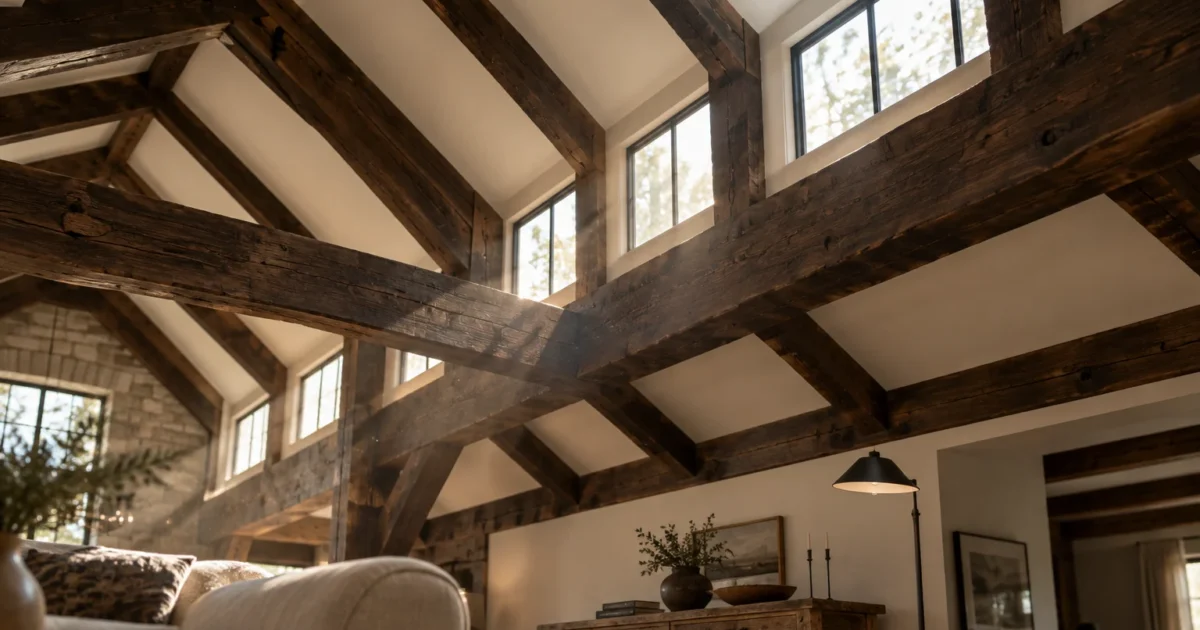
Dark wood beams add stunning architectural drama to any room, but pairing them with the wrong wall shade makes spaces feel heavy. The right paint color lifts your ceiling, highlights rich timber grain, and creates an inviting balance.
Selecting great paint colors with wood beams requires understanding undertones, light reflection, and contrast. You can easily transform your room from dark and dated to bright and sophisticated.
This guide presents twelve designer-approved shades, practical wall preparation techniques, and smart application steps. You will learn exactly how to balance your exposed timber while staying on budget.
Project Overview & Why It Matters
Exposed wood beams represent a timeless design feature in American homes. They anchor vaulted ceilings, bring organic warmth to living areas, and highlight authentic structural craftsmanship.
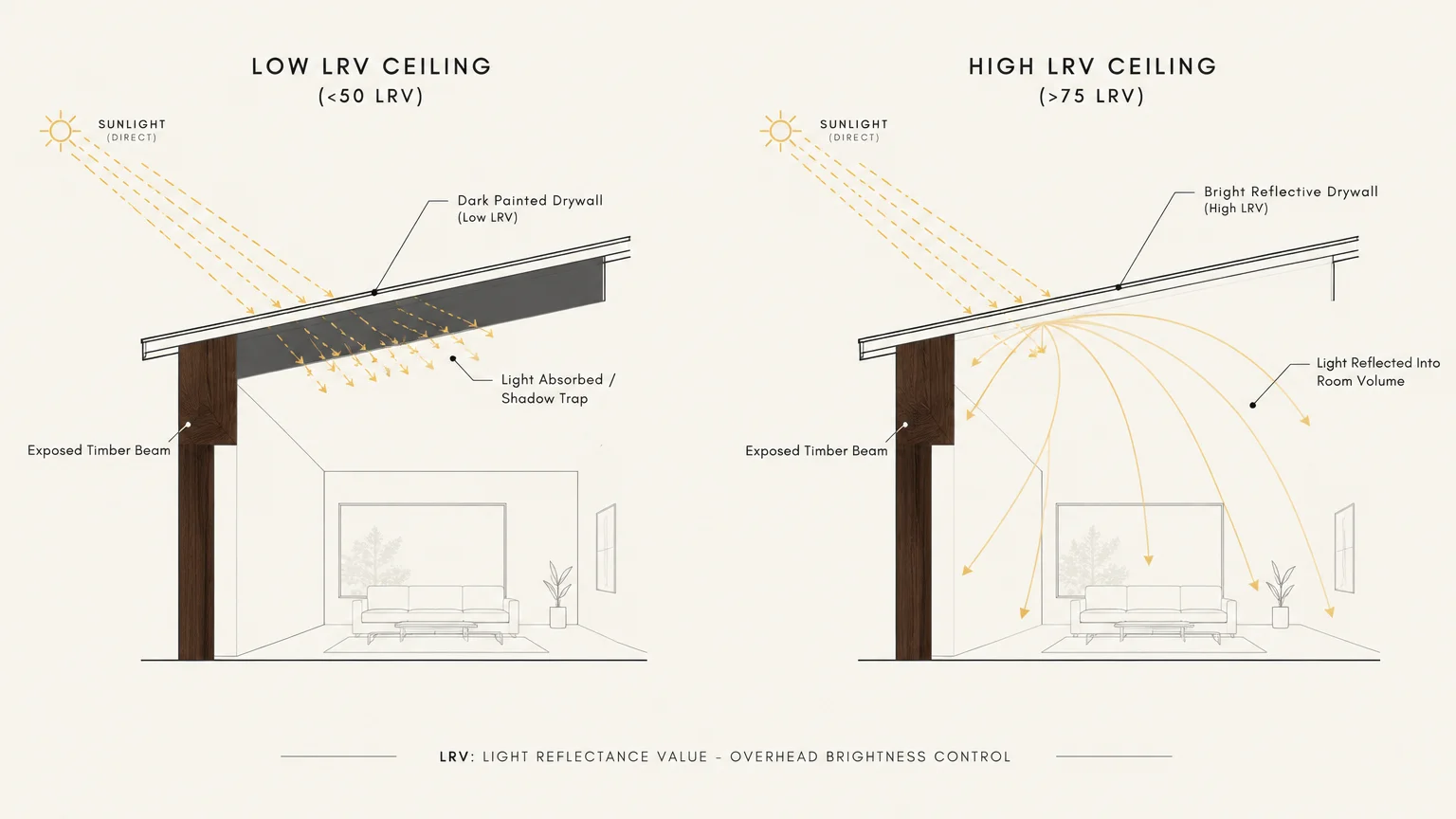
However, dark timber ceiling beams absorb significant amounts of ambient light. Without proper wall and ceiling colors, rooms with heavy rafters can quickly feel cramped and dark.
The right paint palette establishes visual equilibrium throughout the room. By framing dark timbers with strategic shades, you turn oppressive overhead weight into a striking architectural asset.
Choosing intentional dark wood beam ceiling colors also alters perceived room proportions. High-reflectance ceiling shades push surfaces upward visually, making standard eight-foot or ten-foot ceilings feel expansive.
Meanwhile, intentional wall colors bridge the gap between historic timber and contemporary furnishings. Whether your aesthetic leans toward modern farmhouse, Spanish revival, or mountain rustic, color ties the entire room together.
Evaluating the Light Reflectance Value, or LRV, of your paint helps you control overhead brightness. Paints with higher LRV ratings bounce natural sunlight into shadow zones created by deep rafters.
Investing time in proper color selection protects your home improvement budget. You avoid costly repainting projects while dramatically enhancing your property’s interior appeal.
Tools, Materials, and Prep Checklist
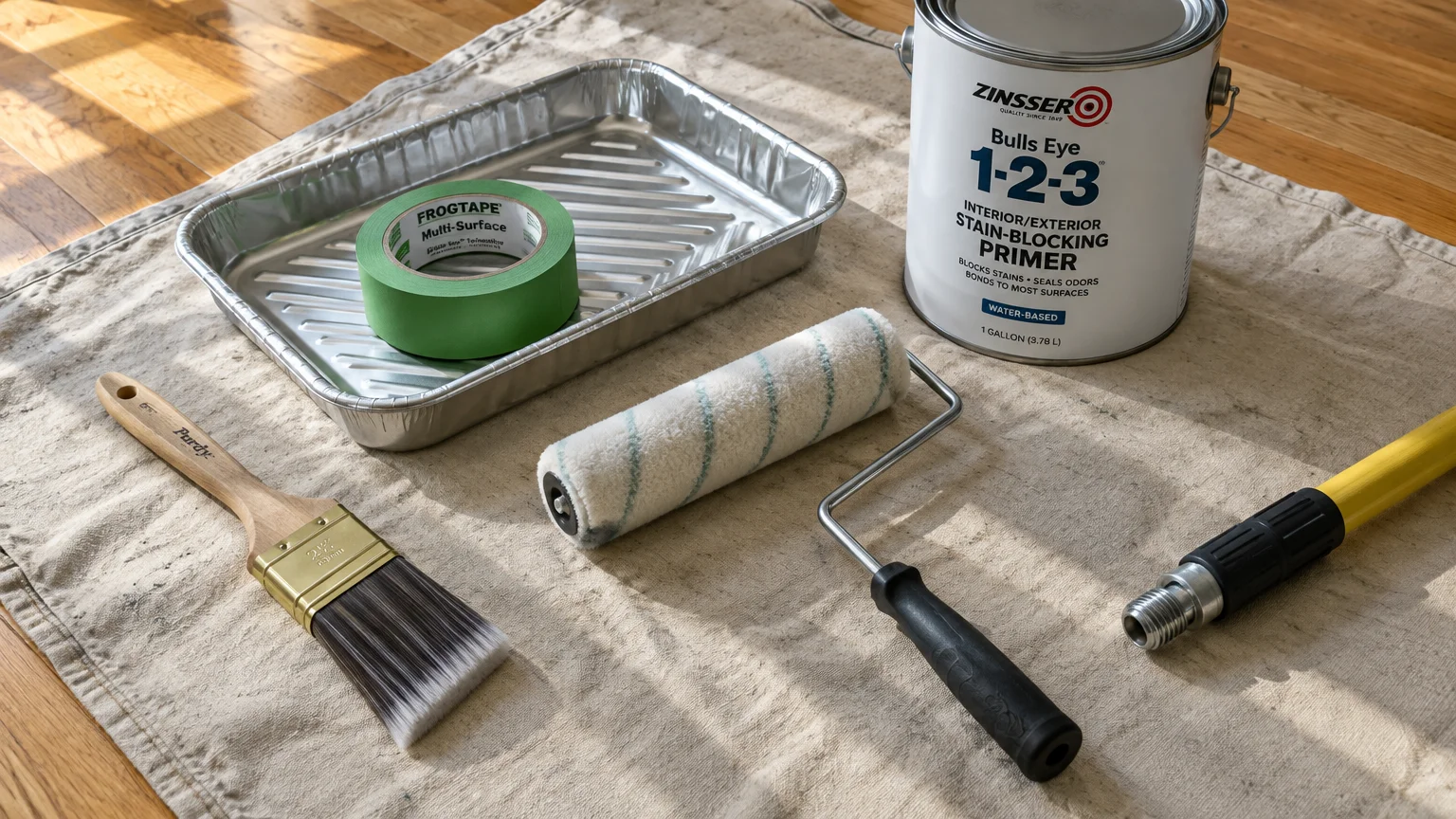
Gathering the right supplies beforehand ensures clean paint edges along rough wood surfaces. Quality tools save hours of frustrating touch-up labor later.
Painter’s Tape: Purchase two to three rolls of multi-surface painter’s tape with edge-lock technology. Crisp adhesion prevents liquid paint from bleeding into the porous grain of your beams.
Canvas Drop Cloths: Heavy canvas drop cloths absorb accidental drips and stay in place over hardwood or tile. Avoid lightweight plastic sheets on floors because they tear easily and create slipping hazards.
Extension Ladder and Step Stool: Secure an OSHA-compliant multi-position ladder for high ceilings. Review ladder safety standards from the Occupational Safety and Health Administration before climbing.
Telescoping Extension Pole: An adjustable four-to-eight-foot fiberglass extension pole connects directly to your roller frame. Telescoping poles eliminate excessive ladder climbing and reduce physical strain on your shoulders.
Angled Trim Brushes: Invest in two-inch and two-and-a-half-inch premium nylon-polyester angled sash brushes. Flexible, high-density bristles allow pinpoint precision when cutting against uneven, hand-hewn lumber.
Roller Frames and Covers: Select a sturdy nine-inch roller cage paired with medium-nap woven covers. A three-eighths-inch nap deposits uniform paint layers across smooth ceiling drywall without spattering.
Stain-Blocking Primer: Buy one gallon of high-hiding acrylic or shellac-based stain-blocking primer. Priming seals existing drywall patches and locks out water stains before applying finished color.
Interior Latex Paint: Expect to purchase two to three gallons of premium acrylic paint for an average room. Selecting durable formulas from established makers like Sherwin-Williams or Benjamin Moore ensures uniform, scrubbable coverage.
Surface Cleaners and Sanding Blocks: Keep trisodium phosphate substitute and medium-grit sanding sponges on hand. Thoroughly cleaning and smoothing drywall joints guarantees maximum paint bond and flawless visual results.
Step-by-Step Instructions
Painting around dark beams requires methodical preparation and controlled application. Follow these three distinct project phases to achieve crisp lines without damaging your timber.
Phase 1: Surface Preparation and Beam Masking
Begin by clearing furniture from the work zone and laying canvas drop cloths over flooring. Vacuum accumulated cobwebs, sawdust, and loose debris from the upper edges of every beam.
Wash nearby drywall sections with a mild degreasing detergent to strip away cooking grease and dust. Clean walls guarantee that fresh primer and paint adhere tightly without peeling.
Review guidelines from the Environmental Protection Agency on choosing low-VOC interior coatings to maintain healthy indoor air quality. Adequate room ventilation during prep and painting remains essential.
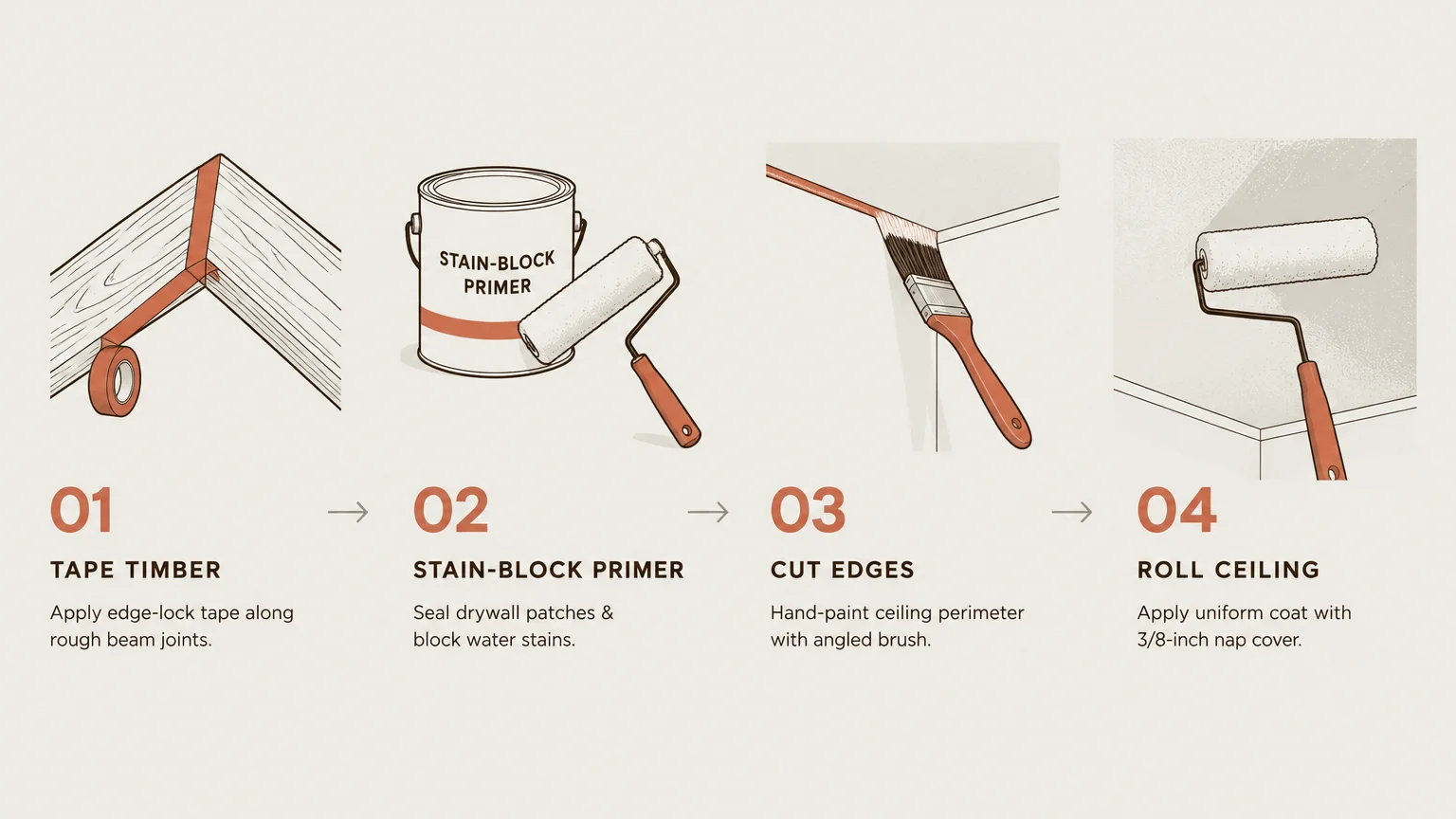
Apply painter’s tape along the exact seam where the drywall meets each wood beam. Press the tape edge firmly into the wood grain using a clean plastic putty knife.
If your beams feature rough-hewn, irregular surfaces, run a very thin bead of paintable caulk along the tape line. This technique creates a physical barrier that stops paint bleed completely.
Phase 2: Priming and Cutting In Around Timber
Pour your stain-blocking primer into a small, portable trim pail for easy ladder access. Position your ladder on level flooring, maintaining three points of contact as you climb.
Cut in around each beam perimeter using your angled trim brush. Apply paint with steady, smooth strokes, keeping the brush bristles perpendicular to the wood beam edge.
Keep a damp cotton cloth in your pocket while cutting along the beams. If wet paint touches unprotected timber, immediately wipe it away with a quick, light stroke.
Troubleshooting tip: If dried paint embeds in textured wood grain, do not use aggressive chemical strippers. Gently scrape the dried fleck with a nylon detail brush or plastic razor.
Phase 3: Rolling Ceilings and Walls
Pour your ceiling paint into a heavy-duty rolling tray fitted with a disposable liner. Dip your roller cover evenly and roll off excess paint along the tray ribs.
Roll the drywall bays between beams in small, overlapping sections using your extension pole. Always maintain a wet edge to avoid visible lap marks across wide ceiling expanses.
Apply two thin, uniform coats rather than a single thick application. Thin coats dry faster, resist drips, and provide much deeper, richer color saturation.
Allow two to four hours of drying time between your first and second coats. Check the manufacturer label on your paint can for exact recoat window recommendations.
Remove your painter’s tape while the second coat is still slightly damp to the touch. Pull the tape back slowly at a sharp forty-five-degree angle for razor-sharp edges.
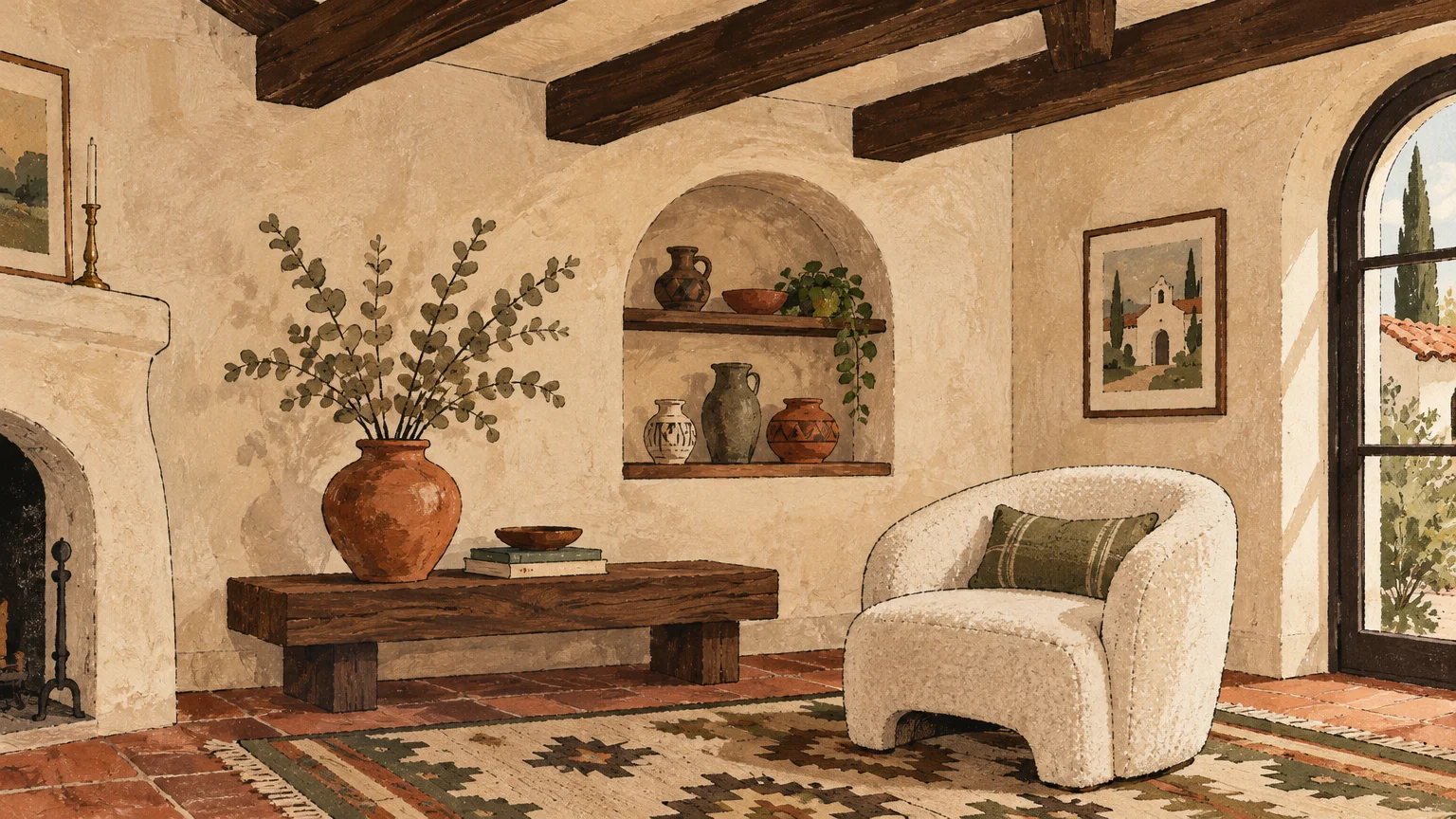
Style & Finishing Touches
The right paint palette establishes the mood, highlights timber character, and unifies your furniture. Explore these twelve curated shades to complement your home’s exposed structural lumber.
1. Warm Alabaster White
Warm alabaster white provides a creamy, soft foundation that complements dark wood beam ceiling colors without harshness. Its subtle beige undertones harmonize naturally with aged oak, walnut, or pine rafters.
This shade reflects abundant light while preventing the stark, cold glare common to basic commercial whites. It suits north-facing living rooms that crave warmth and organic farmhouse paint colors.
2. Crisp Gallery White
Crisp gallery white delivers pure, clean contrast against dark espresso or ebonized ceiling timbers. The sharp differentiation makes heavy structural woodwork appear intentional, modern, and sculptural.
Use this bright option in contemporary spaces or mid-century vaulted ceilings with abundant natural sunlight. The striking contrast highlights exposed beam decor as an architectural centerpiece.
3. Warm Linen Cream
Warm linen cream features gentle yellow and tan undertones that mimic unbleached natural fibers. It creates a cozy, historic cottage ambiance when paired with rough-sawn rustic paint colors.
This shade softens the transition between dark stained lumber and white window trim. It works exceptionally well in dining rooms, bedrooms, and traditional great rooms with high cathedral ceilings.
4. Subtle Stone Greige
Stone greige effortlessly combines warm beige with modern gray to produce an adaptable neutral backdrop. It balances both cool lighting and warm timber stains without clashing against underlying wood tones.
This shade provides enough visual weight to ground large open-concept spaces with tall rafters. Pair stone greige with matte black lighting fixtures and natural woven rugs for balanced styling.
5. Light Sandstone Beige
Light sandstone beige draws out golden and amber undertones found inside honey-tinted dark wood. It envelopes your living space in welcoming, earthy comfort while maintaining steady light reflectance throughout the day.
Sandstone beige prevents expansive drywall expanses from feeling empty or clinical. It represents an ideal choice for traditional colonial homes and southwestern timbered ceilings.
6. Earthy Mushroom Taupe
Mushroom taupe brings an organic, earthy sophistication that mimics weathered stone and forest soil. The muted brown-gray pigment wraps your walls in cozy elegance beneath deep timber rafters.
This shade creates a moody yet grounded retreat in home libraries, master bedrooms, and home offices. It partners seamlessly with dark leather upholstery, brass accents, and rustic paint colors.
7. Muted Sage Green
Muted sage green introduces botanical serenity that mirrors the natural world outside your windows. Green sits directly opposite red on the color wheel, neutralizing red undertones in cherry and mahogany beams.
This soft hue turns vaulted living rooms into tranquil, nature-inspired sanctuaries. It pairs wonderfully with potted greenery, cream textiles, and antique brass hardware for refined farmhouse charm.
8. Deep Forest Olive
Deep forest olive produces a dramatic, heritage-inspired backdrop that celebrates historic woodwork. Rather than fighting dark timber, this rich botanical shade embraces the weight of heavy overhead beams.
Use deep olive in formal dining rooms, powder rooms, or intimate dens with ample ambient lamps. Pair it with warm incandescent bulbs to accentuate the timber’s golden grain patterns.
9. Slate Chambray Blue
Slate chambray blue offers a cool, dusky contrast that balances warm brown timber rafters. The smoky gray undertones keep the blue from looking childish or nautical in formal interior spaces.
This color cools down rooms with intense southern sun exposure and heavy exposed woodwork. It creates a crisp, tailored aesthetic in coastal cottages and craftsman bungalows alike.
10. Pale Sky Gray
Pale sky gray acts as an airy ceiling and wall tone that visually expands narrow rooms. Its whisper-soft cool tint creates the illusion of an open sky behind your dark structural rafters.
This shade prevents timber-heavy ceilings from feeling like a low, oppressive canopy. It works wonders in compact guest rooms, basements, and attic conversions featuring exposed beam decor.
11. Warm Terracotta Clay
Warm terracotta clay infuses your walls with Mediterranean vibrancy and sun-baked warmth. The rich earthen pigment complements the deep chocolate hues of stained cedar and Douglas fir beams.
This energetic shade turns kitchen dining nooks and bohemian living spaces into welcoming gathering spots. Pair terracotta walls with wrought iron fixtures, ceramic tiles, and textured wool blankets.
12. Charcoal Iron Ore
Charcoal iron ore provides an ultra-modern, monochrome look for adventurous homeowners. By coating drywall in near-black charcoal, the dark wood beams blend into an atmospheric, velvet-like ceiling canopy.
This bold approach works best in modern industrial lofts, home theaters, and moody master bedrooms. Ensure you layer multiple lighting sources, such as wall sconces and under-beam uplights, to prevent gloom.
Finishing Touches and Lighting Upgrades
Install dimmable warm-white LED uplighting atop structural beams to bounce soft illumination across your newly painted ceiling. Pointing light upward eliminates heavy beam shadows and highlights fresh ceiling paint.
Coordinate your wall paint with window drapery and area rugs that pull subtle undertones from the timber. Layering linen curtains, woven baskets, and matte metal accents creates cohesive visual texture throughout your room.
Maintenance & Long-Term Care
Maintaining painted drywall around dark timber protects your investment and preserves pristine color contrast. Routine care keeps ceiling bays looking freshly painted for years.
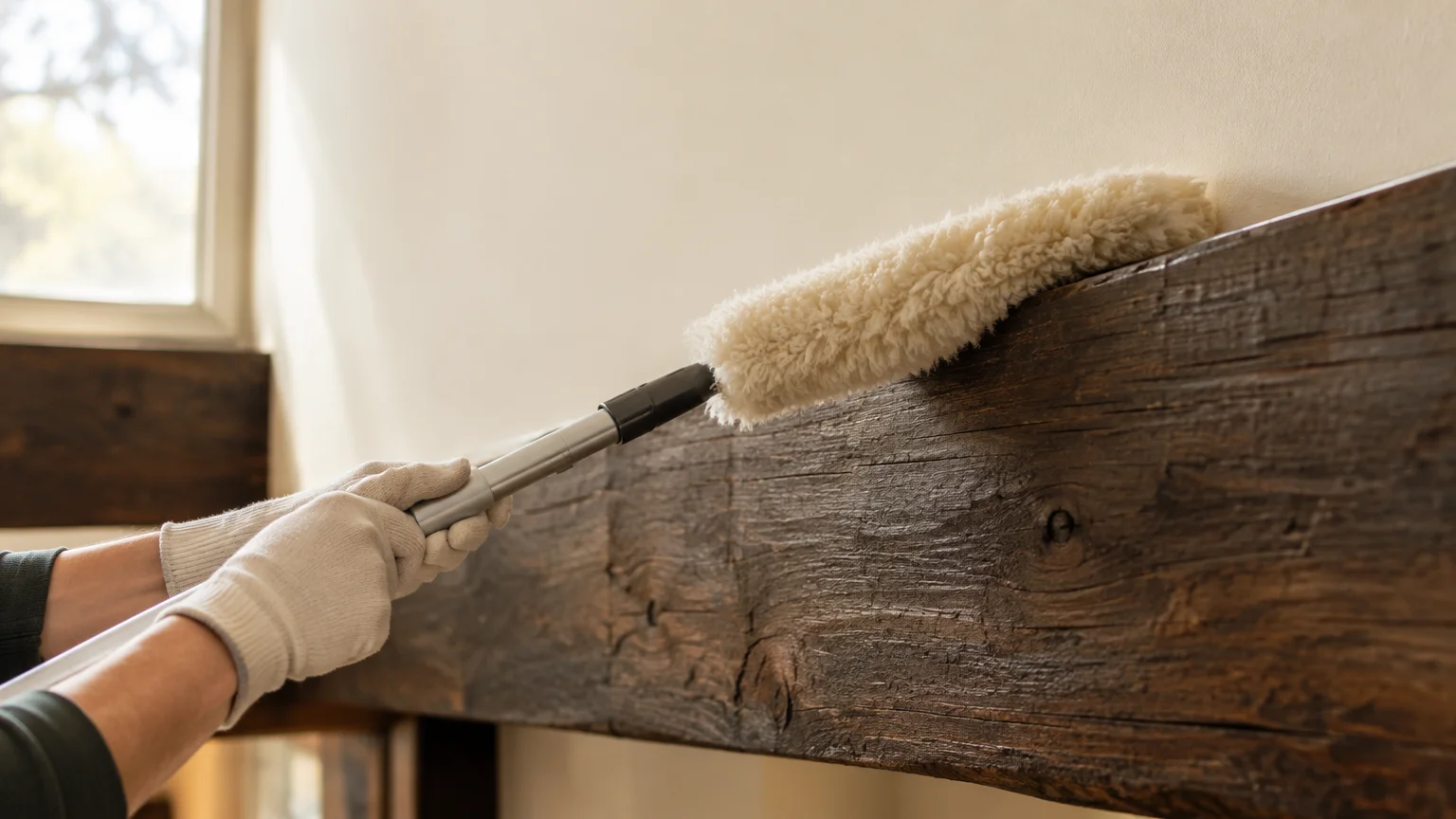
Dust upper beam edges and ceiling seams every three months using an electrostatic microfiber duster. Removing dust prevents airborne particles from settling into paint pores and discoloring drywall borders.
Clean minor scuffs and marks using a soft sponge dampened with warm water and mild dish detergent. Avoid harsh abrasive cleaners or scouring pads that burnish flat and eggshell paint sheens.
Wood beams naturally expand in humid summers and contract during dry winter heating seasons. This seasonal movement frequently produces micro-fissures along the caulked drywall junction.
Repair these seasonal gaps using flexible, paintable elastomeric sealant instead of rigid standard caulk. Flexible sealants stretch and compress alongside timber movement without tearing or cracking.
Store leftover paint in tightly sealed glass canning jars rather than half-empty metal cans. Mark the jar lid with the paint formula, sheen, room location, and purchase date for convenient touch-ups.
FAQ
Should the ceiling between dark wood beams always be painted white?
No, ceilings between dark beams do not require pure white paint. While white maximizes light reflection, soft taupe, muted sage, and pale sky gray add welcoming depth without darkening the room.
What paint sheen works best with exposed wood beams?
Flat or matte sheens work best for ceilings because they absorb light reflections and hide surface imperfections. For adjacent walls, choose an eggshell or satin finish for improved durability and washability.
How do wood undertones dictate your wall paint choice?
Identify whether your timber has red, yellow, or neutral undertones by inspecting it under direct daylight. Cool paint colors like slate blue balance reddish wood, while warm creams flatter golden pine timbers.
Can you paint over dark wood beams if you want a brighter room?
You can paint dark beams, but doing so permanently conceals historic timber grain and natural character. Try painting the ceiling drywall in high-LRV white first to brighten your space while preserving natural wood.
When should you hire a professional painter for beamed ceilings?
Consider hiring a licensed professional painter if your ceiling exceeds twelve feet or features steep cathedral vaults. High-elevation painting requires scaffolding, specialized safety harnesses, and heavy ladder expertise.
Takeaway & Next Steps
Matching the right wall shade to your dark beams elevates rustic architecture into an elegant focal point. Balanced tones reflect light, highlight rich wood textures, and create a welcoming environment.
Three immediate actions will launch your room transformation smoothly:
Sample Your Favorites: Paint two-foot by two-foot sample swatches on drywall next to your beams, observing color shifts morning and night.
Inspect Your Safety Gear: Check your ladder, extension pole, and drop cloths to guarantee safe ceiling access before purchasing paint.
Prep the Timber Joints: Vacuum beam ledges and apply edge-lock painter’s tape along wood borders to ensure flawless, razor-sharp cut lines.
Have you updated your exposed beam decor recently? Share your renovation photos with our reader gallery or subscribe to our newsletter for weekly home improvement guides.