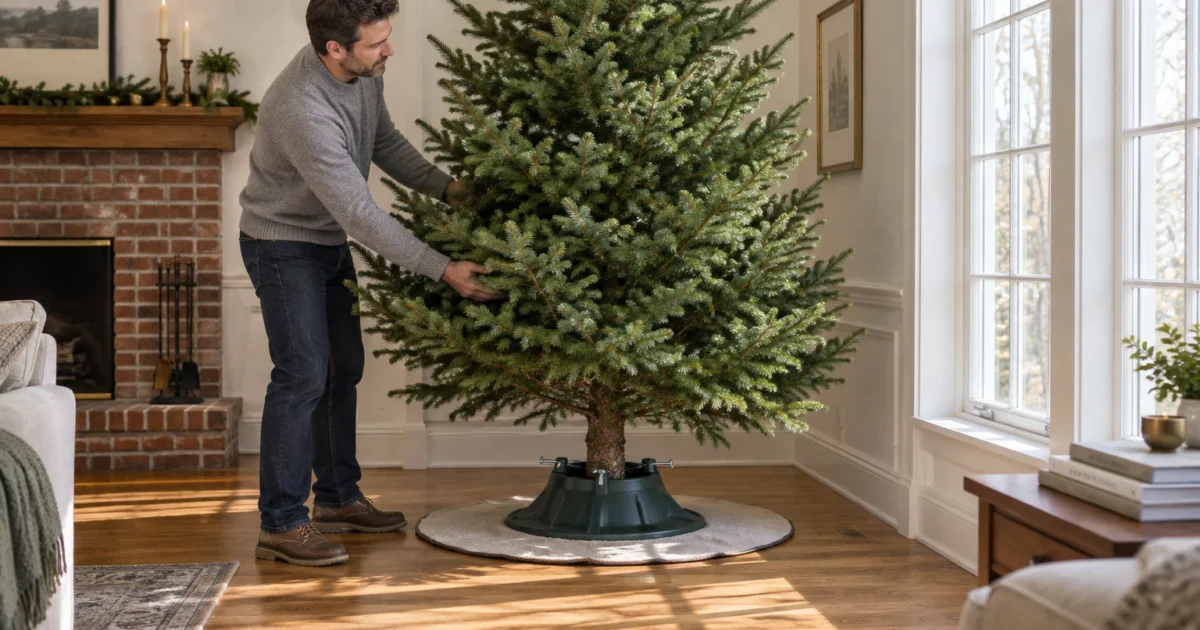
Finding the right spot for your fresh Christmas tree sets the stage for a cozy holiday season. Putting your tree in the wrong place turns your beautiful centerpiece into a serious home fire hazard.
You can protect your family and your property by steering clear of dangerous spots before you bring a tree inside. Smart placement keeps your tree fresh, upright, and safe through the new year.
Here are six spots you must avoid, along with simple steps to set up your display with confidence.
Project Overview & Why It Matters
Bringing a real evergreen into your living room brings fresh scent and festive warmth to your space. However, cut trees lose water rapidly inside modern, climate-controlled houses.
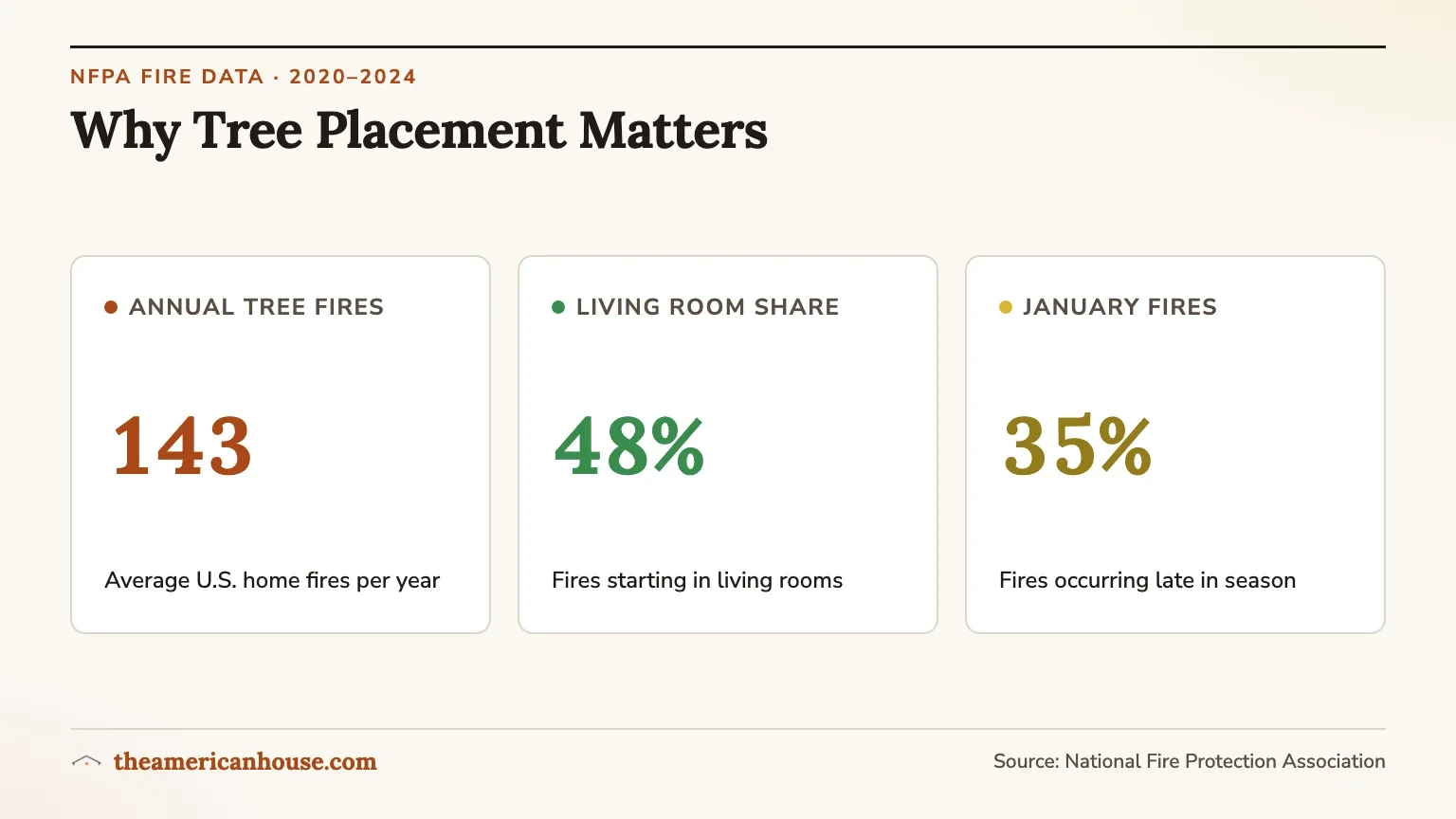
According to the National Fire Protection Association, U.S. fire departments answered an average of 143 home Christmas tree fires each year from 2020 to 2024.
These fires caused an annual average of 7 deaths, 13 injuries, and $15 million in direct property damage. Living rooms accounted for 48% of these fires.
Placing a tree too close to a heat source causes nearly one out of four tree blazes. In addition, 35% of these fires happen in January as trees dry out.
A dry tree can reach flashover in less than one minute. In tests by federal engineers, an unwatered tree became fully engulfed in flames in under 10 seconds.
Practicing proper christmas tree safety protects your investment and keeps your household safe. Safe placement ensures needles stay green while eliminating dangerous ignition risks.
Tools, Materials, and Prep Checklist
Before you haul your tree through the front door, gather the right gear to prepare your room. Having the right supplies makes installation fast and safe.
You need a standard tape measure to confirm clearance distances around furniture and heat sources. A good 25-foot tape measure costs about $10 at any home improvement store.
Pick up a heavy-duty tree stand with a large reservoir for $30 to $60. Avoid small stands that hold less than a gallon of water.
You also need a basic handsaw to make a fresh trunk cut, which costs about $15. Buy a waterproof floor tray or heavy mat for $15 to protect your floors.
Select modern LED string lights for about $10 to $20 per set. Cool-burning LED lights use less power and generate far less surface heat than older bulbs.
Finally, check that your smoke alarms work properly and keep an ABC-rated fire extinguisher nearby. A reliable home fire extinguisher costs between $30 and $50.
Step-by-Step Instructions
Setting up your tree requires careful measuring and firm rules about where branches can go. Check these six forbidden zones before you choose a final corner.
1. Near Fireplaces and Wood Stoves
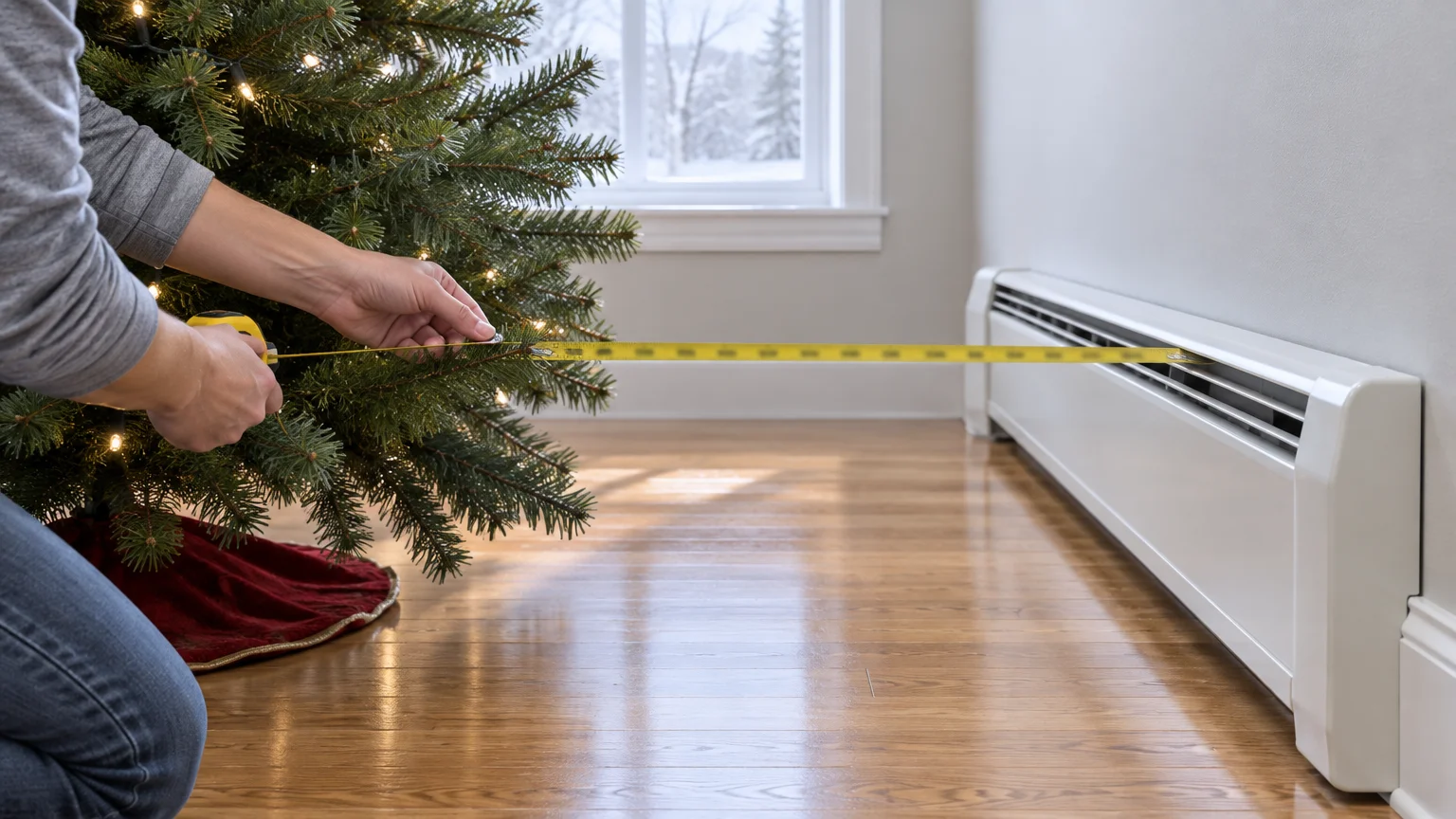
Never place your evergreen near an open hearth or wood stove. The NFPA and the U.S. Fire Administration require at least three feet of space from all heat sources.
Stray embers can pop past screens and ignite needles in seconds. Keeping a generous fireplace distance keeps radiant heat from turning green foliage into dry tinder.
2. Next to Baseboard Heaters and Radiators
Avoid placing your tree beside electric baseboards, hot water radiators, or portable space heaters. Hot metal fins quickly bake moisture out of the lowest boughs.
Maintain that same three-foot buffer between branch tips and heating elements. This separation prevents premature needle drop and reduces your fire risk.
3. Blocking Doors, Hallways, and Windows
Never set your tree in an entryway, main hallway, or doorway. A wide tree can turn an open corridor into a tight bottleneck.
If an emergency occurs, your family needs clear escape routes to exit without tripping. First responders also need wide, open paths to reach every room.
Renters should also check building rules. The International Fire Code bans natural-cut trees in apartment building hallways and lobbies unless protected by fire sprinklers.
4. Over or Against HVAC Vents
Keep your tree clear of forced-air supply registers and central return air grilles. Warm air blowing from registers dries out branches faster than normal room air.
The Department of Energy warns that blocking return grilles restricts airflow and strains your HVAC system. Keep vents open and unobstructed for balanced heating.
5. Under Hanging Candles and Open Flames
Never place your tree on a table near lit candles or beneath wall-mounted candle holders. Open flames should never share space with natural evergreens.
Candles cause 49% of holiday decoration fires in December. Safety guidelines urge keeping open flames at least 12 inches away from all flammable items.
6. Crowded Against Overloaded Electrical Outlets
Do not wedge tree branches directly against wall outlets crowded with plugs, splitters, and extension cords. Electrical problems cause 40% of home Christmas tree fires.
The Consumer Product Safety Commission warns against connecting more than three incandescent light sets together. Never run light cords under area rugs where foot traffic damages the wire insulation.
How to Prepare and Secure the Trunk
Once you identify a safe location, trim two inches off the bottom of the trunk with your handsaw. This cut removes dried sap so the tree drinks properly.
Carry the tree indoors and center the trunk in your stand. Tighten the mounting bolts evenly until the trunk stands completely straight.
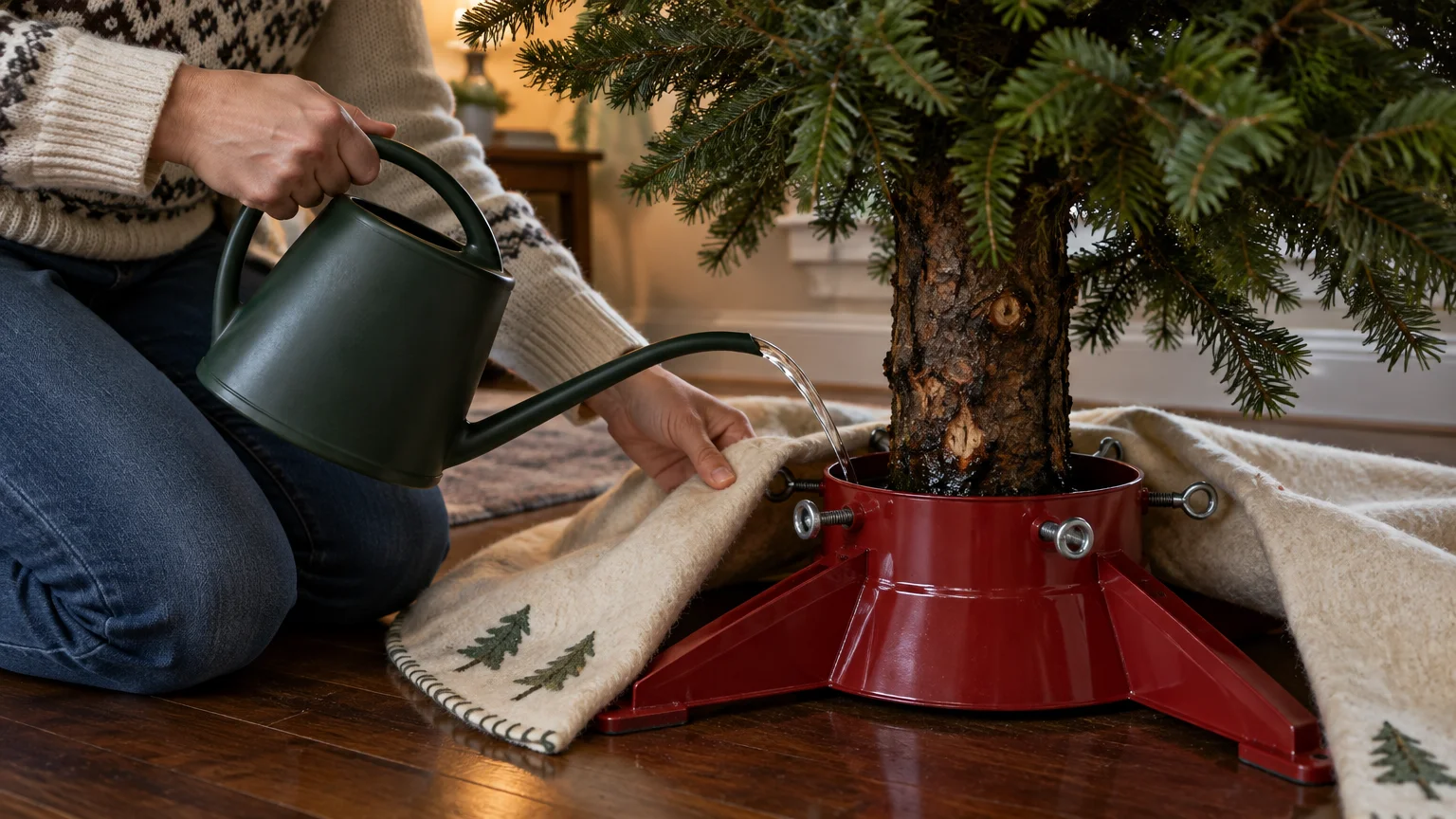
Fill the water bowl immediately with fresh tap water. Keeping the cut base submerged prevents the wood pores from sealing shut with sap.
Style & Finishing Touches
Safe placement still leaves plenty of room for creative holiday design. You can build a festive focal point while keeping your family safe.
Use warm-white LED lights to produce a warm glow without heating up the branches. LED bulbs stay cool to the touch even after hours of use.
Place fragile family ornaments on the upper two-thirds of the tree. Save sturdy wood, paper, or plastic decorations for lower branches where pets might brush past.
Drape a soft tree skirt over your waterproof floor mat to hide the plastic stand. This layer catches falling needles while protecting your floor from stray water drops.
If you love candlelight, set battery-powered LED candles on your mantel or nearby tables. They deliver the same cozy ambiance without the open flame hazard.
Maintenance & Long-Term Care
Keeping your tree well watered is your best defense against fire. Check the water level every single day without exception.
A fresh tree can drink up to one gallon of water during its first day indoors. Keep the water level above the cut line so the trunk stays open.
Test needle moisture twice a week by sliding your fingers along an inner branch. If needles snap or rain down onto the skirt, the tree is drying out.
Plan to remove your tree right after the holiday ends. January accounts for 35% of all tree fires, making late-season trees a serious hazard.
Check with your town waste department for local tree-cycling programs. Most cities collect trees at the curb and grind them into beneficial garden mulch.
FAQ
How far should a Christmas tree be from a fireplace?
Keep your tree at least three feet away from any fireplace or wood stove. Measure this distance from the closest branch tip to the edge of the hearth.
Can I put my tree over a heat register if I close the vent?
You should still avoid placing your tree directly over closed vents. Closed dampers can leak hot air, and blocking vents disrupts airflow across your heating system.
Why do so many Christmas tree fires occur in January?
Trees continue to lose moisture the longer they remain inside a heated house. By January, dry wood and brittle needles catch fire much faster than fresh evergreens.
How much water does a real Christmas tree need each day?
A typical tree drinks about one quart of water per inch of trunk diameter daily. Check your stand daily to ensure the water level never drops below the cut base.
Takeaway & Next Steps
Picking a safe spot for your real Christmas tree prevents fires and keeps your home beautiful. A few minutes of planning ensures worry-free holiday celebrations.
First, use a tape measure to verify a three-foot clearance from all heaters and vents. Second, test your smoke alarms and inspect your light strands for worn wires.
Third, cut two inches off the trunk base and fill the stand with clean water. These three steps protect your home while keeping your evergreen vibrant.
Do you have a creative holiday setup in your living room? Share your photos with our community, or sign up for our weekly home improvement newsletter today.