Your front porch does not have to sit bare once temperatures drop below freezing. With the right winter container plants, you can hold onto crisp evergreen structure, rich foliage, and genuine blooms from late fall through early spring.
Keeping plants for pots in winter alive takes more than luck, because exposed roots face harsher cold than garden beds. Picking varieties tough enough for frozen potting mix makes all the difference.
This guide covers eight proven cold-weather performers, smart container prep, and simple seasonal care. You will finish with a low-maintenance porch display that boosts curb appeal all winter.
Project Overview & Why It Matters
Cold-weather container gardening turns empty stoops, patios, and entryways into welcoming outdoor spaces during the darkest months of the year. Instead of staring at cracked plastic and dead annuals until April, you get living color and architectural texture every time you pull into the driveway.
Homeowners are investing heavily in durable outdoor upgrades right now. According to the 2026 National Gardening Survey published by the National Gardening Association and Garden Research, total U.S. lawn and garden spending reached a record $79.0 billion in 2025, averaging $740 per household.
Even though overall household participation dipped from 84.1% in 2024 to 79.2% in 2025, committed growers spent more on lasting woody plants. Per-participant spending jumped 41% for shrub care and 76% for tree care, rising from $163 to $286.
Momentum remains strong among the roughly 80 million gardeners estimated by the USDA Agricultural Research Service. In the Axiom 2026 Gardening Outlook, 63.6% of surveyed gardeners planned to expand their plantings in 2026, and 42.8% expected to spend more.
Before you buy a single pot, check your updated climate rating on the USDA Plant Hardiness Zone Map. Released in November 2023 by the USDA Agricultural Research Service and Oregon State University’s PRISM Climate Group, the map uses 30-year climate data from 13,412 weather stations.
About half of the United States shifted into a warmer half-zone averaging roughly 2.5°F warmer than the 2012 map. Even with milder trends, container gardening follows stricter survival math than in-ground flower beds.
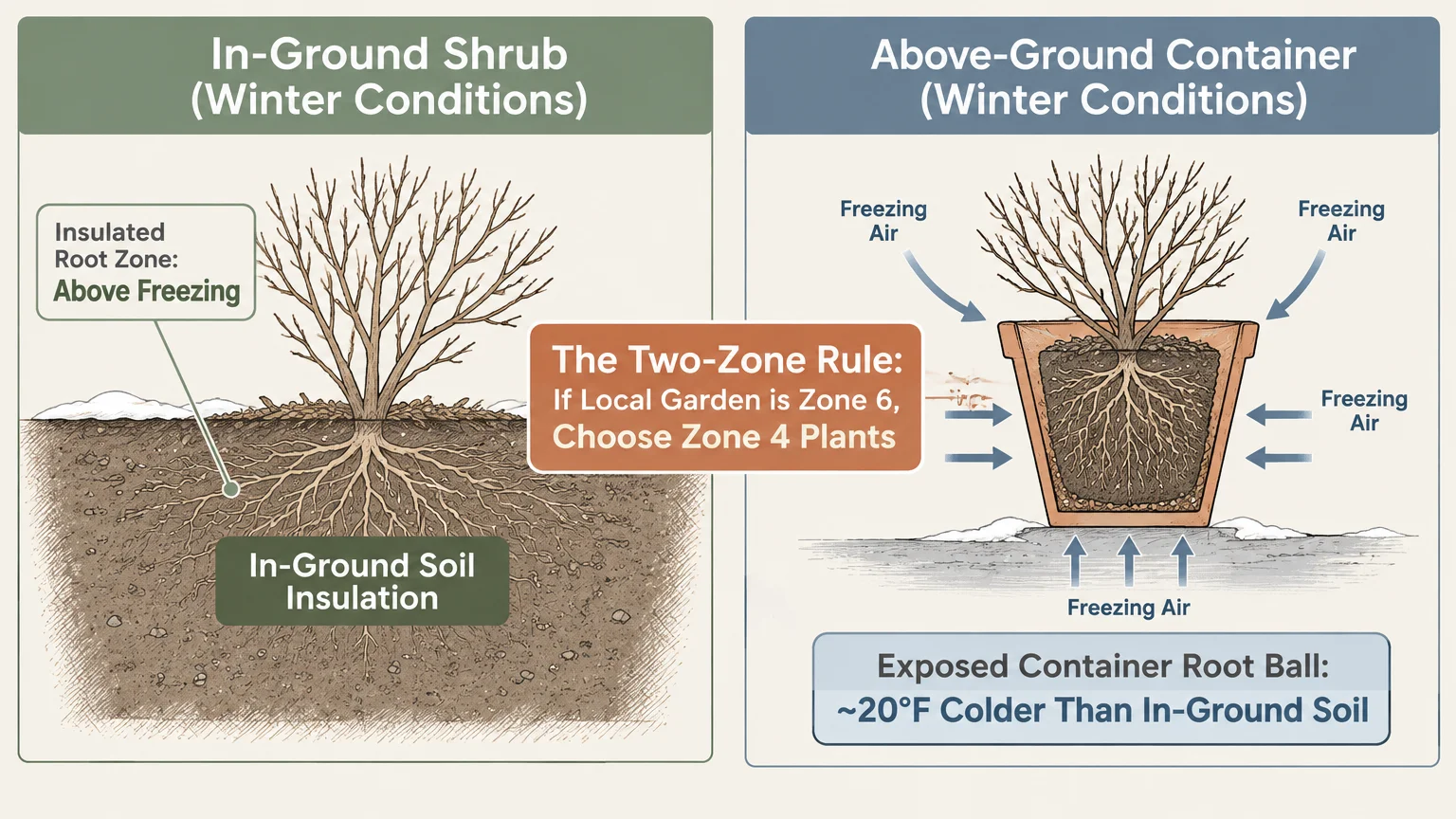
Horticultural advisors at Penn State Extension, the University of Illinois Extension, and the Brooklyn Botanic Garden recommend choosing plants hardy at least two USDA zones colder than your local zone. Because pots lack surrounding earth insulation, root balls can drop to ambient air temperatures—roughly 20°F colder than nearby ground soil.
If your home sits in Zone 6, shop for cold hardy container plants rated down to Zone 4. Follow that single rule and your winter porch plants will handle sudden January freezes without turning to mush.
8 Cold Hardy Container Plants That Thrive All Winter
1. Hellebores (Helleborus spp.)
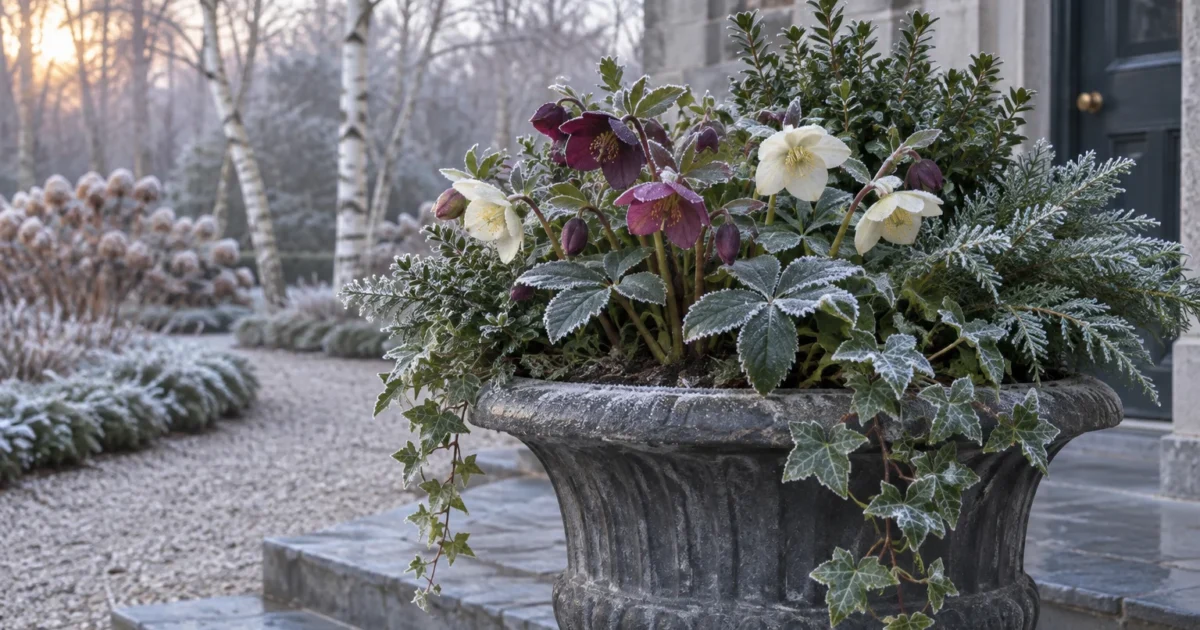
Named the 2027 Year of the Hellebore perennial by the National Garden Bureau, Christmas roses and Lenten roses deliver rare winter flowers when almost nothing else blooms. Their nodding 2- to 3-inch blossoms arrive in crisp white, blush pink, plum, and speckled cream.
Check the species label before buying for northern porches. Pure Helleborus niger carries an H7 hardiness rating from the Royal Horticultural Society, surviving down to -4°F (-20°C), while evergreens like Helleborus × ericsmithii Winter Star thrive across USDA Zones 4–9.
Compact hybrids grow roughly 14 inches tall by 18 inches wide and bloom from December through May, offering valuable early nectar for bumblebees. Foliage and flowers are naturally deer- and rabbit-resistant, per NC State Extension.
Safety note: Hellebores are listed as toxic to dogs, cats, and horses by the ASPCA, causing drooling, vomiting, diarrhea, lethargy, and severe distress in large doses. Always wear gloves when pruning or repotting them, as advised by the Royal Horticultural Society.
2. Pansies and Violas (Viola × wittrockiana and Viola cornuta)
Pansies and their smaller-flowered cousins, violas, bring cheerful jewel tones to winter porch plants. They shrug off light freezes, bounce back after frosts wilt their stems, and grow as true perennials in USDA Zones 6–10.
Expect compact mounds standing 6–9 inches tall and spreading 9–12 inches wide with 2- to 4-inch blooms, based on guidelines from NC State Extension and the Missouri Botanical Garden. Give them full sun to part shade, soil pH between 5.4 and 5.8, and about 1 inch of water weekly during mild weather.
Safety note: Both pansies and violas appear on the ASPCA non-toxic list for cats, dogs, and horses. Still, keep ornamental nursery plants out of salads and pet bowls because commercial growing mixes may contain chemical residues.
3. Ornamental Kale and Cabbage (Brassica oleracea var. acephala)
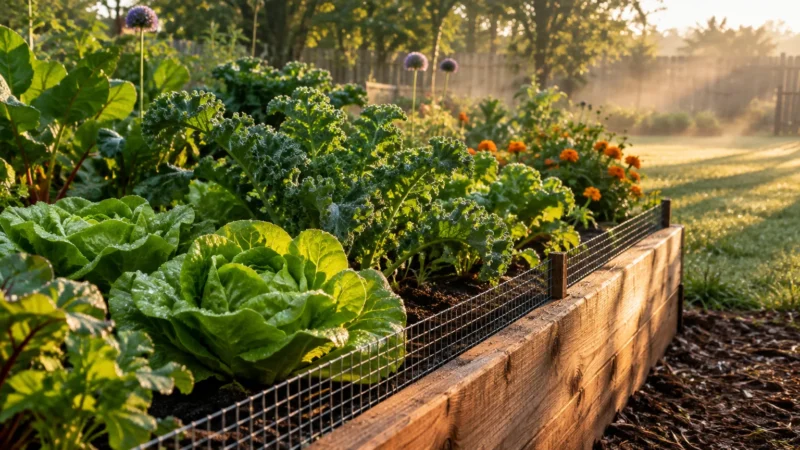
Few plants for pots in winter match the ruffled rosettes of ornamental kale and flowering cabbage. Their cream, magenta, and deep violet centers actually intensify once temperatures fall below 60°F, according to University of Florida IFAS Extension.
Suitable across USDA Zones 3B–11B as a cool-season accent, ornamental kale tolerates hard frosts down to 25°F (-4°C) and lower. Mississippi State University Extension notes that certain Brassica oleracea kale types can even survive dips to 10°F.
Plants reach 1–2 feet tall and wide—sometimes up to 3 feet in mild regions—and prefer a slightly acidic potting mix around pH 6.0–6.5, per West Virginia University Extension. Although leaves are technically edible, University of Florida IFAS Extension cautions they taste bitter and are not bred for table use.
4. Coral Bells (Heuchera spp.)
Coral bells pack foliage color in shades of amber, burgundy, silver, and chartreuse across USDA Zones 4–9. Cultivars like Obsidian, Caramel, and Lime Marmalade hold an RHS H6 rating, enduring cold down to -4°F to 5°F (-20°C to -15°C).
Mature clumps fill out 12–18 inches tall and 18–24 inches wide, while leaf tannins naturally deter browsing deer and rabbits. Place pots in partial shade so pale-leafed cultivars do not scorch during bright winter afternoons.
Keep the central crown flush with the soil surface rather than burying it deep. You will also want to gently press frost-heaved crowns back into the potting mix come spring, and pet owners can relax because the ASPCA lists coral bells as non-toxic to dogs and cats.
5. Dwarf Alberta Spruce (Picea glauca Conica)
Dwarf Alberta spruce delivers classic evergreen symmetry in a tight, slow-growing pyramid that looks made for symmetrical entryway urns. Dense, soft needles stay fresh green all winter without constant pruning.
Rated hardy in USDA Zones 2–6 or 3–7 depending on the nursery source, this miniature conifer easily clears the two-zones-colder rule for most cold-climate homeowners. Place it in bright sun to light afternoon shade and shield the pot from drying winter winds.
Safety note: Neither the ASPCA nor the Pet Poison Helpline lists dwarf Alberta spruce as toxic. Chewing large amounts of sharp needles can still irritate a curious pet’s stomach, so keep low branches away from teething puppies.
6. Cold-Hardy Boxwood (Buxus spp.)
Boxwood anchors formal container gardening displays with crisp, glossy leaves that respond well to clean geometric shaping. While common boxwood (Buxus sempervirens) suits USDA Zones 5–8, northern porches perform better with tougher compact cultivars.
Look for Korean hybrids like Green Gem (Zones 4–8) or Wintergreen (Buxus sinica var. insularis, Zones 4–9) for stronger resistance against winter bronzing. Deer rarely bother boxwood, making it a dependable pick for unfenced front walkways.
Check local winter wind exposure before siting boxwood on exposed corners. Wrapping the root container or tucking the pot near a brick house wall keeps foliage from drying out during prolonged cold snaps.
7. Cold-Hardy Holly (Ilex × meserveae and Ilex glabra)
Nothing signals winter curb appeal faster than glossy evergreen holly loaded with bright berries. Blue Princess holly (Ilex × meserveae) thrives in USDA Zones 5–9, though University of Connecticut guidance notes you need a male pollinator like Blue Prince nearby to set fruit.
For harsher cold or native landscaping, choose inkberry holly (Ilex glabra), which is hardy across USDA Zones 4–9. Avoid planting English holly (Ilex aquifolium) in the Pacific Northwest, as the University of Washington Botanic Gardens warns it is invasive there.
The Royal Horticultural Society advises repotting container-grown holly every 2–3 years in spring into a planter 2 inches wider all around, keeping soil well-drained. Safety note: Holly contains saponins toxic to dogs, cats, and horses per the ASPCA, and NC State Extension warns the berries pose a poisoning risk to children.
8. Japanese Skimmia (Skimmia japonica)
Japanese skimmia solves the toughest design puzzle on north-facing porches: thriving in partial to full shade while still showing seasonal color. Tight clusters of deep red winter flower buds sit above leathery evergreen leaves for months before opening in spring.
Pair skimmia with shaded stoops or covered entryways where pansies and spruce struggle for light. Keep potting mix evenly moist but never soggy during winter thaws.
Safety note: The Royal Horticultural Society notes that skimmia berries can cause mild digestive upset if eaten. Position pots out of reach of toddlers and pets who sample fallen fruit.
Tools, Materials, and Prep Checklist
Gathering durable supplies before your first hard freeze prevents cracked pottery and suffocated roots. Stick with frost-safe materials matched to your budget rather than gambling on clearance ceramic pots that shatter in January.
Frost-Proof Containers
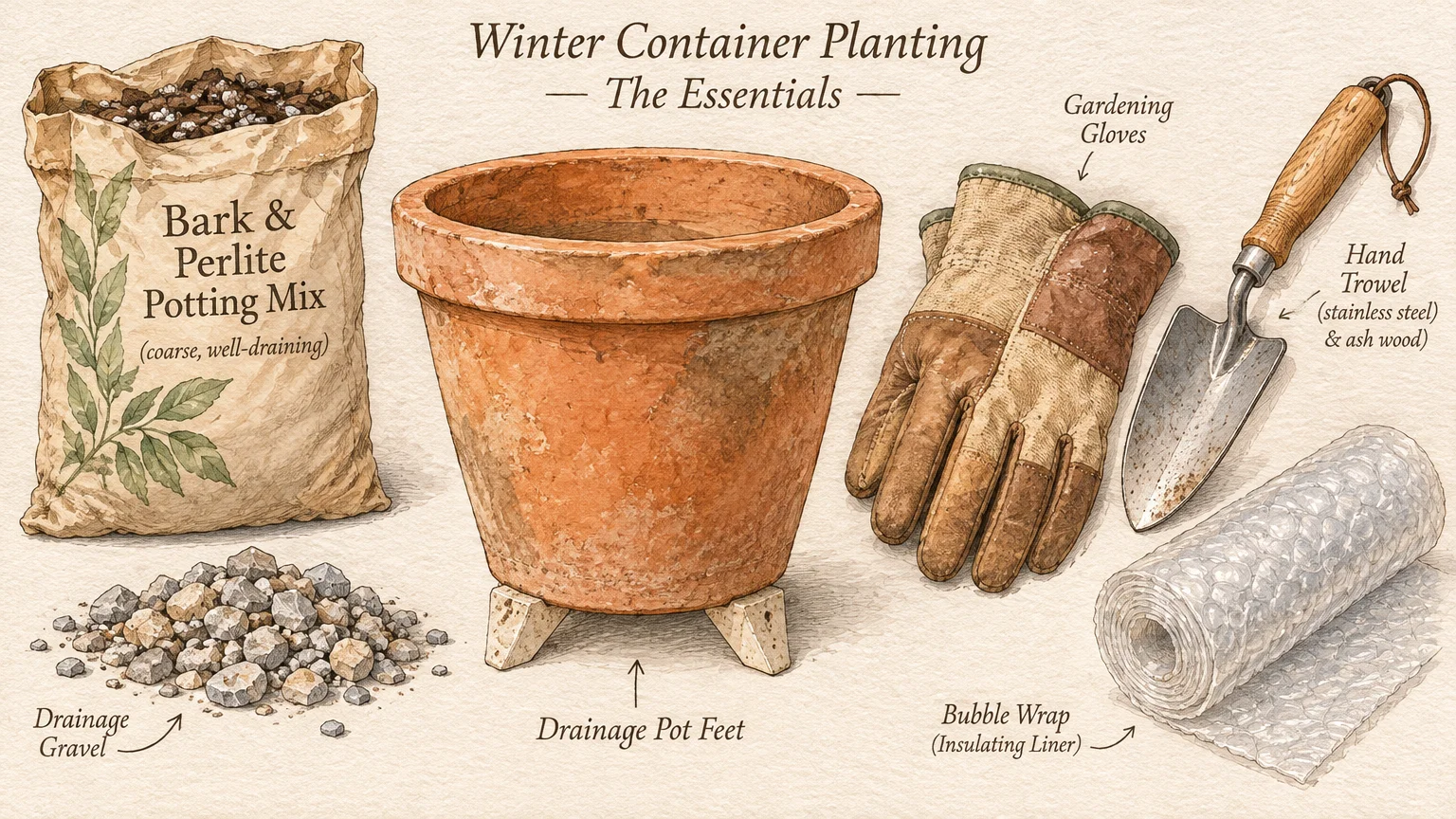
Choose frost-proof terracotta—not merely frost-resistant clay—or opt for heavy-duty resin, plastic, fiberglass, or treated wood planters, as recommended by the Royal Horticultural Society. Penn State Extension warns that standard unglazed clay, ceramic, and glazed pottery often crack outdoors when wet soil expands.
Resin and fiberglass pots offer a budget-friendly to mid-range option that stays lightweight on upper decks. Thick-walled frost-proof terracotta and cedar wood boxes sit at a higher investment tier, yet last through many freeze-thaw cycles when raised off the ground.
Drainage Hardware and Potting Mix
Stock up on three to four terracotta pot feet, cedar shims, or simple bricks for every container you plan to keep outside. Lifting pots off concrete or wood decking prevents water from pooling underneath and freezing solid.
Remove every matching saucer or drip tray before temperatures drop below 32°F. Buy fresh, coarse, well-draining container potting mix—never heavy garden topsoil, which compacts and freezes into an ice block.
Winter Wrap and Safety Gear
Pick up heavy-duty bubble wrap, burlap, or plastic sheeting if you live in Zone 5 or colder and want extra root insulation. Keep clean waterproof gardening gloves, hand pruners, a trowel, and a watering can with a gentle rose attachment nearby.
If you are moving oversized planters filled with wet soil, keep a rolling plant dolly or upright hand truck on hand to protect your back. Add a bag of pet-safe ice melt near your porch steps so runoff from winter watering never creates a slip hazard.
Step-by-Step Instructions
Phase 1: Audit Your Zone, Light, and Porch Structure
Start by plugging your ZIP code into the updated USDA Plant Hardiness Zone Map, noting the 10°F band and 5°F half-zone for your yard. Subtract two full zones from that rating to set the cold-hardiness floor for your container plant shopping list.
Watch your porch across a sunny afternoon to map direct sunlight versus deep shade. Place sun lovers like pansies, ornamental kale, and dwarf Alberta spruce in bright spots, while reserving shaded overhangs for hellebores, coral bells, and Japanese skimmia.
Structural & HOA check: Confirm local homeowner association rules or historic-district guidelines before lining shared sidewalks or exterior railings with planters. Never mount heavy pots on deck railings without code-rated brackets, and keep exterior door swing paths and emergency exits completely unobstructed.
If you want built-in oversized planters on a rooftop terrace or elevated second-story deck, hire a licensed structural contractor or landscaper first. Saturated soil and stone containers add massive dead weight that older framing may not safely support.
Phase 2: Prep Containers and Elevate Drainage
Scrub used pots with warm soapy water and a stiff brush to remove lingering fungal spores or pest eggs from summer annuals. Check that bottom drainage holes are completely open and at least the width of your thumb.
Set three or four pot feet or bricks evenly on your porch surface, and center the empty pot on top before adding soil. Skipping this step traps moisture under the rim, leading to freeze-thaw cracks and stained wood decking.
Leave out broken pottery shards or gravel at the bottom of the pot, because coarse layers do not improve drainage and actually shrink root room. Fill the lower third with fresh potting mix instead.
Phase 3: Plant Full-Size Specimens Tightly
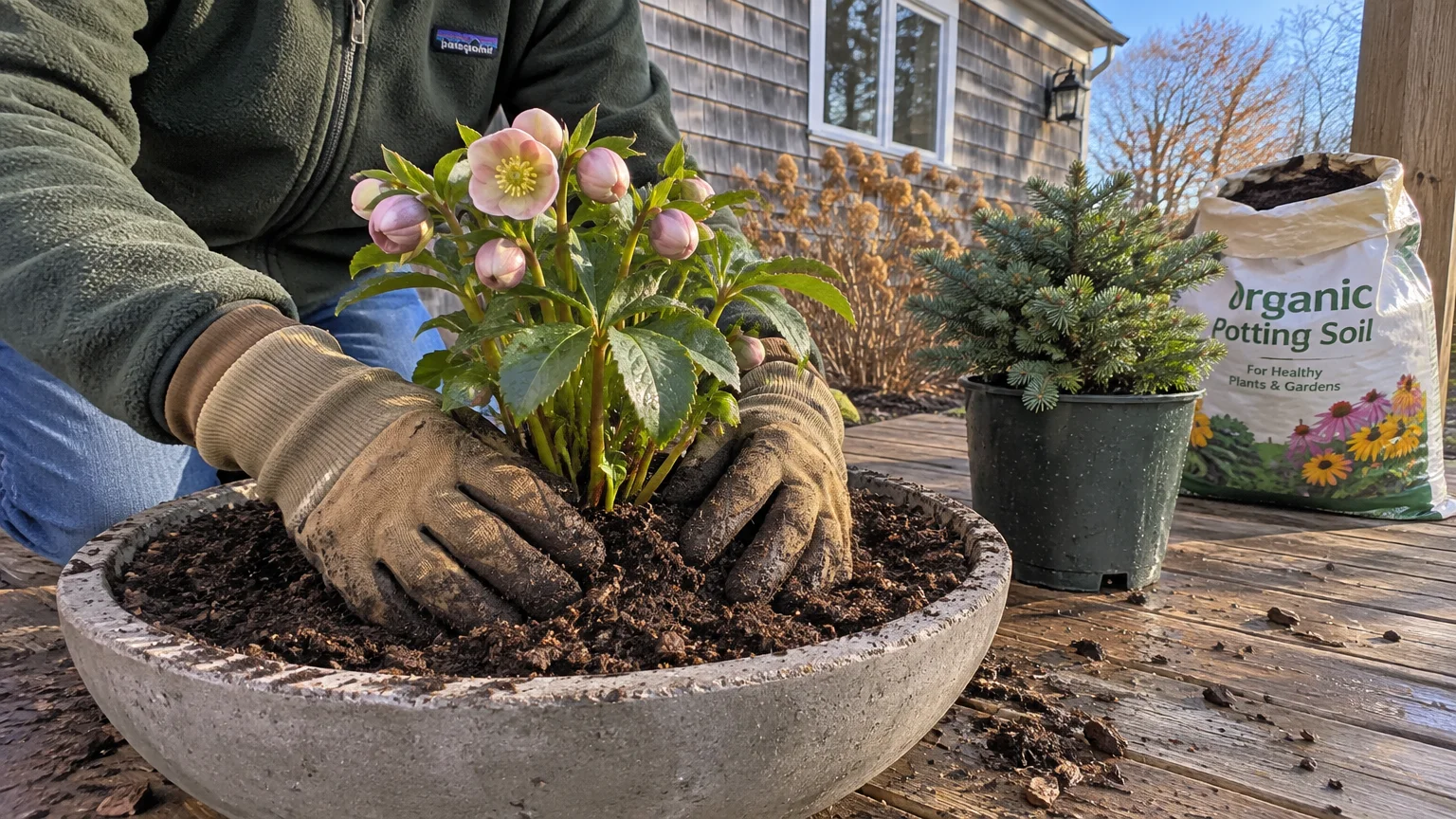
Cold weather halts almost all new top growth, so the Royal Horticultural Society advises starting with well-established specimens sized to fill the pot right away. Space root balls closer together than you would in May, keeping leaves touching slightly for instant visual density.
Set evergreen shrubs like boxwood, holly, or spruce slightly off-center or toward the back, keeping their root flares level with the soil line. Tuck mid-height hellebores or coral bells around the sides, and finish the front rim with pansies.
Leave about 1 to 2 inches of space between the soil surface and the container rim so watering stays tidy. Pay close attention to coral bells so their central crowns sit flush with the mix rather than buried underneath.
Phase 4: Water Deeply and Insulate Against Hard Freezes
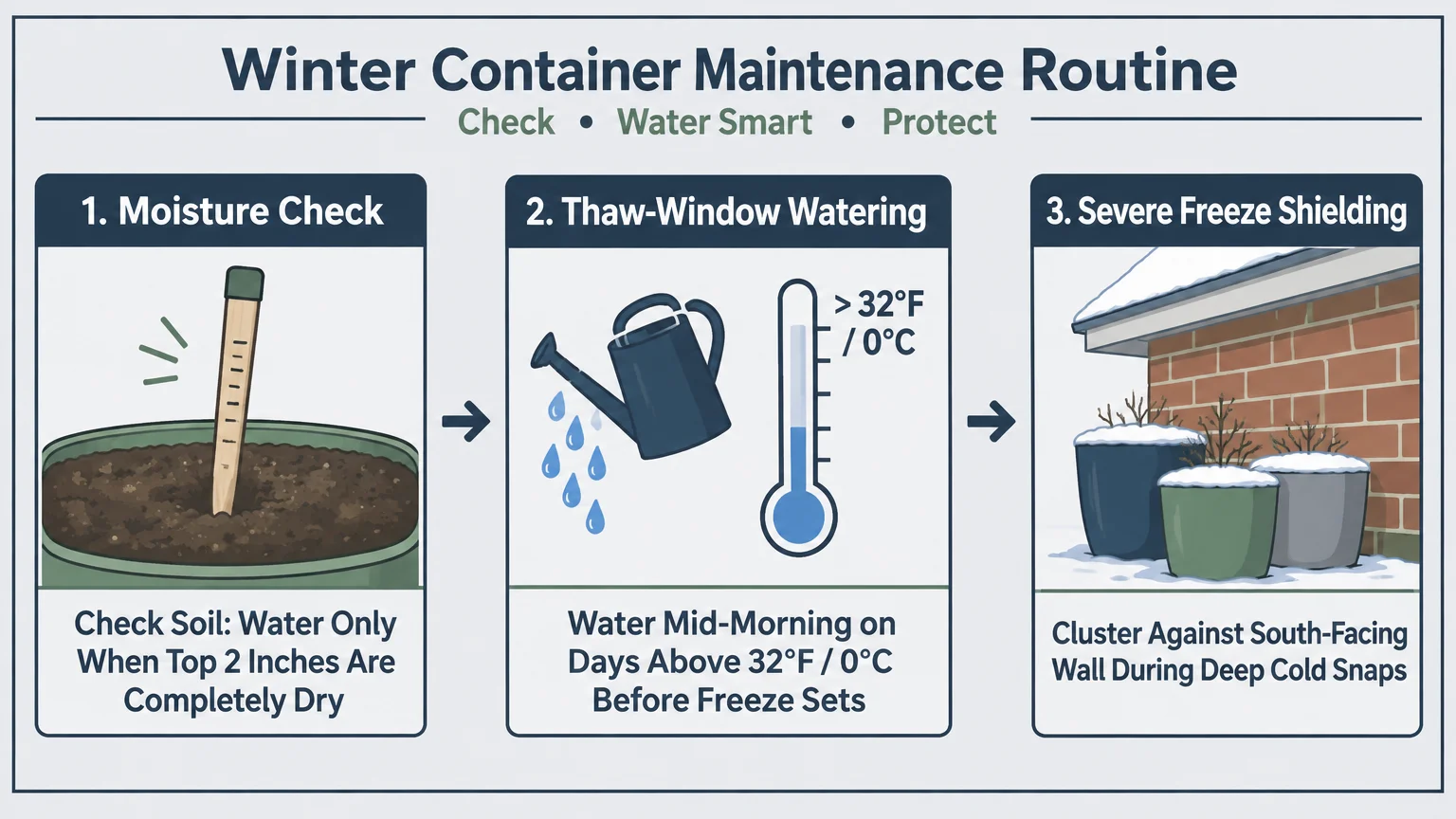
Soak newly planted pots thoroughly until water runs freely out the bottom holes, well before the first hard freeze arrives. Penn State Extension and the University of Illinois Extension explain that moist potting mix freezes more slowly than bone-dry soil, shielding tender roots.
Cluster finished containers together against a sheltered, south- or east-facing house wall to capture residual radiant heat and block harsh north winds. If an Arctic blast approaches, wrap exposed pot sides with bubble wrap secured inside an outer layer of plastic sheeting.
Troubleshooting tip: If a sudden cold snap hits before you wrap delicate ceramic pots, slide the entire plastic nursery liner out of the decorative outer pot and sink it temporarily into an empty garden bed surrounded by mulch.
Style & Finishing Touches
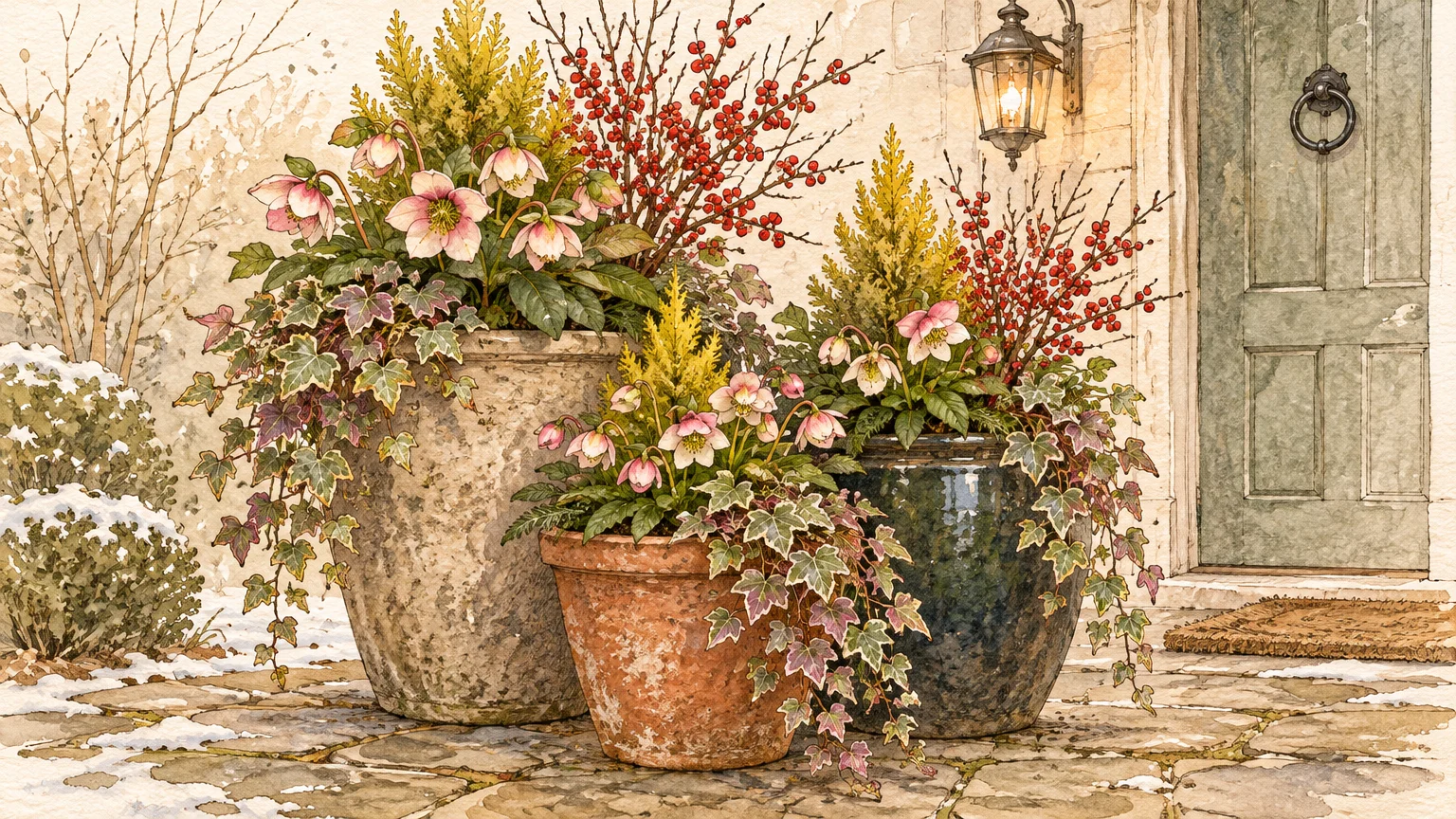
Great winter porch plants rely on strong silhouettes and foliage contrast rather than fleeting summer petals. Combine three visual layers in every large pot: an upright evergreen anchor, a textured mid-layer perennial, and a low, colorful rim accent.
Classic Front-Door Symmetry
Flank your front door with matching pairs of dark charcoal resin urns holding dwarf Alberta spruce centered over white hellebores and trailing pansies. This crisp green-and-white palette pops cleanly against brick, dark siding, and painted wooden doors without looking overly holiday-themed.
Moody Foliage Contrast for Mild Zones
Homeowners in mild regions—especially USDA Zones 8 and warmer where the two-zone buffer holds—can add black mondo grass (Ophiopogon planiscapus Nigrescens) along container edges. Rated hardy in Zones 6–11, deer-resistant, and absent from ASPCA toxicity lists, its jet-black blades look striking beside lime coral bells and pink ornamental kale.
Woodland Shade Palette
On covered north-facing stoops, pair red-budded Japanese skimmia with silvery hellebores and deep plum coral bells inside weathered wood or fiberglass troughs. Tucked alongside warm outdoor lanterns, the layered matte and glossy leaves deliver rich texture even under gray winter skies.
Smart Seasonal Upgrades
Skip heavy late-season fertilizer, which forces soft growth vulnerable to frostburn, and spend that budget on structural add-ons instead. Weaving warm white, outdoor-rated micro-LED string lights through boxwood or holly branches creates instant evening curb appeal until spring bulbs emerge.
Maintenance & Long-Term Care
Winter container gardening demands far less labor than summer upkeep, provided you time your watering around local weather forecasts. Check potting mix moisture with your finger every couple of weeks during dry, mild spells, especially for broadleaf evergreens that keep transpiring in winter sun.
Follow the Royal Horticultural Society rule strictly: never water containers when frost is forecast, and never fertilize plants during winter. Cold roots cannot absorb nitrogen, and late-season feeding triggers tender shoots that blacken overnight.
Watch walkways closely whenever you water during January thaws. Excess drainage spilling onto shaded steps can refreeze into clear black ice after sunset, so wipe up puddles or dust nearby stairs with pet-safe traction grit.
Once freezing weather passes in early spring, inspect coral bells and pansies for frost heave. Gently press lifted crowns back down into moist soil, trim off browned outer leaves with clean pruners, and feed with a balanced slow-release fertilizer as new shoots appear.
Give long-lived shrubs like holly and boxwood fresh room as they outgrow their winter homes. The Royal Horticultural Society recommends repotting holly every 2–3 years in spring into a container 2 inches wider all around using fresh potting mix.
FAQ
Can I leave terracotta or ceramic pots outside all winter?
Standard unglazed clay, ceramic, and glazed pottery absorb moisture and frequently crack during freeze-thaw cycles, as Penn State Extension warns. Only leave clay pots outdoors if they carry a verified frost-proof label, and always empty saucers and raise them on pot feet.
How often should I water winter container plants?
Water thoroughly before the soil freezes solid, then check pots with your finger during winter thaws when daytime temperatures stay above freezing. Broadleaf evergreens like boxwood, holly, and skimmia lose moisture through their leaves all winter, though you must hold off watering whenever frost is predicted.
Do I need to fertilize plants for pots in winter?
No; the Royal Horticultural Society confirms that container plants do not need fertilizer during winter. Avoid nitrogen-heavy feeds from late summer onward so you do not push vulnerable new growth right before a freeze.
Are winter porch plants safe around dogs and cats?
Pet safety depends completely on which species you pick, so separate pet-safe options from toxic evergreens near pet doors. Pansies, violas, coral bells, dwarf Alberta spruce, and black mondo grass are non-toxic or unlisted by the ASPCA, whereas hellebores and holly are toxic and skimmia berries can upset stomachs.
What happens to my winter plants once spring arrives?
Perennials and evergreen shrubs like hellebores, coral bells, boxwood, holly, and dwarf Alberta spruce can stay in containers year-round or move straight into landscape beds once soil warms. Cool-season annuals like pansies and ornamental kale will fade in summer heat, giving you an easy spot to swap in warm-weather flowers.
Takeaway & Next Steps
Choosing cold-hardy varieties rated two zones below your local climate keeps winter porch plants healthy through brutal cold snaps. Combined with frost-proof containers, elevated pot feet, and smart pre-freeze watering, your entryway stays green and polished until spring.
Take three simple steps this weekend to get started. First, check your current zone on the USDA Plant Hardiness Zone Map and count back two full zones to build your nursery shopping list.
Second, clear out summer annuals, scrub down frost-proof pots, and set aside terracotta pot feet or bricks. Third, plant a balanced mix of evergreen anchors and winter bloomers before your next deep freeze arrives.
Ready to show off your winter curb appeal? Share photos of your finished front-porch planters with us, or subscribe to our newsletter for weekly hands-on home and garden project ideas.