Moving your indoor greenery outdoors for the summer accelerates foliage growth and revitalizes sluggish root systems. Natural sunlight, humid breezes, and fresh rain showers deliver energy that indoor grow lights cannot match.
Before you move your favorite pots outside, you need a smart strategy to prevent scorched leaves and root shock. Choosing the right species makes all the difference for your porch or patio garden.
These seasonal transitions require proper timing, careful hardening off, and smart placement. Follow our proven guidance to turn your patio into a lush sanctuary while protecting your plant collection.
Project Overview & Why It Matters
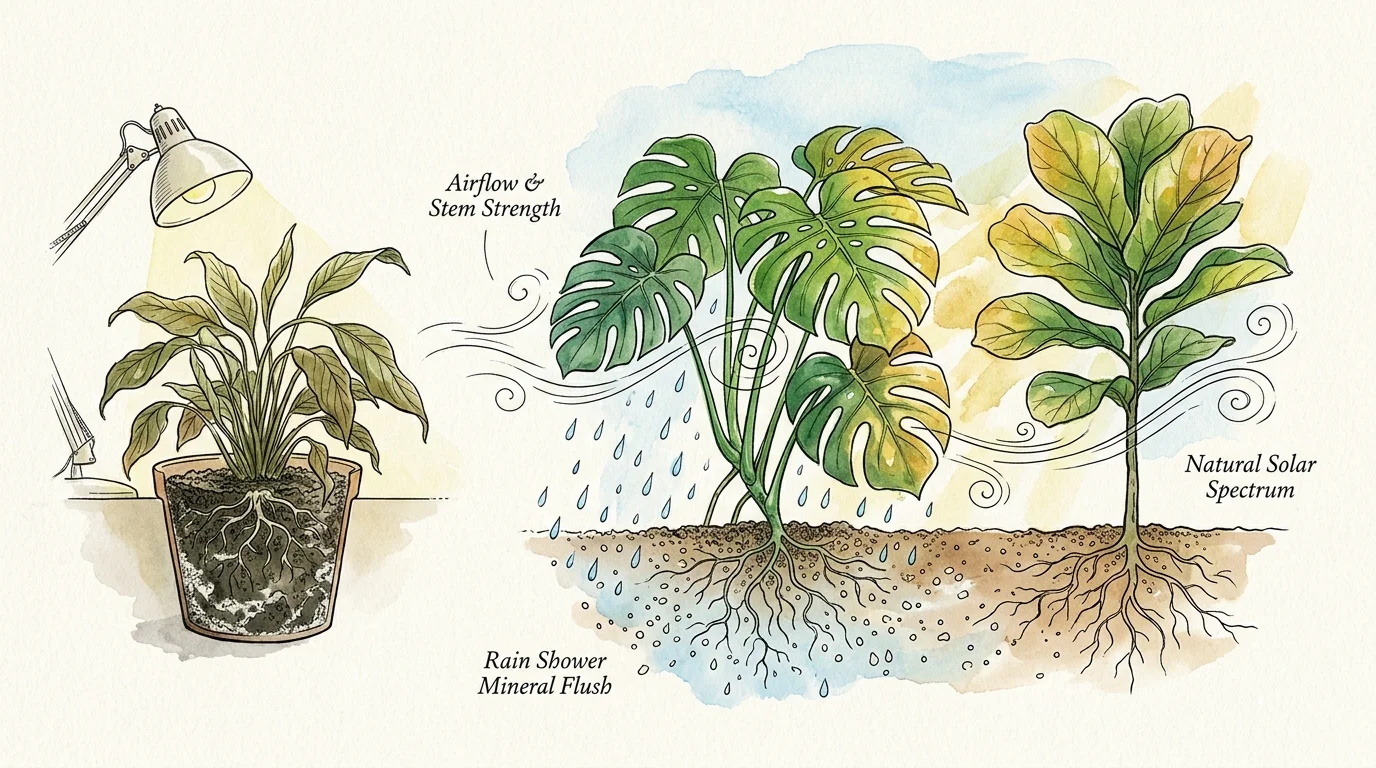
Summertime offers your houseplant collection an ideal environment for explosive seasonal growth. Moving plants outside summer conditions replaces dim artificial lighting with full-spectrum natural solar energy.
Outdoor airflow strengthens thin stems, while summer rains flush accumulated mineral salts from stale potting soil. Not every variety tolerates exterior elements, but these ten best outdoor houseplants flourish under open skies.
1. Snake Plant (Sansevieria)
Snake plants rank among the most resilient houseplants for outdoors. They tolerate high summer heat and withstand sporadic watering schedules without showing stress.
Place your snake plant in partial shade or gentle morning light. Harsh afternoon sunlight will bleach and burn their structural leaves.
2. Fiddle-Leaf Fig (Ficus lyrata)
Fiddle-leaf figs often languish in stagnant indoor air during long winters. Moving them outside into humid air stimulates rapid flushes of large, violin-shaped foliage.
Position your fig under a covered porch or leafy pergola. Direct midday rays will scorch the sensitive foliage within hours.
3. Monstera Deliciosa
Monstera deliciosa thrives outdoors when summer humidity matches its native tropical climate. Warm breezes trigger dramatic leaf fenestrations and vigorous aerial root development.
Keep your monstera in bright, dappled shade away from harsh sunbeams. Filtered morning light brings out rich emerald color across the broad leaves.
4. Spider Plant (Chlorophytum comosum)
Spider plants produce dozens of cascading runner plantlets when hung in exterior spaces. Outdoor breezes improve air circulation, which prevents indoor fungal leaf spotting.
Hang these resilient plants in full shade under a porch awning. Direct sun quickly browns delicate leaf tips and fades variegated foliage.
5. Jade Plant (Crassula ovata)
Jade plants love sunny patios once you acclimate their thick, fleshy pads. Outdoor warmth and bright light produce brilliant red margins along each leaf edge.
Ensure your container features open drainage holes before leaving jade outside. Trapped summer rainwater causes rapid root rot in drought-adapted succulents.
6. Boston Fern (Nephrolepis exaltata)
Dry indoor air often leaves Boston ferns brittle, pale, and messy. High outdoor humidity quickly rejuvenates these forest natives into lush, cascading green spheres.
Suspend your fern in deep shade beneath a north-facing overhang. Shield the delicate fronds from strong afternoon winds and drying sunbeams.
7. Golden Pothos (Epipremnum aureum)
Golden pothos vines grow several feet during a single warm summer season outdoors. Elevated humidity expands leaf surface size and brightens yellow variegation patterns.
Hang pothos baskets along sheltered railing posts away from direct sunlight. Partial shade keeps the vines lush, healthy, and actively branching.
8. Ponytail Palm (Beaucarnea recurvata)
Ponytail palms store reserve moisture inside their swollen, bulbous trunk bases. This hardy specimen thrives in baking deck heat and welcomes direct sunbeams.
Acclimate your ponytail palm gradually over two weeks before exposing it to all-day sun. Once adapted, it withstands hot western exposures without wilting.
9. Rubber Tree (Ficus elastica)
Rubber trees develop thick, woody stems and leathery leaves in warm outdoor air. Strong natural light encourages vertical branching that turns spindly stems into sturdy trees.
Place your rubber tree in bright, indirect light with brief morning sun exposure. Filtered light prevents leaf drop and deepens burgundy foliage colors.
10. Tropical Hibiscus (Hibiscus rosa-sinensis)
Tropical hibiscus shrubs rarely produce blooms indoors due to insufficient light levels. Moving your hibiscus onto an open patio produces non-stop, vibrant flowers all summer long.
Position this heavy feeder in full outdoor sunlight after a one-week hardening period. Provide daily watering and biweekly organic fertilizer to fuel continuous blooming.