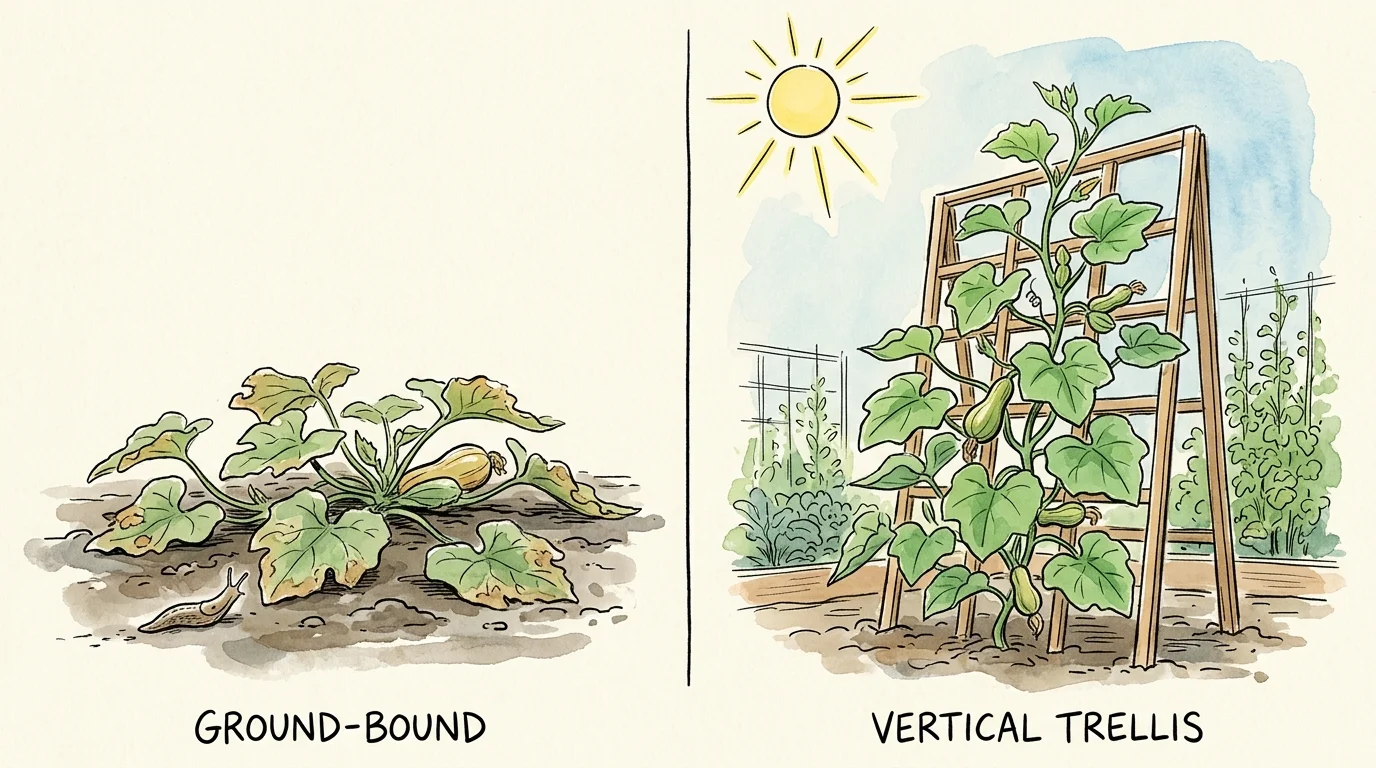
Maximizing your vegetable harvest in a compact backyard starts by training your crops to grow upward instead of outward. By utilizing vertical structures, you double your usable garden acreage, improve airflow, and drastically lower the risk of fungal blights that ruin ground-bound produce. Building sturdy supports for climbing vegetables for trellis gardening creates an organized, visually stunning landscape that protects developing fruit from hungry ground pests. Whether you manage a sprawling suburban plot or a modest urban patio, establishing strong vertical support systems will transform struggling vining plants into prolific producers. You will save your back from excessive bending while harvesting clean, healthy crops all season long.
Project Overview & Why It Matters
Growing crops vertically transforms horizontal footprint limitations into high-yielding three-dimensional space. When foliage spreads out against a vertical framework, it captures maximum solar energy throughout the day, accelerating photosynthesis and boosting fruit yields. Ground-dwelling pests like slugs, snails, and squash bugs struggle to access foliage elevated high above the soil line. Furthermore, keeping leaves off damp soil eliminates direct contact with soil-borne pathogens like powdery mildew, early blight, and bacterial spot.
Understanding which crops require support ensures you spend your time and budget wisely. Specialized mechanisms—such as tendrils, twining stems, or scramblers—require specific support structures. Supporting these vegetables that need vertical support prevents stem breakage under heavy fruit loads and keeps garden pathways open for easy harvesting and routine garden maintenance. Implementing permanent or modular trellising systems elevates the structural visual appeal of your yard while delivering significantly cleaner harvests year after year.