Transforming your outdoor space into a vibrant haven for native wildlife requires only a few strategic plant choices and simple site preparation. By cultivating pollinator friendly plants in your yard, you directly support essential ecosystem engineers while elevating your landscape with continuous, seasonal color. North American native bees face mounting pressures, with roughly 1 in 4 species currently at elevated risk of extinction, while iconic Eastern monarch butterfly populations have dropped by nearly 80 percent since the 1990s. Designing a dedicated backyard pollinator garden creates a vital biological corridor that provides rich nectar, pollen, and shelter. You can easily build a low-maintenance sanctuary that fits your budget, enhances curb appeal, and yields immediate environmental rewards.
Project Overview & Why It Matters
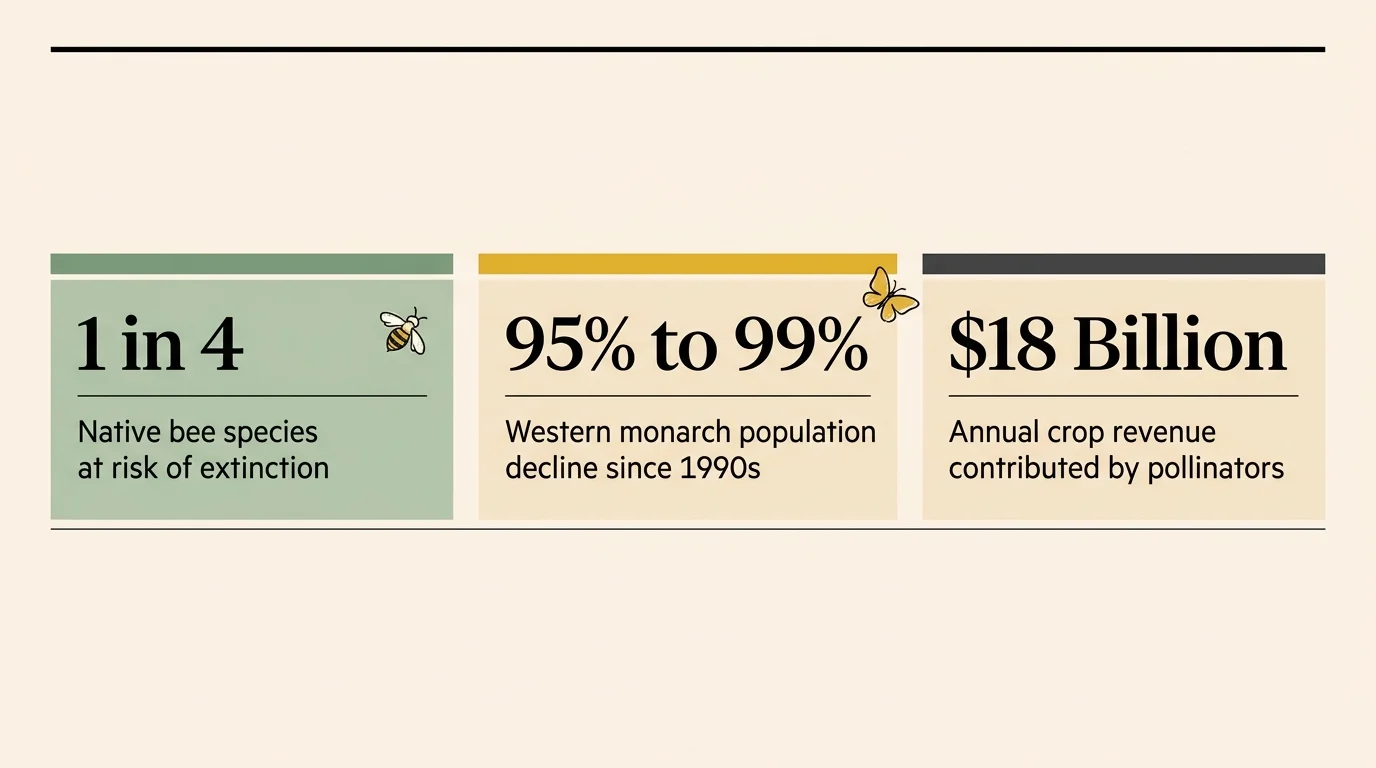
Building a habitat for beneficial insects goes far beyond basic residential landscaping; it serves as a critical environmental intervention for your local neighborhood. Across the globe, more than 85 percent of flowering plant species and over 30 percent of human food and beverage crops rely directly on animal pollinators. Within the United States alone, native and managed pollinators contribute more than $18 billion annually to agricultural crop revenue. Managed honey bees account for roughly $700 million of that total economic value through pollination services and hive production.
The ecological crisis facing butterflies and native solitary bees highlights the urgent need for restored residential habitat. Western monarch butterfly populations wintering along the California coast have suffered a catastrophic decline of over 95 to 99 percent since the 1990s. Recognizing this steep decline, the U.S. Fish and Wildlife Service formally proposed listing the monarch butterfly as a threatened species under the Endangered Species Act in December 2024, designating 4,395 acres of critical California habitat. Although federal regulators recategorized the final ruling under long-term administrative actions in late 2025, home gardens offer immediate relief. By installing the best plants for pollinators in your yard, you construct essential feeding stops for migrating insects.
Selecting native perennials establishes a self-sustaining ecosystem that requires significantly less synthetic fertilizer, supplemental watering, and labor than conventional turf grass. A high-impact backyard pollinator garden focuses on resilient species that flower sequentially from early spring through late autumn. Here are seven exceptional plant choices that deliver maximal ecological value and visual beauty for your landscape:
1. Butterfly Weed (Asclepias tuberosa): This native milkweed features brilliant orange blooms that serve as an essential host plant for monarch caterpillars and a prime nectar source for native bees.
2. Purple Coneflower (Echinacea purpurea): Featuring sturdy stems and vibrant magenta petals, this drought-tolerant perennial attracts swallowtails, bumblebees, and songbirds seeking late-season seeds.
3. Black-Eyed Susan (Rudbeckia hirta): Famous for bright golden petals surrounding dark central cones, this long-blooming native provides constant pollen from mid-summer until early frost.
4. Bee Balm (Monarda fistulosa): Producing distinct purple blossoms, this fragrant mint-family member excels at attracting pollinators to garden beds, including hummingbirds and clearwing moths.
5. Anise Hyssop (Agastache foeniculum): Featuring soft lavender spikes and licorice-scented foliage, this superstar producer supplies dense, continuous nectar to hundreds of bee species daily.
6. New England Aster (Symphyotrichum novae-angliae): Bursting with deep violet flowers in late autumn, this late-season powerhouse provides essential fuel for migrating monarchs and winter-bound bees.
7. Showy Goldenrod (Solidago speciosa): Offering rich yellow plumes in late summer, goldenrod delivers crucial high-protein pollen required by overwintering native bee queens.