Tools, Materials, and Prep Checklist
Proper preparation ensures your new garden bed thrives without unexpected cost overruns or excessive physical strain. Before purchasing plants for bees and butterflies, gather your tools and assess your soil conditions to streamline installation. Investing in quality hand tools and organic soil amendments creates healthy root zone conditions that support deep plant establishment.
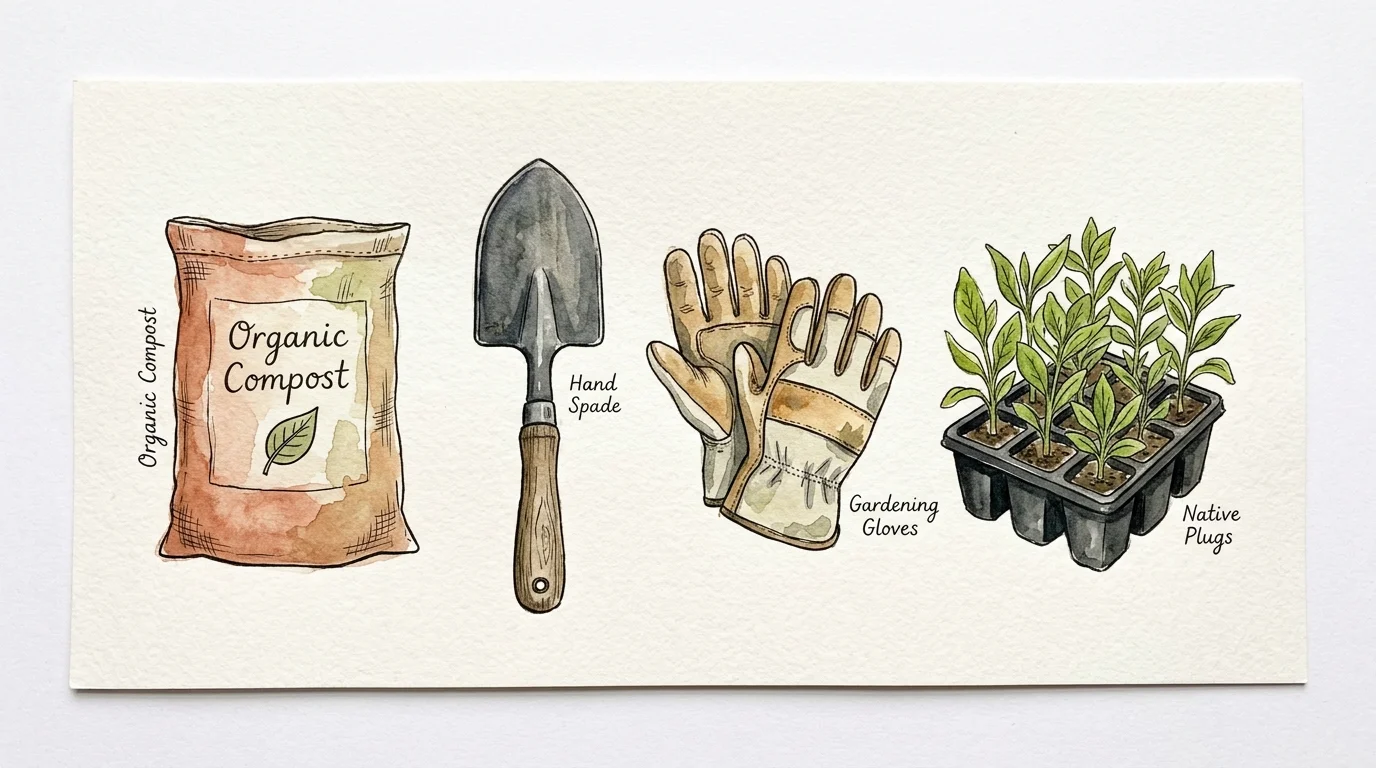
Square-Point Shovel and Spade: Expect to spend $25 to $45 for heavy-duty forged steel shovels to slice through existing turf grass, define clean bed edges, and dig planting holes.
Garden Fork or Hand Tiller: Quality soil forks cost between $30 and $50. Use them to break up compacted subsoil without destroying beneficial fungal networks.
Soil pH Test Kit: Simple home test kits cost $12 to $25. Testing reveals whether your soil requires lime or organic matter to improve drainage.
Organic Compost: Budget $50 to $90 for 2 to 3 cubic yards per 100 square feet of garden space to improve soil structure and deliver essential bio-available nutrients.
Untreated Hardwood Mulch: Plan on 3 to 4 bags of shredded bark mulch at $4 to $6 per bag for a 100-square-foot area to suppress aggressive weeds.
Pesticide-Free Native Perennials: Container plants in 1-gallon sizes cost $12 to $18 each. Sourcing certified pesticide-free stock ensures your plants carry no harmful neonicotinoid residues.
Personal Protective Equipment: Leather work gloves ($15) and safety glasses ($10) protect your hands and eyes during bed prep.
Soaker Hose System: Drip irrigation kits cost $25 to $50, delivering water directly to root zones while minimizing evaporation.
Refer to ecological restoration guidelines provided by the Xerces Society for Invertebrate Conservation to select regional plant variations that match your precise hardiness zone.