You can slash your backyard mosquito population and reclaim your outdoor living space by swapping out hidden pest havens. Certain popular ornamental plants quietly collect stagnant moisture and shelter biting swarms right next to your patio.
Female mosquitoes need only a tablespoon of trapped water and five warm summer days to breed hundreds of biting insects. Choosing the right flora protects your family while keeping your yard vibrant and beautiful.
Before you visit the nursery this weekend, inspect your garden beds for high-risk plant varieties. Smart landscaping choices stop mosquito infestations before they ever hatch.
Project Overview & Why It Matters
Mosquito management starts with habitat disruption rather than chemical foggers. While adult mosquitoes feed on plant nectar, females require stagnant water to lay their eggs.
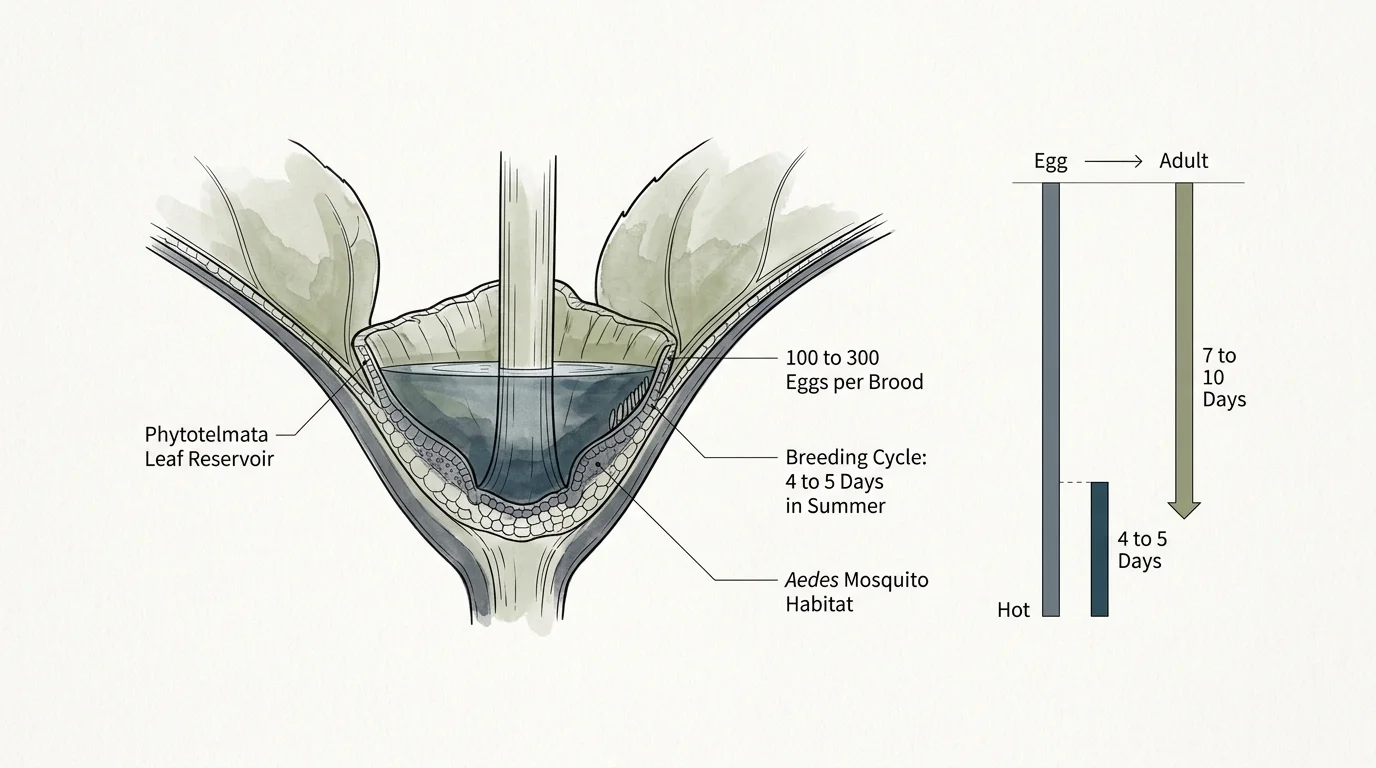
According to official CDC mosquito prevention guidelines, mosquito eggs take only 7 to 10 days to reach adulthood. In hot summer weather, that breeding cycle accelerates to just 4 to 5 days.
A single female deposits 100 to 300 eggs per brood into standing water. Even a tiny pocket of moisture trapped in a leaf joint can produce a massive backyard infestation.
Certain landscape plants feature physical cup structures called phytotelmata that hold rainwater for weeks. These natural reservoirs create ideal nurseries for dangerous vectors like Aedes aegypti and Aedes albopictus.
Other plants grow in dense, ground-hugging mats that block airflow and trap ambient humidity. These damp zones provide dark daytime shelter where adult mosquitoes hide from midday heat and predators.
By identifying and replacing these garden pest plants, you eliminate both breeding reservoirs and resting habitats. Your patio becomes substantially more comfortable, and your landscape requires fewer synthetic pesticide treatments.