Step-by-Step Instructions
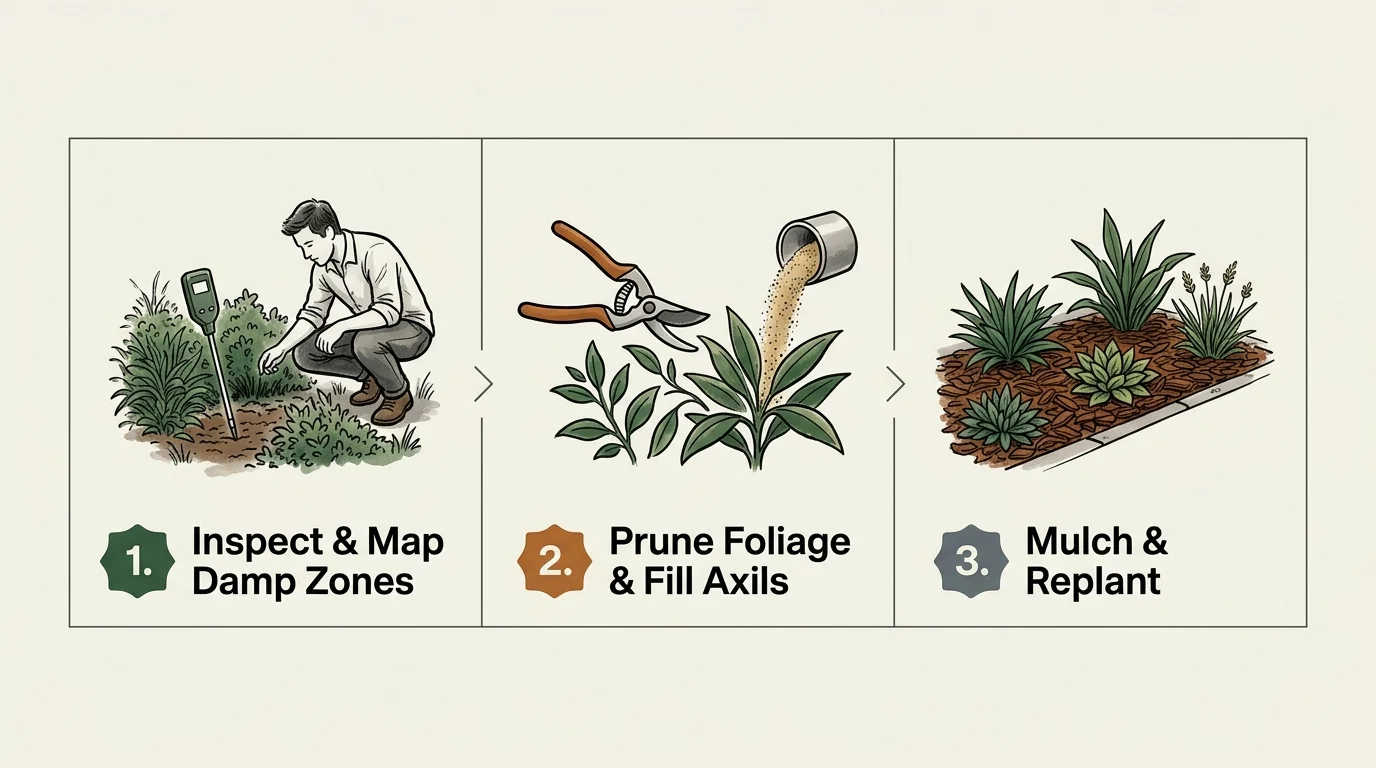
Eliminating mosquito attracting plants requires a structured approach. Follow these phases to identify problem species, remove high-risk foliage, and establish better botanical alternatives.
Phase 1: Identify and Remove the 10 Mosquito Magnets
1. Bromeliads (Bromeliaceae): These tropical favorites form natural center cups that hold water indefinitely. Municipal mosquito control agencies routinely cite bromeliads as primary suburban breeding zones for disease-carrying mosquitoes.
If you keep bromeliads, flush their central cups with a garden hose every five days. Alternatively, sprinkle biological larvicide granules directly into the center wells twice monthly.
2. Elephant Ears and Taro (Colocasia and Alocasia): The broad, cup-shaped leaf joints funnel rainwater directly into tight stem bases. The massive leaves also cast deep shade that keeps underlying topsoil soggy and cool.
Replace these water-hungry specimens with native upright grasses or canna varieties that feature open, self-draining stem structures.
3. Water Hyacinth (Pontederia crassipes): This aquatic plant forms impenetrable surface mats across ponds and water features. The tangled root system protects mosquito larvae from predatory fish and prevents natural water movement.
Federal law under 18 U.S.C. § 46 strictly prohibits transporting water hyacinth across state lines due to its invasive nature. Remove this species immediately and dispose of it in municipal yard waste bags.
4. Water Lettuce (Pistia stratiotes): Much like water hyacinth, water lettuce creates stagnant floating mats in backyard water gardens. The feathery submerged roots shelter larvae from water ripples and goldfish.
Several states, including Florida and Michigan, ban the possession and sale of water lettuce. Replace it with open-water aerators and submerged oxygenating plants like hornwort.
5. English Ivy (Hedera helix): This dense evergreen groundcover traps decaying leaves, blocks sunlight, and holds immense surface moisture. The humid microclimate beneath ivy mats provides a premier daytime shelter for adult mosquitoes.
Strip back dense ivy beds using a flat spade and heavy garden rake. Replace this aggressive cover with permeable gravel pathways or airy native groundcovers like creeping thyme.
6. Hollow-Stem Running Bamboo (Phyllostachys spp.): When broken or pruned incorrectly, bamboo stalks expose hollow internodes. These open chambers collect rainwater that cannot drain, creating hundreds of hidden micro-nurseries throughout the grove.
Cut broken bamboo culms flush with the nearest solid growth node to eliminate standing water pockets. Check local municipal codes, as many jurisdictions restrict running bamboo varieties.
7. Overgrown Privet (Ligustrum spp.): Unpruned privet hedges grow thick, interlocking branches that choke out breezes and maintain high humidity. Mosquitoes avoid open breezes and roost inside these damp, windless thickets during midday hours.
Thin interior branches aggressively to allow sunlight and wind penetration through the shrub canopy. Maintain a minimum gap of two feet between building foundations and mature hedge lines.
8. Papyrus and Bog Reeds (Cyperus papyrus): Papyrus requires saturated mud and shallow standing water to thrive in residential beds. These swampy conditions quickly stagnate when garden irrigation pools around the clump bases.
Relocate moisture-loving marginals into self-contained decorative planters fitted with internal drainage plugs. Never allow uncirculated irrigation water to sit around the root crown.
9. Broadleaf Hostas (Hosta spp.): Large, horizontally cupped hosta leaves collect sprinkler water and morning dew for days. Their dense canopy creates a cool, damp habitat directly over moist soil beds.
Switch to narrow-leaf hosta cultivars with upright growth habits that shed surface water naturally. Always direct drip irrigation lines to the soil rather than spraying overhead leaves.
10. Carnivorous Bog Bowls (Sarracenia in unmaintained trays): Pitcher plants often sit in deep water saucers to simulate natural wetland environments. Unmaintained trays become prime mosquito nurseries within four days during peak summer heat.
Treat bog trays with biological larvicide granules to kill developing larvae without harming sensitive carnivorous plants. Keep water levels shallow so trays dry out periodically between scheduled waterings.
Phase 2: Remediate Soil and Improve Drainage
After excavating problem plants, address the underlying soil moisture conditions. Dig out compacted clay and incorporate coarse sand alongside organic compost to boost porosity.
Re-grade planting beds to establish a minimum two percent slope away from outdoor living zones. Ensure downspout extensions discharge runoff at least six feet away from foundation garden beds.
Phase 3: Install Well-Drained Botanical Replacements
Select upright, drought-hardy shrubs and perennials that encourage strong airflow around patio borders. Space new plantings according to their mature width to avoid creating damp, congested thickets.
Top newly installed beds with a two-inch layer of shredded cedar or pine bark mulch. Avoid piling mulch against woody plant stems, which holds destructive moisture against the bark.