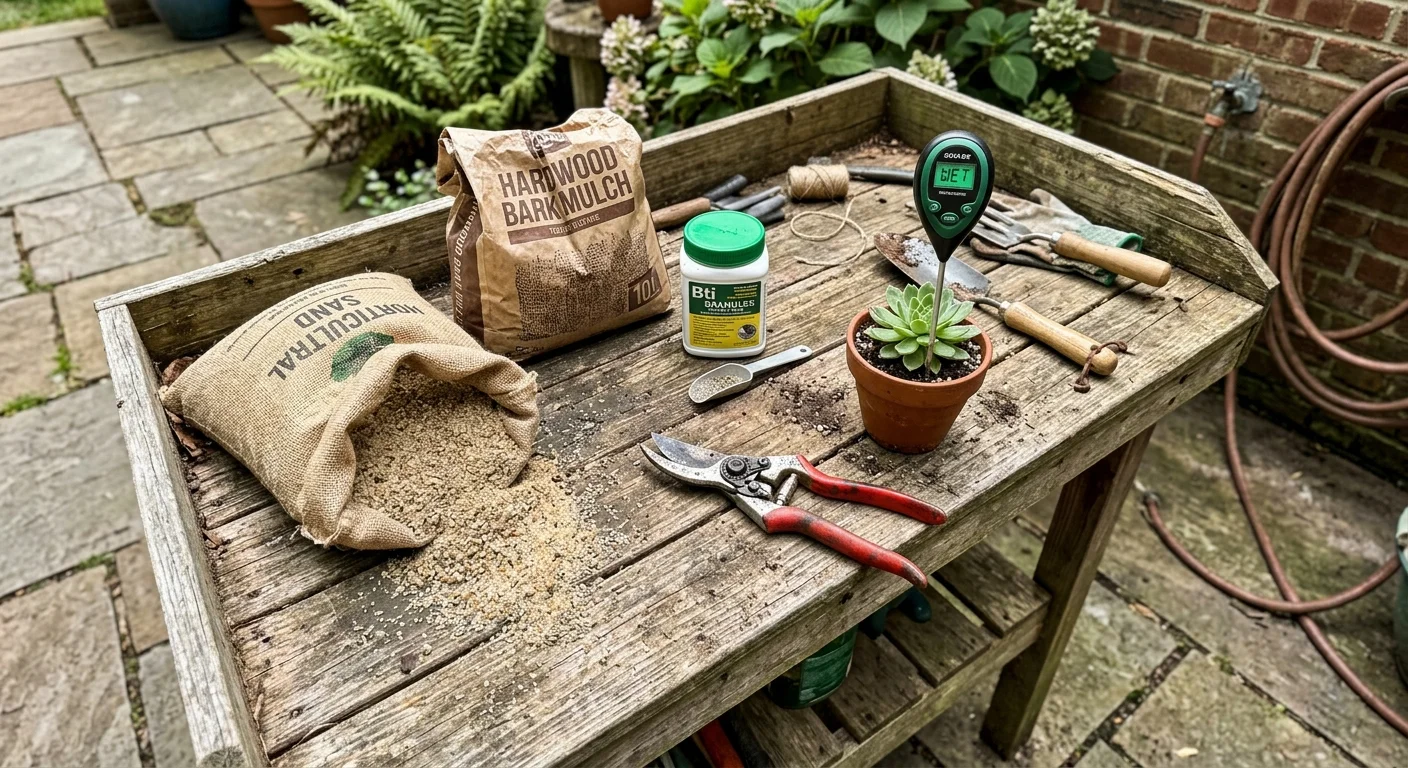
Tools, Materials, and Prep Checklist
Auditing and renovating your garden beds requires basic landscaping tools and proper safety gear. Having the right equipment on hand ensures you complete the project efficiently in a single weekend.
Required Tools
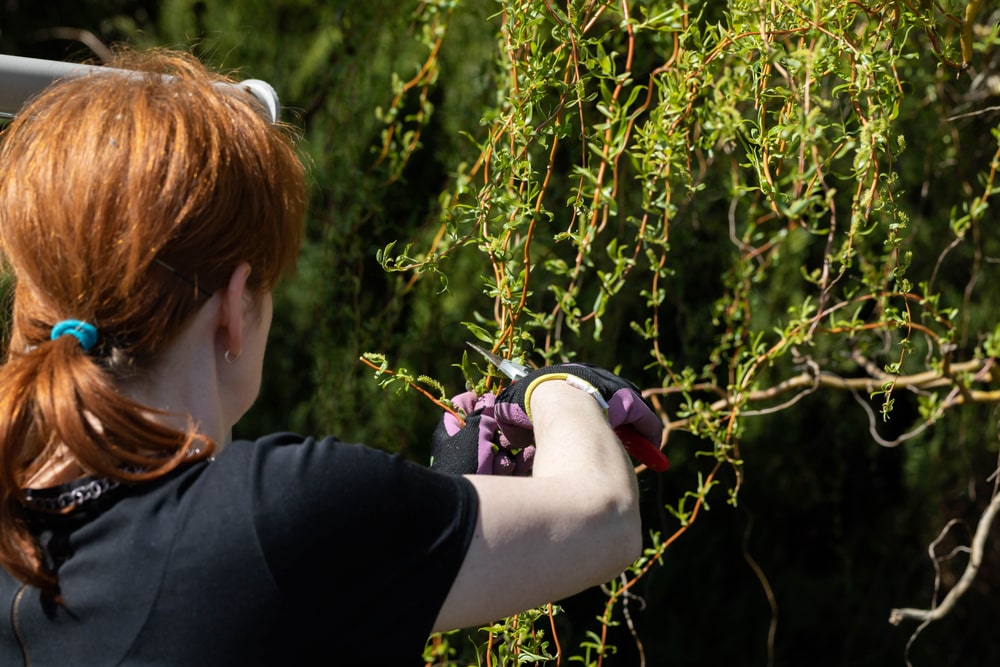
Bypass Pruning Shears: Essential for trimming dense foliage, removing damaged stalks, and testing stem hollowness. Expect to spend $25 to $45 for a durable pair.
Long-Handled Garden Spade: Needed for digging out invasive root systems, dividing aggressive perennials, and reshaping drainage swales. High-carbon steel spades cost roughly $30 to $60.
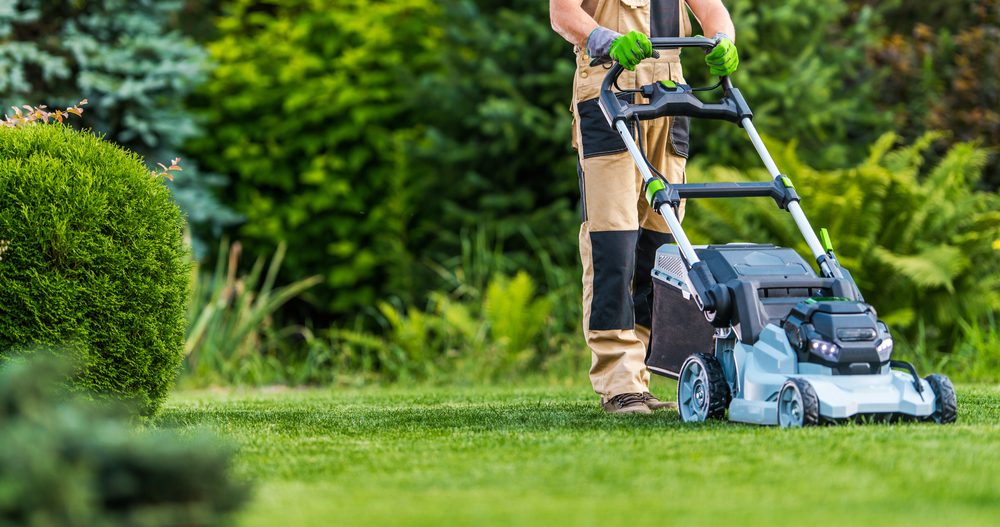
Cordless Leaf Blower: Quickly clears wet leaf litter and organic debris from under dense garden canopies. Quality homeowner models range from $100 to $200.
Soil Moisture Meter: Pinpoints damp microclimates and overwatered zones across your lawn and planting beds. Digital probes cost between $12 and $25.
Materials and Amendments
Bti Larvicide Granules: Biological treatment using Bacillus thuringiensis israelensis to eliminate mosquito larvae safely. A container costs $15 to $30 and treats standing reservoirs effectively.
Coarse Horticultural Sand: Fills standing reservoirs in leaf axils and improves soil drainage around thirsty root zones. Budget $5 to $10 per 50-pound bag.
Coarse Hardwood Bark Mulch: Retards weeds while allowing excess surface water to evaporate faster than dense peat mulches. Costs $4 to $7 per two-cubic-foot bag.
Native Replacement Plants: Drought-tolerant perennials and mosquito repellent landscaping alternatives. Budget $15 to $40 per three-gallon nursery container depending on the selected species.
Preparation Guidance
Begin by walking your property 24 hours after a rainfall or irrigation cycle. Inspect the base and foliage of every shrub, perennial, and groundcover for trapped moisture.
Call 811 to locate underground utility lines before excavating deep root systems or invasive bamboo stands. Always wear heavy leather gloves and eye protection when cutting fibrous stalks or thorny brush.