You can slash your weekend chores and reclaim hundreds of hours by replacing thirsty turf with a no mow front yard. Modern lawn alternatives cut your outdoor water bills while boosting curb appeal with vibrant textures and colors.
Traditional grass demands endless mowing, chemical fertilizers, and expensive weekend fuel. Trading high-maintenance sod for durable ground covers or hardscaping creates a stunning, grass free yard that thrives with minimal effort.
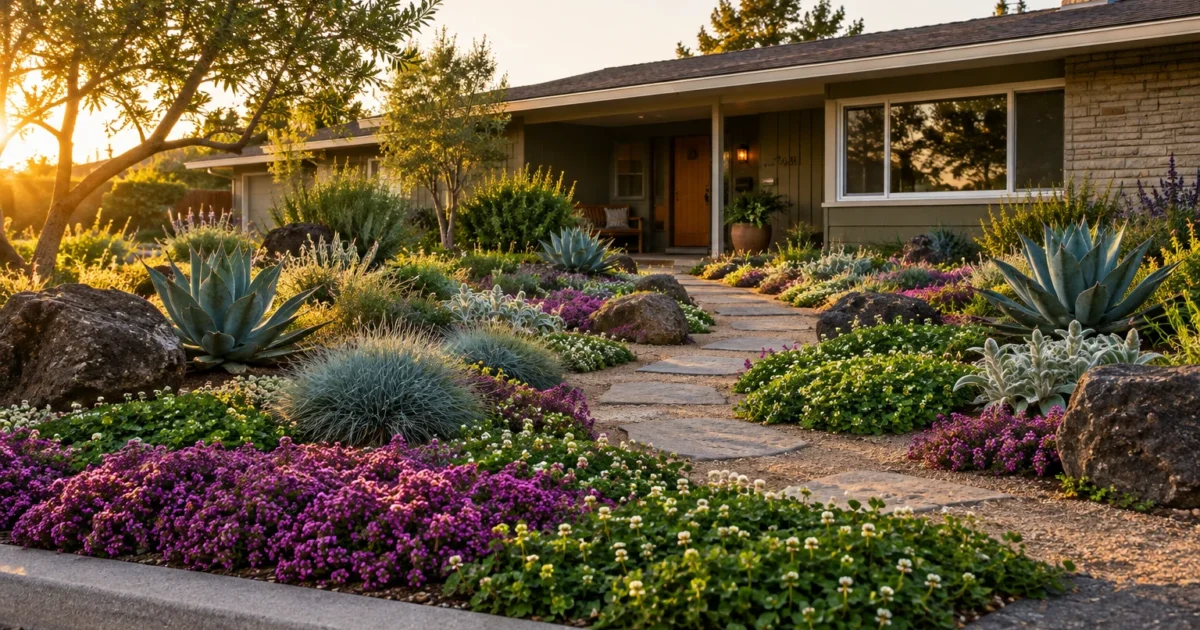
Whether you want a lush clover carpet or a water-wise gravel courtyard, these front yard landscaping ideas deliver lasting style. You will protect your budget, save precious time, and eliminate noisy mowing routines permanently.
Project Overview & Why It Matters
Standard residential lawns require immense resources that drain your wallet and consume your free time. Mowing every Saturday steals dozens of daylight hours each growing season.
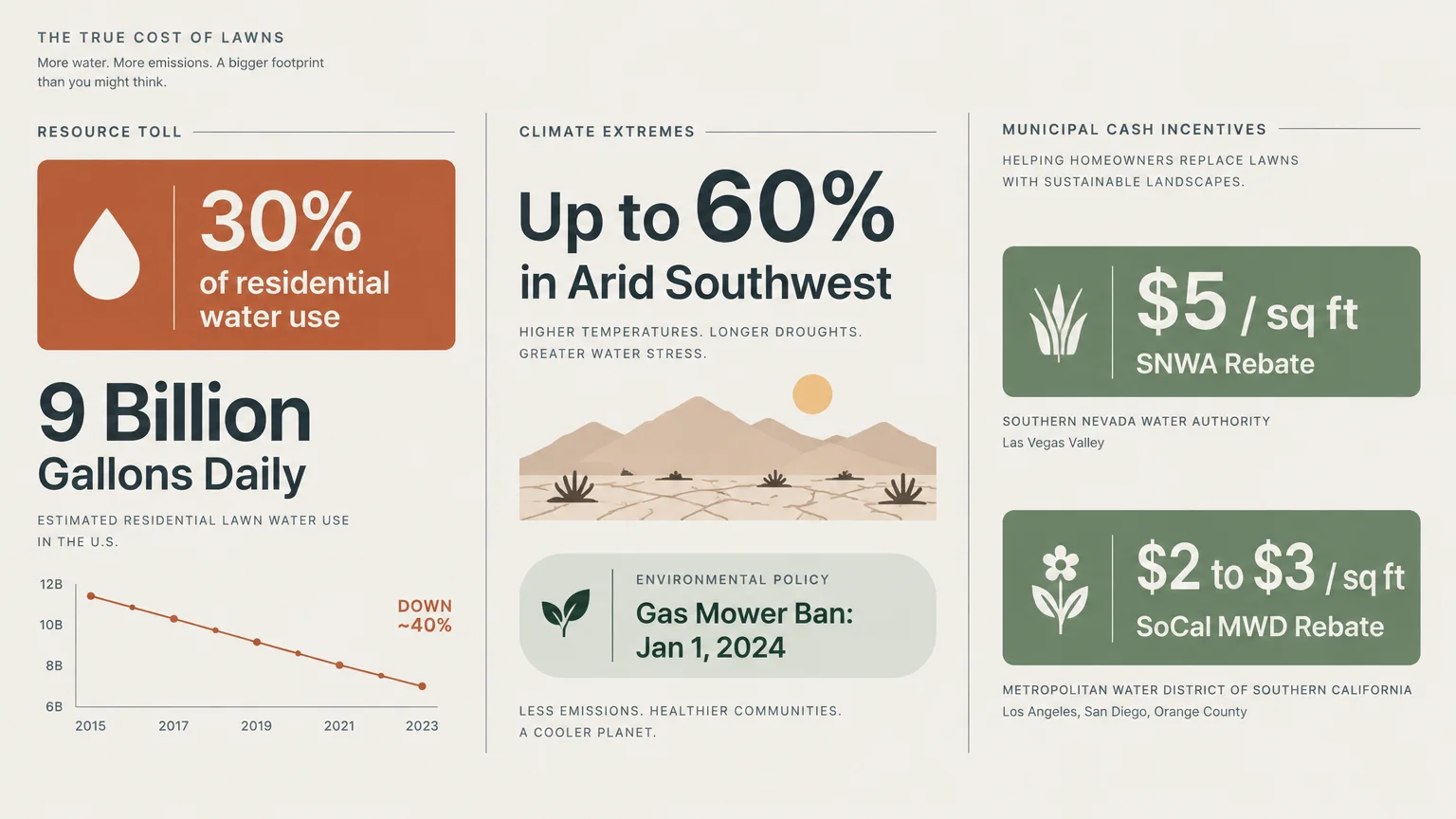
Data from the EPA WaterSense program reveals that landscape irrigation accounts for nearly 30% of all residential water use nationwide. That staggering demand totals approximately 9 billion gallons of water daily.
In arid southwestern states, outdoor watering climbs as high as 60% of total household consumption. Maintaining non-native grass in dry climates strains municipal supplies and escalates utility bills.
Gas-powered lawn equipment also creates heavy emissions during routine maintenance. In response, the California Air Resources Board banned the sale of new gas-powered mowers manufactured after January 1, 2024.
State legislation increasingly protects homeowners who replace turf with sustainable alternatives. Maryland enacted HB 322 in 2021 to prevent homeowner associations from restricting pollinator gardens.
Colorado enacted SB 23-178 in 2023, barring HOAs from prohibiting front yard xeriscaping. Similar protections exist in Texas Property Code § 202.007 and California Civil Code § 4735.
Municipalities now offer attractive financial incentives to eliminate grass. The Southern Nevada Water Authority provides $5 per square foot up to 10,000 square feet for turf conversions.
Additionally, the Metropolitan Water District of Southern California offers turf removal rebates starting at $2 to $3 per square foot. Converting to a low maintenance front yard pays immediate financial dividends.
Nine Front Yard Ideas That Need No Mowing
1. Dutch White Clover Carpet
A clover lawn gives you an emerald ground cover that never requires mowing. Dutch white clover naturally fixes nitrogen from the atmosphere, enriching your soil without synthetic fertilizers.
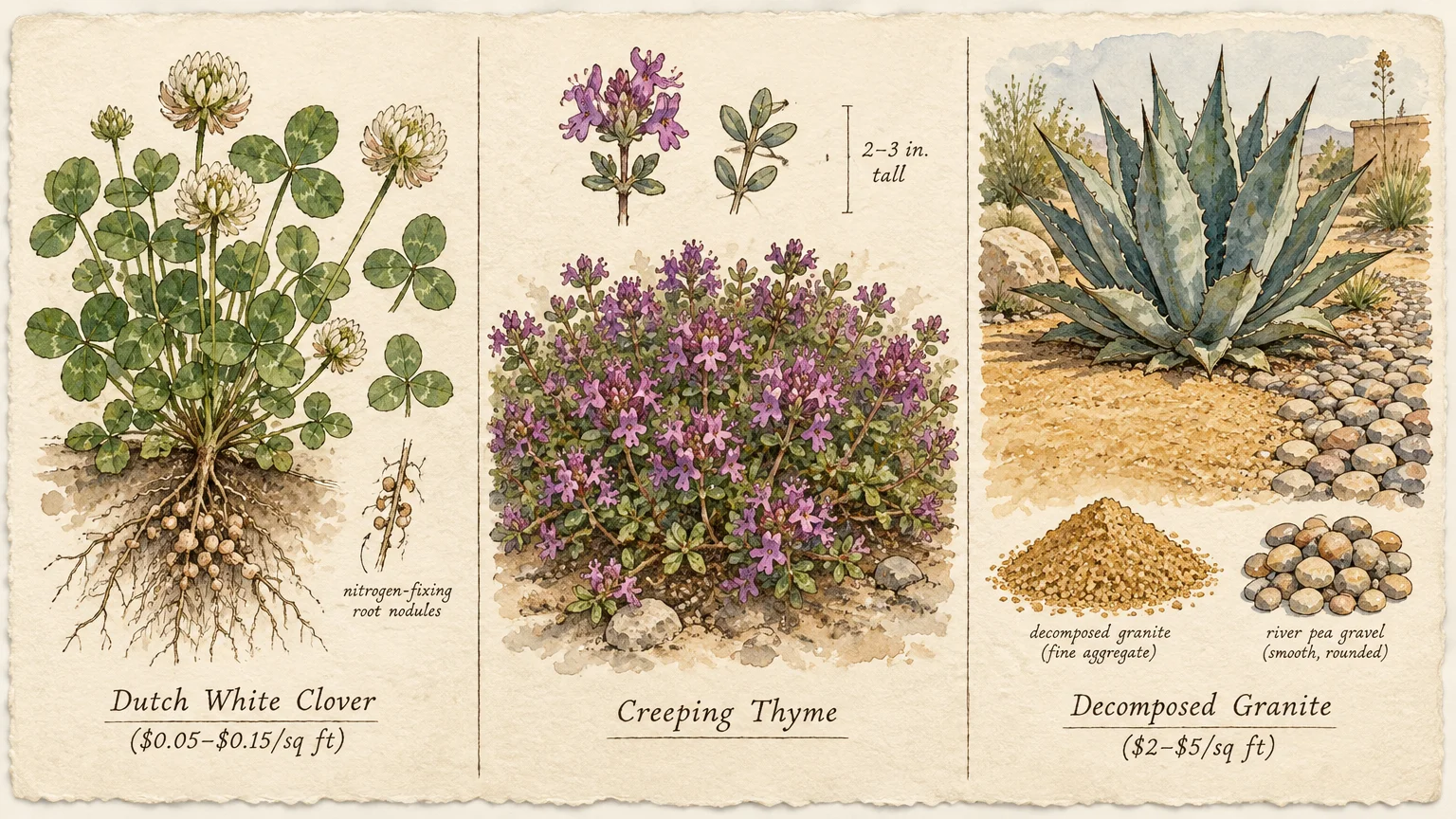
Seeding a clover lawn costs merely $0.05 to $0.15 per square foot, with a five-pound bag covering 10,000 square feet for roughly $150. It resists pet urine and stays green during summer heatwaves.
2. Decomposed Granite and Pea Gravel Xeriscape
Crushed aggregate delivers a clean architectural look for modern front yards. Decomposed granite packs firmly to create stable, walkable surfaces that suppress persistent weeds.
DIY gravel materials cost between $2 and $5 per square foot, or $4 to $8 per square foot professionally installed. Pair gravel expanses with drought-hardy agaves and ornamental boulders for striking texture.
3. Creeping Thyme Living Tapestry
Creeping thyme forms a dense, aromatic carpet that releases a fresh herbal fragrance underfoot. Plants reach only two to three inches in height, eliminating any need for a mower.
During early summer, creeping thyme explodes with vibrant magenta and purple blooms. It thrives in lean, well-draining soil and tolerates regular foot traffic along walkway edges.
4. Native Pollinator Tapestry Meadow
Replace monoculture turf with a diverse tapestry of indigenous perennials and native bunchgrasses. Regional flowers like black-eyed Susans, purple coneflowers, and coreopsis feed bees and migrating butterflies.
Native root systems dive deep into subsoil, making established plants exceptionally drought-tolerant. You only cut the stems back once in late winter to clear old growth.
5. Modern Flagstone and Permeable Paver Courtyards
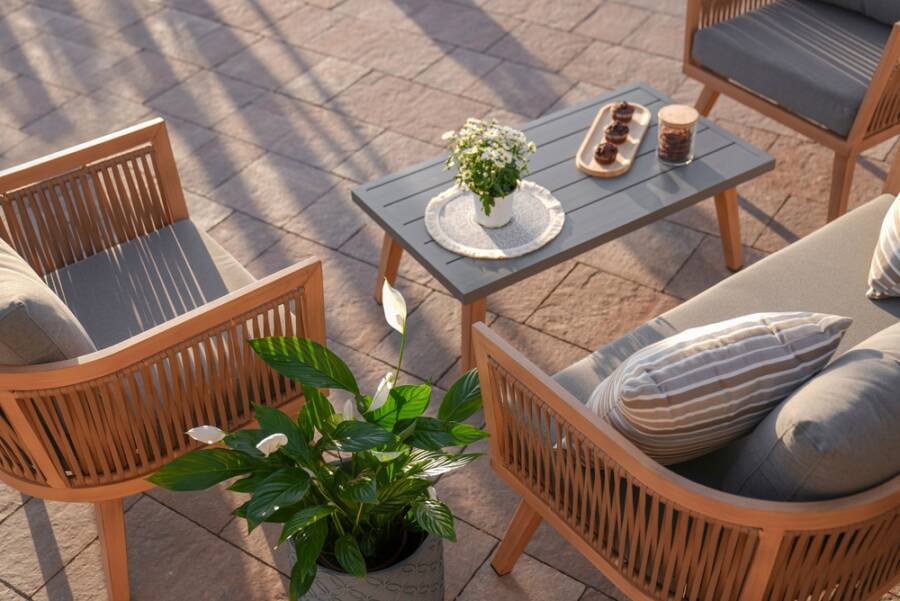
Hardscaping converts wasted turf into functional outdoor living space for entertaining neighbors. Natural flagstone and concrete pavers create a polished entryway that raises overall property appraisal values.
Fill the joints between pavers with polymeric sand or creeping thyme. Permeable paving captures stormwater runoff while permanently eliminating weekend mowing and watering duties.
6. High-Performance Synthetic Turf
Modern artificial turf looks remarkably realistic and stays bright green through all four seasons. High-grade antimicrobial synthetic fibers resist heavy pet activity and eliminate muddy footprints entirely.
Fully installed residential synthetic turf averages between $8 and $20 per square foot, with materials costing $4 to $6 per square foot. You enjoy a manicured lawn without using municipal water.
7. Hardwood Mulch and Ornamental Grass Beds
Layered shredded bark mulch combined with architectural ornamental grasses delivers exceptional visual depth at minimal expense. Feather reed grass, blue fescue, and maiden grass add gentle movement in the breeze.
Bulk shredded cedar mulch costs roughly $35 to $50 per cubic yard delivered. A three-inch mulch layer locks moisture into the soil and stops weed seeds from sprouting.
8. Low-Sun Native Moss Lawn
If mature shade trees cause traditional turf to thin and rot, plant a resilient moss lawn instead. Moss thrives in acidic, damp soil where conventional sod varieties consistently wither.
Sheet moss and cushion moss require zero fertilizers, weed killers, or mechanical mowing. They pull moisture and nutrients straight from ambient air, forming a velvety green carpet.
9. Terraced Rock Gardens and Dry Creeks
Dry riverbeds constructed with river rock and limestone boulders direct stormwater away from home foundations. Sculpted rock swales slow down heavy rainfall, preventing costly soil erosion.
Tuck creeping junipers, dwarf conifers, and sedums into rocky crevices for hardy greenery. Terracing a sloped yard with stone walls eliminates the dangerous chore of mowing steep hillsides.
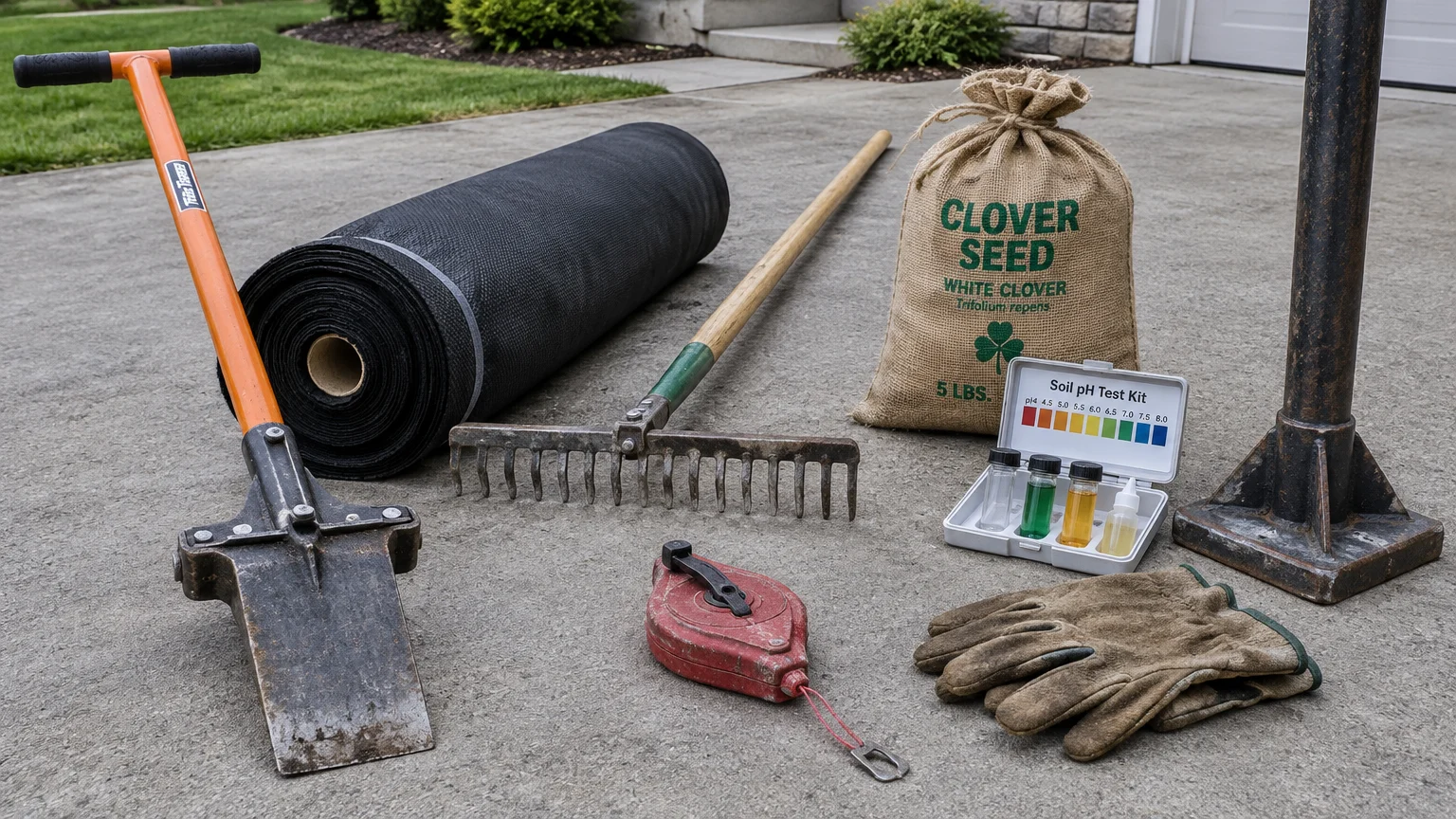
Tools, Materials, and Prep Checklist
Proper site preparation ensures your grass free yard installation lasts for decades. Renting the right machinery saves your back and speeds up turf extraction significantly.
Reserve a motorized sod cutter from The Home Depot for approximately $100 per day. You also need a heavy-duty wheelbarrow, flat spade shovel, bow rake, and hand tamper.
Purchase commercial-grade woven landscape fabric rather than flimsy plastic sheeting. Heavy geotextile fabric lets soil breathe and water pass while blocking stubborn weed roots.
Order bulk aggregates and mulch by the cubic yard from local suppliers to save money. One cubic yard covers roughly 100 square feet at a three-inch depth.
Always protect yourself with heavy leather work gloves, steel-toed boots, and impact-resistant safety glasses. Wear ear protection whenever operating vibrating motorized equipment.
Contact Call 811 at least three business days before excavating your property. Technicians mark buried electrical, gas, and communications lines free of charge.
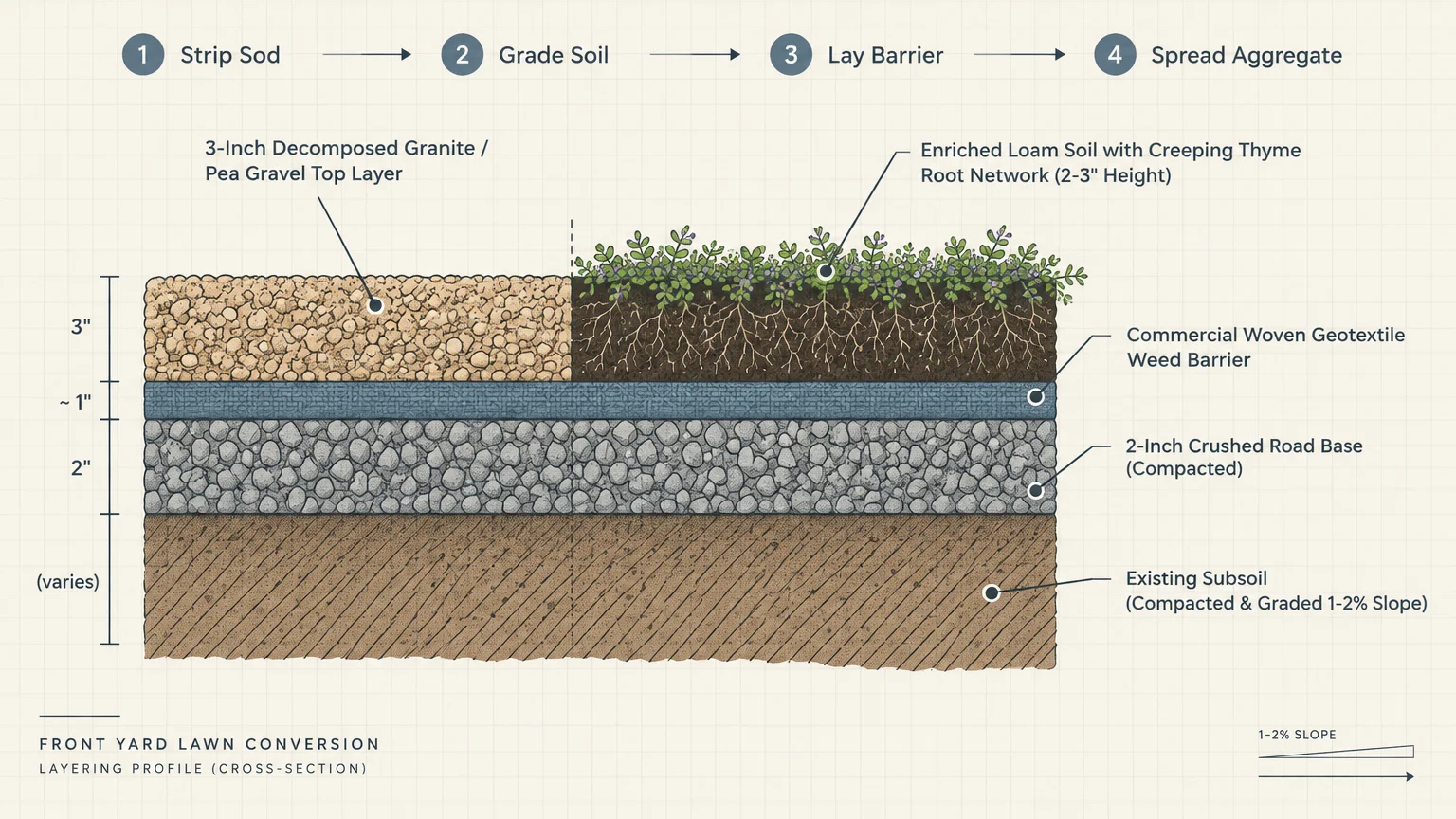
Step-by-Step Instructions
Phase 1: Clear the Lawn and Grade the Soil
Mark existing underground sprinkler heads with landscape marking flags before starting mechanical equipment. Slice through existing grass roots with the sod cutter set to a two-inch depth.
Roll up turf strips like carpet and compost them or offer them to neighbors. Verify that the subsoil slopes downward away from foundations by at least one-quarter inch per foot.
Phase 2: Install Weed Barriers and Edging
Install rigid steel or commercial composite edging along driveways, public sidewalks, and property lines. Set edging stakes one-half inch below pavement surfaces to eliminate trip hazards.
Roll out heavy commercial landscape fabric across the graded subsoil in overlapping rows. Overlap fabric seams by six to eight inches and secure them with steel landscape staples.
Phase 3: Lay Hardscapes, Irrigation, and Plants
Convert old spray sprinkler zones to high-efficiency drip irrigation tubing using pressure-regulated conversion kits. Position drip emitters near the root zones of your new shrubs and perennials.
Cut X-shaped slits into the landscape fabric to dig planting holes for shrubs. Distribute bulk gravel, decomposed granite, or organic mulch across the area to a three-inch depth.
Phase 4: Sowing and Rolling Living Ground Covers
Broadcast Dutch white clover or microclover seed evenly using a calibrated hand spreader. Lightly rake the soil surface to ensure seed-to-soil contact at an eighth-inch depth.
Roll the seeded area with a water-filled lawn roller to lock seeds firmly in place. Mist the soil twice daily for ten days until tender green sprouts establish roots.
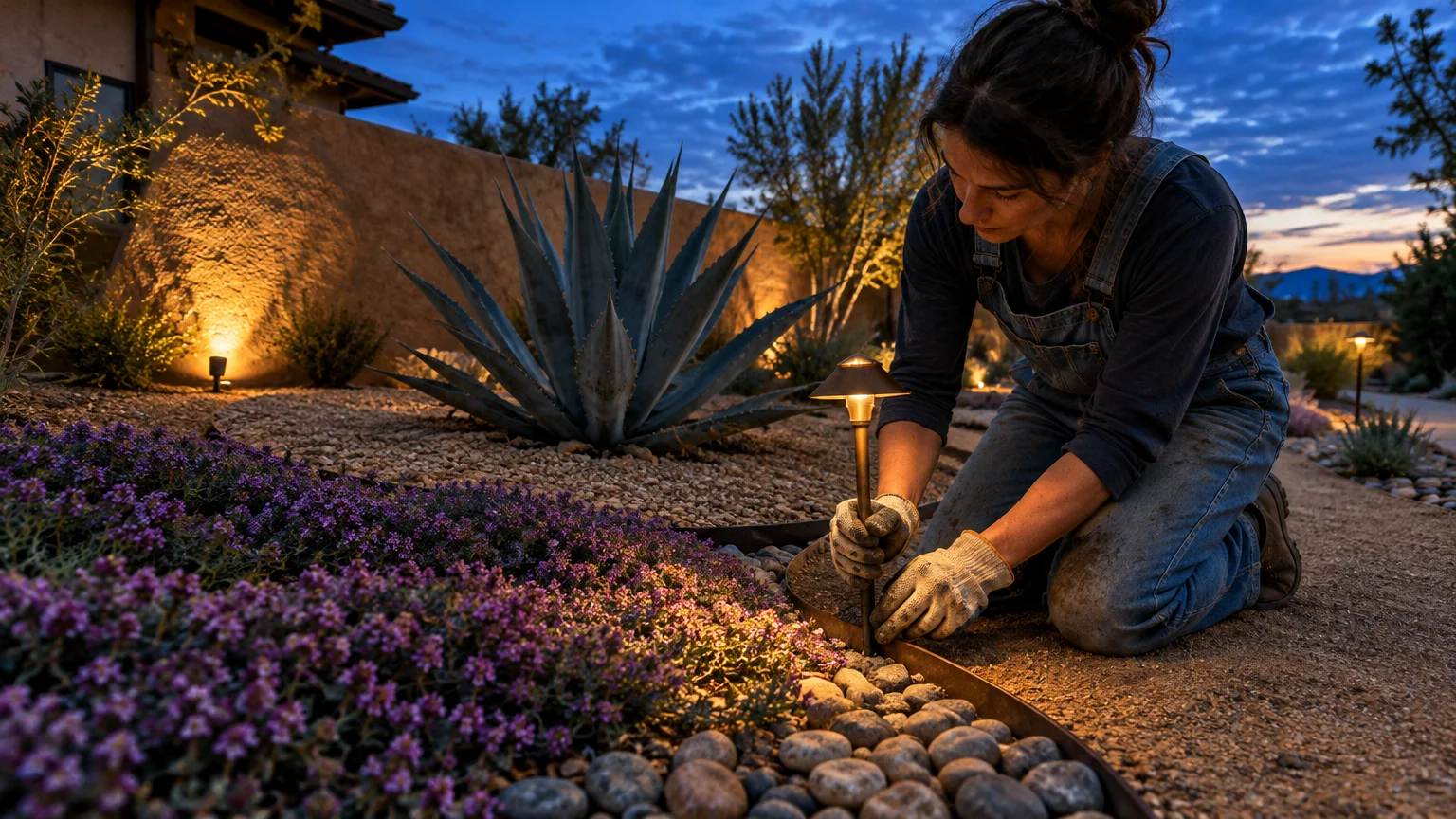
Style & Finishing Touches
Elevate your no mow front yard by matching landscape textures to your home architectural style. Clean geometric lines and monochromatic stone complement modern and mid-century contemporary facades.
If you own a craftsman or cottage home, blend warm flagstone paths with soft creeping perennials. Incorporating fieldstone borders establishes an organic, historic appearance.
Select a cohesive color palette for decorative aggregates and structural boulders. Pair gray granite rock with cool slate accents, or match tan crushed limestone with warm desert sandstone.
Install low-voltage LED landscape lighting along walkways to illuminate plant silhouettes after dusk. Solar-powered path fixtures provide affordable nighttime curb appeal without requiring complicated electrical wiring.
Budget projects start with clover seed and wood chips under $300. High-end transformations featuring mortared flagstone courtyards, custom masonry, and professional lighting exceed $5,000.
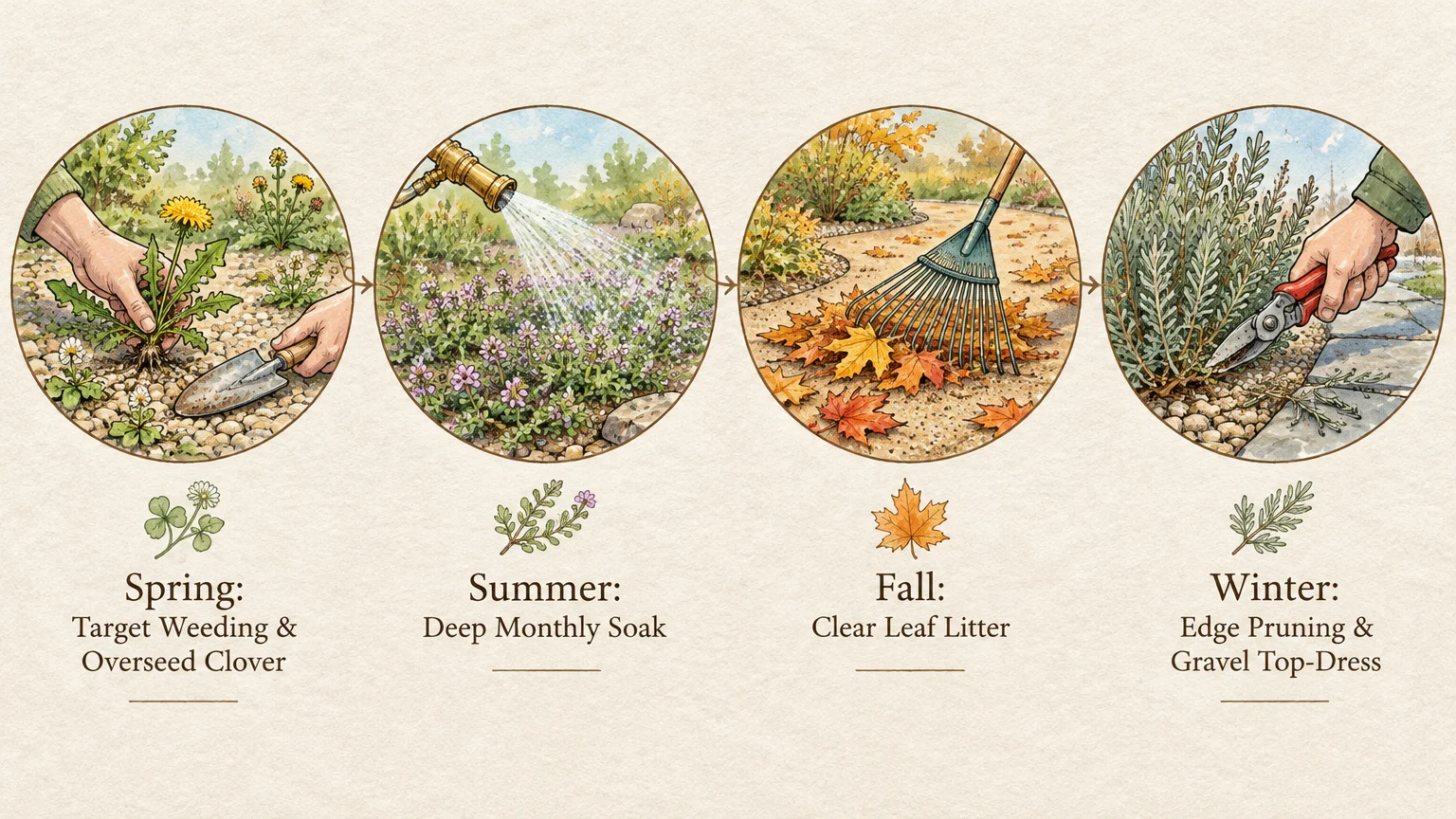
Maintenance & Long-Term Care
Eliminating grass removes weekly mowing, but periodic seasonal care keeps your landscape looking pristine. Clear stray fallen leaves and windblown debris with a lightweight battery-powered leaf blower.
Rake decorative gravel surfaces twice each year to redistribute stone and eliminate footprints. Refresh organic bark mulch beds with a thin one-inch topdressing every two seasons.
Hand-pull stray weed seedlings immediately before they develop deep taproots through gravel fabric. You can also spot-treat weeds on hot sunny days using agricultural horticultural vinegar.
Check drip irrigation lines every spring for clogged emitters or seasonal freeze cracks. Flush drip line filters to ensure consistent water delivery to your specimen plantings.
Shear dead flower heads from native meadow plants and perennial thyme in early spring. This annual trim stimulates bushy new foliage growth and triggers abundant flower blossoms.
FAQ
Can my HOA penalize me for removing my front lawn?
Most state laws now override restrictive HOA turf requirements to encourage water conservation. State statutes in Texas, Colorado, California, and Maryland forbid associations from banning drought-tolerant landscaping.
Always submit your landscape design plans to your HOA architectural review board first. Document how your plan complies with state statutes to ensure rapid administrative approval.
How much money will a grass free yard save each year?
The average homeowner saves between $500 and $1,500 annually on water bills and mower maintenance. You also eliminate recurring expenses for gasoline, seasonal fertilizer, and chemical weed treatments.
Replacing grass with drought-tolerant plantings also qualifies for substantial cash rebates from water providers. These local utility incentives often cover a large portion of your initial material costs.
Do clover lawns attract stinging bees near front entrances?
Dutch white clover produces summer flowers that attract beneficial honeybees and pollinators. If family members have bee allergies, select microclover cultivars instead.
Microclover produces fewer flower heads and smaller foliage than standard white clover. It delivers dense green coverage while reducing pollinator congregation near high-traffic front entry walkways.
What is the fastest way to kill grass without harsh chemicals?
Renting a motorized mechanical sod cutter removes an entire front lawn in a single afternoon. The blade slices grass crowns and surface roots clean away from the subsoil.
Alternatively, sheet mulching with cardboard and thick wood chips suffocates turf within six weeks. This method enriches the underlying soil with organic matter as the paper layers decompose.
Can pets use synthetic turf without creating odors?
High-quality residential artificial turf features permeable backing panels that drain liquid waste instantly. Use antimicrobial infill sand rather than crumb rubber to eliminate odor retention.
Rinse the synthetic grass fibers occasionally with a garden hose during hot dry spells. Non-toxic enzymatic turf sprays break down organic waste and keep the surface fresh.
Takeaway & Next Steps
Ditching your traditional lawn frees up your summer weekends and slashes monthly utility expenses. Embracing a no mow front yard boosts curb appeal with eco-friendly style.
Take your first step today by measuring your front yard square footage with a measuring wheel. Calculate your square footage to see if you qualify for local turf removal cash rebates.
Next, contact 811 to schedule free underground utility marking before purchasing rental excavation equipment. Knowing where buried utility pipes run keeps your project safe and compliant.
Finally, test a ten-square-foot patch with clover seed or aggregate samples to finalize your aesthetic vision. Starting small builds your confidence before tackling the entire front yard.
Have you transformed your front yard with a grass-free design? Share your project photos with our editorial community or subscribe below for weekly DIY renovation guides.