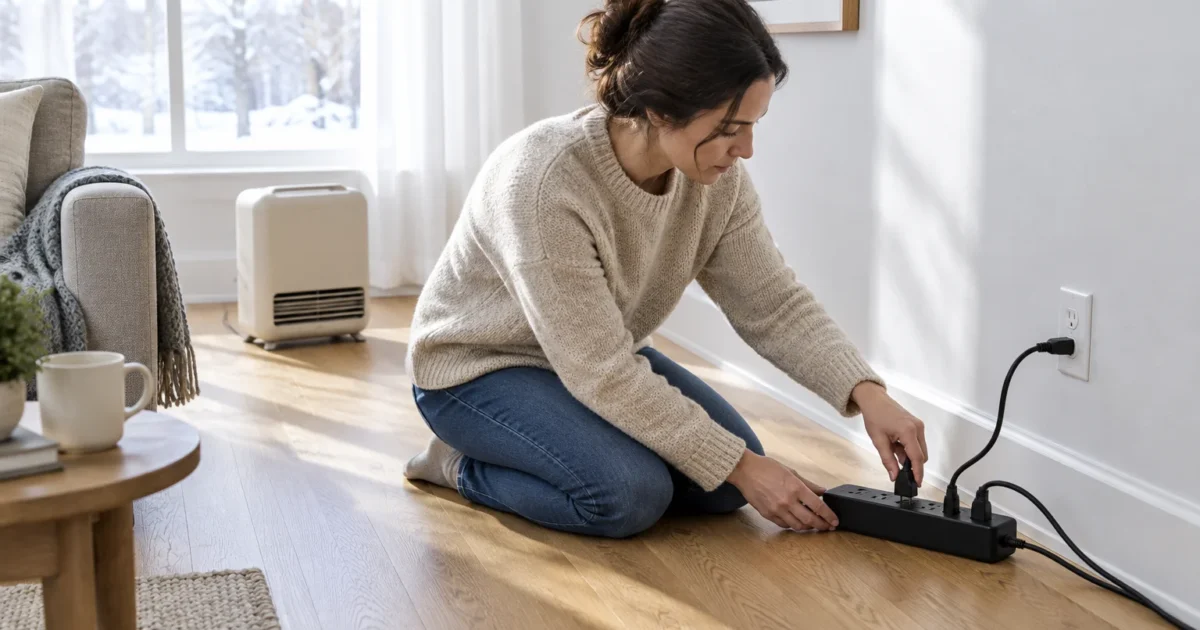
Winter weather pushes your home electrical safety to the limit as you plug in space heaters and holiday displays. Correcting basic power strip mistakes today protects your family and safeguards your property against devastating electrical fires.
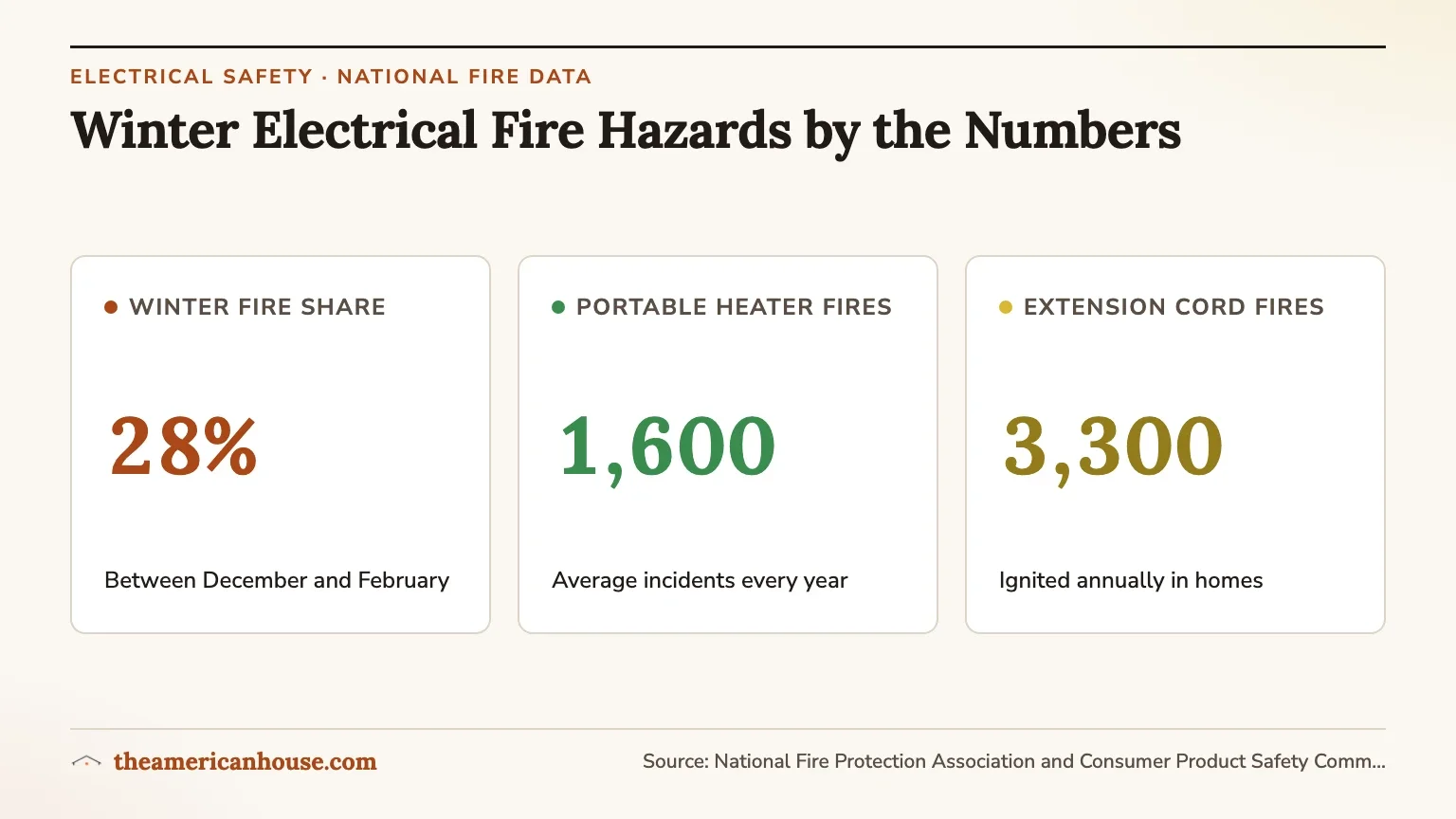
Cold-weather demands often lead homeowners to overload circuits without realizing the danger lurking behind furniture. According to the National Fire Protection Association, 28 percent of home electrical structure fires occur between December and February.
Learn how to audit your seasonal cords, eliminate hidden hazards, and keep your living spaces warm and secure all winter long.
Project Overview & Why It Matters
Winter brings unique electrical demands to every household in the country. Between supplemental heating units and festive lighting, your electrical outlets experience unprecedented strain during the coldest months.
Data from the National Fire Protection Association reveals that home electrical structure fires cause an annual average of 527 civilian deaths and $2.4 billion in direct property damage. Electrical distribution or lighting equipment ignites 47 percent of these fires.
Portable heaters alone account for an average of 1,600 fires and 70 civilian deaths every year according to the Consumer Product Safety Commission. Furthermore, extension cords ignite roughly 3,300 home fires annually.
Auditing your winter cord setups takes less than an hour and costs virtually nothing. By practicing proactive power strip safety, you eliminate unnecessary risks while preserving your home comfort and interior style.
Tools, Materials, and Prep Checklist
Before tackling your winter electrical setup, gather a few basic tools to evaluate your current power demands. Proper preparation prevents overloaded circuits and ensures every device operates safely.
You will need a digital outlet tester, which costs about $10 at any home improvement center. This device checks for open grounds, reversed polarity, and correct wall receptacle wiring.
Pick up UL 1363 listed heavy-duty power taps and UL 1449 certified surge protectors ranging from $15 to $35 each. Make sure you select models equipped with integrated circuit breakers.
For wire management, budget $15 to $25 for paintable cable raceways or flame-retardant cable boxes. These accessories conceal excess wiring without trapping dangerous heat.
Begin your prep work by calculating the total wattage of the appliances you plan to connect. Always verify the amperage rating of your room circuit at the main service panel before plugging in appliances.
Step-by-Step Instructions
Follow these targeted steps to eliminate four common winter electrical mistakes and optimize your setup for safety.
Mistake 1: Plugging High-Draw Space Heaters into Power Strips
The most dangerous cold-weather habit involves running a portable electric heater through a power strip or extension cord. Space heaters typically draw 1,500 watts, which pulls roughly 12.5 amps on a standard 120-volt circuit.
A standard 15-amp power strip is rated for 1,800 watts at 120 volts. However, the National Electrical Code enforces an 80 percent continuous-load rule for appliances operating for three hours or longer.
This continuous-load threshold caps safe sustained power draw at 1,440 watts on a 15-amp circuit. A 1,500-watt heater exceeds this limit immediately, creating an extreme space heater fire risk.
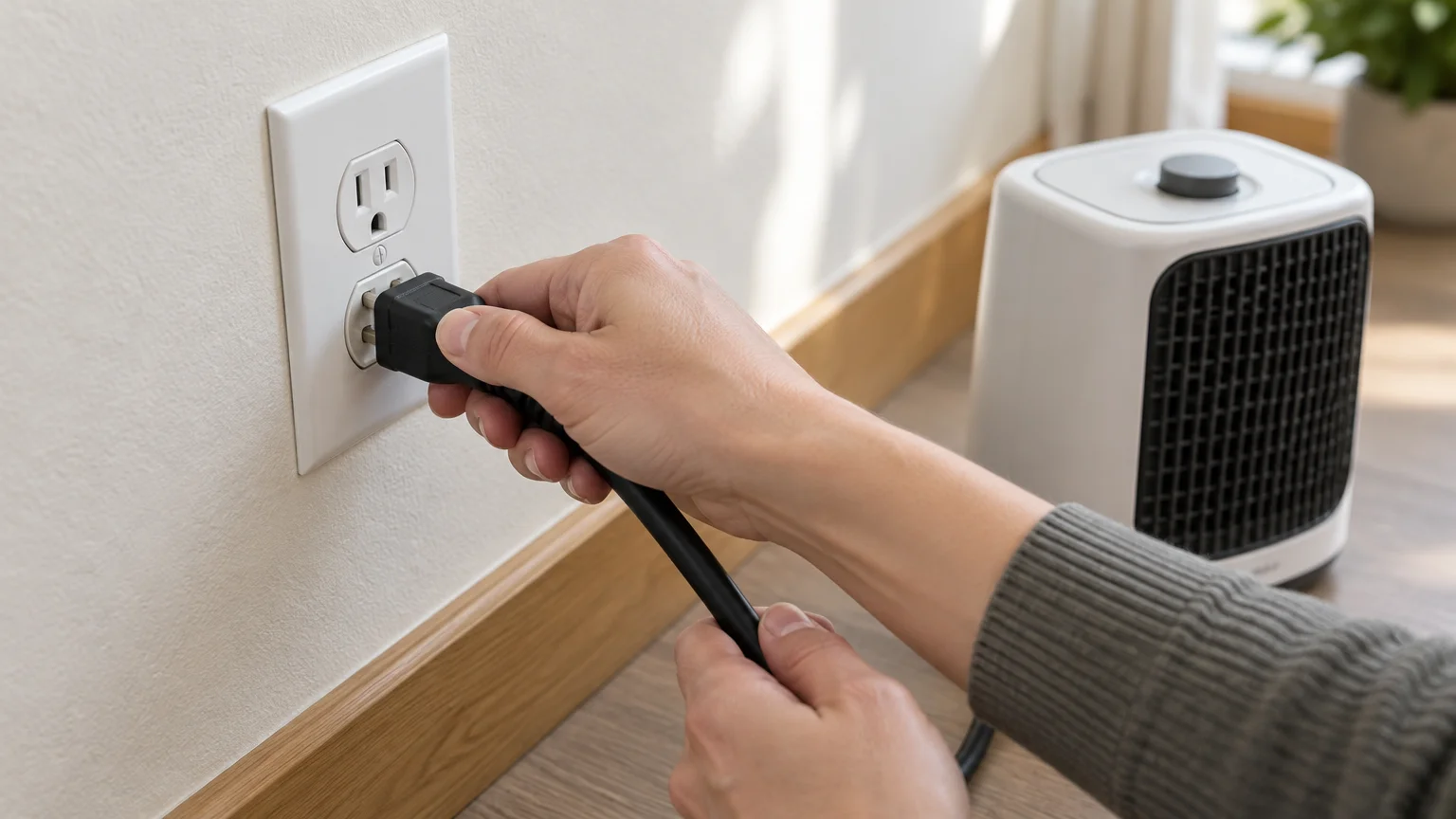
Both the Consumer Product Safety Commission and the Electrical Safety Foundation International require plugging space heaters directly into a permanent wall outlet. Never plug another appliance into the same wall receptacle, and keep combustibles 3 feet away.
Mistake 2: Daisy-Chaining Strips and Extension Cords
Connecting one power strip to another—known as daisy-chaining—is a serious fire code violation. Section 11.1.4 of NFPA 1 mandates that power taps must plug directly into a permanently installed wall receptacle.
Under UL standard 1363 Section 1.7, manufacturers specifically design power taps to operate without interlinking cords. Daisy-chaining multiplies electrical resistance, bypasses built-in overcurrent protections, and quickly overheats the initial cord.
Similarly, never connect an extension cord between the wall outlet and your power strip. If you lack accessible outlets in your room, relocate your devices or hire a licensed electrician to install additional receptacles.
Mistake 3: Overloading Holiday Light Displays
Tying multiple holiday light strings into a single budget power strip creates severe holiday light hazards. UL standard 588 caps seasonal lighting strings at 210 to 216 watts per single continuous run.
Traditional incandescent lights draw approximately 20.4 watts per 50-bulb string, limiting your safe connection to only three to five strands. Exceeding that threshold melts internal fuses and compromises the thin 22 AWG wire.
Switch your holiday displays to energy-efficient LED strings, which draw merely 2.4 watts for every 50 bulbs. Always check the manufacturer label on the cord tag to verify the maximum allowed connections before hanging your lights.
Mistake 4: Confusing Power Strips with Surge Protectors
Many homeowners assume that every multi-outlet strip provides surge protection against winter storm spikes. A basic power strip merely adds extra plug receptacles; it does not protect connected electronics from damaging voltage spikes.
True surge protectors contain metal oxide varistors designed to divert transient electrical spikes harmlessly into the ground wire. Look for a UL 1449 listing and a visible status indicator light before trusting valuable electronics to the device.
Remember that neither surge protectors nor power strips increase circuit capacity. Furthermore, never conceal power cords under carpets or rugs, as foot traffic damages insulation while trapped heat causes smoldering fires.
Safety and Troubleshooting Protocol
Feel the plastic casing and cord of your power strips periodically while devices operate. If a power tap feels hot to the touch or emits a burning plastic odor, disconnect it immediately.
If your circuit breaker trips repeatedly, stop resetting it blindly. You are likely drawing more power than the breaker can safely supply, signaling an urgent need to rebalance your connected loads.

Style & Finishing Touches
Home electrical safety does not require sacrificing clean interior design. You can conceal and manage cords while maintaining full compliance with safety codes and ventilation requirements.
Install surface-mounted cable raceways along your baseboards to guide wiring discreetly toward wall outlets. Paint the raceways with your existing trim paint so they blend seamlessly into the room architecture.
Use ventilated wooden or matte-finish cable organizer boxes beneath desks and entertainment centers. These decorative enclosures contain excess cord slack while allowing internal air circulation to prevent heat accumulation.
Consider replacing standard wall outlets with flush-mounted designer receptacles featuring integrated USB charging ports. Modern tamper-resistant outlets eliminate the need for bulky plug adapters and keep your walls looking polished and modern.
Maintenance & Long-Term Care
Perform seasonal electrical inspections twice a year to maintain peak performance and household safety. Winter setup and spring teardown offer ideal moments to examine every power tap in your home.
Unplug your power strips and inspect the prong contacts for discoloration, loose fit, or internal dust buildup. Clear exterior dust using compressed air, because accumulated debris can ignite from tiny electrical sparks.
Check active safety recalls regularly through government databases like the CPSC recall portal. In early 2026, the CPSC recalled 5,543 CCCEI power strips because they lacked overcurrent protection, presenting a serious fire hazard.
Replace any power strip older than five years or any unit that has absorbed a major lightning spike. Internal protective components degrade over time, leaving your home vulnerable without displaying visible exterior signs of wear.
FAQ
Can I plug a space heater into a heavy-duty surge protector?
No, you should never connect a space heater to any surge protector or power strip. Portable heaters require sustained high amperage that can melt internal components, so always plug them directly into permanent wall receptacles.
How many holiday light strings can I safely connect end-to-end?
It depends entirely on the bulb type and the UL 588 rating. You can generally string three to five incandescent sets together, whereas energy-efficient LED sets often allow dozens of connected strands.
What is the difference between a power strip and a surge protector?
A basic power strip only multiplies your available outlets without offering voltage regulation. A surge protector includes specialized internal components that absorb transient voltage spikes to safeguard sensitive electronic equipment.
Why is running cords under area rugs dangerous?
Rugs trap normal heat generated by electrical current, causing the wire insulation to dry out and degrade. Constant foot traffic crushes the internal copper strands, creating high electrical resistance and potential fire hazards.
Takeaway & Next Steps
Winter electrical safety requires vigilance, proper equipment ratings, and adherence to electrical codes. Protecting your home against cold-weather fire hazards takes minimal effort while delivering priceless peace of mind.
Start by completing these three immediate actions today:
First, unplug every portable space heater from power strips and plug them directly into wall outlets.
Second, inspect all holiday light connections and confirm they remain within the UL 588 wattage threshold.
Third, discard damaged, unrated, or daisy-chained cords and replace them with certified UL 1363 units.
Have you upgraded your winter home setup recently? Share your project photos with our community, or subscribe to our newsletter for weekly home improvement guides and seasonal maintenance advice.