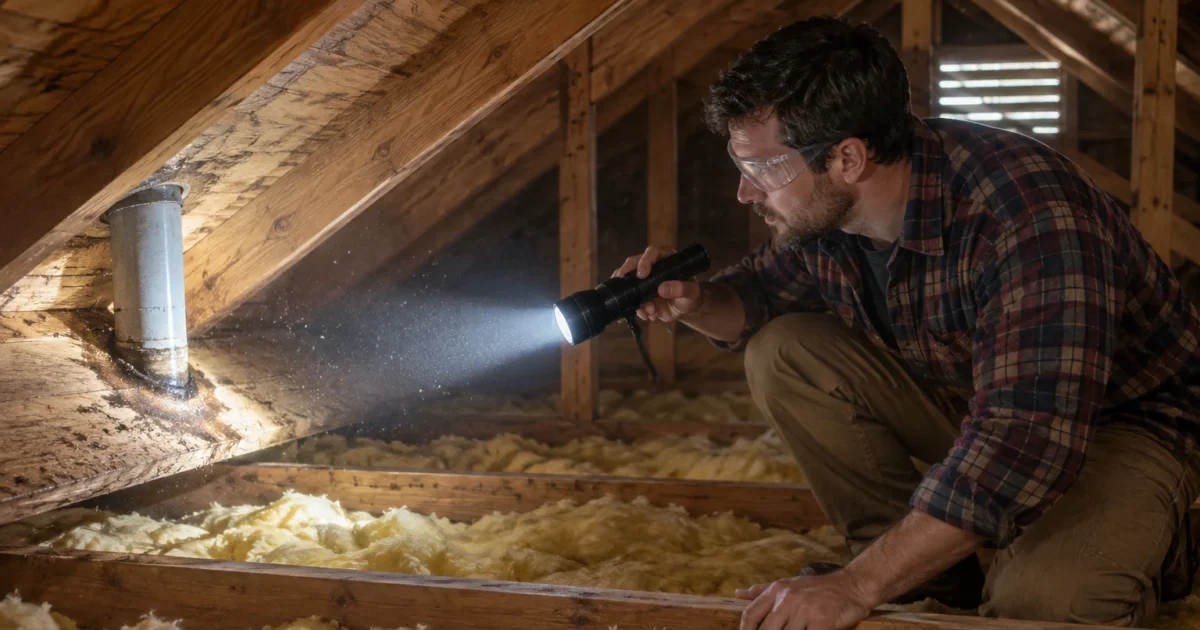
Your monthly mortgage check covers the loan, yet owning a home triggers thousands of dollars in overlooked bills every year. Preparing your finances and inspecting vulnerable systems now stops sudden repairs from wrecking your savings.
Rising property taxes, steep homeowners insurance premiums, and aging mechanicals routinely catch new and seasoned buyers off guard. Treating home upkeep like a structured whole-home project puts you back in control of your budget.
This guide walks you through auditing your housing costs, inspecting high-risk building systems, and scheduling upgrades that protect your property value.
Project Overview & Why It Matters
Managing the hidden costs of homeownership is the single highest-return project you can tackle for your household finances. When you map out both paper expenses and physical wear, routine surprises turn into predictable line items.
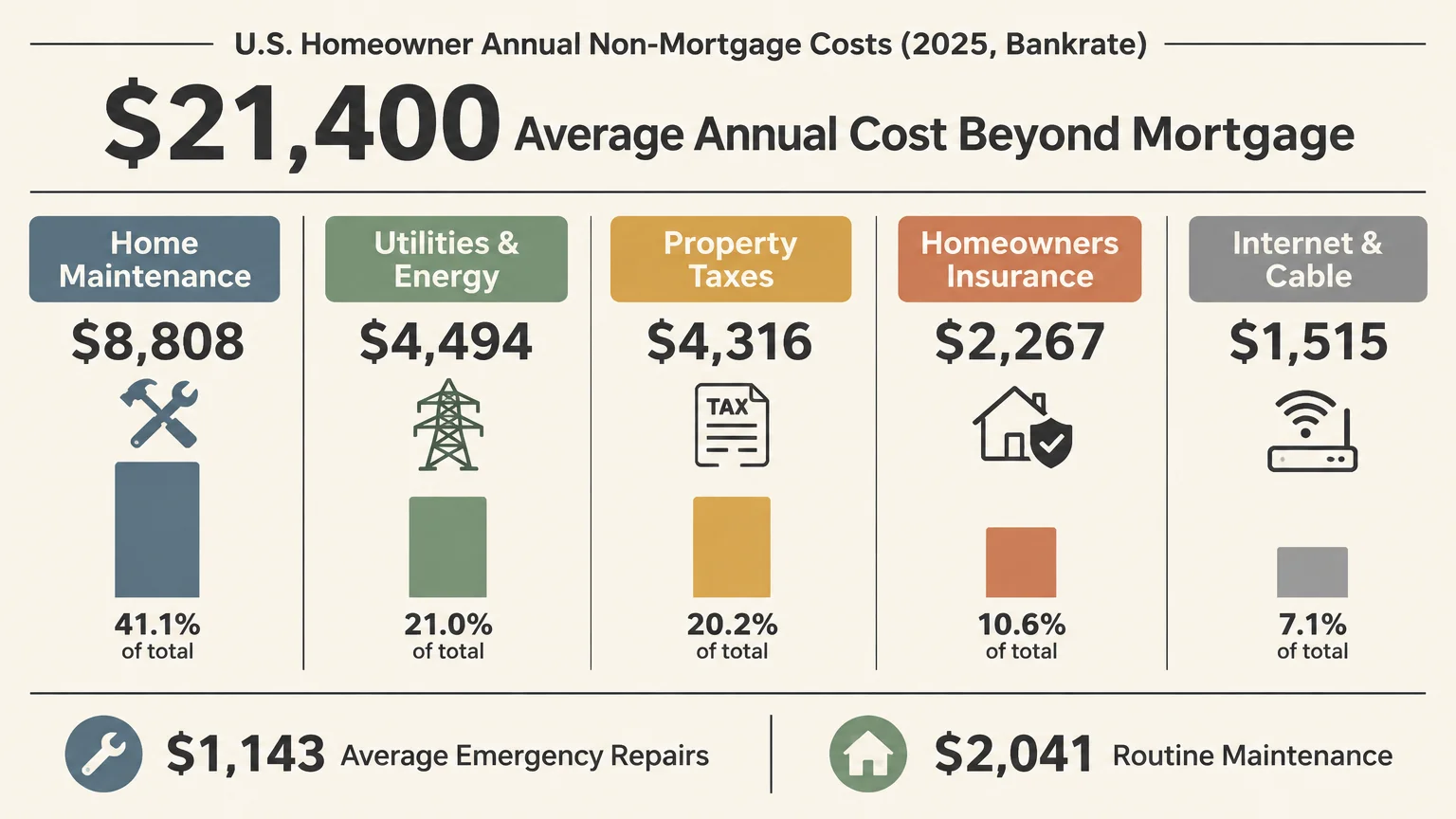
According to Bankrate, U.S. single-family homeowners pay an average of $21,400 per year beyond their mortgage in 2025. That total climbed sharply from $18,118 in 2024 and $14,428 in 2020 across 49 states.
Bankrate breaks that $21,400 annual burden into $8,808 for home maintenance, $4,494 for utilities and energy, $4,316 for property taxes, $2,267 for homeowners insurance, and $1,515 for internet and cable.
Even if you exclude utilities, non-mortgage ownership costs hit hard. A November 2025 analysis by Zillow and Thumbtack estimates modeled annual expenses at $15,979, or roughly $1,325 per month.
That Zillow and Thumbtack model includes $10,946 to hire pros for 17 routine maintenance tasks, $3,030 for property taxes, and $2,003 for homeowners insurance. Meanwhile, the U.S. Census Bureau reports national median selected monthly owner costs at $2,163 with a mortgage and $703 without one—excluding maintenance and repairs.
Those unbudgeted bills explain why buyer remorse runs so high across the country. Bankrate reports that 45% of homeowners feel at least one regret about their purchase, and 42% of those cite maintenance and hidden costs as their top regret.
Actual household spending reflects how tightly budgets are squeezed. Angi reports that U.S. households spent an average of $3,184 on upkeep and surprises in 2025, splitting into $2,041 for routine maintenance and $1,143 for emergency repairs.
Those same homeowners spent another $9,288 on home improvements across an average of 10 projects. Yet Angi also found that 48% felt more stress from mandatory repairs, 62% worried more about affording upkeep, and 71% postponed planned projects to prioritize preventative care.
Running a whole-home cost and system audit solves this squeeze before an emergency strikes. By pairing a solid home repair budget with hands-on inspections of your roof, foundation, plumbing, and HVAC, you eliminate costly guesswork.
Tools, Materials, and Prep Checklist
Before you adjust a single line item or open an access panel, gather the physical tools and financial records you need for a complete home audit. Having everything on your kitchen table keeps this project fast and thorough.
Physical Inspection Tools
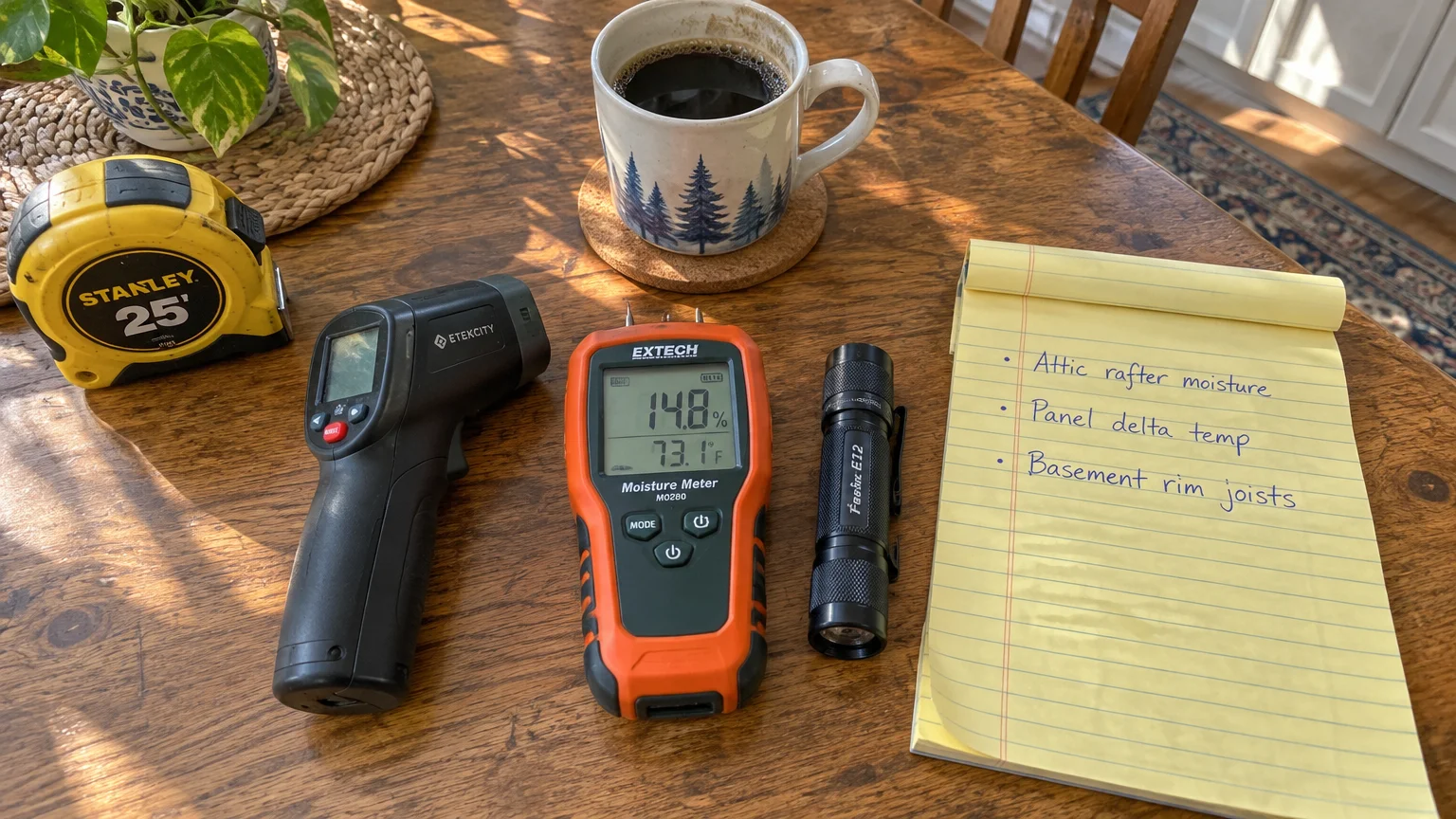
Bright LED flashlight: Use a high-lumen beam to spot dark water stains in attic rafters, crawlspaces, and under sinks. Check behind appliances where slow supply-line drips often hide.
Pinless digital moisture meter: Press this handheld tool against basement walls, bathroom subfloors, and window sills to detect trapped dampness behind drywall. Catching hidden moisture early helps you prevent mold growth and structural rot.
Infrared thermometer: Aim this point-and-shoot sensor at HVAC supply registers, exterior walls, and electrical panel covers. Sudden temperature swings quickly reveal missing insulation, leaking ducts, or overloaded breakers.
Sturdy step ladder and tape measure: Keep a reliable ladder handy for indoor attic hatches and ceiling registers, plus a 25-foot tape measure to calculate square footage. Knowing your exact square footage helps you size your annual maintenance reserve accurately.
Exterior silicone or polyurethane caulk and caulk gun: Keep fresh sealant on hand to close small gaps around exterior trim, utility penetrations, and bath fixtures. Properly applied caulking lasts 5 to 10 years and blocks costly water intrusion.
Financial Records and Prep Materials
Mortgage escrow statement and tax notice: Pull your latest annual escrow analysis alongside your county property tax assessment. You will verify every tax hike, insurance change, and reserve cushion calculation against federal rules.
Homeowners insurance declarations page: Gather the full policy summary, not just your billing invoice. Look closely at your deductible, dwelling coverage limit, and listed exclusions for water or foundation events.
HOA or condo fee schedule: Collect your community association bylaws, monthly dues notices, and reserve study summaries if applicable. Checking reserve funding helps you anticipate sudden special assessments before they arrive.
Dedicated home repair budget tracker: Set up a simple spreadsheet or binder to log system installation dates, warranty expirations, and maintenance receipts. Track 12 months of utility bills alongside your savings balance.
Safety and Budget Prep
Start by locating your main water shut-off valve, gas shut-off valve, and electrical breaker box so everyone in your house can stop a leak or hazard fast. Label each shut-off clearly with high-visibility tags.
Next, set your baseline savings target using proven industry rules of thumb. Financial and homeownership guides commonly recommend budgeting 1% to 3% of your home’s value each year—or $1 per square foot annually—with Bankrate modeling 2% of home value.
Never climb onto a steep, wet, or multi-story roof during this prep phase. Keep both feet on solid ground, use binoculars to inspect shingles, and hire a licensed roofer for high-elevation checks.
Step-by-Step Instructions
Tackle your hidden costs of homeownership in four clear phases, moving from your financial statements out to your roof, foundation, and mechanical rooms. Work through one phase per weekend so nothing gets rushed or skipped.
Phase 1: Audit Your Escrow, Property Taxes, and PMI
Start with your mortgage statement because payment shock hits even fixed-rate borrowers hard. Real estate analytics firm Cotality found that average mortgage escrow payments jumped 45% between 2019 and 2025.
Roughly 4 in 10 borrowers did not realize their monthly payment could rise on a fixed-rate loan when property taxes or insurance climb. An Ownwell survey also showed that 76% of homeowners faced higher property taxes than they budgeted.
Check your county tax bill against regional norms to see if an appeal makes sense. ATTOM reports that U.S. single-family homeowners paid $396.8 billion in property taxes in 2025, with the average bill rising 3% to $4,427.
That pushed the national effective tax rate to 0.9%, even while average estimated home values dipped 1.7% to $494,231. The U.S. Census Bureau puts the median annual real estate tax bill at $3,344 on a $371,100 median home value.
Location drives huge swings in what you owe each year. ATTOM found 2025 effective rates peaked in Illinois at 1.84% and New Jersey at 1.58%—where bills averaged $10,499—while Hawaii hit 0.33% and West Virginia averaged just $1,081.
Review your servicer’s annual escrow calculation using rules enforced by the Consumer Financial Protection Bureau (CFPB). Under Regulation X and RESPA, servicers may require an escrow cushion of no more than one-sixth of estimated annual disbursements, equal to two months of payments.
If your statement shows a cushion larger than two months, call your servicer and request an escrow correction unless your state law or loan contract sets a different cap. Next, check whether you are still paying Private Mortgage Insurance (PMI).
PMI typically adds 0.5% to 1.5% of your loan balance every year when you put less than 20% down. Under federal CFPB rules, you can request PMI removal once you reach 80% loan-to-value based on your home’s original value, and servicers must automatically cancel it at 78%.
If you plan to refinance or buy another home soon, remember to shop multiple lenders aggressively. Bankrate reports that upfront closing fees average $5,503 for low-income buyers and $7,996 for middle-income buyers, while 87% of 2025 borrowers paid above competitive mortgage rates, costing the typical borrower $3,343 per year.
Finally, review your tax filing strategy with the IRS rules for 2026 in mind. The federal State and Local Tax (SALT) deduction cap sits at $40,400 in 2026 before phasing down above $505,000 MAGI, alongside standard deductions of $16,100 for single filers and $32,200 for married joint filers.
Phase 2: Close Homeowners Insurance and Coverage Gaps
Pull out your homeowners insurance declarations page and compare this year’s premium against the past three renewals. NerdWallet reports the national median annual premium hit $2,564 in the first quarter of 2026, jumping 24% since early 2023.
Older houses carry an especially steep insurance penalty that catches buyers off guard. NerdWallet found that a home built in 1984 costs 81.2% more to insure—an extra $1,149 per year—than brand-new construction.
Insurify tracks average premiums climbing 12% in 2025 to $2,948, up 46% since 2021, with projections reaching $3,057 by late 2026 and Florida nearing $8,500. Pew Research Center notes that 71% of U.S. homeowners saw insurance increases recently, including 42% reporting large hikes.
Read your policy exclusions line by line so a disaster does not become an out-of-pocket catastrophe. Standard homeowners insurance policies exclude flooding, earthquakes, and gradual foundation damage caused by soil settling, tree roots, or poor construction.
Check your local flood map and consider adding a separate policy through the National Flood Insurance Program (NFIP). NerdWallet reports that an average NFIP flood insurance policy runs about $976 per year in 2026.
Also confirm how your policy handles sudden indoor water losses versus slow leaks. When a sudden, covered water or freezing event strikes, the Insurance Information Institute reports an average insured claim payout of $12,514.
If your policy uses a percentage-based wind or hail deductible instead of a flat dollar figure, recalculate your emergency cash target right away. A 2% deductible on a high dwelling value can easily turn minor storm repairs into thousands of dollars out of pocket.
Phase 3: Inspect High-Ticket Exterior and Foundation Systems
Step outside with your flashlight, binoculars, and moisture meter to examine your roof and perimeter drainage. Ignoring small exterior defects leads straight to the costliest repairs in homeownership.
Scan your roofline for curling shingles, missing granules, rusted flashing around chimneys, and sagging gutters. Angi reports that a full roof replacement averages $9,612 nationally—typically $5,903 to $13,381, or $4 to $11 per square foot—while TheFatBook Cost Index estimates $14,568 for a 2,500-square-foot asphalt tear-off.
Spot repairs are far cheaper when caught early, averaging $1,176 for general roof repairs and $4,250 for hail damage. Keep your gutters clear as well, since professional gutter cleaning runs just $120 to $235 compared to thousands in fascia and siding rot.
Safety callout: Never step onto a roof deck without fall protection or dry conditions. If you see missing shingles or daylight in your attic rafters, hire an insured roofing contractor to inspect the decking safely.
Next, walk the foundation perimeter and look for stair-step mortar cracks, pooling rainwater, or soil sloping toward your walls. Angi places average foundation repairs at $5,175 to $5,176, ranging from $2,225 to $8,133 for typical work.
Sealing minor cracks early costs $250 to $800, whereas major structural underpinning climbs from $10,000 to $40,000 after $500 to $3,000 soil reports. Troubleshooting drainage early—by extending downspouts away from footings—prevents hydrostatic pressure from bowing basement walls.
Bring your moisture meter into your basement or crawlspace to test lower drywall, sill plates, and floor joists. Water damage restoration averages $3,904 nationally and surges past $16,000 after severe flooding, while mold remediation adds another $1,200 to $3,800.
If your basement sits near a high water table, budget for a reliable sump pump with a battery backup. Angi estimates sump pump installation averages around $1,200, a smart shield against flooded mechanical rooms.
Phase 4: Evaluate Mechanicals, Plumbing, and HOA Obligations
Head to your utility closet, basement, or attic to record the manufacture date on every major appliance and mechanical unit. Compare those dates against expected system lifespans published by the National Association of Home Builders (NAHB) and InterNACHI.
Central air conditioners typically last 10 to 15 years with routine upkeep, while furnaces run 15 to 20 years and heat pumps average 16 years. Angi reports central AC replacement averages $5,978—typically $3,887 to $8,073—plus $3,000 to $7,500 if ductwork updates are required.
Routine HVAC repairs average $350, with diagnostic service calls running $100 to $250. If your cooling system is past year 12, start earmarking replacement cash in your home repair budget now rather than waiting for a July breakdown.
Check the data plate on your water heater next, looking for rust around the base or dampness near the pressure-relief valve. Standard gas or electric tank water heaters last about 10 years, while tankless models last 20 years or longer.
Angi lists tank-style water heater replacement at an average of $1,349—typically $881 to $1,827—compared to $1,400 to $3,900 for tankless upgrades. If your home relies on a private well, also inspect your treatment gear, as well water treatment systems average $2,300.
Safety and permit warning: Do not attempt DIY repairs on gas lines, sealed refrigerant loops, or 240-volt electrical feeds. Replacement water heaters, HVAC condensers, and electrical panel upgrades require local permits, licensed trades, and municipal inspections to protect your safety and preserve insurance coverage.
Finally, if your property sits inside a community association, inspect your HOA budget alongside your personal repair reserve. Realtor.com data shows 43.6% of for-sale listings carried an HOA fee in 2025, including 84.8% of condos and townhomes.
The U.S. Census Bureau puts the national median HOA or condo fee at $135 per month across 21.6 million households, though self-reported averages reach roughly $355 per month due to high-rise condo dues. With 78.1 million Americans living in community associations per the Foundation for Community Association Research, reading annual reserve disclosures helps you avoid sudden special assessments.
Style & Finishing Touches
Cutting long-term home maintenance costs does not mean living in a stripped-down utility zone. Smart design choices and durable material upgrades elevate your rooms today while shielding your wallet from premature replacements.
Low-Cost Preventive Finishes
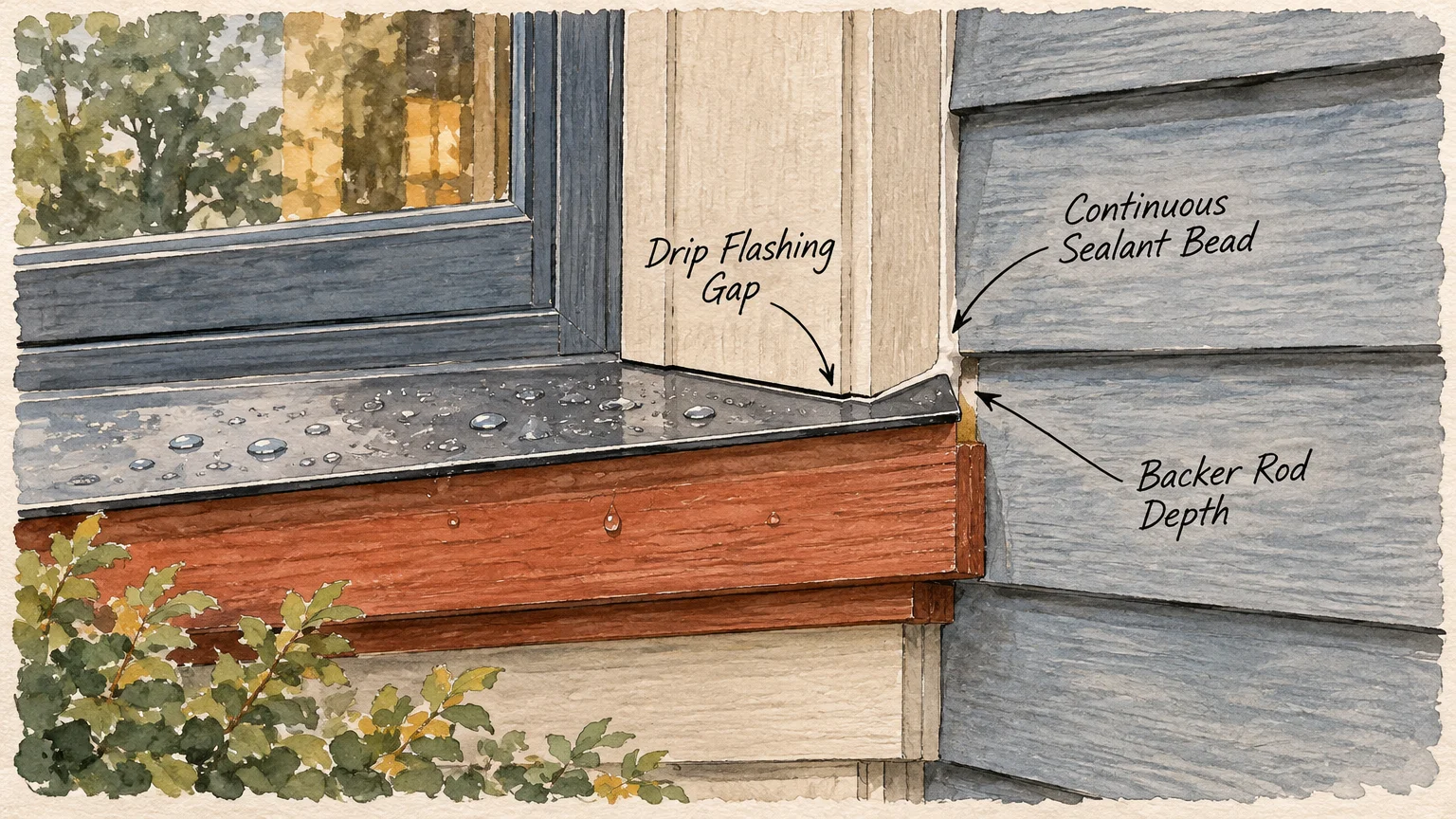
Fresh paint and clean sealants deliver the fastest visual refresh while acting as your home’s primary moisture barrier. Interior paint lasts 10 to 15 years, while exterior paint protects siding for 7 to 10 years before fading or peeling.
Choose satin or semi-gloss low-VOC finishes in light, warm neutral palettes for kitchens, baths, and hallways to reflect daylight and resist scrubbing. Pair fresh wall paint with crisp white or color-matched silicone caulk along tubs, backsplashes, and baseboards every 5 to 10 years.
While refreshing ceilings, swap aging yellow plastic smoke and heat detectors for sleek, low-profile dual-sensor units. InterNACHI and NAHB guidelines place smoke and heat detector lifespans at 5 to 10 years, making regular replacement essential for family safety.
Mid-Tier Functional Upgrades
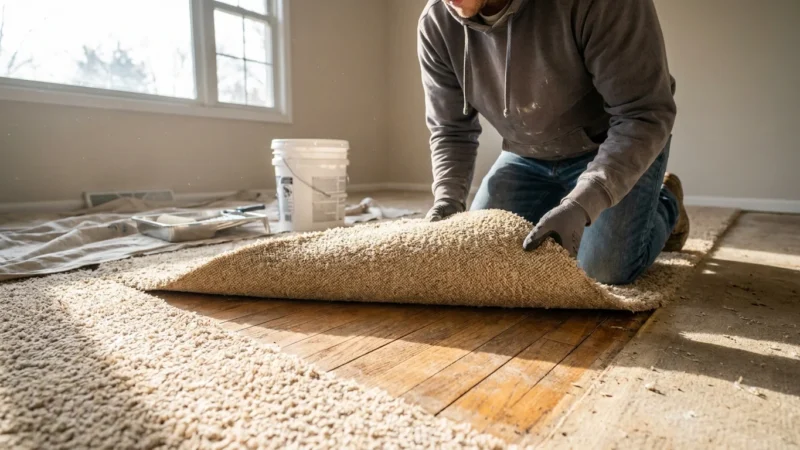
When high-wear interior surfaces approach the end of their lifespan, swap high-maintenance materials for tough everyday finishes. Standard wall-to-wall carpet lasts only 8 to 10 years and traps moisture near entryways and basements.
Replacing worn carpet in damp or heavy-traffic zones with waterproof hard-surface flooring boosts everyday cleanliness and prevents hidden subfloor rot. In kitchens and laundry rooms, track your appliances closely since dishwashers average a 9-year lifespan and clothes dryers last about 13 years.
Upgrading a leaky 10-year-old dishwasher or adding braided steel supply hoses and a leak-detection shut-off valve protects surrounding cabinetry. If your tank water heater nears year 10, moving to a wall-mounted tankless unit frees up floor space and doubles your expected service life to 20 years or more.
Long-Haul Architectural Investments
If you plan to stay in your home for decades, upgrading exterior cladding and roofing materials pays off over time. Standard asphalt shingles last around 20 years, requiring repeat tear-offs at roughly $9,612 to $14,568 per cycle.
Stepping up to wood shakes extends roof life toward 30 years, while slate, copper, clay, or concrete systems can protect your home for 50 years or longer. In storm-prone regions, ask your insurer whether impact-resistant roofing or reinforced garage doors qualify for annual premium discounts.
Maintenance & Long-Term Care
Consistent seasonal care is the secret to spending closer to Angi’s $2,041 routine upkeep average instead of getting blindsided by emergency repairs. Build a repeatable quarterly rhythm so small tasks never snow under your schedule.
Spring and Fall Exterior Checks
Every spring and fall, clear leaves from gutters and flush downspouts—hiring a pro for $120 to $235 if your roofline sits higher than one story. Check roof valleys and chimney flashing from the ground with binoculars after heavy windstorms.
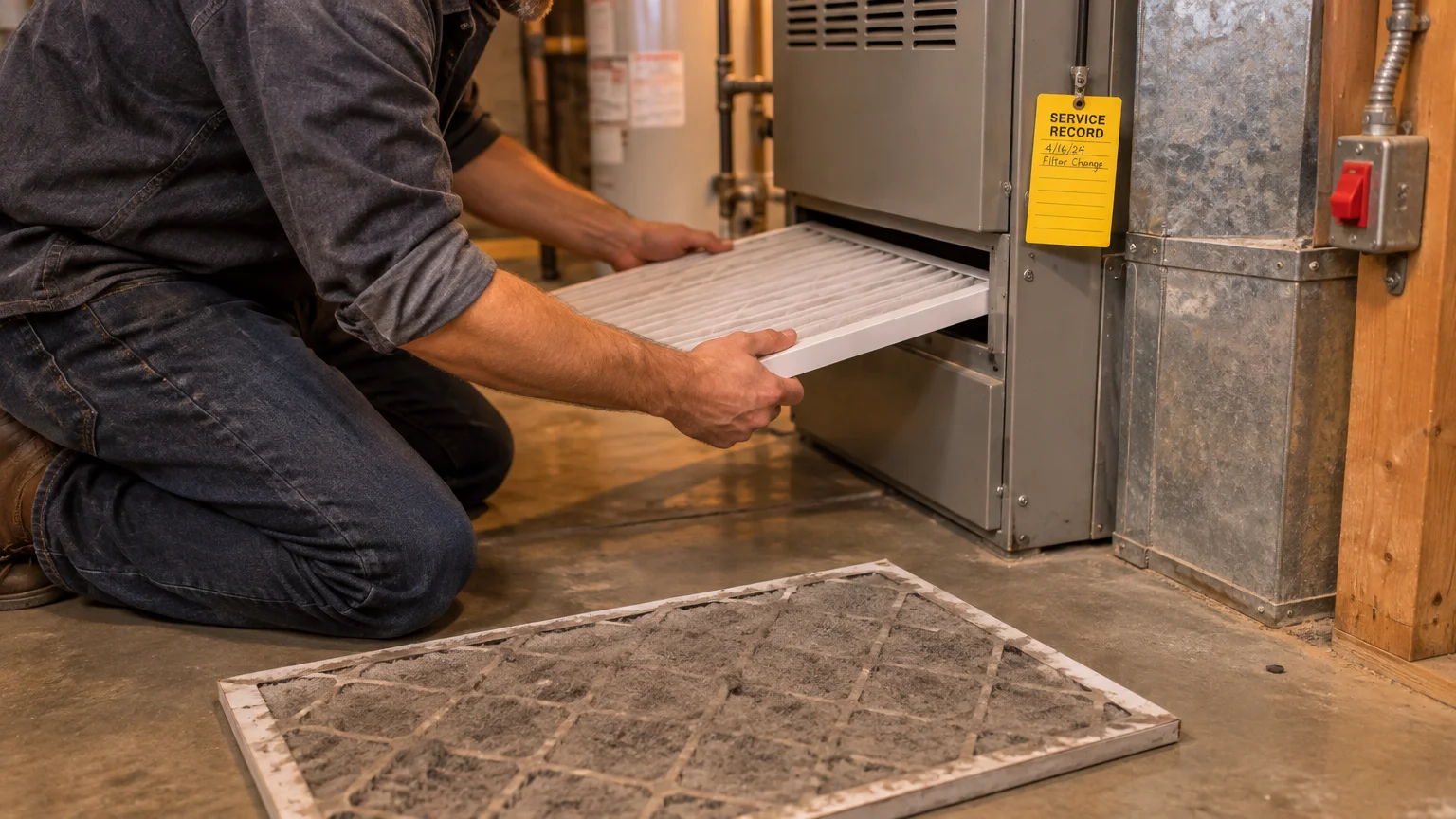
Schedule professional HVAC tune-ups twice a year, or sign up for an annual service contract averaging $150 to $500 per year. Clean coils, fresh air filters, and clear condensate drains keep central cooling systems running toward their full 15-year lifespan.
Test your sump pump each spring by pouring a bucket of water into the pit until the float switch activates. At the same time, flush sediment from tank water heaters annually to prevent mineral buildup from corroding the steel lining.
Summer and Winter Protection
During dry summer months, inspect exterior caulking around windows, doors, and hose bibs, resealing gaps before autumn rains arrive. Trim tree branches back from rooflines and foundations to stop falling limbs and invasive root damage.
Before the first hard freeze, disconnect outdoor garden hoses, shut off exterior sillcocks, and insulate exposed basement or crawlspace water pipes. Preventing a single burst pipe keeps you away from that $12,514 average insured water claim.
In winter, test all smoke and carbon monoxide alarms and vacuum lint thoroughly from clothes dryer exhaust ducts. Good airflow reduces fire risk and helps your dryer reach its full 13-year lifespan without burning out heating elements.
Annual Financial Tune-Up
Once a year, spend 30 minutes comparing your actual maintenance receipts against your 1% to 3% home repair budget target. Adjust automatic monthly transfers upward if your home’s market value or local contractor rates climbed.
Review your county tax notice before local appeal deadlines expire, and gather quotes from at least three insurers prior to your homeowners policy renewal. Staying proactive keeps your housing payments lean and predictable.
FAQ
How much should I put in my home repair budget each year?
Most housing and financial guides advise setting aside 1% to 3% of your home’s value every year, or roughly $1 per square foot annually. Bankrate models annual maintenance at 2% of home value—about $8,808 nationally—while Angi shows average actual household upkeep spending at $3,184 per year.
Why did my fixed-rate mortgage payment suddenly go up?
A fixed interest rate locks your principal and interest payment, yet your total monthly bill rises whenever property taxes or homeowners insurance premiums jump inside your escrow account. Cotality reports average escrow payments climbed 45% between 2019 and 2025, catching roughly 4 in 10 borrowers by surprise.
What surprise repairs do standard homeowners insurance policies exclude?
Standard policies routinely exclude flooding, earthquakes, and gradual foundation damage stemming from soil settling, tree roots, or poor construction. Adding separate NFIP flood coverage costs an average of $976 per year in 2026, protecting against events regular home policies reject.
When can I stop paying Private Mortgage Insurance (PMI)?
Under federal CFPB guidelines, you can contact your servicer and request PMI cancellation once your equity reaches 20%—meaning an 80% loan-to-value ratio based on your home’s original value. Servicers must automatically terminate PMI on schedule when your balance hits 78% loan-to-value, saving 0.5% to 1.5% annually.
Which home systems fail first and cost the most to replace?
Inside the home, dishwashers average 9 years, carpets last 8 to 10 years, and tank water heaters run about 10 years with replacement averaging $1,349. Major exterior and climate systems run much higher, with central AC units lasting 10 to 15 years at $5,978 average replacement and asphalt shingle roofs lasting 20 years at $9,612.
Takeaway & Next Steps
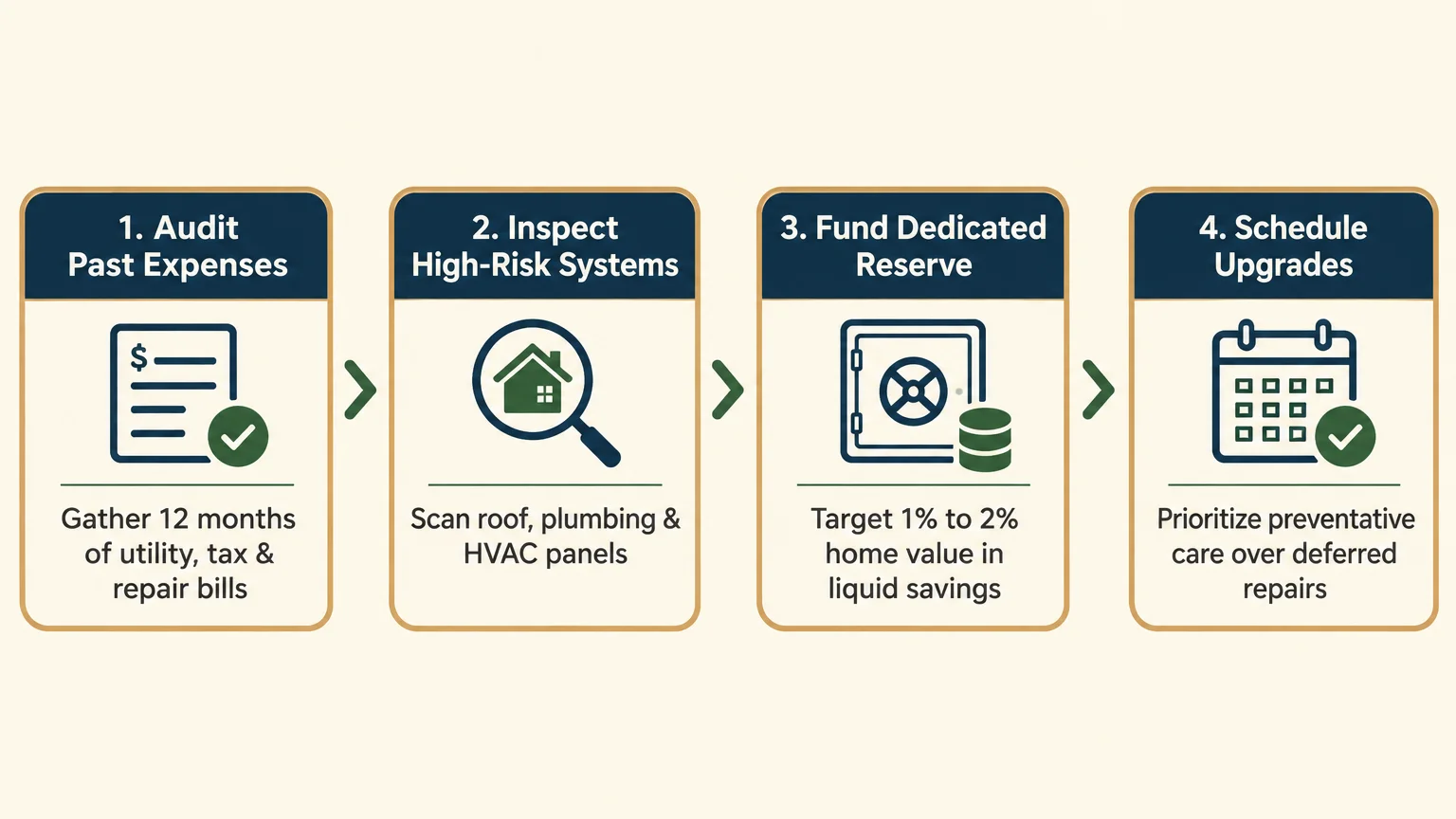
Homeownership costs reach far beyond your principal and interest, yet none of these surprise bills have to derail your finances. When you pair an honest annual reserve with seasonal inspections, you turn emergency breakdowns into scheduled upgrades.
Action 1: Open a dedicated high-yield savings account for your home repair budget today and automate monthly deposits toward a 1% to 3% annual reserve.
Action 2: Pull your escrow analysis, tax assessment, and insurance declarations page this week to check your CFPB two-month cushion limit, PMI removal threshold, and flood or foundation coverage gaps.
Action 3: Walk your property with a flashlight and moisture meter this weekend to log installation dates for your roof, HVAC system, and water heater before trouble starts.
Ready to tackle your next preventative upgrade or utility room organization project? Share photos of your home improvement wins with our community, and subscribe to TheAmericanHouse.com for practical weekly renovation ideas delivered straight to your inbox.