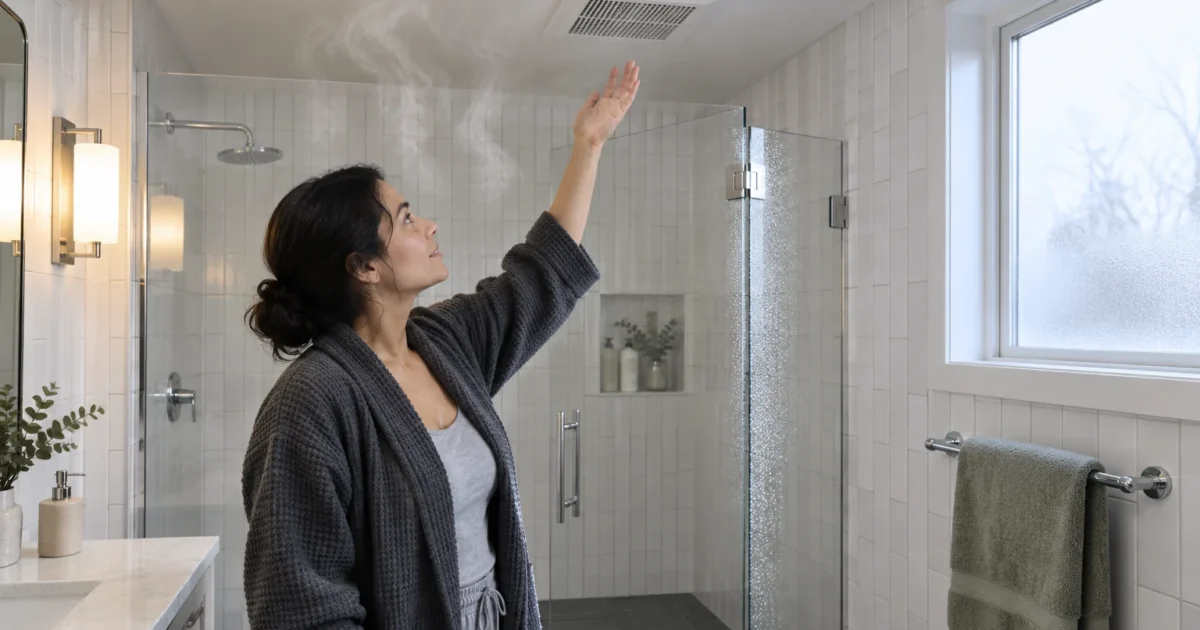
You should always run your bathroom exhaust fan in winter during hot showers and for 20 minutes afterward. Skipping this step traps humid air that damages your drywall and triggers rapid mold growth.
Many homeowners turn off their fans to protect their winter heating bills. However, shutting the vent creates structural moisture hazards that cost far more to fix than the small amount of exhausted warm air.
Modern HVAC guidelines show that targeted ventilation clears moisture before condensation forms without spiking your utility costs. Here is how you can balance heating efficiency with essential bathroom moisture mold protection.
Project Overview & Why It Matters
Winter showers generate dense plumes of steam that immediately collide with cold wall studs, ceilings, and window glass. When you trap this moisture inside, you invite wood rot and peel paint from your walls.
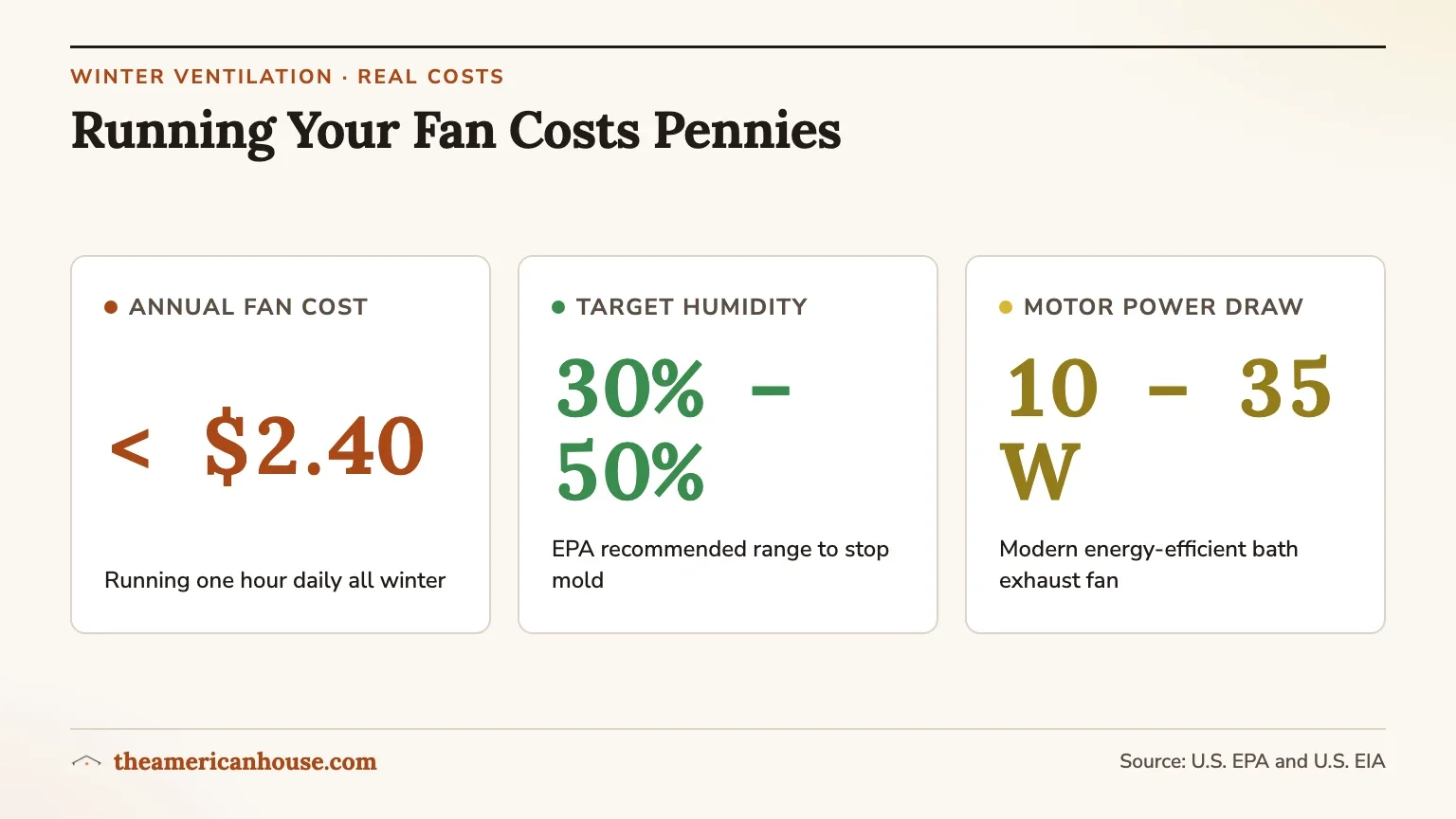
The U.S. Environmental Protection Agency (EPA) recommends maintaining indoor relative humidity between 30% and 50% to prevent mold. Damp surfaces that stay wet for 24 to 48 hours create ideal breeding grounds for spores.
Homeowners often fear that running a bathroom exhaust fan in winter pulls costly heated air straight outside. Because heating bills can strain household budgets, this concern seems reasonable at first glance.
According to the U.S. Energy Information Administration (EIA), average winter heating bills reach $1,196 for electric systems and $2,179 for heating oil. Excessive air leakage can increase overall heating and cooling bills by up to 30%.
Fortunately, running your fan does not ruin your heating bill savings. A typical modern exhaust fan consumes only 10 to 35 watts of electricity during operation.
With residential electricity averaging 18.16 cents per kilowatt-hour, operating your fan for an hour every day costs less than $2.40 per year. Running the fan properly protects your home without draining your wallet.
Tools, Materials, and Prep Checklist
You can upgrade your bathroom ventilation setup over a single weekend with basic hand tools. Gather your supplies before you begin inspecting your fan and ductwork.
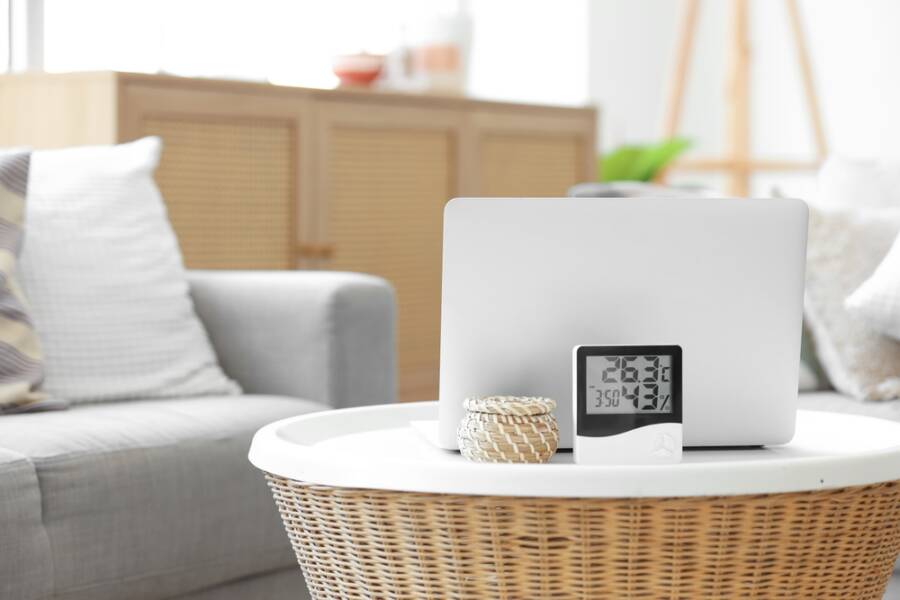
Digital Hygrometer: Spend $10 to $20 on a standalone sensor to monitor indoor humidity levels accurately. Keep your bathroom readings below 50% throughout the cold winter months.
Push-Button Countdown Timer: A digital in-wall timer switch costs roughly $25 to $40. This tool automates the required 20-minute post-shower runtime so you never forget to turn the unit off.
Insulated Ductwork: Purchase R-6 insulated flexible or rigid metal ducting for $30 to $60. Insulating your exhaust pipe stops warm air from condensing inside the ductwork before it exits your home.
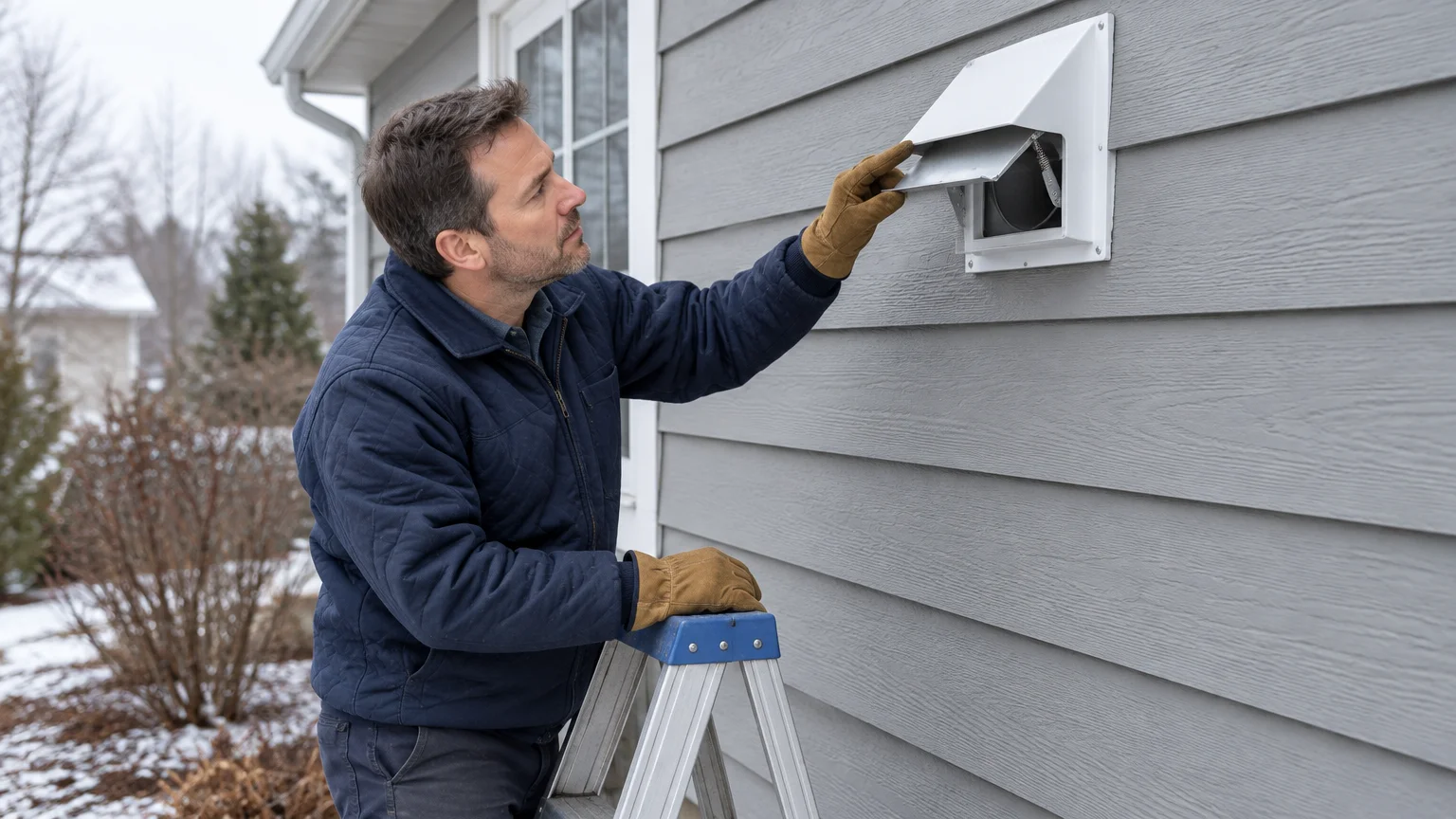
Exterior Backdraft Damper: Install an exterior wall or roof cap with a spring-loaded damper for $25 to $45. This barrier stops cold winter drafts from blowing backward into your living space.
Safety Gear and Foil Tape: Grab safety glasses, a dust mask, and a roll of UL-listed HVAC foil tape. Never use standard cloth duct tape, as heating cycles dry out the adhesive rapidly.
Step-by-Step Instructions
Phase 1: Verify Airflow and Fan Sizing
First, verify that your fan delivers sufficient power for your room size. The ANSI/ASHRAE Standard 62.2-2025 and the 2024 International Residential Code require at least 50 cubic feet per minute (CFM) for intermittent bathroom ventilation.
Calculate your minimum airflow by assigning 1 CFM per square foot of floor space for bathrooms under 100 square feet. A standard 8-by-10-foot room requires an 80 CFM ventilation unit.
Test your existing fan by placing a single square of toilet paper against the intake grille while it runs. Strong suction should hold the paper flat against the cover without slipping.
Phase 2: Establish the 20-Minute Ventilation Window
Turn on the exhaust fan as soon as you step into the shower to control moisture instantly. Running the fan early prevents steam from accumulating on your mirrors, ceilings, and painted trim.
Keep the fan running for exactly 20 minutes after you turn off the water. The U.S. Department of Energy recommends this 20-minute post-shower window to exhaust lingering airborne moisture completely.
Swap your standard toggle wall switch for a push-button countdown timer. Press the 20-minute button when you finish showering so the unit shuts off automatically without wasting conditioned heat.
Phase 3: Inspect Ducts and Prevent Backdrafts
Head into your attic to confirm that your exhaust duct vents directly outdoors through a roof or exterior wall. The 2024 International Residential Code strictly prohibits dumping bathroom exhaust into attics or crawl spaces.
Dumping moist air into a cold winter attic creates frost on roof rafters that turns into structural rot. Wrap uninsulated duct sections with R-6 insulation sleeves to prevent condensation inside the pipe.
Seal every pipe seam with HVAC foil tape rather than screws that catch lint. Check that the exterior damper flap opens freely when the fan turns on and seals tightly when it shuts.
Style & Finishing Touches
Upgrading your bathroom exhaust fan in winter offers an excellent opportunity to improve room aesthetics and acoustic comfort. Older builder-grade exhaust fans sound like jet engines and discourage family members from using them.
Look for replacement units certified under ENERGY STAR Version 4.2 guidelines. These advanced fans must produce sound ratings of 2.0 sones or lower, operating as quietly as a soft hum.
Choose an ENERGY STAR certified fan to secure an efficiency rating of at least 2.8 to 4.0 CFM per watt. These efficient motors use more than 70% less energy than standard models.
Modern decorative grilles feature low-profile, clean white finishes that blend smoothly into modern ceilings. Many models incorporate integrated dimmable LED lights with selectable color temperatures ranging from warm amber to clean daylight.
You can also install sleek humidity-sensing wall controllers with designer screwless faceplates. These smart sensors detect humidity spikes automatically, ensuring optimal ventilation even if guests forget to press the timer.

Maintenance & Long-Term Care
Incorporate exhaust fan servicing into your regular winter home maintenance schedule. Dust buildup on fan blades reduces airflow performance by as much as 50% under realistic static pressure.
Pull down the plastic grille twice a year and wash it in warm, soapy water. Use a vacuum hose attachment to clear collected dust and lint from the motor housing and blower wheel.
Inspect your exterior vent cap during freezing weather to ensure ice has not frozen the damper shut. A stuck damper flap traps moisture inside your home and pushes steam back into wall cavities.
Take two minutes after your shower to squeegee wet tile walls and glass enclosures. Removing standing water cuts the evaporation burden in half, allowing your fan to clear the room faster.
FAQ
Does running a bathroom exhaust fan pull cold air into the rest of the house?
Yes, exhaust fans create a small negative pressure that pulls outside makeup air through structural cracks. However, limiting runtime to 20 minutes keeps infiltration minimal while effectively removing moisture that causes mold.
Can I vent my bathroom fan into the attic during cold weather?
No, you must never vent exhaust air into an attic or crawl space. Warm, moist air instantly condenses against cold roof sheathing, generating hidden mold colonies and rotting your structural roof trusses.
What should my indoor relative humidity be during winter?
The EPA recommends maintaining indoor relative humidity between 30% and 50% throughout the winter. Keeping your levels below 60% prevents mold spores from germinating on drywall and bathroom surfaces.
How much electricity does a bath fan use if left on accidentally?
Modern bathroom fans consume 10 to 35 watts of power during operation. At national average rates of 18.16 cents per kilowatt-hour, running a fan all day costs roughly 5 to 15 cents.
Takeaway & Next Steps
Running your bathroom exhaust fan in winter is vital for protecting your home against damaging moisture and mold. The minor heat loss from a 20-minute run is negligible compared to costly water damage repairs.
First, test your existing fan with the paper suction test to confirm it pulls sufficient airflow. Second, install a 20-minute countdown timer switch to automate your shutoff and preserve conditioned indoor heat.
Third, check your attic to ensure your exhaust duct vents directly outdoors through an insulated pipe. Take these practical steps today to safeguard your indoor air quality and protect your winter budget.
Share your bathroom upgrade photos with our DIY community or subscribe to our weekly newsletter for more practical winter home improvement guides.