Step-by-Step Instructions
Managing specialized waste requires a systematic sorting approach. Group your items by chemical profile, package them safely, and deliver them to their designated recovery streams.
1. Used Motor Oil and Automotive Fluids
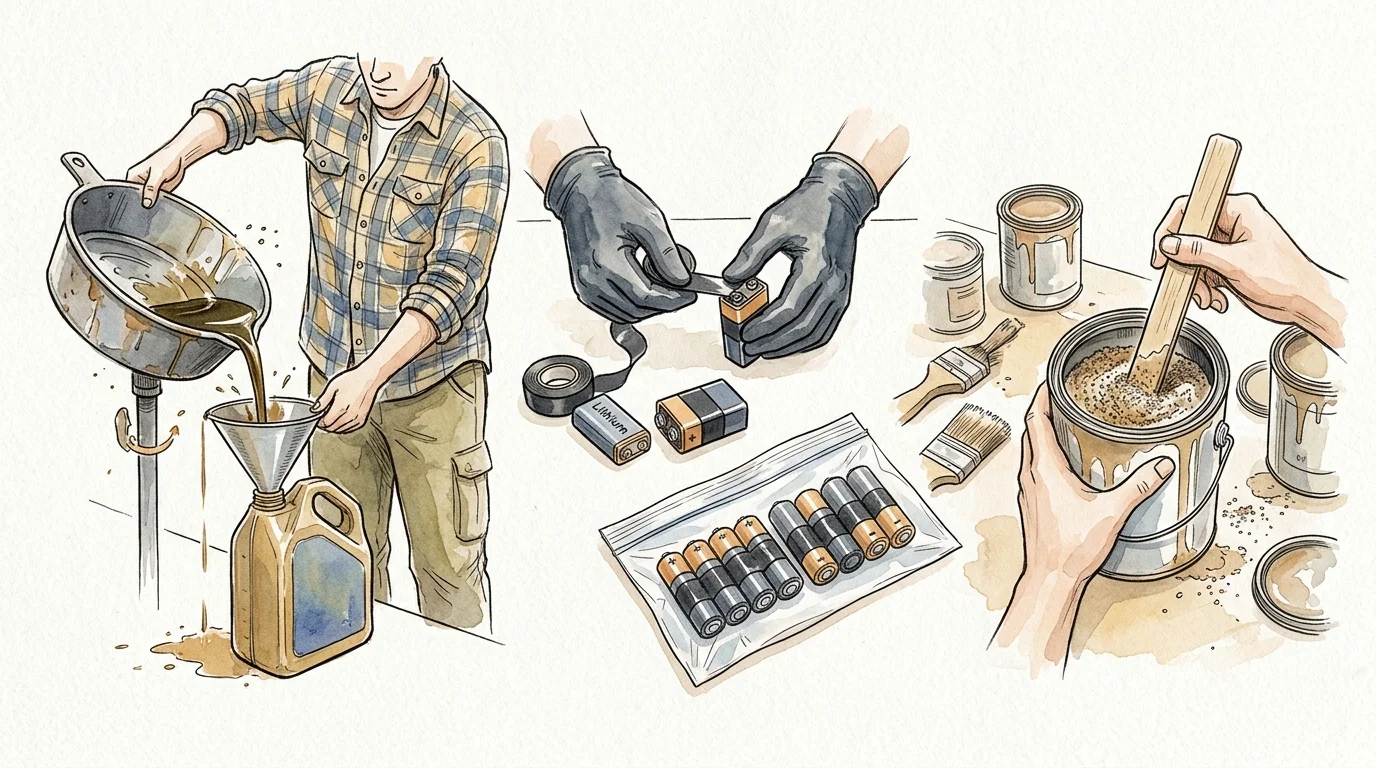
Never dump used motor oil into storm drains, onto gravel driveways, or into household trash. According to the Environmental Protection Agency (EPA), improperly dumping oil from a single DIY oil change—roughly one gallon—can contaminate up to one million gallons of fresh drinking water, which represents a full year of clean water for 50 people. Drain oil into a clean automotive basin, funnel it into a sturdy, sealed plastic container, and bring it to an auto parts retailer like AutoZone or Advance Auto Parts; most locations accept up to five gallons per day for free recycling.
2. Lithium-Ion and Rechargeable Batteries
Rechargeable lithium-ion batteries power modern cordless drills, lawn equipment, laptops, and cordless vacuums. When crushed inside standard garbage trucks, these batteries experience internal thermal runaway, leading to violent fires. An EPA study documented over 240 fires across 64 waste and recycling facilities caused or suspected to be caused by lithium-ion batteries. Always cover battery terminals with electrical tape or place each battery inside an individual clear plastic bag. Deliver them directly to nationwide collection bins managed by Call2Recycle at local hardware retailers like The Home Depot or Lowe’s.
3. Refrigerators, Freezers, and Dehumidifiers
Older cooling appliances contain chemical refrigerants such as chlorofluorocarbons (CFCs), hydrochlorofluorocarbons (HCFCs), or hydrofluorocarbons (HFCs). Under Section 608 of the Clean Air Act (40 CFR Part 82), venting these potent greenhouse gases into the atmosphere is strictly illegal. Scrapping or discarding an appliance requires an EPA-certified technician to evacuate the refrigerant using specialized recovery equipment. Check with your local electric utility provider before arranging scrap pickup; many utilities offer bounty programs providing $25 to $75 cash rebates plus free appliance haul-away.
4. Architectural Paint and Stains
Never pour leftover oil-based paints, varnishes, or latex coatings down household drains or into storm sewers. In 12 states and Washington, D.C., state-legislated stewardship programs managed by PaintCare make recycling straightforward. Funded by a modest point-of-sale fee ($0.45 to $1.95+ depending on container size), PaintCare enables you to drop off leftover house paint and primer at participating paint stores free of charge. If you live outside a PaintCare state, dry out small amounts of latex paint with kitty litter until solid before disposal; always route oil-based paints directly to your county hazardous household waste facility.
5. Unused and Expired Prescription Medications
Flushing unwanted medications down the toilet sends synthetic compounds directly into municipal wastewater plants, which cannot filter out active pharmaceutical ingredients before releasing treated water into rivers and lakes. The U.S. Drug Enforcement Administration (DEA) sponsors nationwide National Prescription Drug Take Back Days biannually on the last Saturday of April and October. You can also visit permanent drop-box kiosks located inside neighborhood pharmacies like Walgreens and CVS to deposit expired pills, capsules, and patches anonymously year-round.
6. Mercury Dial Thermostats
Pre-2002 manual dial thermostats utilize a sealed glass ampoule containing three to five grams of elemental liquid mercury to complete electrical circuits. Throwing an old thermostat into the trash risks crushing this glass vial, releasing neurotoxic vapors. The Thermostat Recycling Corporation (TRC) has diverted more than 14 tons of mercury from landfills through free collection programs. HVAC wholesale distributors and municipal hazardous collection sites accept these intact mercury switches at no cost to homeowners.
7. Fluorescent Tubes and Compact Fluorescent Lamps (CFLs)
Linear fluorescent tubes and CFL bulbs contain an average of three to five milligrams of toxic mercury vapor. When broken in a landfill or garbage hopper, this vapor disperses into the air and leaches into surrounding soil. Discarding fluorescent bulbs in standard trash is illegal in California, Maine, Massachusetts, Minnesota, Vermont, and Washington. Transport unbroken bulbs inside padded cardboard boxes to participating home centers or local household hazardous waste centers for mechanical recycling and mercury recovery.
8. Ionization Smoke Detectors
Ionization smoke alarms detect flaming fires using a microscopic fraction of the radioactive isotope Americium-241. While the Nuclear Regulatory Commission permits the disposal of single consumer units in standard trash, many regional waste authorities prohibit them. Look closely at the back of the detector casing for disposal instructions; reputable manufacturers like Kidde and First Alert maintain dedicated mail-back programs to safely process returned radioactive components.
9. Consumer Electronics and E-Waste
Obsolete televisions, desktop monitors, audio receivers, and computer towers contain hazardous heavy metals including lead, cadmium, and brominated flame retardants alongside recoverable copper and gold. Landfilling electronics wastes finite resources and threatens regional groundwater quality. Drop off your old electronics at certified e-Stewards or R2-certified electronic recycling depots, or bring them to electronics retailers like Best Buy for comprehensive component recycling.
10. Propane Tanks and Fuel Cylinders
Discarded 20-pound barbecue propane tanks and 1-pound camping fuel cylinders retain volatile pressurized vapors even when they appear completely empty. When compacted inside a sanitation truck, these containers explode with tremendous force. Exchange standard 20-pound tanks through exchange kiosks at hardware stores and supermarkets. For 1-pound camping cylinders, drop them off at designated county hazardous waste stations; never puncture pressurized gas cylinders at home unless you use an approved, spark-free depressurizing tool.
11. Pool Chemicals and Concentrated Pesticides
Pool shock treatments, trichlor sanitizing tablets, concentrated weed killers, and garden insecticides contain powerful oxidizing agents and caustic compounds. Mixing these chemicals inside standard trash containers can produce toxic chlorine gas clouds or spontaneous chemical fires. Keep these materials in their original containers with legible labels intact. Place leaking or deteriorating containers into secondary plastic tubs and hand them over directly to licensed technicians during municipal hazardous collection drop-offs.
12. Pressure-Treated Wood and Railroad Ties
Lumber manufactured before 2004 was commonly treated with chromated copper arsenate (CCA), a chemical preservative containing inorganic arsenic, while vintage railroad ties and utility poles contain heavy concentrations of creosote. Burning treated wood in fireplaces, wood stoves, or backyard fire pits releases toxic arsenic-laden smoke and concentrated ash. Never run treated lumber through a wood chipper for garden mulch; take structural renovation cutoffs directly to a certified construction and demolition landfill.