Tools, Materials, and Prep Checklist
Executing a ceiling project safely requires the right gear, accurate structural measurements, and proper safety prep. Working overhead presents unique physical challenges, so securing stable scaffolding or a sturdy ladder forms the foundation of a smooth installation.
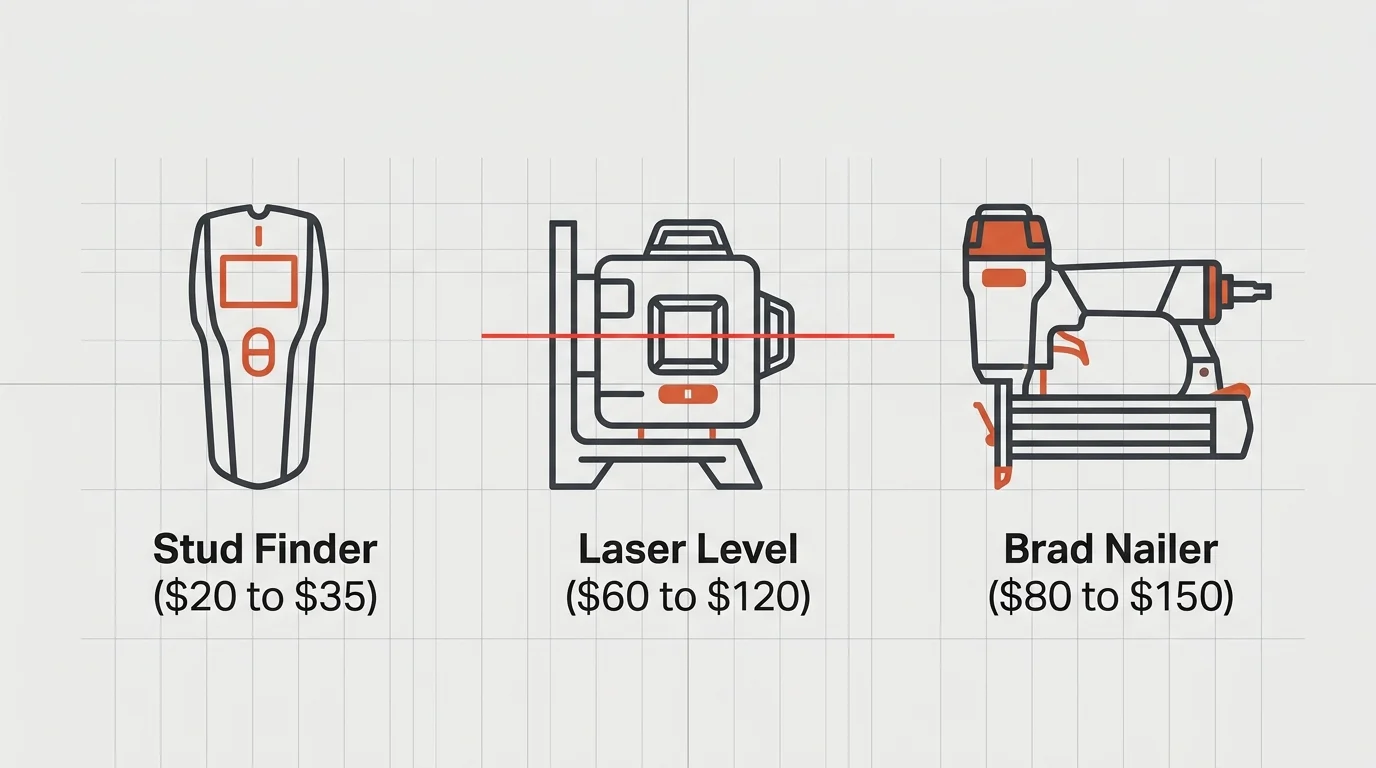
Essential Tools and Equipment: You will need an electronic stud finder ($20 to $35) capable of detecting wood framing through half-inch drywall, a 360-degree cross-line laser level ($60 to $120) for establishing straight reference lines, a pneumatic 18-gauge brad nailer ($80 to $150) with 2-inch brad nails, a sliding compound miter saw ($180 to $350) for precise angle cuts, a heavy-duty caulking gun ($15), a measuring tape, safety glasses, and a dust mask. For high ceiling applications, rent a rolling Baker-style scaffold ($40 per day at centers like Home Depot) rather than balancing precariously on a stepladder.
Material Requirements and Budgeting: Material choices depend on your preferred ceiling decor inspiration. For wood planking, budget $2.50 to $4.50 per linear foot for pre-primed tongue-and-groove pine or cedar. Faux polyurethane wood beams cost roughly $110 to $240 per 8-foot section, offering the rich aesthetic of solid oak at a fraction of the weight. Glue-up PVC or lightweight metal tin ceiling tiles cost approximately $15 to $30 per 2×2-foot panel. Premium zero-VOC interior acrylic paint runs $50 to $70 per gallon, with one gallon covering roughly 350 to 400 square feet. Always add a 10 percent material buffer for cuts and waste.
Surface Prep and Safety Protocols: Begin every overhead project by locating and marking all ceiling joists with painter’s tape across the entire span. Turn off circuit breakers supplying overhead junction boxes before removing existing light fixtures or ceiling fans. According to guidelines from the National Electrical Code, any structural material added over original drywall requires electrical junction box extenders to ensure outlets and light boxes remain flush with the finished surface. Clean the drywall using a damp sponge with trisodium phosphate (TSP) cleaner to remove grease and dust, ensuring maximum adhesion for construction adhesives or wallpaper pastes.