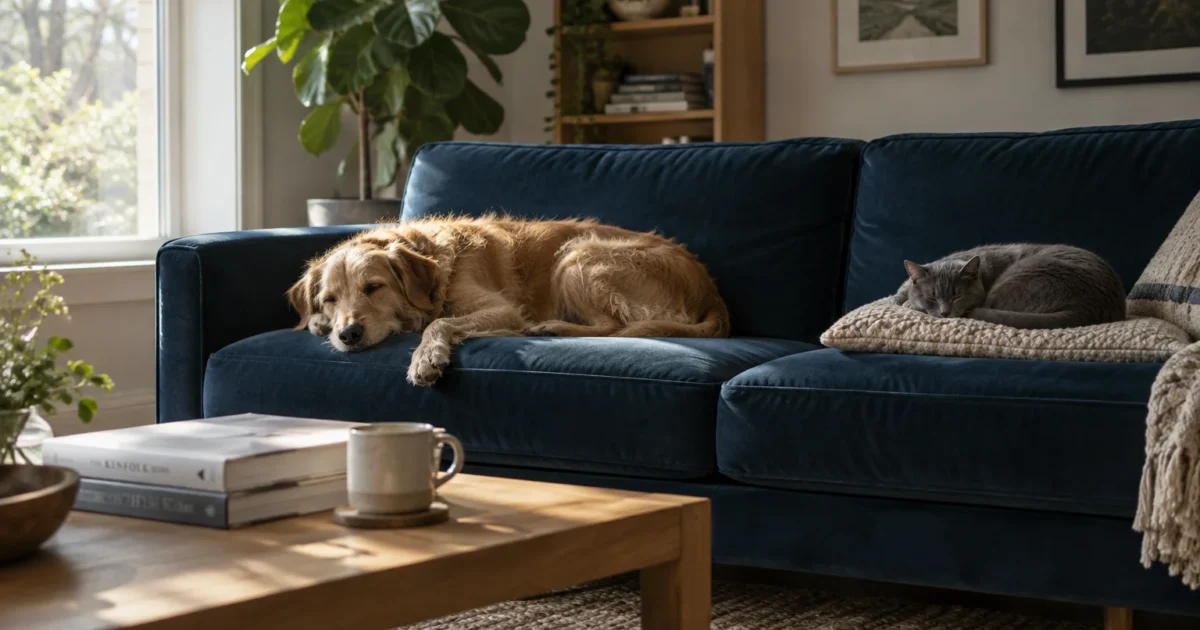
Living with four-legged companions should never force you to compromise on your home aesthetic. You can protect your furniture investment by selecting upholstery engineered to resist sharp claws, shed hair, and inevitable muddy paws.
The right textile balances structural durability, stain resistance, and daily comfort without feeling like industrial plastic. Modern performance weaves make snagged threads and lingering odors relics of the past.
Choosing the best sofa fabric for pets ensures your couch endures heavy family traffic while maintaining showroom beauty. We have analyzed the top ten materials so you can buy with total confidence.
Project Overview & Why It Matters
According to data from the American Pet Products Association, roughly 71% of U.S. households own a companion animal. That represents nearly 94 million homes where dogs and cats share our daily living spaces.
Dogs live in approximately 68 million homes, while cats reside in 49 million properties. Because companion animals spend substantial time relaxing alongside their owners, standard residential fabrics often fail rapidly under daily stress.
Pet ownership creates specific mechanical challenges for living room upholstery. Claws snag loose textile loops; shedding coats push dander deep into cushion cores; and active paws introduce abrasive grit, moisture, and biological oils.
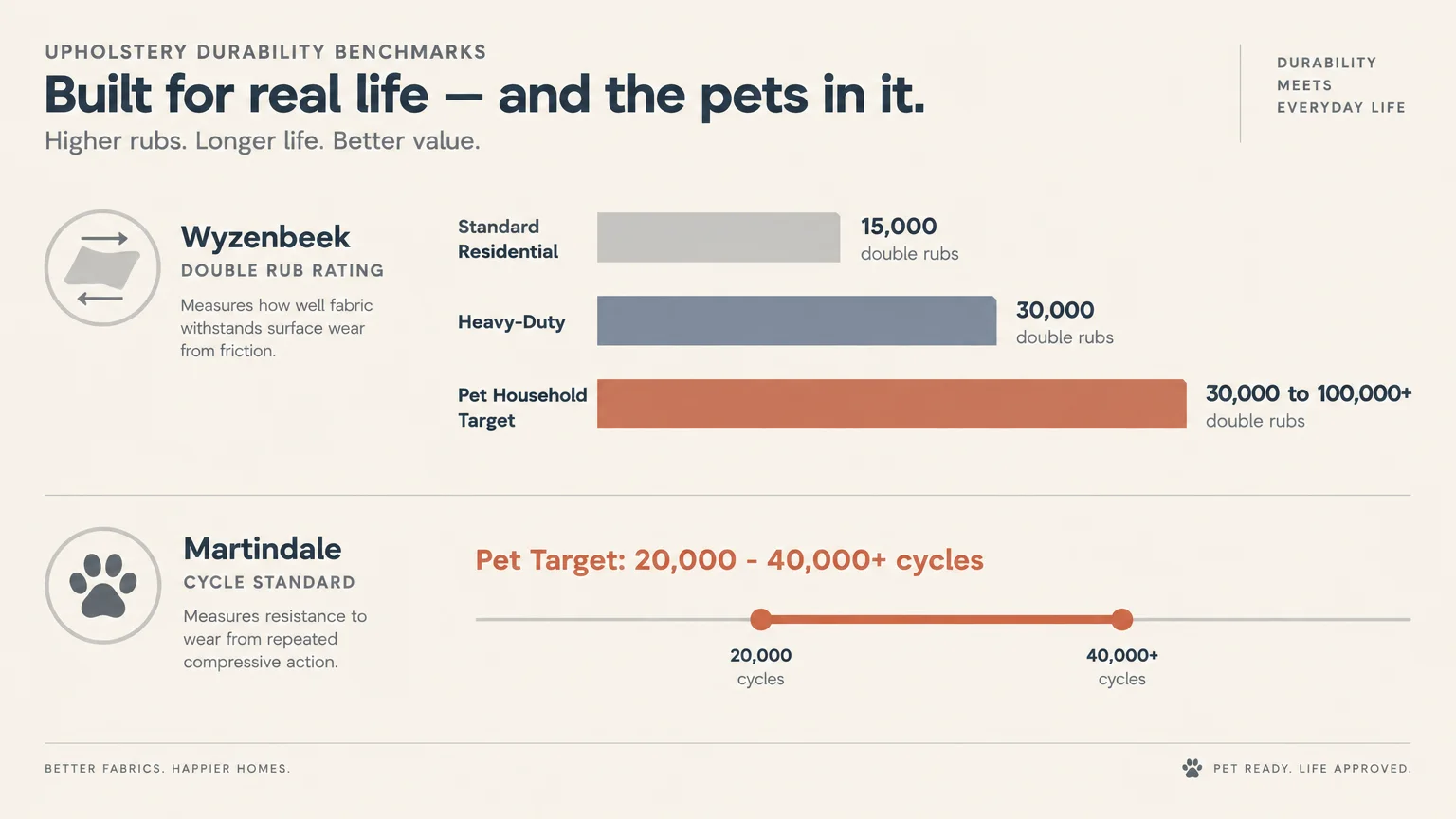
Standardized testing helps quantify how well textiles resist this mechanical friction. The ASTM D4157 Wyzenbeek method measures surface abrasion resistance through mechanical double rubs using heavy cotton duck cloth.
The Association for Contract Textiles rates standard residential upholstery at 15,000 double rubs and heavy-duty textiles at 30,000 double rubs. Pet households require materials rated between 30,000 and 100,000+ double rubs to prevent thinning and premature tearing.
European furniture lines often apply the Martindale abrasion test under ISO 12947. For pet-friendly furniture materials, you should seek a Martindale score between 20,000 and 40,000+ cycles to withstand relentless digging and claw friction.
Pile construction determines whether claws destroy your couch. Loop-pile fabrics catch animal claws like fishhooks, while flat weaves and dense cut piles allow claws to slide away harmlessly.
Purchasing the correct textile eliminates recurring reupholstery costs and simplifies daily sanitation. Investing early in a scratch-resistant couch fabric safeguards your household budget and maintains your peace of mind.
Tools, Materials, and Prep Checklist
Before ordering a custom sofa or buying off the showroom floor, assemble an evaluation kit. Testing swatches at home prevents costly purchasing mistakes before you commit your budget.
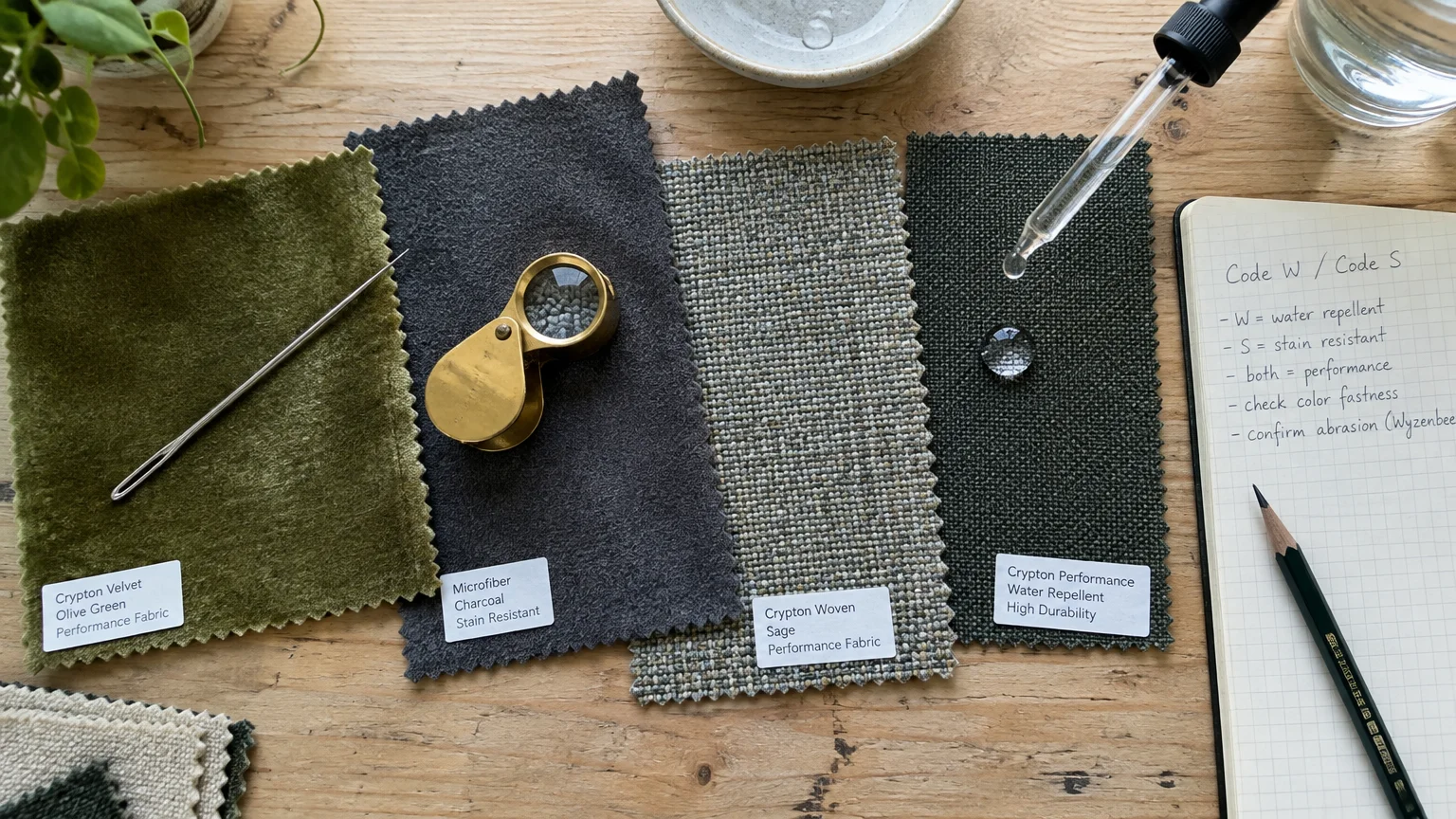
Textile Inspection Swatches ($5 to $30): Order generous fabric samples directly from furniture retailers. Always evaluate swatches in your living room lighting rather than trusting digital catalog images.
Testing Hardware ($10 to $20): Keep a blunt darning needle, a handheld magnifying loupe, and an eye dropper on hand. These simple tools let you inspect weave density and test liquid repellency.
Fabric Cleaning Code Guide: Always inspect the manufacturer care tag under the sofa frame. The textile industry designates cleanability through standardized alphabetical codes that dictate safe cleaning agents.
Code W: Cleanable strictly with water-based agents. This rating cleans easily when your pet tracks in wet mud or suffers an accidental bladder leak.
Code S: Cleanable only with pure water-free solvents. Water-based pet messes will leave permanent rings on these delicate fibers, making them impractical for pet owners.
Code W-S: Cleanable with either water-based products or mild solvent cleansers. This versatile rating gives you broad flexibility when treating varied pet messes.
Code X: Strictly cleanable by vacuuming or light brushing alone. Liquid cleaners damage these fabrics immediately; avoid this rating entirely in pet-friendly homes.
PFAS-Free Finish Verification: Under California AB 1817, upholstery containing intentionally added PFAS chemicals is banned starting January 1, 2025. This regulation limits total organic fluorine to 100 parts per million.
The restriction tightens to 50 parts per million on January 1, 2027. Demand modern fluorine-free (C0) water-repellent and stain-repellent finishes to ensure healthy indoor air quality.
Core Cushion Density: Check cushion foam specifications before buying. Insist on high-resiliency foam rated at 2.0 pounds per cubic foot or higher to prevent permanent body impressions.
Step-by-Step Instructions
Phase 1: Profile Your Pet and Household Traffic
Begin by diagnosing your pet’s specific physical habits. Large dogs that dig before lying down require high tensile strength, whereas cats demand smooth surfaces without accessible loose loops.
Note chronic shedding patterns and outdoor access points. Long-haired breeds weave stiff guard hairs into open knits, while active sporting dogs deposit outside grit directly onto cushions.
Phase 2: The 10 Pet-Approved Sofa Materials
1. Performance Microfiber: True upholstery microfiber features filaments measuring less than 1 denier, making each strand finer than silk. Because mills knit this ultra-fine synthetic without open loops, cat claws cannot penetrate.
Pet hair sits on the surface rather than embedding into the backing. You can lift shedding fur quickly using a damp rubber squeegee or specialized upholstery brush.
2. Solution-Dyed Acrylic: Manufacturers inject colored pigments into liquid polymer before extruding the fibers. This process locks color directly into the fiber core, making the textile completely UV-resistant and colorfast.
You can safely sanitize solution-dyed acrylic using up to a 10% diluted bleach solution. Mix 1 cup of household bleach with 1 gallon of water to eliminate stubborn bacteria without color loss.
3. Olefin (Polypropylene): Olefin excels at repelling moisture because its synthetic polymer absorbs virtually zero liquid. It yields exceptional abrasion ratings, frequently exceeding 50,000 Wyzenbeek double rubs at an accessible price point.
This durable sofa fabric stands up to repeated chemical scrubbings. However, keep high heat away, as olefin melts under elevated thermal exposure.
4. Crypton Performance Fabric: Crypton incorporates an engineered, breathable backing that stops liquid messes from soaking into cushion foam. Modern Crypton formulations utilize fluorine-free stain technologies meeting current clean-air regulations.
Pet accidents remain perched on top of the fabric matrix. You simply blot fluids with a towel and clean the spot with mild soapy water.
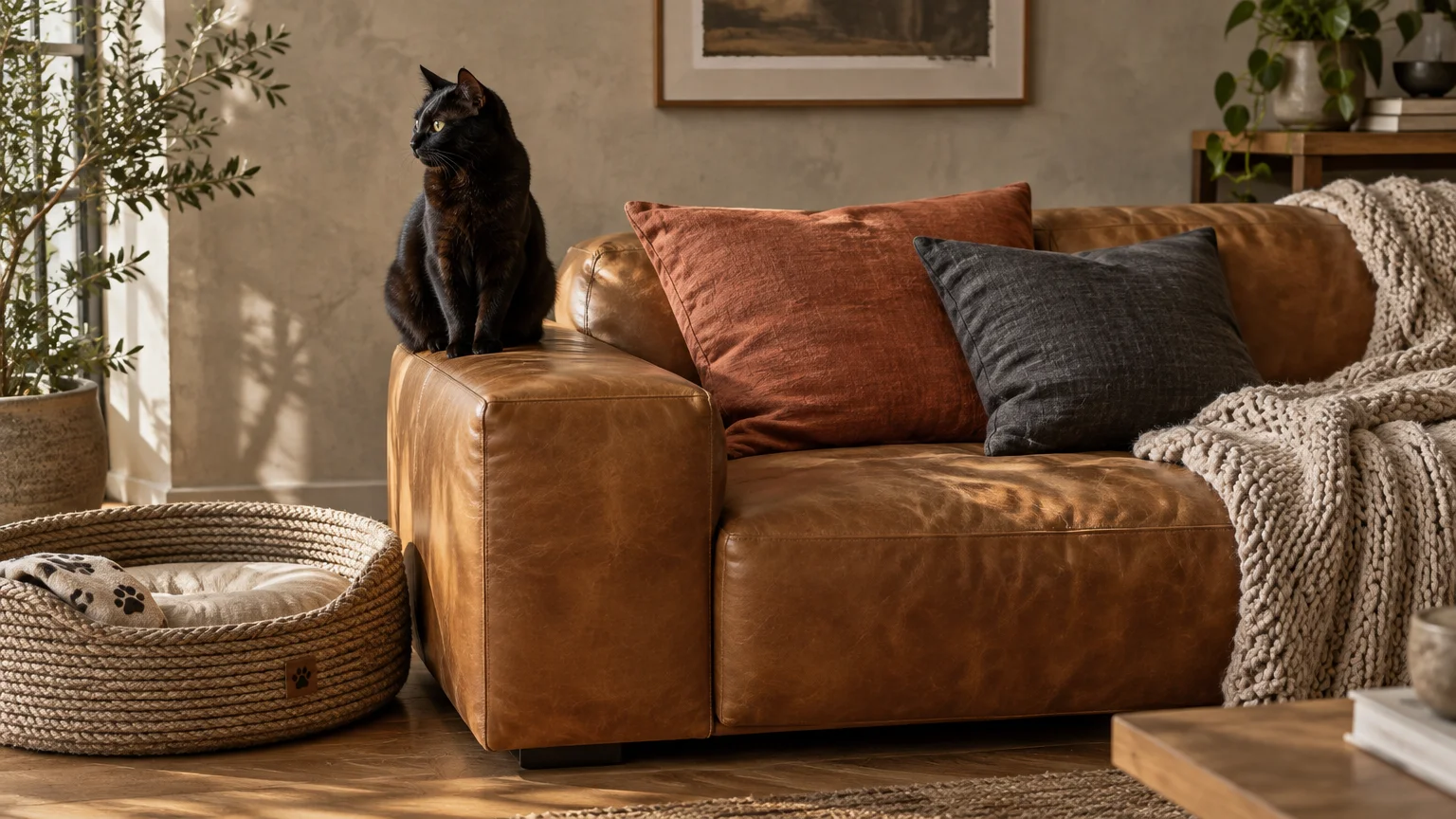
5. Top-Grain Semi-Aniline Leather: Genuine top-grain leather features a light protective surface coat that resists accidental claw punctures. Pet hair cannot penetrate the smooth hide, allowing you to wipe away dander effortlessly.
Leather develops an attractive natural patina over years of use. Avoid fragile full-aniline or suede hides, which absorb liquids instantly and scratch permanently under dog nails.
6. Commercial-Grade Polyester Velvet: Despite its luxurious appearance, 100% polyester velvet is exceptionally pet-friendly. Velvet has a flat cut pile without woven loops, leaving cats with no purchase to scratch or shred.
High-density polyester velvet regularly passes 50,000 Wyzenbeek double rubs. Dropped pet hair slides easily across the smooth pile during routine weekly vacuuming.
7. Heavy Cotton Canvas Duck: Heavy cotton canvas shines when tailored into removable, machine-washable slipcovers. Duck canvas offers extreme tear resistance against vigorous dog nesting behaviors.
Washable slipcovers let you launder away dander and odors using standard household laundry cycles. Pre-wash your canvas fabric thoroughly before custom tailoring to avoid unwanted shrinkage.
8. Heavy Denim Twill: Cotton and poly-blend denim twill features a tight diagonal weave originally engineered for rugged workwear. The dense diagonal construction prevents pet claws from snagging individual yarns.
Denim softens comfortably over time while maintaining structural integrity. Opt for medium or dark washes to camouflage intermittent fur shedding between laundering sessions.
9. Recycled Polyester Performance Weaves: Modern recycled polyester weaves combine post-consumer plastics with advanced fluorine-free stain barriers. These sustainable textiles achieve heavy-duty ratings exceeding 50,000 double rubs while conserving raw resources.
The tightly twisted multi-ply yarns resist surface pilling from claw friction. Choose flat, dense weaves over loose basketweaves to keep claws from catching.
10. High-Grade Polyurethane Faux Leather: High-performance polyurethane mimics genuine leather at a fraction of the cost. Commercial-grade polyurethane resists liquid penetration, eliminates trapped pet odor, and wipes clean with warm, soapy water.
Ensure you select pure polyurethane rather than bonded leather. Bonded leather uses shredded scraps bound by adhesive that peel rapidly when subjected to pet claws.
Phase 3: Conduct the In-Home Durability Test
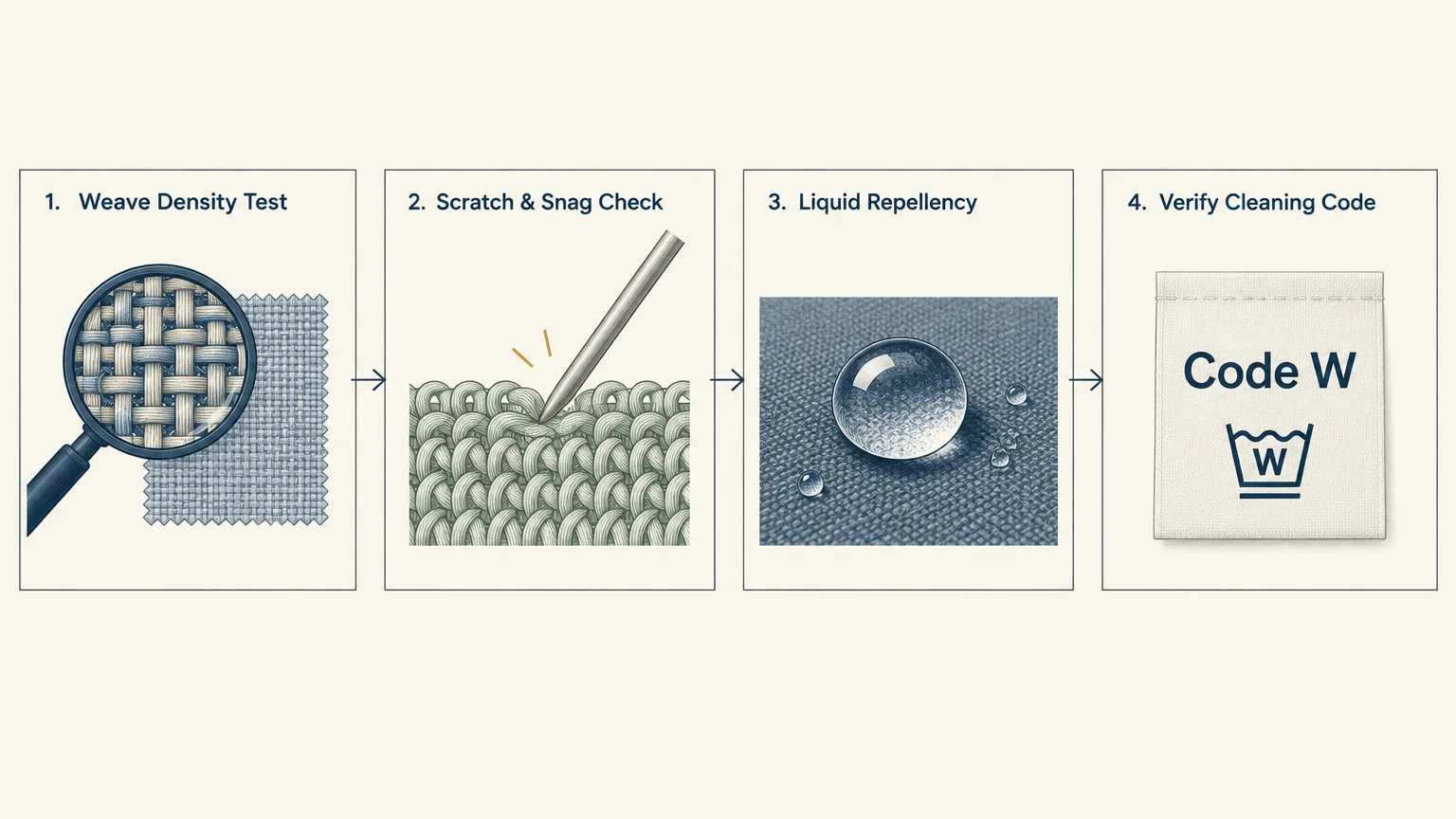
Place your chosen fabric swatch on a flat wooden surface. Drag a blunt darning needle across the surface with moderate pressure to simulate a cat claw or dog nail.
Inspect the yarn structure under your magnifying loupe. If threads pull outward or unravel into loops, reject the textile immediately.
Next, deposit three drops of water onto the swatch and wait five minutes. The liquid must bead on the surface without soaking into the backing fibers.
Troubleshooting Fabric Issues: If pet hair clings stubbornly via static electricity, mist the fabric with an anti-static spray. Never purchase loose chenille, tweed, or open linen for homes with scratching animals.
Style & Finishing Touches
Selecting pet-friendly furniture materials does not mean sacrificing living room beauty. Smart color and weave selections bridge the gap between interior design and practical pet durability.
Choose heathered fabrics or tweed-inspired flat weaves that blend multi-tonal yarns. Multi-colored threads disguise shedding hair effectively between cleanings far better than solid light or dark fabrics.
Match your sofa color to your pet’s coat if your animal sheds constantly. Light golden fabrics conceal retriever fur, while charcoal and slate fabrics hide dark cat hair effortlessly.
Inspect cushion engineering before finalizing your purchase. Specify high-resiliency foam wrapped in water-resistant ticking to keep pet accidents from reaching the core foam.
Demand zippered cushion covers on both seat and back cushions. Zippered casings allow you to replace foam cores or access the interior for targeted odor decontamination.
Layer stylish, washable accent throws across your pet’s favorite lounging corner. Soft cotton or wool throws capture loose hair and wash easily in weekly laundry loads.
Choose sofa frames with tall, tapered legs rather than skirted bases. Elevated furniture legs provide adequate clearance for robot vacuums to capture pet hair drifts underneath.
Maintenance & Long-Term Care
Consistent maintenance preserves scratch-resistant couch fabric and extends furniture life. Establishing a predictable cleaning routine stops pet dander and skin oils from bonding to fibers.
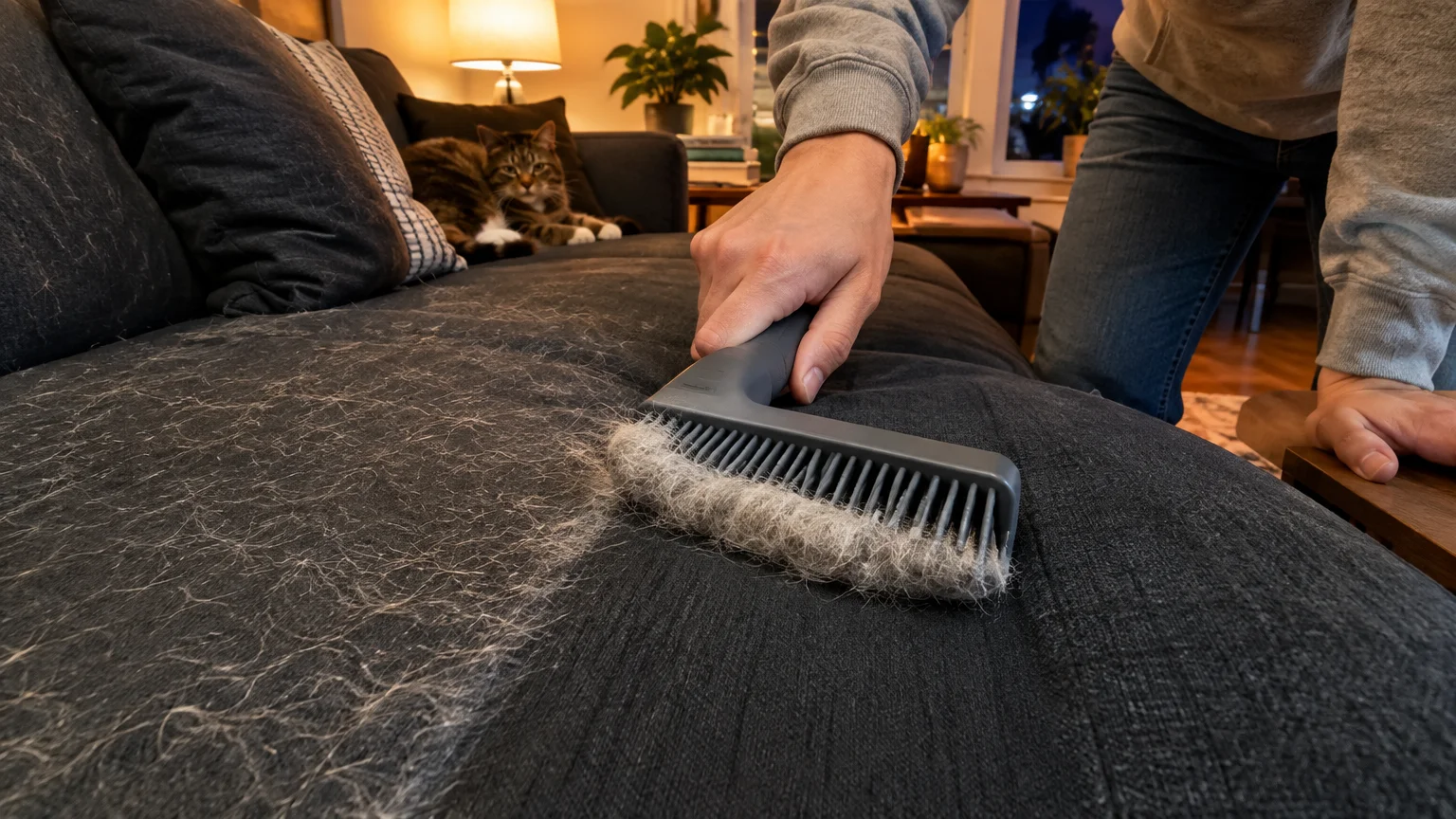
Vacuum your sofa weekly using an upholstery attachment with rubber bristles. Rubber edges pull stubborn dog hairs out of tight seams without damaging delicate textile weaves.
Treat biological accidents immediately using bio-enzymatic cleaning solutions. Enzymatic formulas digest uric acid crystals and organic proteins rather than merely masking pet odors with perfume.
For solution-dyed acrylics or olefins, disinfect severe stains using a diluted bleach solution. Blend 1 cup of household bleach and 1/4 cup mild soap into 1 gallon of clean water.
Apply the solution with a soft sponge, allow it to sit for ten minutes, and rinse thoroughly. Always air-dry the upholstery completely before permitting pets back onto the cushions.
Condition genuine leather sofas twice each year using a specialized leather balm. Hydrated leather maintains suppleness and resists puncture tears far better than dry, brittle hide.
Rotate seat and back cushions every three months. Flipping reversible cushions distributes wear patterns evenly and prevents sagging from your pet’s favorite lounging spot.
Avoid hot steam cleaners on solvent-cleaned fabrics or heat-sensitive synthetics like olefin. Excessive steam heat can melt synthetic fibers or set organic protein stains permanently.
FAQ
What is the best sofa fabric for pets that scratch?
Commercial-grade microfiber and flat polyester velvet perform best against scratching. Their lack of woven loops leaves cat claws unable to catch, preventing thread pulls and shredding.
Can you use genuine leather in a home with dogs and cats?
Yes, semi-aniline top-grain leather works exceptionally well for pet households. It resists puncture tears, wipes clean instantly, and does not trap pet hair or odors.
Are modern stain-resistant fabrics safe for my pets?
Yes, provided they utilize modern fluorine-free (C0) repellent finishes. Following recent legislative bans in California and New York, manufacturers have replaced toxic PFAS chemicals with safe, non-toxic alternatives.
What Wyzenbeek abrasion rating should I look for?
Seek a minimum Wyzenbeek rating of 30,000 double rubs for pet homes. For active, large dogs, choose commercial-grade fabrics rated between 50,000 and 100,000 double rubs.
How do I clean pet accidents from Code S upholstery?
Code S fabric requires dry-cleaning solvents rather than water. However, pet urine requires liquid extraction, so you should avoid Code S fabrics entirely when living with animals.
Takeaway & Next Steps
Selecting durable, pet-friendly furniture materials lets you enjoy companion animals without compromising your living room design. Modern performance fabrics repel messes, resist claws, and clean up effortlessly.
Take these three immediate steps to pet-proof your living space today:
1. Audit Your Current Care Tags: Check your furniture cleaning codes to ensure you use the proper cleaning agents on existing upholstery messes.
2. Order Fabric Swatches: Request samples of microfiber, solution-dyed acrylic, and velvet to conduct scratch and water drop tests at home.
3. Verify PFAS-Free Standards: Ask retailers whether their performance textiles comply with current fluorine-free safety regulations before placing your custom order.
We want to hear about your living room transformations! Share your before-and-after pet furniture photos with our editors, or subscribe to our newsletter for weekly home renovation tips and guides.