Step-by-Step Instructions
Choosing a material and executing installation requires evaluating performance data, preparing the wood decking, and laying materials according to local building codes. Below is our comprehensive evaluation of the nine premier roofing choices, followed by structural installation phases.
The 9 Roofing Materials Detailed Comparison
1. Three-Tab Asphalt Shingles: Costs $4.00 to $6.00 per square foot installed ($400 to $600 per square) with an expected lifespan of 15 to 25 years. Three-tab shingles offer the lowest upfront entry cost, featuring a flat, single-layer profile. They work well for budget updates, though wind resistance caps out at 60 miles per hour.
2. Architectural Asphalt Shingles: Costs $4.50 to $8.00 per square foot installed ($450 to $800 per square) with an expected lifespan of 20 to 30 years. Multi-layered dimensional shingles resist winds up to 130 miles per hour. They dominate residential market share due to their superior durability relative to cost.
3. Metal Roofing (Steel and Aluminum): Costs $8.00 to $14.00 per square foot installed ($800 to $1,400 per square) with an expected lifespan of 40 to 70 years. Standing seam metal panels reflect solar heat, shed snow effortlessly, and provide Class A fire protection with minimal ongoing maintenance.
4. Wood Shakes and Shingles: Costs $6.00 to $12.70 per square foot installed ($600 to $1,270 per square) with an expected lifespan of 25 to 40 years. Natural cedar shakes deliver rustic beauty and natural thermal insulation, though they require routine fire-retardant treatments and moss removal.
5. Concrete Roof Tiles: Costs $6.00 to $12.00 per square foot installed ($600 to $1,200 per square) with an expected lifespan of 40 to 70 years. Concrete tiles mimic Spanish clay or natural slate. They withstand severe winds and hail, but their heavy weight (900 to 1,200 pounds per square) requires certified framing evaluation.
6. Clay Roof Tiles: Costs $10.00 to $21.35 per square foot installed ($1,000 to $2,135 per square) with an expected lifespan of 50 to 100-plus years. Kiln-fired clay tiles provide permanent color and complete immunity to salt air and rot, though material brittleness requires careful installation.
7. Synthetic and Composite Shingles: Costs $8.00 to $16.00 per square foot installed ($800 to $1,600 per square) with an expected lifespan of 40 to 50 years. Polymer composite tiles replicate quarried slate or hand-split cedar, delivering Class 4 impact resistance without heavy structural loads.
8. Natural Slate Tiles: Costs $15.00 to $32.00 per square foot installed ($1,500 to $3,200 per square) with an expected lifespan of 75 to 150-plus years. Quarried stone slate delivers extraordinary beauty and longevity. Heavy material weights (800 to 1,500 pounds per square) mandate custom structural rafter reinforcement.
9. Copper and Premium Metal Roofing: Costs $20.00 to $35.00-plus per square foot installed ($2,000 to $3,500-plus per square) with an expected lifespan of 50 to 100-plus years. Copper panels form a protective patina over time, never rust, and offer a premium architectural aesthetic.
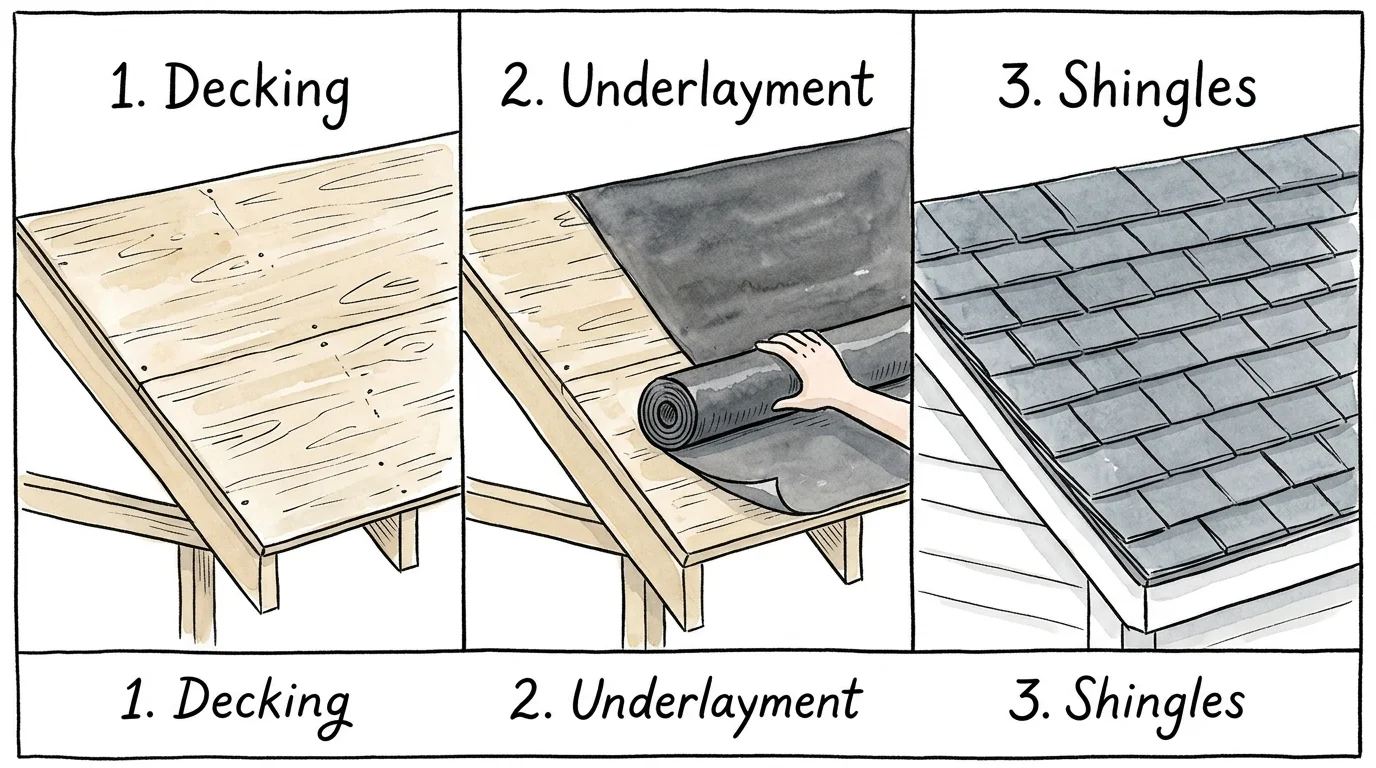
Phase 1: Deck Preparation and Repair
Pry off old shingles down to the bare plywood. Replace water-stained sheathing using 8d ring-shank nails spaced six inches on center along panel margins. Sweep the deck clean of debris to ensure optimal underlayment adhesion.
Phase 2: Installing Underlayment and Flashings
Apply self-adhering ice shield along eaves, extending at least 24 inches inside warm interior walls per building codes. Fasten aluminum drip edge profiles along eaves, then roll synthetic underlayment across remaining deck surfaces in overlapping courses.
Phase 3: Material Laying and Fastening Controls
Snap chalk lines to maintain straight courses across the roof pitch. Lay course materials starting at lower eaves, driving four to six galvanized nails per shingle into marked nail lines. Weave metal step flashing along vertical sidewall joints and chimney intersections.
Safety Callouts and Troubleshooting
Wear anchored safety harnesses on roof pitches exceeding 4:12. Consult a structural engineer if you observe sagging rafters before installing heavy tile or slate. Install continuous ridge vents paired with open soffit intake vents to ensure balanced attic airflow, preserving material warranties and stopping ice dams.