
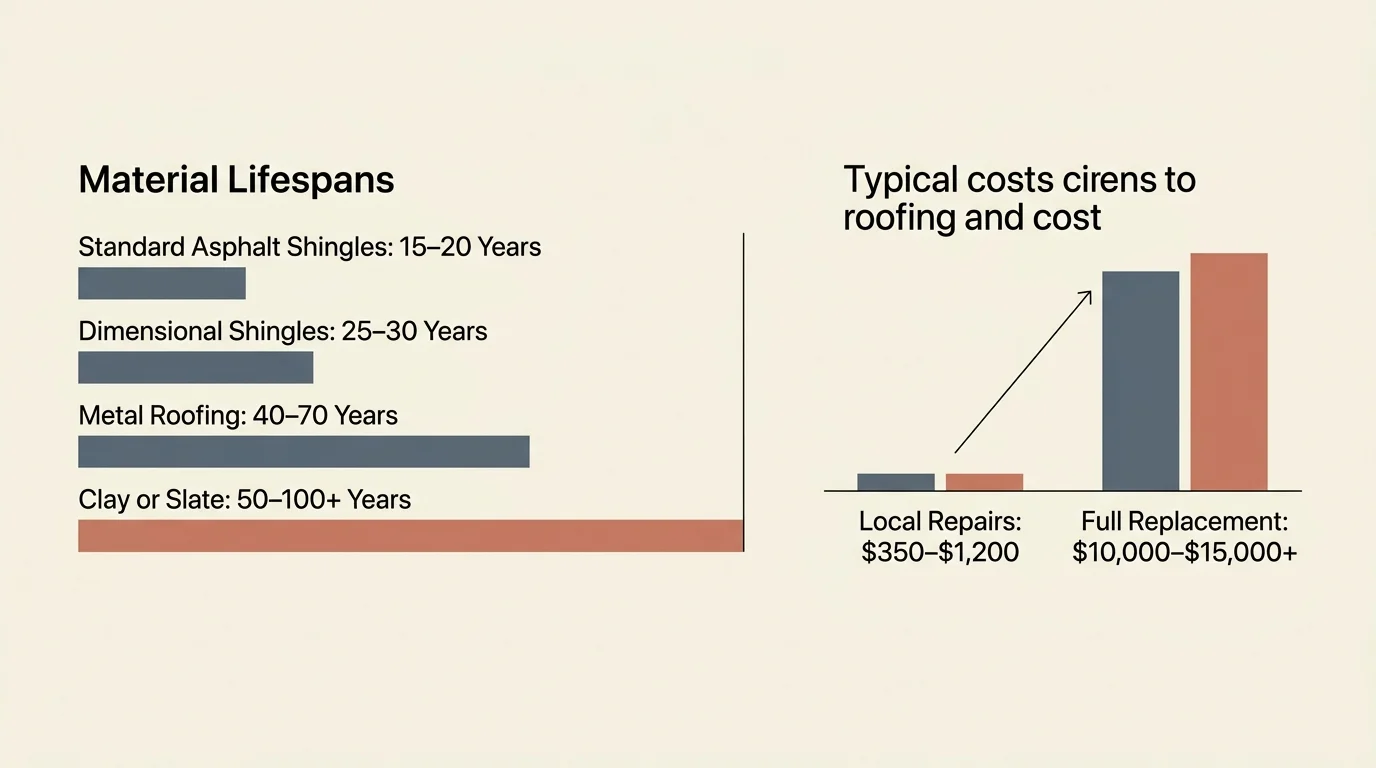
Your roof protects your largest financial investment from torrential rain, heavy snow, and scorching ultraviolet radiation every single day. Spotting subtle roof damage warning signs early prevents thousands of dollars in structural wood rot, ruined attic insulation, and interior drywall destruction. While climbing onto your roof presents severe fall hazards, conducting a vigilant ground-level assessment helps you pinpoint when to call a roofer before a small issue becomes an emergency. Standard localized leak repairs cost between $350 and $1,200, whereas delaying maintenance can quickly trigger a full roof replacement averaging $10,000 to $15,000 or more. Knowing what to look for keeps your home secure and your budget intact.
Project Overview & Why It Matters
Your roofing system functions as a complex, layered shield composed of structural rafters, plywood decking, underlayment, flashing, ventilation components, and exterior coverings. When any single element in this assembly fails, moisture infiltrates the structure, compromising structural framing and encouraging hazardous black mold growth inside your living spaces. Regular diagnostic evaluations help you catch small defects before moisture penetrates the waterproof barrier.
The National Roofing Contractors Association (NRCA) recommends scheduling professional roof inspections at least twice a year—once in the spring and once in the autumn—as well as immediately following severe storms or high-wind events. These bi-annual checkpoints ensure that winter ice expansion and summer heat blistering receive prompt attention before seasonal weather shifts exacerbate the damage.
Material age plays a massive role in structural integrity. Standard three-tab asphalt shingles provide a service lifespan of 15 to 20 years, whereas architectural dimensional shingles last 25 to 30 years. Premium materials like standing-seam metal offer 40 to 70 years of resilience, and clay tile or slate roofs routinely exceed 50 to 100 years. Tracking your roof against these benchmarks ensures you budget proactively for replacements rather than reacting to catastrophic leaks.
Timely inspections also preserve your insurance coverage. Most homeowners insurance carriers require storm damage claims for wind or hail to be filed within 12 to 24 months of the weather incident. Delaying an assessment risks claim denials, leaving you entirely responsible for thousands of dollars in restoration costs.