
Tools, Materials, and Prep Checklist
Conducting a preliminary homeowner assessment requires basic safety equipment and diagnostic tools. You can complete most exterior checks from ground level without stepping foot on a steep pitch.
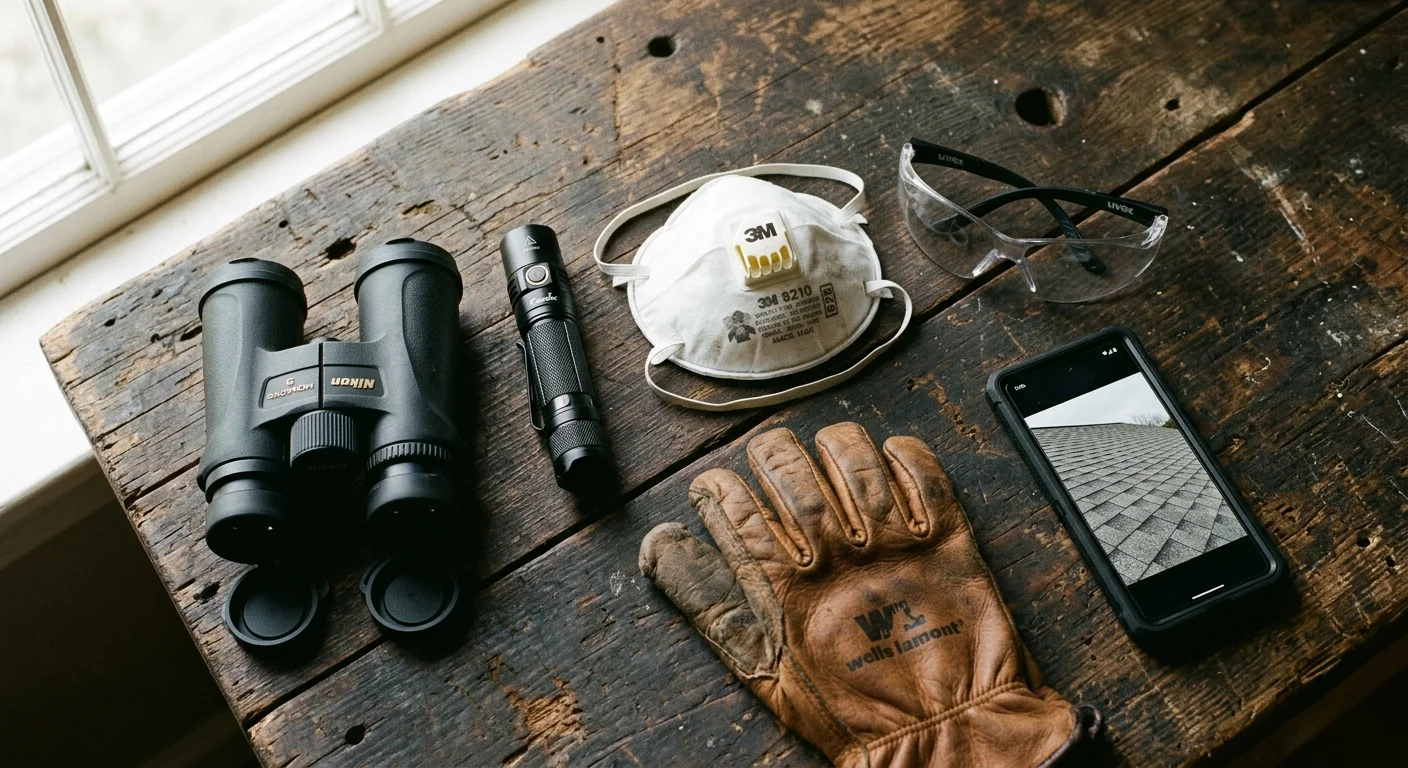
High-Powered Binoculars (8×42 or 10×42 magnification): Essential for scanning high ridge caps, chimney flashing, and valley transitions from multiple angles on the ground. Approximate cost: $35 to $75.
High-Lumen LED Flashlight (1,000+ lumens): Necessary for illuminating dark attic spaces, checking underside roof decking, and inspecting rafter bays for moisture trails. Approximate cost: $20 to $40.
Digital Camera or High-Resolution Smartphone: Document every potential defect with date-stamped photos to provide your contractor or insurance adjuster. Approximate cost: $0 (existing equipment).
Attic Safety Gear (N95 respirator mask, safety glasses, work gloves): Protects your lungs from loose fiberglass or cellulose insulation and shields your eyes in dusty crawlspaces. Approximate cost: $15 to $25.
Sturdy Extension Ladder: Useful strictly for examining low gutter lines and eave drip edges. Keep your feet firmly planted on the ground or follow strict ladder safety protocols. Approximate cost: $120 to $200.
Before beginning your survey, review local weather conditions to ensure dry, clear visibility. Prepare your attic access by clearing items away from the hatch or drop-down stairs, and confirm that all household pets remain safely indoors while you conduct your exterior perimeter walk.
Safety must remain your top priority throughout this process. According to the Occupational Safety and Health Administration (OSHA), falls remain the leading cause of residential construction injuries. Never walk across steep roofs, wet shingles, or surfaces with visible moss growth without certified fall-arrest harnesses. Leave elevated rooftop diagnostics to licensed, insured contractors.