Purging your bedroom without a strategy often leads to tossing versatile organizing tools that cost a fortune to replace. You can reclaim floor space and restore calm by retaining a core set of multi-functional bedroom storage essentials.
Professional organizers know that enduring room transformations rely on adaptable workhorses rather than cheap, trendy containers. Identifying what to keep prevents buyer remorse and protects your renovation budget during your next overhaul.
Master these proven bedroom organization tips to unlock hidden square footage, tame unruly nightstands, and preserve a clutter-free sanctuary for years to come.
Project Overview & Why It Matters
A disorganized bedroom disrupts sleep cycles and creates unnecessary morning friction. Professional organizers focus on structural simplicity, ensuring every square foot serves your daily routine efficiently.
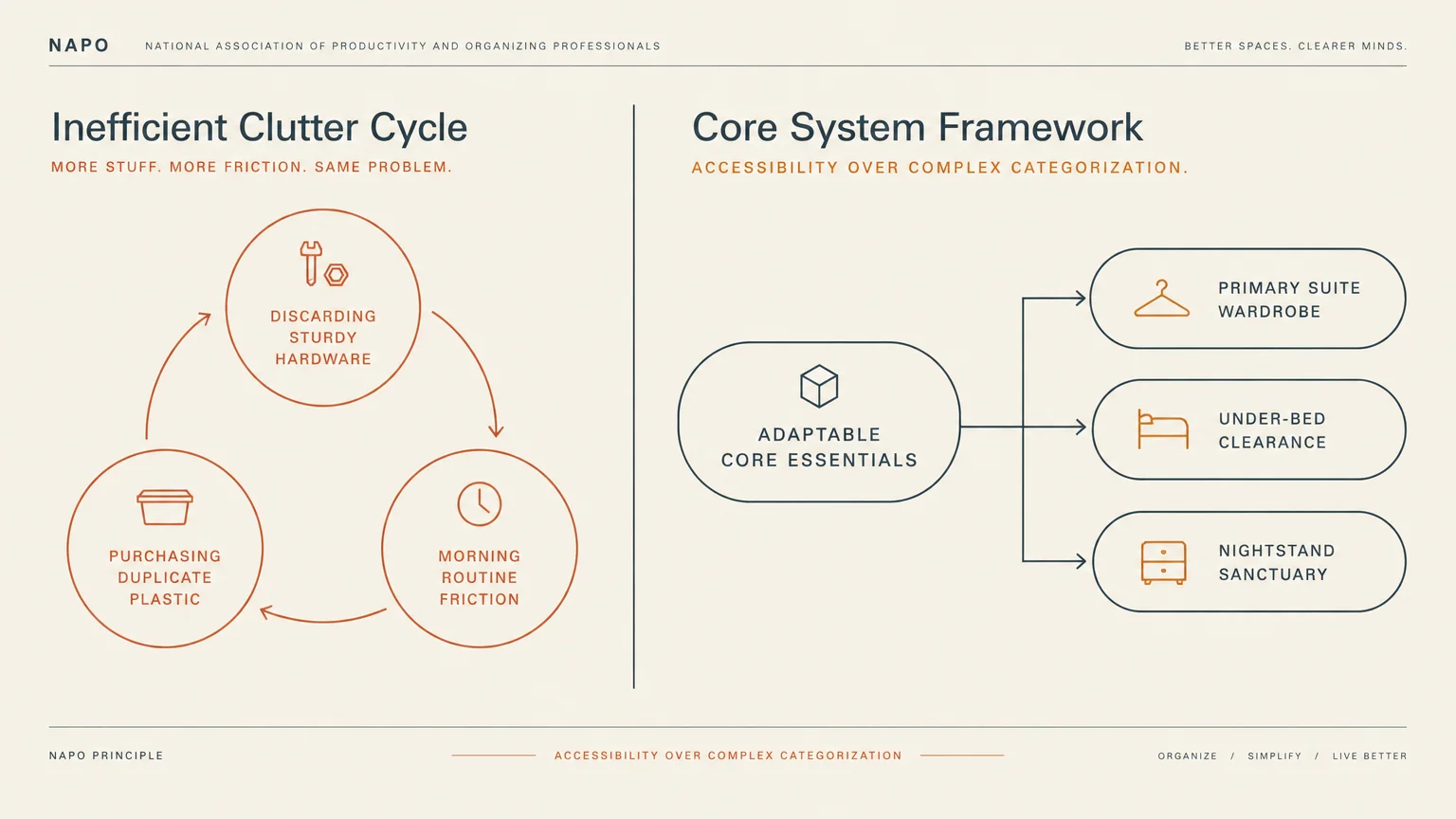
Many homeowners mistakenly discard valuable storage assets during aggressive weekend cleanouts. Discarding sturdy hardware only forces you to buy duplicate products later, which inflates your decorating costs.
Relying on smart organizing principles allows you to adapt your layout as your wardrobe expands. High-quality foundational pieces seamlessly shift from guest rooms to primary suites without losing utility.
According to research from the National Association of Productivity and Organizing Professionals, efficient systems prioritize accessibility over complex categorizations. Streamlining your storage eliminates visual noise and promotes genuine relaxation.
This project transforms cluttered closets, overflowing dressers, and chaotic nightstands into functional zones. You will establish an intentional system that protects delicate fabrics and speeds up morning routines.
Investing time in decluttering bedroom advice provides immediate daily dividends. You spend less time hunting for lost accessories and more time enjoying an orderly retreat.
Retaining adaptable items supports sustainable living by reducing landfill waste. You reuse excellent materials rather than participating in the endless cycle of purchasing cheap plastic containers.
Tools, Materials, and Prep Checklist
Before sorting through your closets, gather basic measurement and staging gear. Having the right tools on hand prevents stops and starts once your project begins.
Following proven organizing expert tips prevents wasted purchases and keeps your project on schedule. Prepare your workspace thoroughly before pulling items off your closet shelves.
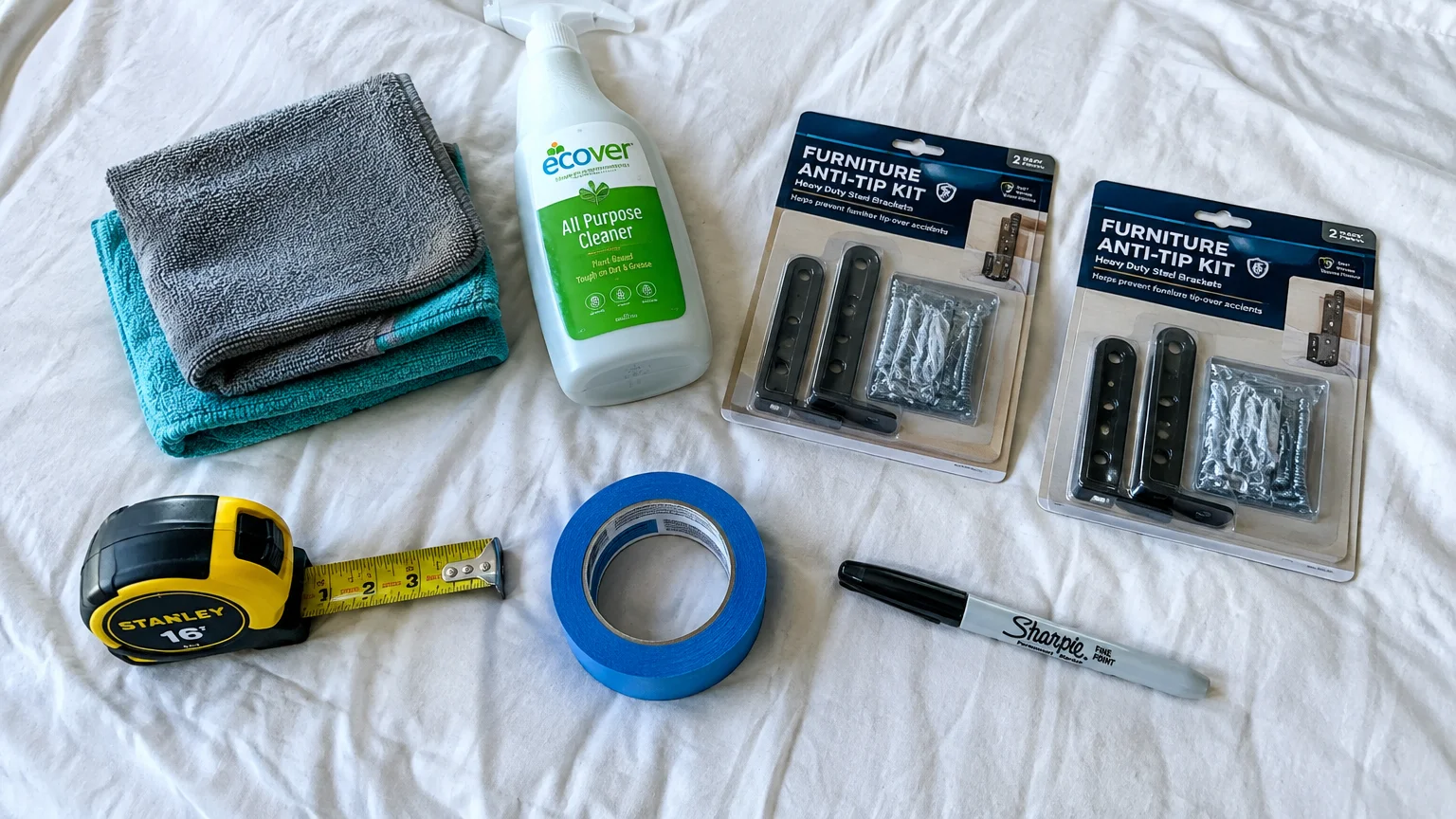
Retractable Tape Measure: A 16-foot tape measure provides exact dimensions for closet shelves and under-bed clearances. High-precision tape measures cost approximately $10 to $15 at The Home Depot.
Microfiber Cloths and All-Purpose Cleaner: Cleaning shelves before reinstalling organizers prevents dust transfer onto clean garments. A standard multi-pack of microfiber towels costs roughly $6.
Painter Tape and Permanent Marker: Removable blue tape lets you label temporary staging zones without damaging painted trim or wood dressers. A standard roll costs around $5.
Heavy-Duty Furniture Anchors: Always secure tall dressers and shelving towers directly to wall studs before reloading your wardrobe. High-grade anti-tip bracket kits cost approximately $12 to $20.
Staging Tarp or Clean Bed Sheet: Spread a clean drop sheet over your mattress to sort folded clothes cleanly. This protective barrier keeps dust away from your bedding.
Clear your bedroom floor entirely before unboxing containers or emptying closet rods. Dedicated sorting zones prevent clutter overwhelm and give you room to maneuver safely.
Set up three distinct staging boxes marked donate, relocate, and repair. This simple sorting protocol prevents indecision and keeps your decluttering session moving forward briskly.
Step-by-Step Instructions
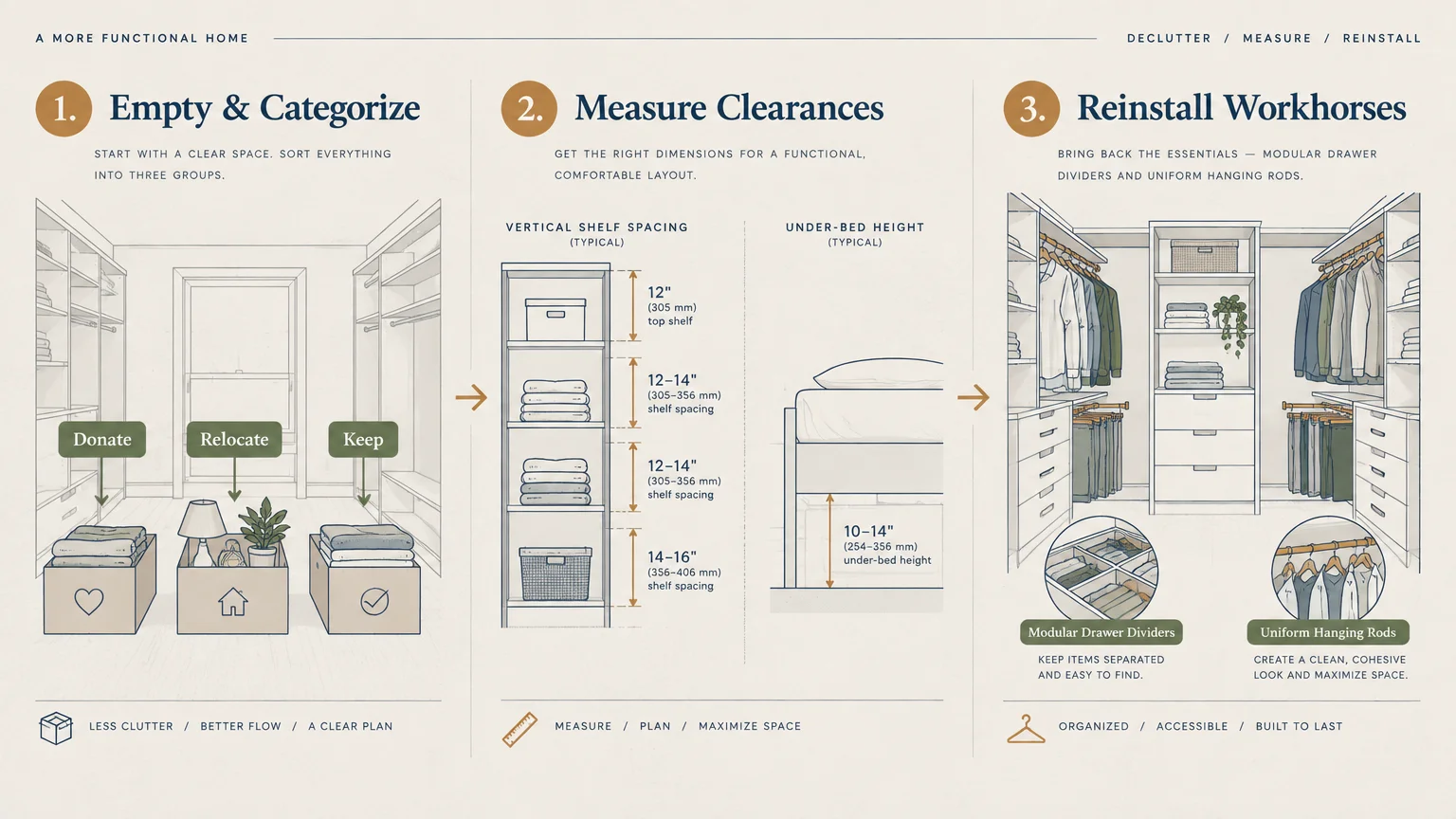
Follow this phased system to audit, preserve, and redeploy your most valuable storage assets. These eight items pros never throw away form the bedrock of an organized home.
Phase 1: Maximize Closet Hanging and Shelf Space
Begin by stripping your closet to evaluate vertical hangers and upper shelving units. Clear surfaces allow you to inspect structural supports and adjust shelf heights accurately.
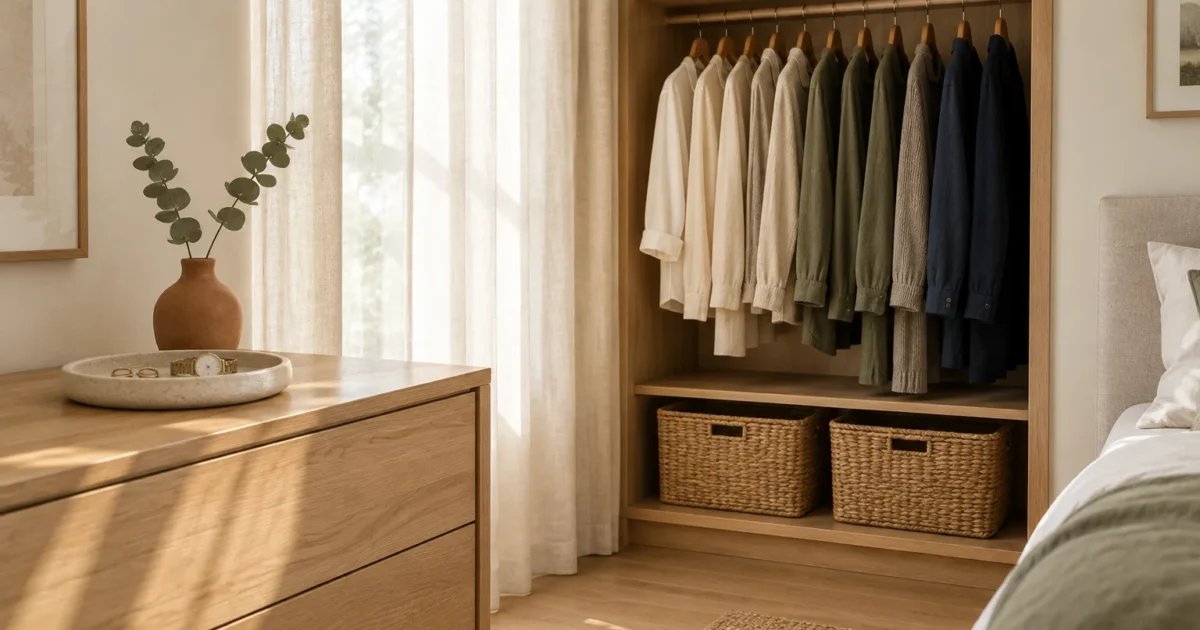
Item 1: Slim Velvet or Wooden Hangers. Organizers never discard uniform slim hangers because they immediately save up to 50 percent of closet rod space. Their non-slip coating prevents silky blouses and broad necklines from falling onto dirty floors.
Standardize your hanging wardrobe by facing all hanger hooks inward toward the back wall. This consistent orientation creates clean sightlines and makes sorting seasonal shirts effortless.
Group your garments by category and sleeve length, arranging them from light tones to dark colors. This structured visual gradient speeds up morning dressing and reveals gaps in your wardrobe.
Item 2: Rigid Shelf Dividers. Acrylic or coated metal shelf dividers keep towering stacks of denim and knit sweaters from toppling over. They transform open, sagging wire shelves into neat, boutique-style cubbies.
Slide dividers along your closet shelf at 10-inch to 12-inch intervals. This narrow spacing prevents leaning stacks while allowing you to pull out a single item without collapsing the rest.
Adjust shelf divider locations as your seasonal inventory changes between summer tees and winter woolens. Sturdy dividers available at The Container Store fit securely onto standard three-quarter-inch shelf boards.
Phase 2: Reinforce Drawer and Nightstand Architecture
Drawers quickly become dumping grounds when they lack internal structure. Installing reconfigurable dividers ensures small garments stay separated after every laundry cycle.
Item 3: Modular Drawer Dividers. Deep-drawer spring-loaded dividers and clear acrylic organizers adapt to any dresser drawer depth. Organizers save these modular units because they transfer seamlessly into new furniture when you move.
Insert tension dividers front-to-back inside your dresser to establish distinct lanes for athletic wear, t-shirts, and socks. File-fold garments vertically inside these lanes so every option remains visible at a glance.
Item 4: Shallow Catchall Valet Trays. Small ceramic trays, leather dishes, and wooden organizers protect your nightstand surfaces from scratches. They corral daily pocket essentials like watches, rings, glasses, and charging cables.
Position one small tray directly on your primary nightstand surface. Restricting personal items to this compact boundary stops nocturnal clutter from spreading across the tabletop.
Empty your valet tray once each week to return stray coins and receipts to their proper homes. Keeping this landing pad tidy guarantees a peaceful visual horizon beside your bed.
Phase 3: Capture Under-Bed and Vertical Dead Space
The empty void beneath your bed frame offers prime square footage for long-term storage. Using the correct containers keeps off-season textiles fresh and out of the way.
Item 5: Low-Profile Rolling Under-Bed Bins. Pro organizers hold onto long, wheeled under-bed totes because they protect bulky winter duvets and coats from dust bunnies. Their low height utilizes dead space without compromising room aesthetics.
Measure your bed frame clearance before loading your under-bed boxes. Pair wheeled bins with zippered canvas garment bags for breathable storage that slides out smoothly on hardwood floors or rugs.
Label the exterior edge of each under-bed container with its specific seasonal contents. Clear labeling saves your knees by eliminating the need to pull out every bin during seasonal wardrobe swaps.
Item 6: Heavy-Duty Over-the-Door Organizers. Pocket organizers and multi-peg hanging racks capture valuable vertical real estate on bedroom and closet doors. Pros repurpose them for scarves, belts, baseball caps, and everyday footwear.
Hang your organizer using padded brackets to prevent scuffing the door header. Place heavier items like running shoes in the lowest pockets to maintain door balance and prevent slamming.
Phase 4: Repurpose Structured Boxes and Woven Baskets
Structured containers give loose items a defined home while adding texture to open bedroom furniture. Repurposing existing containers keeps cash in your pocket.
Item 7: Rigid Shoe Boxes and Clear Drop-Front Bins. High-grade shoe boxes and stackable drop-front shoe containers protect delicate leather footwear from crushing and abrasive dust. Organizers frequently repurpose their lids inside drawers as customized hardware dividers.
Label the exterior face of each box using neat, printed tags or clear adhesive sleeves. Stack heavier dress boots on lower shelves and featherweight sneakers higher up to ensure cabinet stability.
Item 8: Woven Decorative Baskets and Canvas Totes. Natural seagrass baskets and structured canvas bins hide throw pillows, extra bed linens, and laundry. Their durability makes them an indispensable favorite among professional home stylists.
Place a lidded woven basket in an unused bedroom corner to act as an immediate drop zone for decorative shams. This containment strategy keeps your bedding off the floor during nighttime hours.
Use matching canvas totes on top closet shelves to store spare blankets and seasonal linens out of view. Soft fabric bins prevent delicate woven quilts from snagging against rough wooden shelf edges.
Safety Callout and Troubleshooting Tips
Never overload closet shelves with excessive weight. Most standard wire closet shelves support up to 50 pounds per linear foot when anchored securely into wall studs.
Always comply with the Consumer Product Safety Commission guidelines by anchoring bedroom dressers over 27 inches tall. Tip-over accidents represent a serious household danger, particularly in homes with young children.
If drawer dividers slip out of position, affix a small rubber bumper pad to each contact end. The added friction prevents movement against polished wood drawer interiors.
If your closet rod bows in the center, install a heavy-duty center support bracket into a wall stud. Reinforcing the rod prevents catastrophic collapses under the weight of heavy winter coats.
Style & Finishing Touches
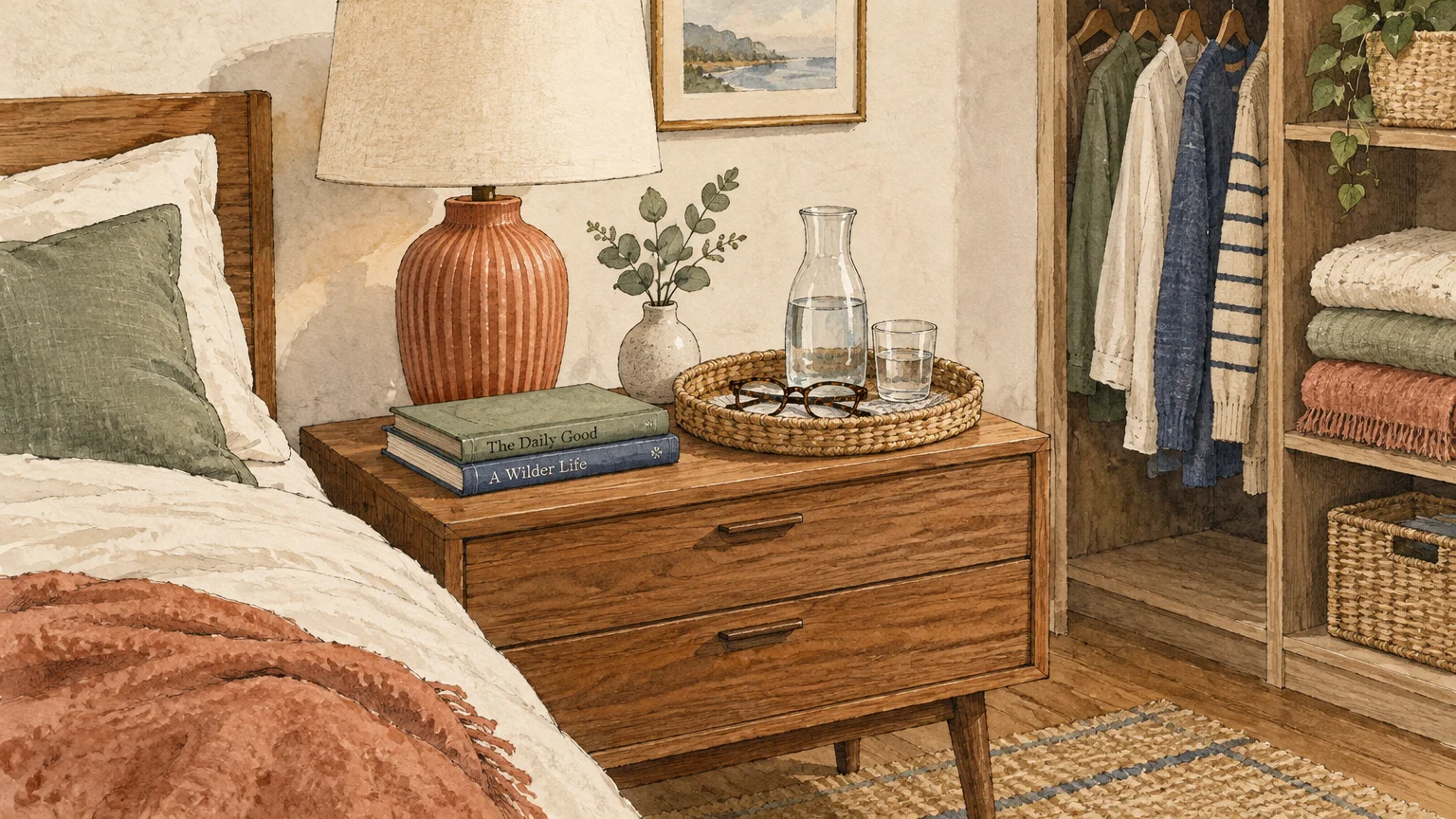
Functional organization should enhance your interior design rather than create a sterile environment. Integrating thoughtful textures elevates your bedroom aesthetic into a soothing luxury sanctuary.
Pair natural woven storage baskets with neutral linen bins to introduce warm, tactile elements. Soft cream, slate gray, and earthy beige palettes complement modern and traditional bedroom decors alike.
Choose uniform hardware finishes across all closet rods, shelf brackets, and hanger necks. Brushed brass or matte black accents deliver an instant high-end designer look without a major renovation price tag.
Budget-conscious homeowners can apply peel-and-stick wallpaper to the back wall of an open closet. This vibrant backdrop highlights your neatly organized shelf dividers and curated wardrobe display.
For a premium touch, install battery-powered motion-sensor LED light bars underneath closet shelves. These energy-efficient lights illuminate dark corners and spotlight your neatly arranged garments each morning.
Coordinate fabric colors among your hanging garment bags to create a unified appearance across open closet spaces. Concealing mismatched winter jackets behind matching covers instantly calms visual clutter.

Maintenance & Long-Term Care
Sustaining an orderly bedroom requires simple recurring maintenance habits rather than constant overhauls. Consistent care extends the lifespan of your storage assets and preserves room serenity.
Schedule a quick ten-minute closet reset at the close of every week. Returning stray clothes to uniform hangers stops minor clutter from snowballing into a chaotic pile.
Wipe down acrylic dividers and under-bed plastic bins twice a year using warm water and mild dish detergent. Avoid ammonia-based glass cleaners, which can cause clear plastics to cloud over time.
Vacuum woven natural baskets using a brush attachment every season to remove trapped dust particles. Keeping containers clean protects your linens, sweaters, and fine fabrics from fiber-degrading debris.
Execute a seasonal clothing rotation when the weather shifts in spring and autumn. Relocate out-of-season coats to under-bed boxes to keep your daily hanging rods open and breathable.
Adopt a strict one-in, one-out rule for new clothing purchases to prevent overcrowding your closet rods. Donating an older piece whenever you buy a new one maintains permanent equilibrium.
FAQ
Why do organizers recommend matching hangers over mixed hangers?
Matching hangers hold clothing at an identical height along your closet rod. This alignment eliminates visual distraction and lets you browse shirts without hangers tangling together.
When should I discard a damaged storage bin instead of keeping it?
Discard storage bins if they develop sharp cracks, cracked lids, or broken latches. Cracked plastic containers snag delicate garments and expose stored linens to moisture and pests.
How do I prevent under-bed storage boxes from attracting pests?
Choose boxes with tight-fitting gasket lids and wash textiles thoroughly before storing them under your bed. Adding natural cedar blocks repels fabric moths without leaving artificial chemical odors on your blankets.
What is the best way to store empty organizers that I am not currently using?
Nest matching empty bins inside one another to minimize their footprint on a high closet shelf. Store flat drawer dividers and small valet trays inside a single designated tote box.
When is it worth hiring a certified professional organizer?
Consider hiring a certified organizer if chronic disorganization causes ongoing stress or after major life transitions. Professionals design customized organizational systems tailored to unique physical limitations and complex architectural layouts.
Takeaway & Next Steps
Transforming your personal living space does not require buying disposable organizing gimmicks. Retaining durable, reusable storage foundations saves money while streamlining your daily routines.
These eight versatile items protect your garments, recover hidden square footage, and introduce calm order to chaotic rooms. High-quality organization tools will serve your changing storage needs for decades.
Take these three immediate actions today to begin your bedroom transformation:
1. Measure your spaces: Record the exact depth of your dresser drawers, closet shelves, and bed frame clearance.
2. Audit your current supplies: Gather all loose hangers, baskets, and acrylic trays scattered throughout your home into one staging spot.
3. Standardize one zone: Reorganize your primary dresser drawer using modular dividers before moving on to your main closet.
We want to see your closet triumphs! Share your bedroom makeover photos with our community or subscribe for weekly renovation ideas.