Tools, Materials, and Prep Checklist
Preparing the right gear ensures a safe, swift upgrade across your living areas. You can fix most fixture and bulb issues during a single weekend.
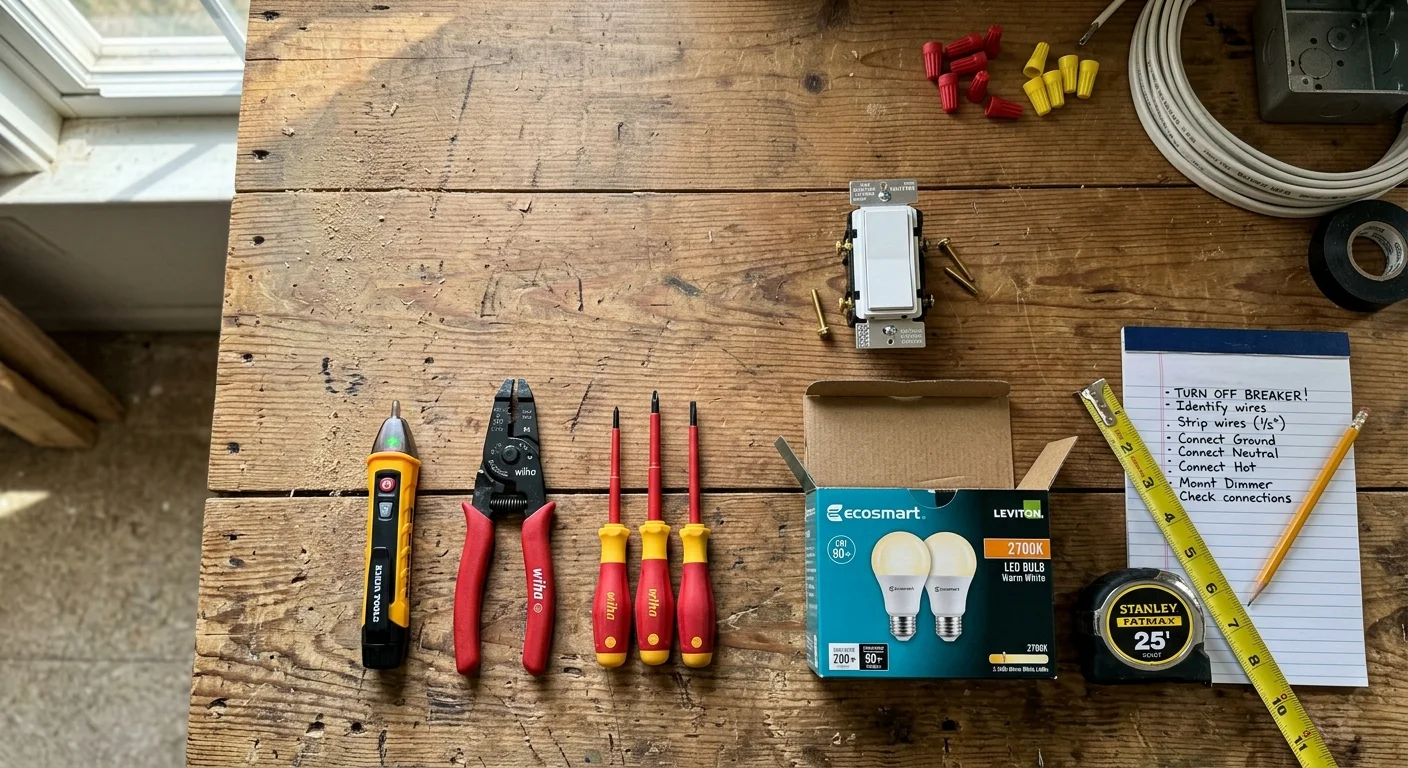
Non-Contact Voltage Tester: Keep a reliable tester on hand to verify circuits before handling wires. Expect to spend approximately $15 to $25 at any home center.
LED-Compatible Dimmers: Purchase trailing-edge or universal electronic dimmer switches rated for low-wattage loads. Budget $20 to $45 per switch depending on style.
Warm White LED Bulbs: Select 2,700K bulbs boasting a Color Rendering Index of 90 or higher. These typically cost $3 to $8 per bulb.
Warm-Dim Specialty Bulbs: Grab dim-to-warm lamps for dining rooms and bedrooms. These premium fixtures cost approximately $9 to $18 each.
Insulated Hand Tools: Gather wire strippers, needle-nose pliers, and insulated screwdrivers. A quality starter set costs roughly $25 to $40.
Tape Measure: Measure room dimensions to calculate total required fixture lumens accurately. A standard 25-foot tape costs about $10.
Plug-In Table Dimmers: Add inline dimmers or smart plugs to control floor and table lamps without wiring. Budget $12 to $20 for each unit.
Lampshades with Warm Linings: Upgrade harsh white shades with cream, linen, or gold-lined alternatives. Quality shades run from $20 to $50 each.
Electrical Safety Protocol: Always switch off your circuit breaker before loosening fixture screws or touching electrical terminals. Confirm the line is dead using your voltage tester.
Check local municipal building codes before altering hardwired electrical boxes. If your home has aging aluminum wiring or ungrounded metal boxes, hire a licensed electrician.