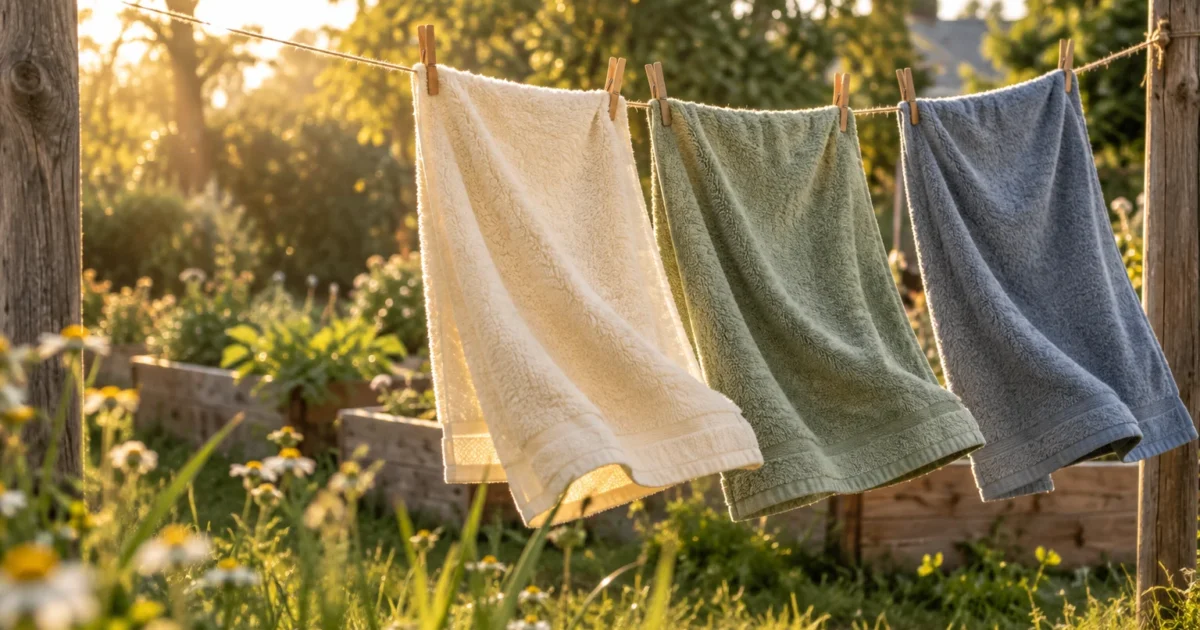
You can eliminate stubborn mildew smell towels hold without throwing away your favorite bath sets. A targeted deep wash strips away trapped body oils, detergent buildup, and fungal spores in a single afternoon.
Damp bathrooms and heavy fabric softeners often lock foul odors deep into cotton fibers. When regular washing fails, standard laundry detergent only masks the scent temporarily.
Learning how to get smell out of towels restores their natural absorbency and fresh aroma. With common household supplies and proper water temperatures, your linens will smell clean and feel plush again.
Project Overview & Why It Matters
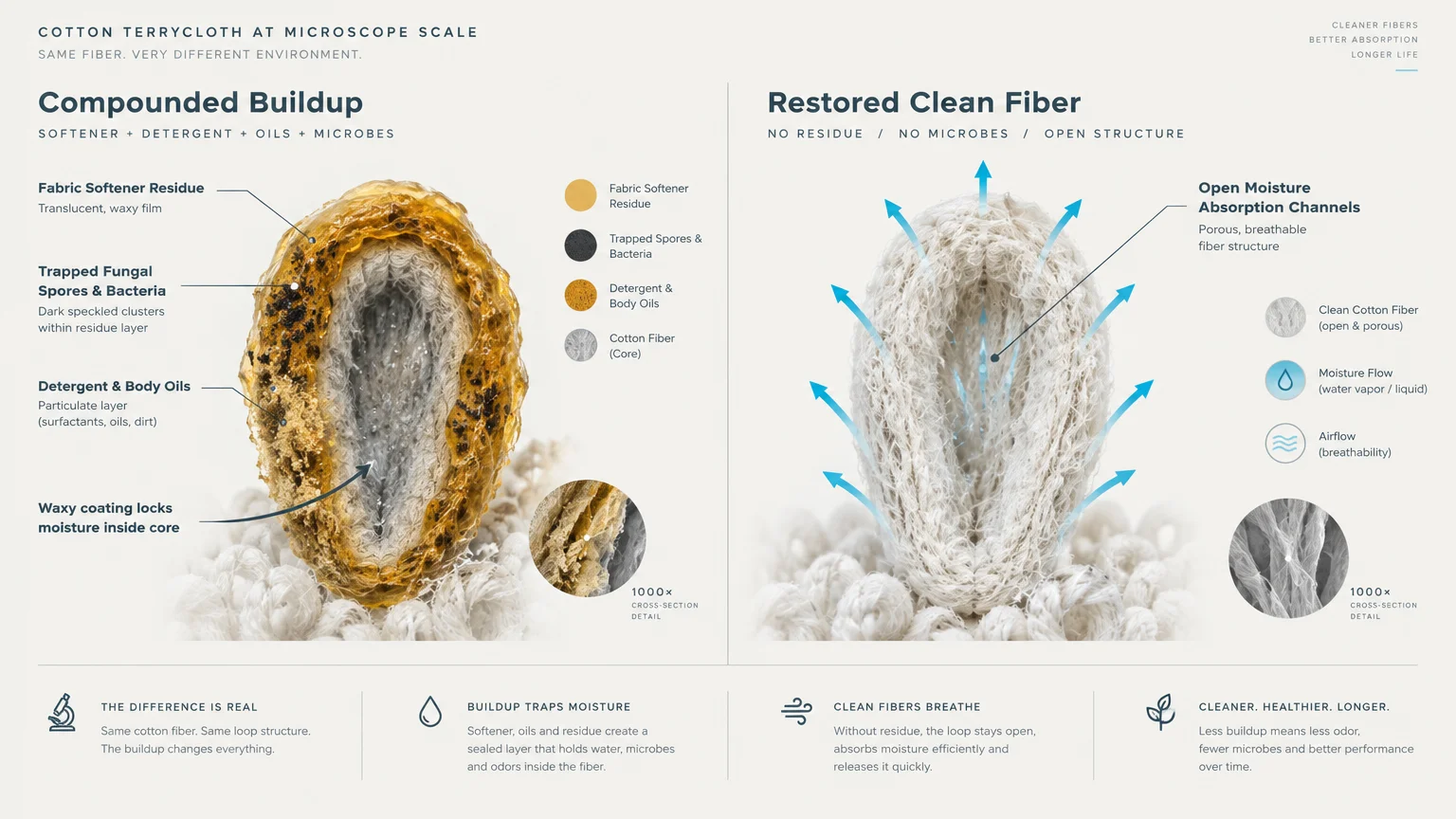
Musty towels develop foul odors when moisture, skin cells, and detergent residues accumulate inside thick terrycloth loops.
Microscopic fungi and bacteria thrive in humid bathroom environments. They multiply rapidly whenever damp towels remain piled on the floor or stuffed into laundry hampers.
Using foul-smelling towels does more than irritate your nose during morning routines.
Trapped bacteria and mildew transfer directly onto clean skin, which can aggravate eczema, trigger allergies, and clog pores.
The Centers for Disease Control and Prevention notes that damp indoor environments encourage fungal growth that can irritate sensitive respiratory tracts.
Commercial fabric softeners compound the problem by coating cotton fibers with a waxy, water-resistant film.
This slick layer locks moisture deep inside fabric channels, rendering normal wash cycles completely ineffective at eliminating odors.
Restoring your bath linens protects your household budget by extending fabric lifespans for several years.
High-grade Turkish or Egyptian cotton towels represent a genuine home investment that you should preserve rather than replace prematurely.
Freshening these textiles transforms your master bath or guest suite into a clean, spa-inspired sanctuary.
Tools, Materials, and Prep Checklist
You need minimal equipment to salvage smelly textiles, and most supplies already sit in your pantry.
Gather your measuring cups, an outdoor clothesline or drying rack, and a reliable washing machine.
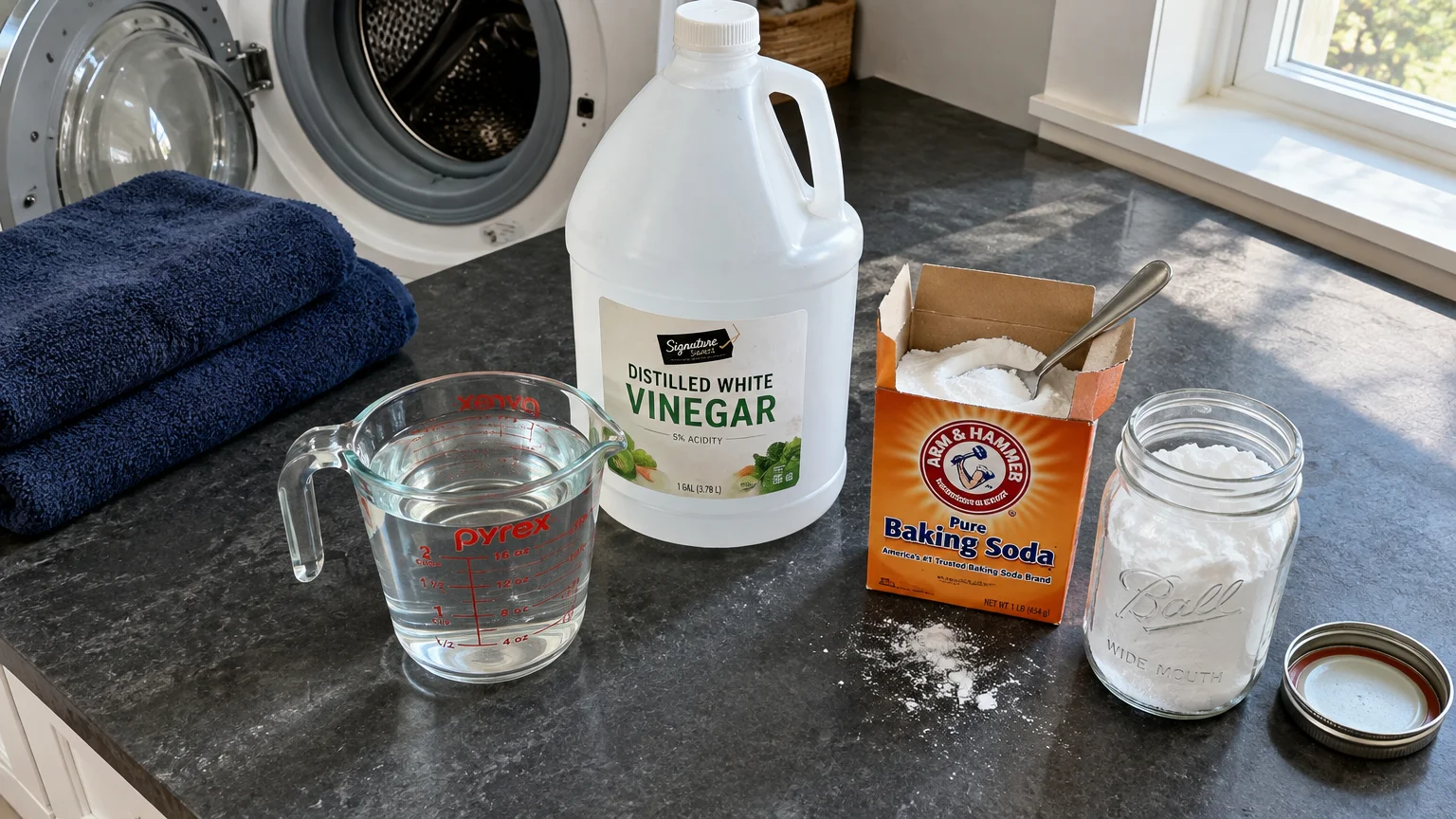
Keep distilled white vinegar on hand; a single standard gallon bottle typically costs under four dollars at local grocery stores.
Vinegar contains mild acetic acid, which dissolves mineral crusts and strips away accumulated chemical softeners without degrading cotton.
Purchase a standard box of sodium bicarbonate, commonly known as baking soda, for around two dollars.
Baking soda neutralizes sour, acidic smells while lifting ground-in grime from dense terry weaves.
Stock powdered oxygen bleach for bright colored linens, or standard chlorine bleach reserved exclusively for pure white towels.
Sodium percarbonate in oxygen bleach brightens dyes safely while killing active fungal spores through gentle oxidation.
Laundry borax softens hard wash water and costs under ten dollars per box at general retailers.
Borax acts as an alkaline mineral builder, which prevents dissolved tap water minerals from binding to towel fibers.
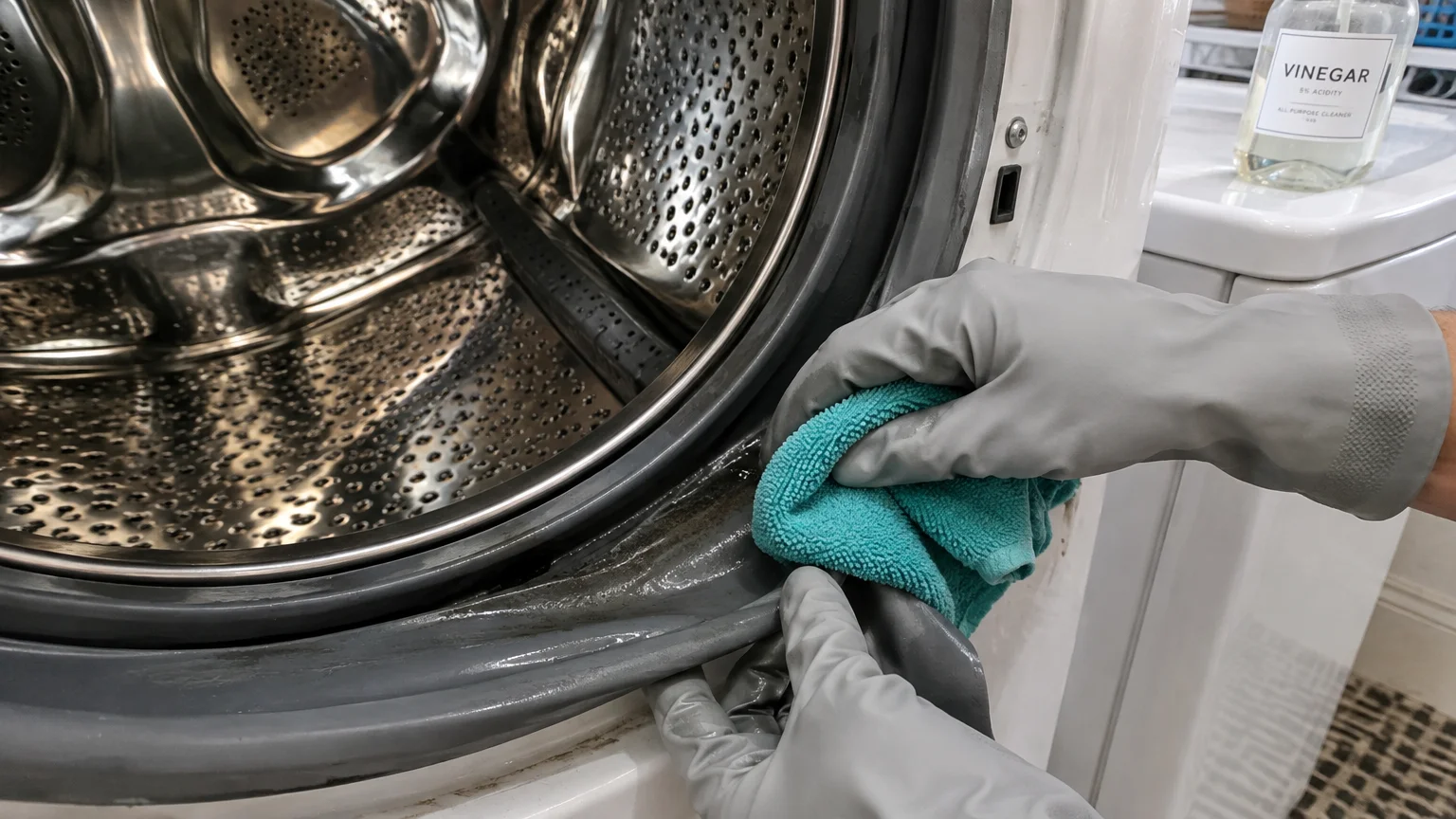
Before washing towels, inspect the rubber door gasket and detergent drawer of your front-loading machine.
Wipe down hidden interior seals using a microfiber cloth to prevent transferring pre-existing machine mold onto clean laundry.
Separate your load by fabric shade, keeping dark towels apart from whites to prevent unwanted dye bleeding during high-temperature cycles.
Check towel manufacturer care tags to identify maximum recommended wash temperatures before starting your cycles.
Step-by-Step Instructions
Tackle musty towels using targeted chemical and thermal methods rather than pouring extra soap into the drum.
Choose the method below that best matches your fabric type, machine capabilities, and the severity of the lingering odor.
Method 1: The Distilled White Vinegar Stripping Wash
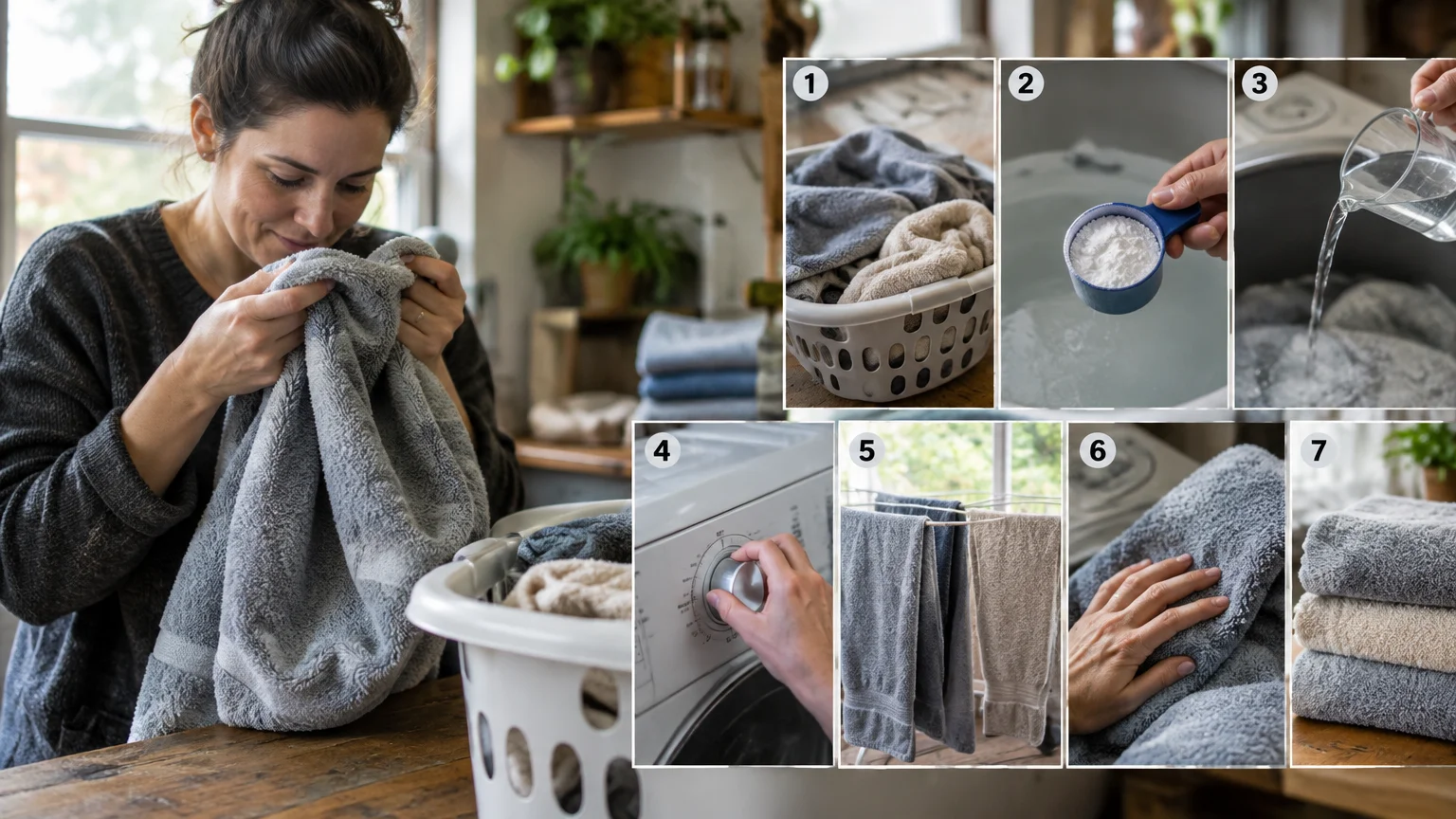
Load your smelly bath towels loosely into the washing machine drum without any laundry detergent.
Overcrowding prevents the wash water from circulating freely between the dense cotton loops. Keep loads at half capacity for maximum agitation.
Pour one to two cups of distilled white vinegar directly into the detergent dispenser or the drum.
Select your machine’s hottest cycle and choose an extra rinse cycle to flush out freed residues.
Acetic acid in the vinegar breaks down old detergent residues and kills odor-causing bacteria lodged in the fabric.
If your towels smell intensely sour, pause the cycle midway through to let the linens soak in the vinegar solution for one hour.
Restart the cycle after soaking and let the machine complete its final high-speed spin cycle.
Safety Callout: Never mix vinegar with chlorine bleach; combining acid and bleach produces toxic chlorine gas that causes severe respiratory injury.
Method 2: The Baking Soda Deep Deodorizer
Leave the damp towels in the drum immediately following your vinegar cycle without drying them first.
Sprinkle one cup of pure baking soda directly across the top of the wet towels.
Do not add standard liquid laundry detergent, fabric softener, or additional vinegar to this cycle.
Set the washer to run on the hottest water setting supported by your towel fabric care tag.
Baking soda acts as a mild alkaline buffer that neutralizes acidic sour odors and dissolves remaining body oils.
Run an extended final spin cycle to extract as much moisture as possible before moving the batch to the dryer.
Troubleshooting Tip: Never mix vinegar and baking soda in the exact same fill cycle, as they neutralize each other into useless salt water.
Method 3: Deep Oxygen Bleach Soak for Colorfast Fabrics
Vibrant, dyed towels require an odor-fighting agent that sanitizes without stripping bright colors or creating bleach spots.
Fill a clean utility sink or top-loading washing machine drum with warm water.
Dissolve two scoops of powdered oxygen bleach into the water until the crystals dissolve completely.
Submerge the smelly colored towels and allow them to soak for two to four hours.
Oxygen bleach releases hydrogen peroxide in water, which oxidizes fungal cell walls while protecting fiber dyes.
Transfer the soaked towels directly into your washing machine and run a regular warm wash with half your standard detergent dose.
Troubleshooting Tip: Test a damp corner of older colored towels with dissolved oxygen bleach before soaking to verify colorfastness.
Method 4: Sanitizing Chlorine Bleach Cycle for White Linens
Reserve chlorine bleach exclusively for one hundred percent cotton white towels that can withstand aggressive chemical sanitization.
White towels reveal hidden stains easily, but they also tolerate deep antimicrobial treatments better than colored fabrics.
Pour one-half cup of regular liquid chlorine bleach into the designated bleach dispenser compartment of your machine.
Ensure your washer connects to an adequate hot water supply to activate the sanitizing properties of the sodium hypochlorite.
Review guidance from the Environmental Protection Agency regarding proper contact time for chlorine sanitizers.
Safety Callout: Wear rubber gloves when handling bleach, and ensure your laundry room has adequate cross-ventilation.
Avoid using chlorine bleach on towels containing modal, bamboo, or spandex, as harsh chlorine permanently weakens those synthetic or semi-synthetic fibers.
Method 5: Borax Mineral and Residue Breakdown
If you live in an area with hard tap water, mineral deposits bind tightly to soap scum and trap bacteria in towel fibers.
Dissolve one-half cup of powdered borax into two cups of hot tap water inside a measuring container.
Pour the dissolved borax solution directly into the washer tub alongside your musty towels.
Add two tablespoons of enzyme-based liquid laundry detergent to break down stubborn body oils.
Borax raises water pH and complexes with calcium and magnesium ions, allowing detergent surfactants to penetrate deep into dense fibers.
Wash the load on a heavy-duty cycle with hot water and run an extra rinse to remove suspended mineral particles.
Troubleshooting Tip: Always pre-dissolve powdered borax in hot water before adding it to front-loading dispensers to prevent clogs.
Method 6: Solar UV Sanitizing and Outdoor Line Drying
Harness natural solar radiation to eradicate lingering mildew spores that survive standard mechanical drying cycles.
Remove freshly washed towels from your machine immediately and give each towel a vigorous snap to fluff the terry loops.
Hang towels outdoors on a clean clothesline in direct sunlight on a warm, breezy afternoon.
Natural ultraviolet light acts as a potent germicide that breaks down bacterial DNA and bleaches organic stains away naturally.
Air currents passing through line-hung fabrics evaporate residual moisture deep within the towel weave far faster than still indoor air.
If outdoor drying leaves your cotton feeling slightly stiff, toss the dry towels into your tumble dryer with wool dryer balls for five minutes.
Troubleshooting Tip: Keep dark navy, black, or deep jewel-toned towels in partial shade to prevent prolonged ultraviolet sun fading.
Method 7: Washer Drum Sterilization and Filter Service
When multiple laundry loads continue to emerge with a sour smell, your washing machine itself likely harbors hidden mold colonies.
Front-loading washing machines frequently collect standing water and slime inside lower pump filters and door seals.
Pour two cups of liquid chlorine bleach or a specialized washing machine cleaning tablet into the empty drum.
Run the machine’s dedicated self-clean cycle or select the hottest water setting available with an extended wash duration.
Inspect the lower drain pump access panel on front-load models; unscrew the filter plug and clear out trapped lint, coins, and stagnant water.
Scrub the rubber door gasket thoroughly with a soft brush dipped in a solution of warm water and mild detergent.
Safety Callout: Unplug your appliance before opening mechanical service panels, and place a shallow pan beneath the drain filter to catch trapped water.
If you encounter recurring drainage backups or persistent sewer odors behind the unit, hire a licensed residential plumber to evaluate your standpipe venting.
Style & Finishing Touches
Upgrading bathroom hardware directly prevents mildew from returning by dramatically speeding up fabric drying times after daily use.
Replace single robe hooks with wide, wall-mounted towel bars that allow wet towels to hang flat and unfold completely.
When towels bunch tightly on small hooks, trapped moisture inside the interior folds creates the perfect incubator for musty odors within twenty-four hours.
Consider installing a hardwired or plug-in heated towel rack to accelerate drying in compact or humid guest bathrooms.
Heated towel warmers dry damp linens in under two hours while adding a luxurious, high-end design element to your wall space.
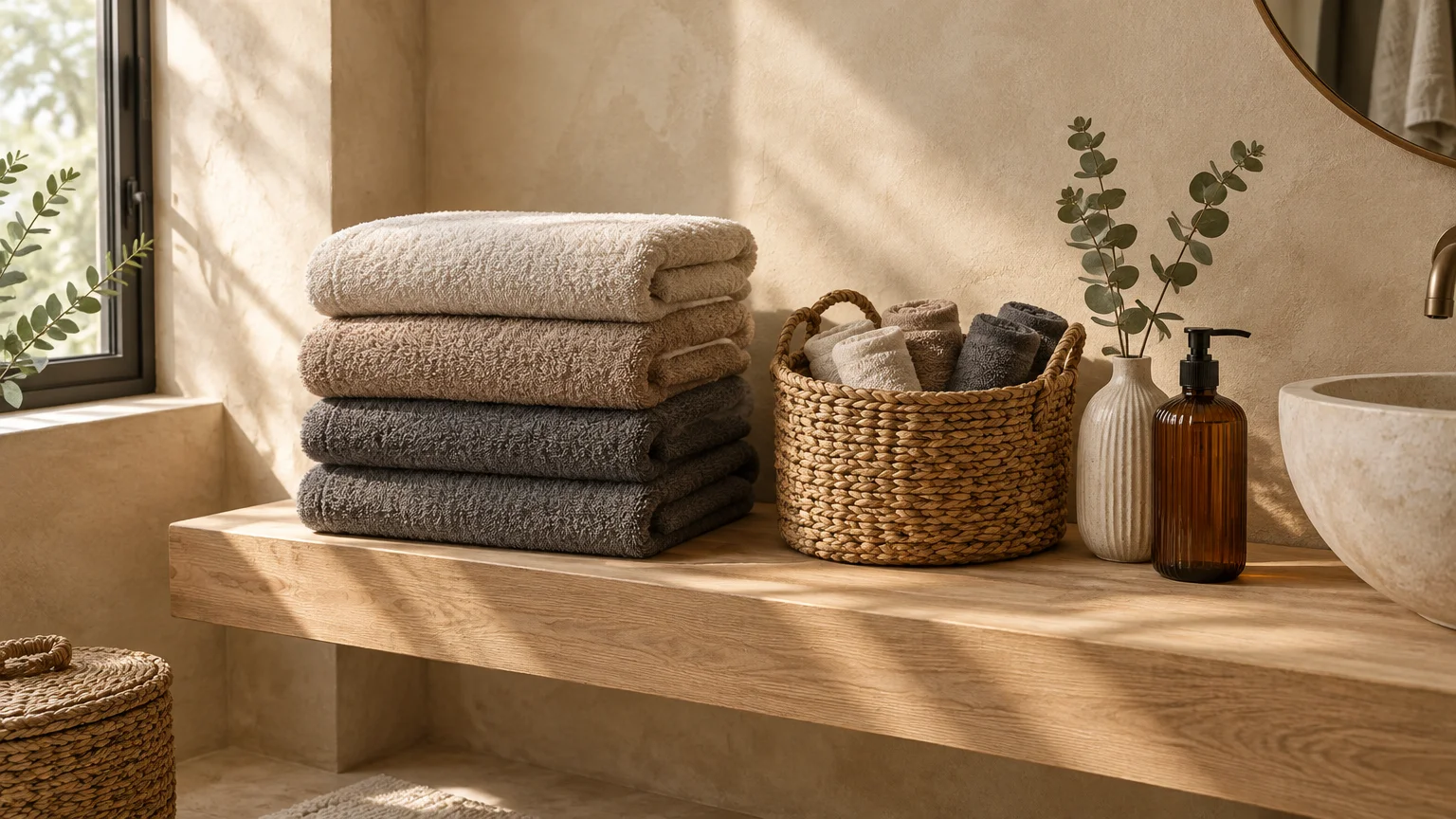
Choose timeless color palettes such as crisp optic white, soft slate gray, or warm oatmeal to keep your linen closet looking intentional.
White towels allow you to utilize sanitizing hot water washes and oxygen or chlorine treatments regularly without worrying about fading dyes.
If you prefer high-texture design, switch from heavy plush terrycloth to quick-drying waffle-weave or lightweight Turkish peshtemal cotton towels.
Waffle-weave linens feature recessed honeycomb pockets that shed moisture twice as fast as heavy nine-hundred-gram plush cotton.
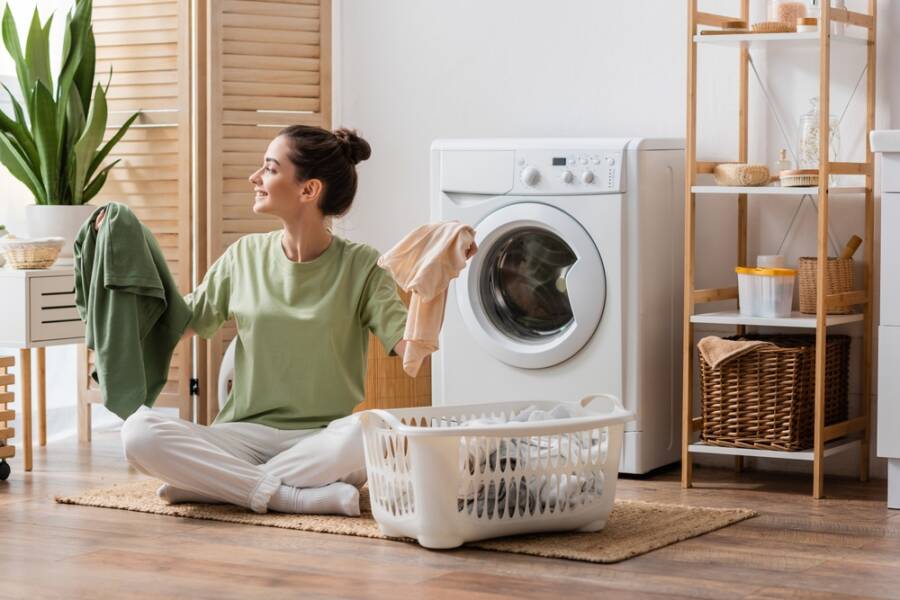
Rolling clean, dry towels neatly into open woven baskets creates a refined spa aesthetic while keeping fabrics well-ventilated on open bathroom shelves.
Maintenance & Long-Term Care
Maintaining fresh towels requires adjusting your daily habits and eliminating common laundry missteps.
Cut your standard laundry detergent dose in half whenever washing towels.
Modern concentrated detergents produce excess suds that rinse poorly, leaving a sticky residue on cotton fibers that catches dirt and bacteria.
Stop using commercial liquid fabric softeners and single-use dryer sheets on bath linens entirely.
Fabric softeners deposit silicone and animal tallow films that coat cotton yarns, destroying towel absorbency and sealing in bad odors.
Toss three or four natural wool dryer balls into the tumble dryer instead to fluff towels and reduce drying time naturally.
Run your bathroom exhaust fan during showers and leave it running for twenty minutes afterward to evacuate humid air.
Look for exhaust fans rated by the ENERGY STAR program for quiet, energy-efficient ventilation performance.
Leave your front-loading washing machine door and detergent dispenser drawer cracked open between loads to let the drum air out completely.
Perform a monthly maintenance wash using one cup of vinegar in an empty hot cycle to keep the washer drum sanitized.
Never allow damp towels to sit inside a dark hamper or inside the washing machine drum overnight after a wash cycle finishes.
FAQ
Why do my towels smell fine when dry but smell musty as soon as they get wet?
Trapped bacteria and mold spores remain dormant inside dry cotton fibers until fresh moisture activates them. As soon as you wipe water onto your skin, the moisture dissolves bacterial compounds, immediately releasing foul odors.
A thorough hot-water stripping cycle with distilled white vinegar breaks down this embedded bacterial film permanently.
Can I use scented fabric softeners to hide the mildew smell?
Fabric softeners never eliminate odor-causing bacteria; they only mask smells temporarily with synthetic perfumes. Over time, the waxy coating traps more moisture and bacteria inside the fibers, worsening the mildew smell towels produce.
Ditch fabric softeners entirely and use wool dryer balls to soften your linens without chemical buildup.
How often should you wash bath towels to prevent musty odors?
You should wash bath towels after every three to four normal uses under ideal drying conditions. If your bathroom stays humid or towels cannot hang flat to dry, wash them every two uses to prevent bacterial growth.
Always hang towels completely spread out between uses rather than bunching them together on a hook.
Does washing towels in cold water save energy without causing odors?
Cold water washes save electricity on standard clothing loads, but they fail to dissolve body oils and fungal spores in thick towels. You must use hot water cycles periodically to sanitize dense terrycloth and keep musty towels fresh.
Reserve cold cycles for delicate clothing and keep hot water reserved for heavy bath linens.
When is a towel too damaged by mildew to save?
If dark black or green mold spots have physically rotted the underlying cotton fibers, chemical stripping will not repair structural fabric loss. Retire frayed, rotted towels into garage cleanup rags and invest in a durable new bath set.
If the fabric weave remains structurally sound, the stripping methods outlined above will successfully restore fresh scents.
Takeaway & Next Steps
Banishing musty odors restores comfort to your daily routine while preserving your bathroom textile investments.
With basic pantry staples and proper drying habits, you can eliminate foul towel scents permanently without purchasing expensive specialty chemicals.
Take these three immediate steps today to rejuvenate your bath linens:
First, run your smelliest towels through a hot water wash with two cups of white vinegar, followed by a hot baking soda cycle.
Second, wipe down your washing machine door gasket and clear out the drain pump filter to eliminate existing mold colonies.
Third, replace liquid fabric softeners with natural wool dryer balls to ensure lasting fabric absorbency and freshness.
Have you successfully eliminated stubborn laundry odors in your home?
Share your project photos and laundry transformations with our community, or subscribe to our newsletter for weekly home renovation and maintenance tips.