Regular cleaning does far more than keep living spaces tidy; it saves you thousands of dollars in premature flooring replacement costs. Adopting the right floor cleaning habits keeps your hardwood, tile, and vinyl surfaces pristine for decades.
Minor adjustments to your weekly routine will shield delicate surface finishes, stop gritty abrasive scratches, and block moisture intrusion before permanent damage starts.
Put these proactive floor care tips into practice today to protect your investment and maintain showroom shine without doubling your chores.
Project Overview & Why It Matters
Flooring represents one of the largest capital investments inside any residential home. Protecting that investment requires ongoing diligence rather than occasional, aggressive scrubbing.
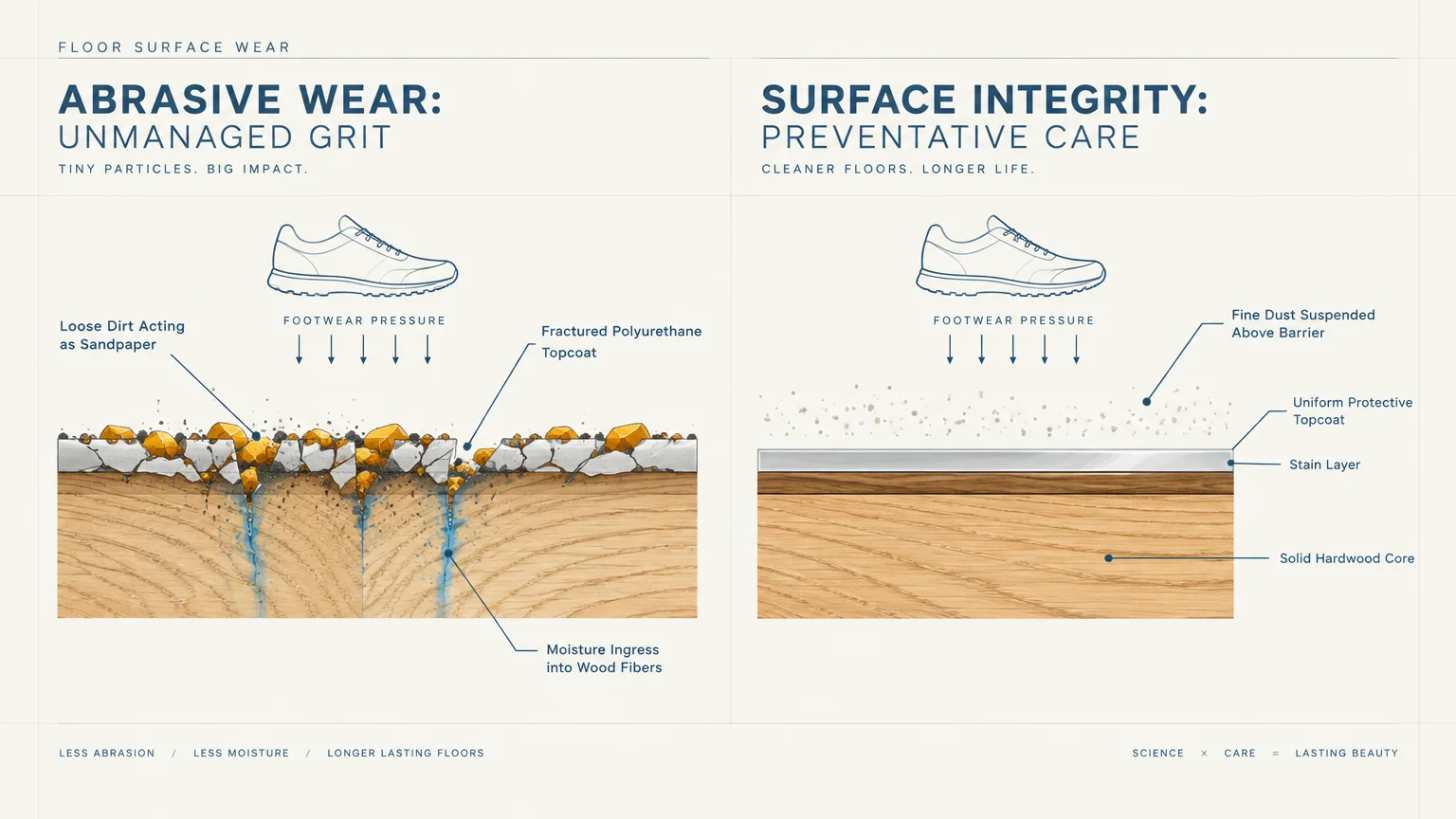
High-traffic areas like entryways, kitchens, and hallways face relentless wear from footwear, moisture, and pet claws. Without protective habits, dirt accumulates and accelerates surface degradation.
Loose surface grit acts like sandpaper underfoot. Every step grinds fine particles into your floor, wearing down protective polyurethane coatings and factory finishes.
Consistent floor maintenance prevents the dulling, cupping, and discoloration that eventually force costly sanding or complete floor tear-outs. Simple preservation keeps boards intact.
When you establish disciplined routines, you can easily make floors last longer while improving everyday indoor air quality. Clean surfaces trap less pollen and pet dander.
These strategies work effectively across solid hardwood, engineered planks, glazed ceramic tile, and luxury vinyl floors. Proper maintenance safeguards beauty across every room.
Tools, Materials, and Prep Checklist
Using the proper equipment prevents surface damage during routine maintenance tasks. High-quality tools streamline chores while safeguarding delicate factory coatings.
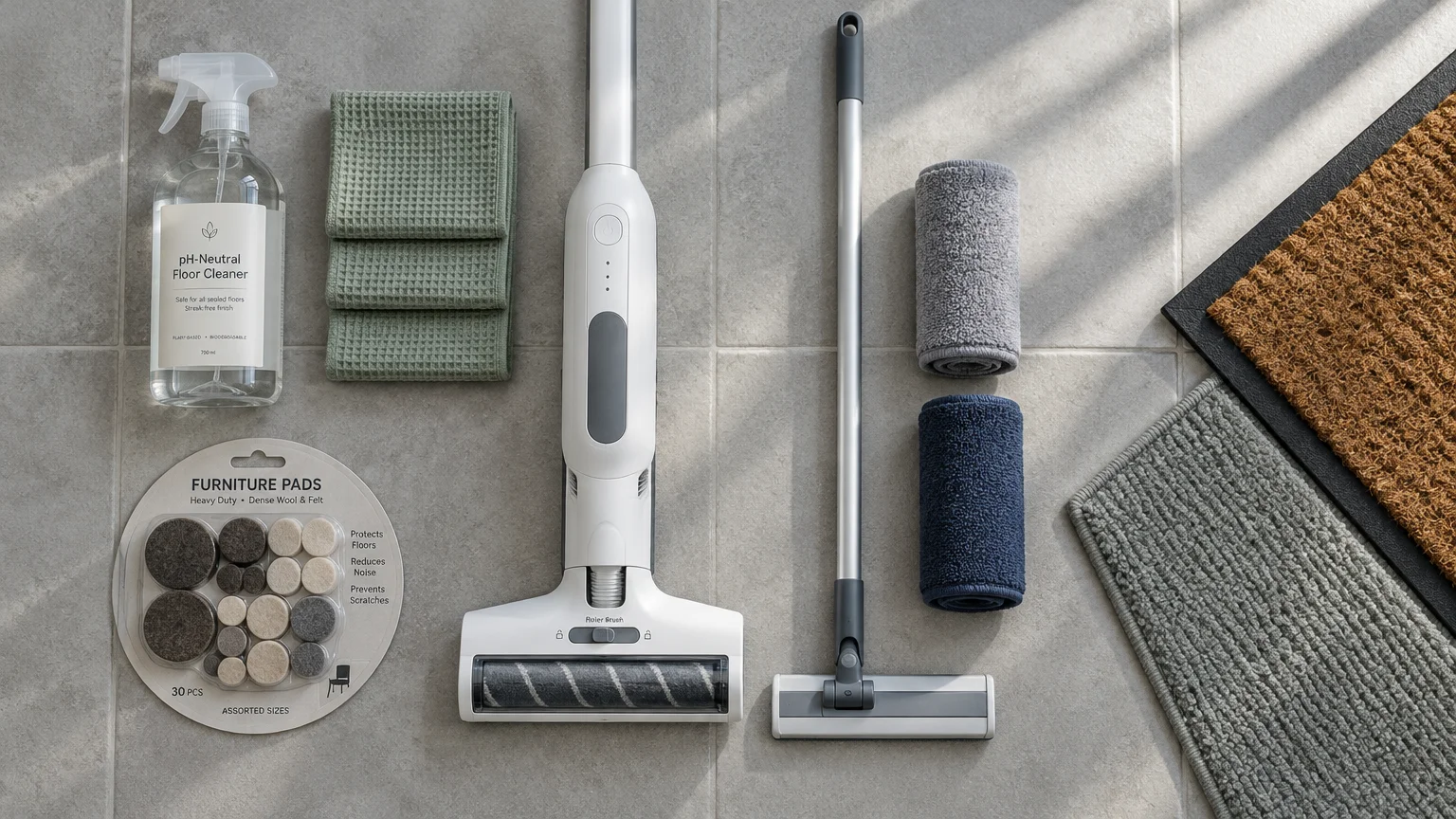
Microfiber Flat Mop: Choose a model with machine-washable pads that electrostatically attract dust without abrasive scratching.
Hardwood-Safe Vacuum: Select a canister or stick vacuum featuring a dedicated hard floor switch. Disengaging the rotating brush roll prevents unsightly tread marks.
pH-Neutral Cleaning Concentrates: Avoid aggressive multi-surface cleaners or harsh degreasers. Neutral solutions break down grime without compromising delicate topcoats or factory sealers.
Microfiber Wiping Towels: Keep dedicated microfiber cloths in every utility closet. Soft cloths allow you to blot spills instantly before liquid seeps into joints.
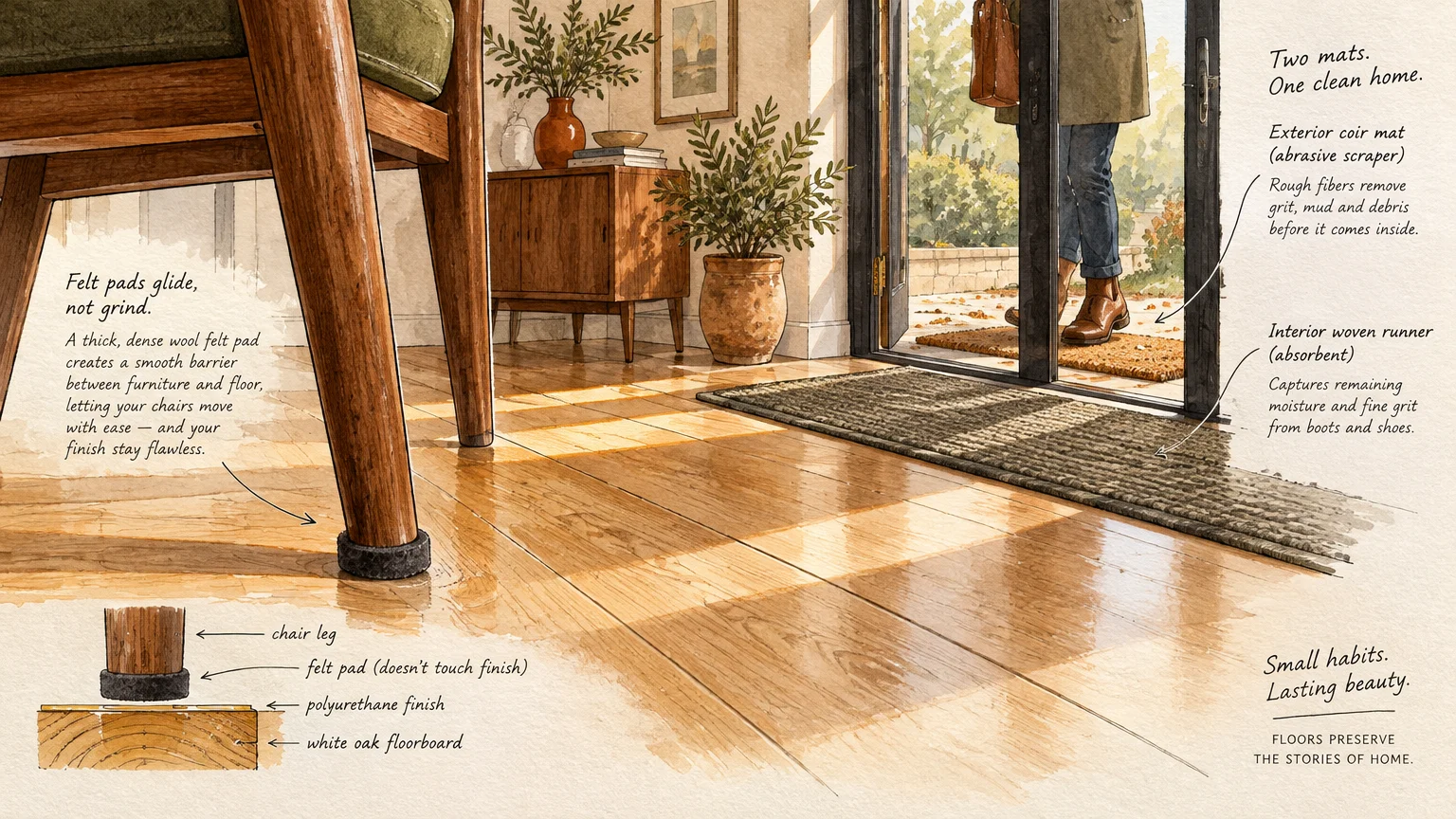
Heavy-Duty Felt Furniture Pads: Install dense wool or felt sliders on all movable furniture. Pads prevent gouges when chairs shift across rooms.
Dual-Action Door Mats: Position abrasive scraper mats outside exterior doors and absorbent mats inside. This two-stage system captures grit before footwear crosses thresholds.
Before initiating any deep cleaning regimen, inspect your floors for loose planks, cracked grout, or deep scratches. Repairing minor structural flaws prevents moisture penetration during cleaning.
Clear lightweight clutter, toys, and pet bowls from the floor before cleaning. Unobstructed walkways allow you to clean smoothly without dragging objects across floorboards.
Step-by-Step Instructions
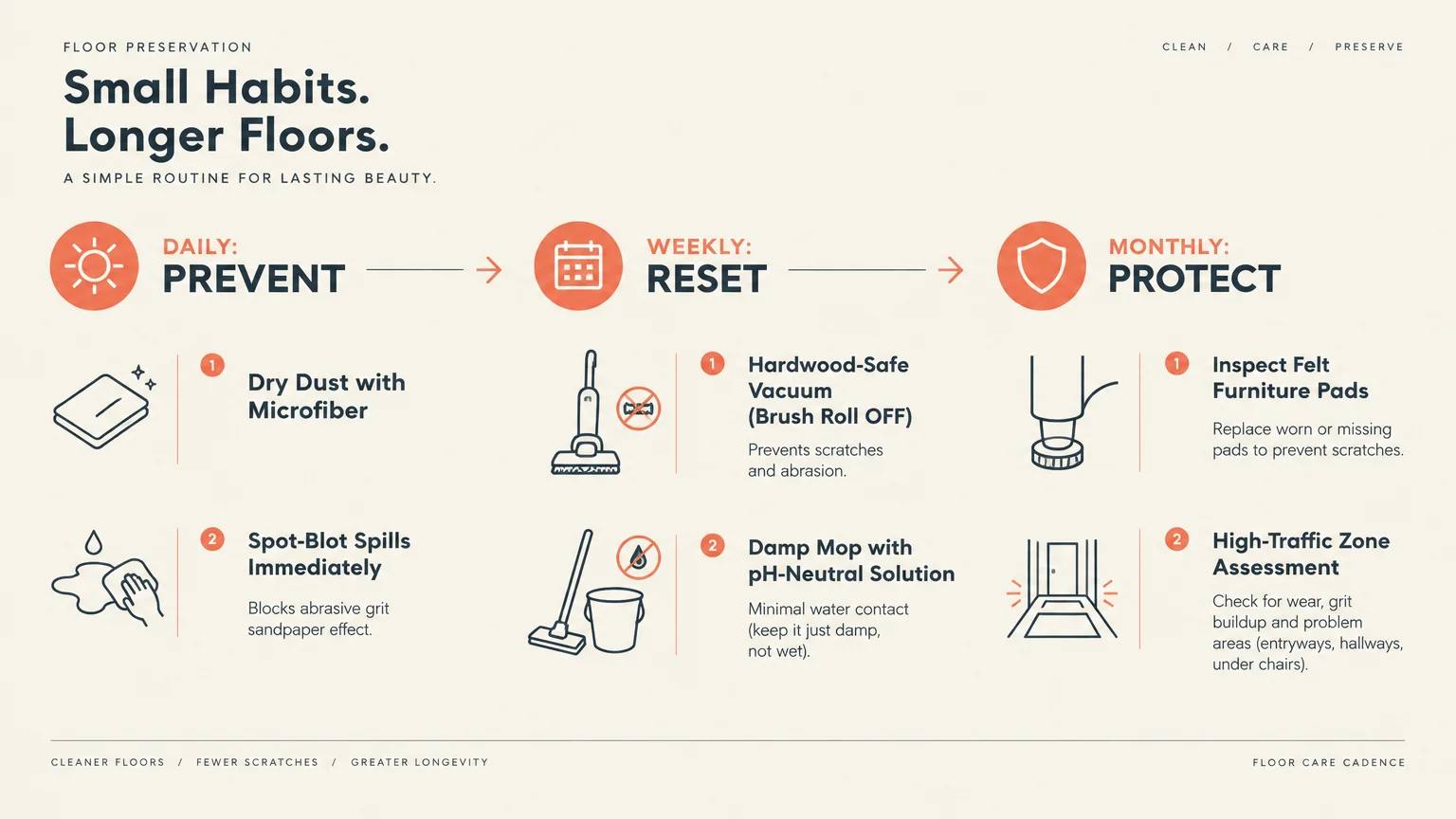
Follow these ten actionable floor cleaning habits to establish a reliable preservation schedule. Small, daily practices deliver massive long-term dividends for your home.
Habit 1: Dry Dust Daily with Microfiber
Dusting daily removes abrasive particles before foot traffic grinds them into your floor finish. A quick pass takes minutes and extends finish life considerably.
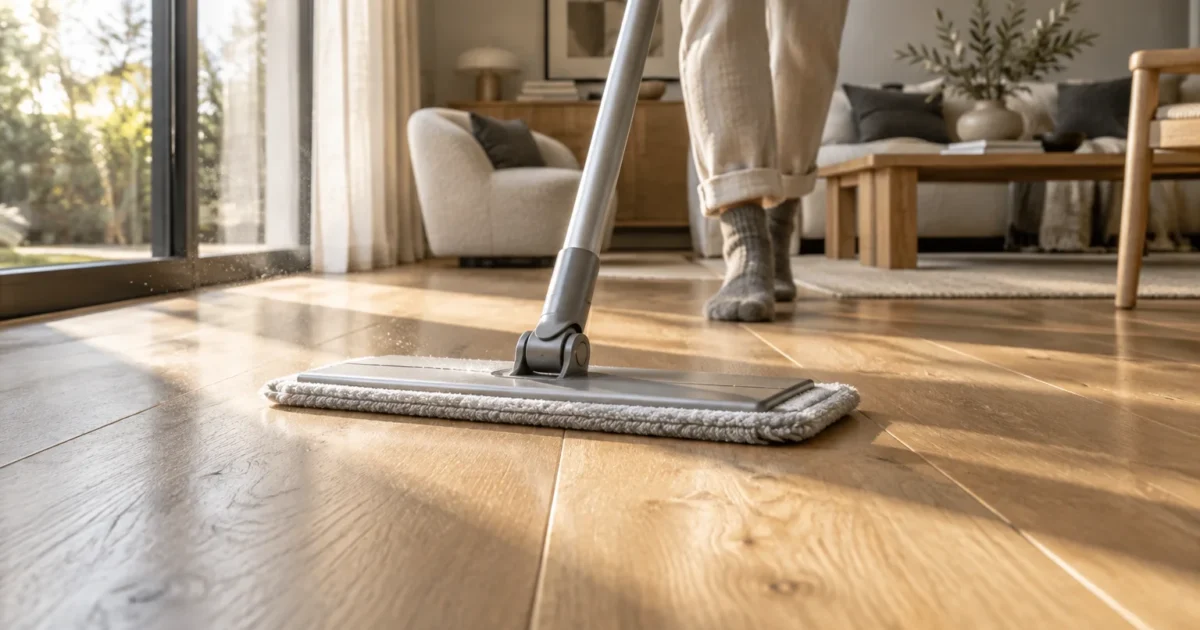
Use a dry microfiber mop head instead of a traditional broom. Standard broom bristles flick dust into the air, allowing it to settle back onto surfaces.
Guide the mop across the room using continuous, sweeping S-patterns to trap debris against the leading edge. Never lift the mop head mid-stroke.
Empty captured dust into a wastebasket after finishing each room. This practice prevents dirt transfer between different flooring materials.
Habit 2: Use Damp, Never Sopping, Mops
Excess liquid represents the primary threat to natural wood and composite core boards. Saturated mops force water directly into floorboard joints.
Wring your mop pad until it feels barely damp to the touch before placing it on the floor. The surface should dry within ninety seconds.
If you see standing droplets or moisture beads behind your mop, stop immediately. Press the mop pad with an absorbent towel to remove excess liquid.
Run ceiling fans or open interior windows during damp mopping sessions. Accelerated airflow speeds drying and prevents boards from cupping or warping.
Habit 3: Match the Solution to the Surface
Different flooring types require specific chemical balances to prevent clouding and finish deterioration. Never use one universal cleaner across all surfaces.
Use specialized formulas approved by the National Wood Flooring Association for natural hardwood planks. These pH-neutral solutions maintain sheen without leaving residue.
Avoid acidic cleaners like vinegar or lemon juice on stone and wood. Acid etches delicate stone surfaces and slowly dissolves clear protective urethane coats.
Always spot-test new cleaning products inside a closet or behind a door. Verifying surface compatibility beforehand avoids costly accidental discoloration across open rooms.
Habit 4: Clean Liquid Spills Instantly
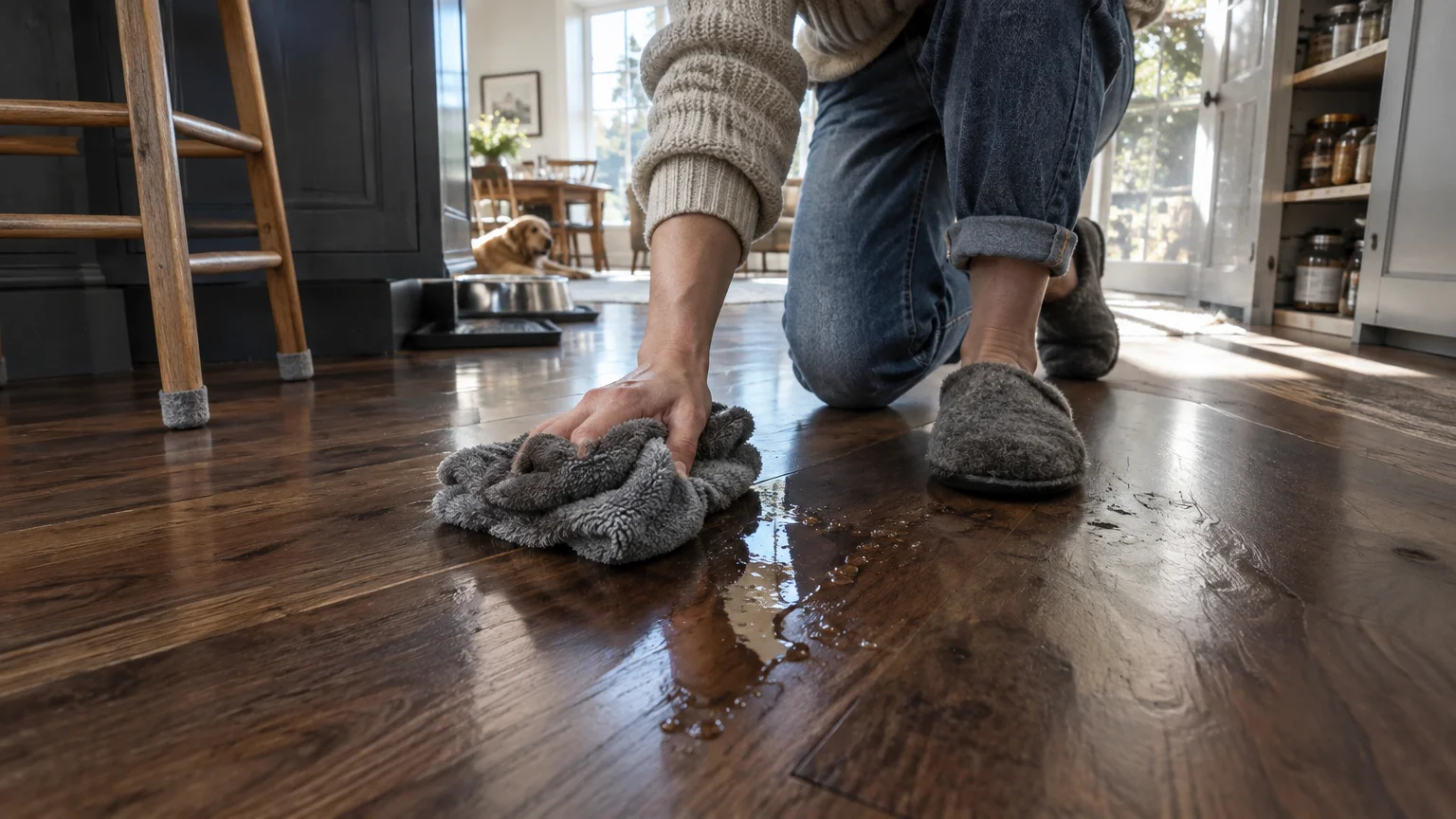
Standing liquids quickly penetrate micro-gaps between planks and seep beneath baseboards. Immediate action prevents subfloor rot and edge swelling.
Blot spills immediately using a dry microfiber cloth rather than rubbing the liquid outward. Blotting lifts fluid without forcing it into adjacent seams.
Address acidic liquids like wine, coffee, or pet accidents with special urgency. Acidic compounds attack protective coatings and permanently stain untreated wood fibers.
Mist the treated area with a pH-neutral spray after blotting to neutralize residual sugars. Dry the spot completely with a fresh towel.
Habit 5: Sweep Exterior Entryways Regularly
The most effective way to protect hardwood floors involves stopping grit before it crosses your threshold. Exterior pathways gather loose gravel and sharp sand.
Sweep front porches, steps, and exterior walkways once every week. Clearing these areas minimizes the dirt transfer that clings to household footwear.
Shake out exterior scraper mats weekly to clear trapped grit from their bristles. Wash indoor absorbent rugs frequently to renew their trapping capacity.
Encourage family members and guests to remove their shoes at the front entrance. A no-shoe policy cuts indoor abrasive particulate volume dramatically.
Habit 6: Disengage the Vacuum Beater Bar
Standard vacuum brush rolls feature stiff nylon bristles designed for carpet pile. When used on hard floors, these rotating bristles cause micro-scratches.
Always set your vacuum to bare floor mode to disengage the rotating roller completely. Straight suction removes dust safely without abrading delicate finishes.
Inspect the vacuum caster wheels regularly to verify that hair or threads have not locked the bearings. Seized plastic wheels drag and leave scratches.
Replace worn rubber wheel covers promptly if your vacuum begins scraping across floor planks. Smooth rolling motion prevents accidental surface gouging.
Habit 7: Wash Reusable Pads After Every Single Session
Mop pads trap grit and oil deep within their synthetic fibers. Reusing an unwashed pad rubs embedded grit directly across your floors.
Launder microfiber pads in warm water using a mild liquid laundry detergent. Avoid powdered detergents, which leave granular residue inside the fibers.
Never add fabric softeners or chlorine bleach to your microfiber wash cycles. Fabric softeners coat synthetic fibers, ruining their electrostatic dust-grabbing properties.
Hang mop pads to air dry or tumble dry them on low heat. Clean, fluffy fibers maximize dirt collection during your next cleaning session.
Habit 8: Clean Under Movable Furniture
Dust, pet hair, and grit accumulate rapidly beneath sofas, credenzas, and media consoles. Drafts pull this debris into main walkways, increasing surface wear.
Move lightweight furniture regularly to vacuum underneath using soft-bristle brush wand attachments. Thorough extraction keeps dust from circulating through your home.
Never drag heavy tables, chairs, or dressers directly across open floorboards. Dragging furniture exerts concentrated pressure that creates deep, permanent gouges in wood.
Use temporary felt or plastic furniture sliders whenever repositioning heavy items for deep cleaning. Sliders disperse weight and protect finish coatings.
Habit 9: Strip Lingering Residue Safely
Commercial floor polishes and all-in-one cleaners often leave invisible acrylic or wax residues. Over time, these coatings attract dirt and create a cloudy haze.
Strip residue by damp-mopping with a mixture of clean warm water and a manufacturer-recommended residue remover. Gentle lifting restores natural floor luster.
Avoid steam mops completely when treating sealed hardwood, laminate, or luxury vinyl. Intense thermal steam forces moisture through seams and delaminates composite layers.
Dry the stripped surface immediately with clean microfiber cloths to verify finish clarity. If haze persists, repeat the gentle rinse process once more.
Habit 10: Wipe Pet Paws and Trim Claws Consistently
Family pets track outdoor grit, moisture, and street contaminants directly onto residential floors. Pet traffic requires specialized daily containment strategies.
Keep a soft microfiber drying towel near exterior doorways to wipe paws after outdoor walks. Catching damp dirt prevents stubborn muddy paw prints.
Trim your dog’s nails consistently every three to four weeks. Well-trimmed nails prevent puncture marks and deep claw scratches on softer wood species.
Place waterproof silicone catchment mats beneath all pet water bowls and feeding stations. Mats contain inevitable splashes and protect subfloors from hidden moisture pools.
Style & Finishing Touches
Preserving clean flooring allows your architectural detailing, stain choices, and interior decor to shine. Floor protection can complement your overall design vision seamlessly.
Select high-quality area rugs that feature natural wool or woven cotton fibers. Warm earth tones, neutral creams, or geometric patterns anchor living room furniture beautifully.
Always place breathable, non-staining rug pads beneath all decorative runners and carpets. Dense pads prevent rug slippage and protect underlying wood from rough backings.
Avoid cheap rubber or latex rug backings that trap moisture and release chemical plasticizers. These compounds often cause permanent yellow discoloration on luxury vinyl.
Upgrade floor vents to flush-mount wood registers stained to match your exact floorboards. Flush vents eliminate cleaning snags and provide seamless aesthetic transitions.
Install matching quarter-round or shoe molding along baseboard perimeters to conceal expansion gaps. Molding prevents dust accumulation and simplifies edge mopping routines.
Consider adding subtle threshold transition strips made from brushed brass or matte black metal. Metal transitions bridge disparate room heights while resisting heavy foot scuffs.
Maintenance & Long-Term Care
Long-term floor care requires managing environmental factors that influence plank stability. Ambient moisture and sunlight cause gradual, unseen changes over the years.
Manage indoor humidity levels year-round to protect solid and engineered hardwood planks. Planks naturally expand during humid summers and shrink during dry winters.
Maintain indoor relative humidity between 35 and 55 percent according to the Environmental Protection Agency air guidelines. Balanced moisture prevents board cracking, gapping, and cupping.
Rotate large area rugs and heavy furniture arrangements every twelve months. Periodic shifting ensures even ambient light exposure, preventing distinct sun-fading patterns across floors.
Replace felt furniture pads every six months or whenever pads appear compressed and stiff. Fresh felt maintains cushioning and prevents hidden grit gouges.
Schedule professional screen-and-recoat services every three to five years for hardwood floors. Adding fresh clear coats restores sheen before traffic wears through base finishes.
Consult a certified professional if you notice loose tiles, severely cupped boards, or deep moisture discoloration. Timely professional interventions prevent widespread subfloor structural damage.
FAQ
Can I use vinegar and warm water to clean hardwood floors?
You should never clean hardwood with vinegar solutions. Vinegar contains acetic acid, which breaks down protective topcoats over time, leaving wood dull and vulnerable to water.
How frequently should I damp-mop my high-traffic floors?
Damp-mop high-traffic zones like kitchens and entryways every one to two weeks. Lower-traffic rooms like formal dining areas and guest bedrooms only require monthly mopping.
Are steam mops safe for cleaning luxury vinyl planks?
Avoid using steam mops on vinyl plank or laminate flooring. Intense heat and pressurized moisture penetrate seams, destabilizing core layers and dissolving underlying adhesives.
Why do my floors look cloudy after using commercial floor cleaners?
Hazy surfaces usually result from concentrated surfactant buildup or acrylic shine additives. Clean the surface with plain warm water to dissolve and lift lingering soap residue.
What is the best way to prevent chair legs from scratching wood?
Attach heavy-duty, adhesive felt pads to the bottom of all chair legs. Check pads periodically to clean away trapped grit and replace worn felt promptly.
Takeaway & Next Steps
Consistent, gentle floor care habits protect your home investment, preserve aesthetic warmth, and prevent premature floor replacement. Small daily adjustments yield enduring structural returns.
Start extending your floor lifespan today by putting three straightforward action steps into immediate practice.
First, inspect every chair and table base, replacing worn or missing felt furniture pads immediately.
Second, retire your abrasive outdoor brooms and string mops, replacing them with a dedicated microfiber cleaning system.
Third, install heavy-duty scraper mats and absorbent runners at every exterior doorway to intercept abrasive dirt.
We would love to see your floor preservation progress! Share your project photos with our community, or subscribe to our newsletter for weekly home renovation tips.