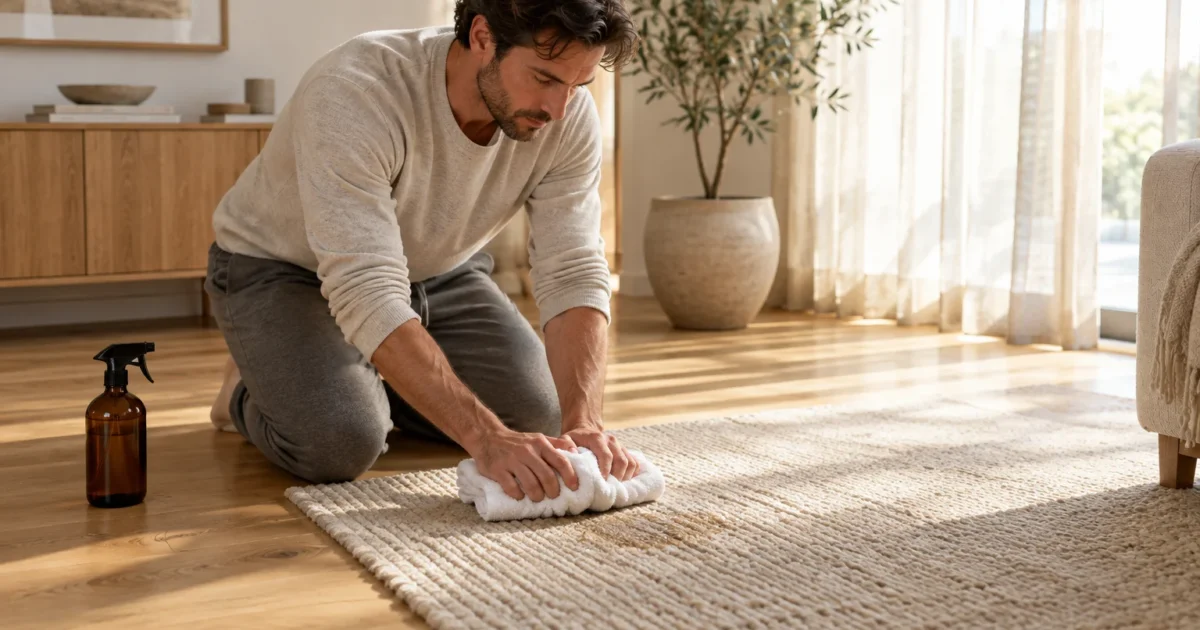
You can rescue your carpets, rugs, and upholstery from stubborn pet accidents without damaging delicate floor fibers. The right cleaning formula breaks down organic waste immediately and stops foul odors at the molecular source.
Selecting the best pet stain remover protects your indoor air quality and safeguards your home improvement investments. Using specialized solutions prevents repeat territorial marking and keeps your living spaces fresh and welcoming.
Our team evaluated leading chemical and enzymatic formulas to find proven remedies that conquer tough pet stains. These ten top-performing options will help you restore your flooring quickly and efficiently.
Project Overview & Why It Matters
Pet accidents present a unique chemical challenge for residential flooring. Standard dish soaps and all-purpose surface sprays merely mask surface grime while leaving pungent biological residues untouched.
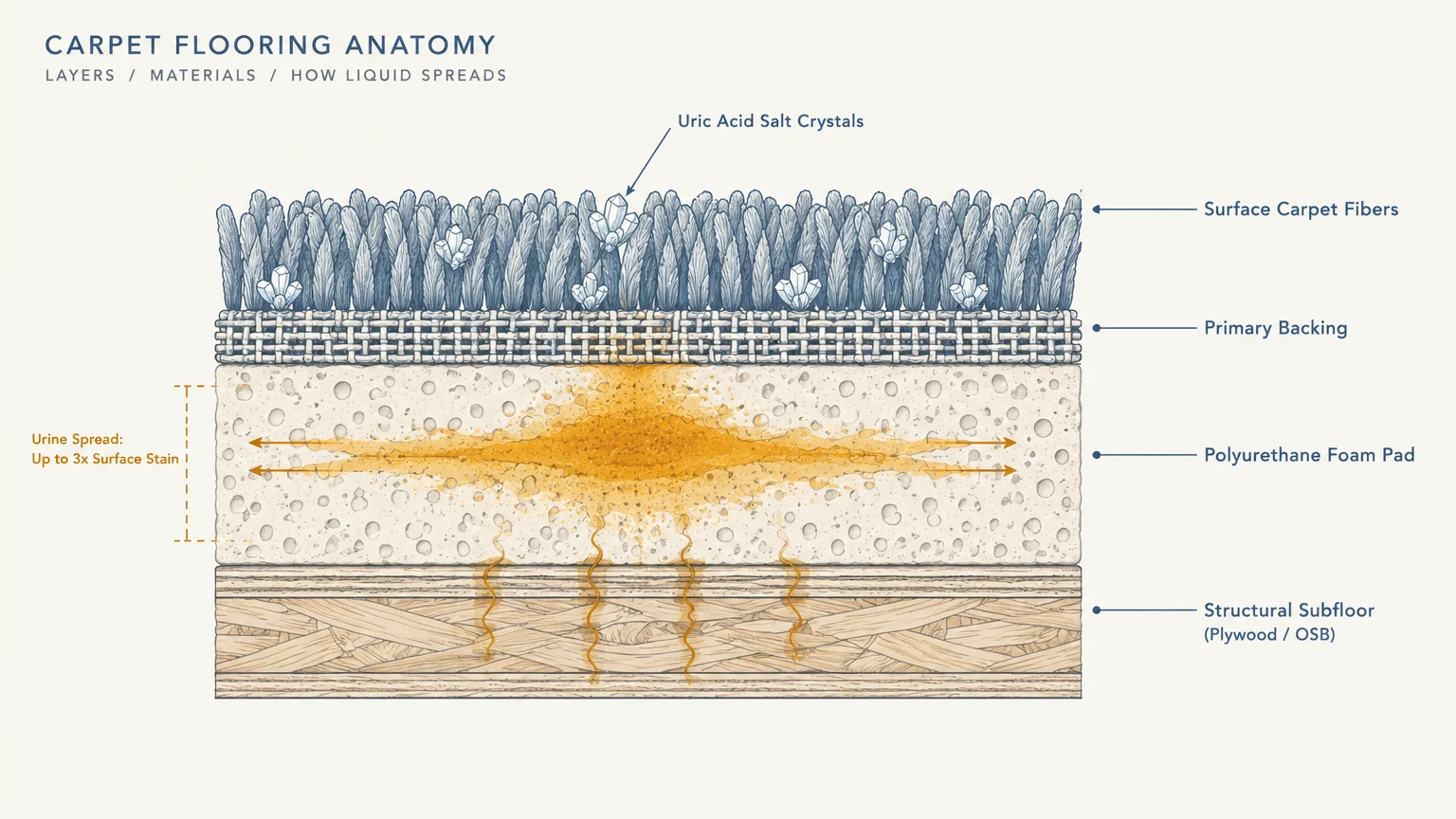
Mammalian urine consists of urea, urobilin, proteins, and insoluble uric acid crystals. When liquid urine evaporates, those concentrated uric acid crystals bond tightly to synthetic and natural carpet fibers.
High indoor humidity rehydrates these dormant salt crystals, which releases pungent ammonia gas back into your living areas. Masking fragrances cannot dissolve these microscopic bonds; only targeted chemical or biological agents can eliminate them permanently.
Unchecked pet urine also seeps downward through the carpet primary backing into the porous polyurethane foam padding beneath. Once liquid saturates the pad, it spreads laterally to create a hidden reservoir up to three times larger than the surface stain.
Severe contamination eventually penetrates your structural plywood or oriented strand board subfloor. Replacing structural subflooring requires extensive carpentry, significant labor, and thousands of dollars in avoidable structural repairs.
The Carpet and Rug Institute established its Seal of Approval program in 2004 to independently test spot removers. Their rigorous laboratory evaluations measure cleaning efficacy, rate of resoiling, pH balance, and fiber colorfastness.
According to the CRI 205 Residential Carpet Standard, applying unapproved, harsh chemicals to your floor can permanently void your manufacturer carpet warranty. Choosing certified solutions ensures you lift deep discoloration without stripping protective fiber coatings.
The U.S. EPA Safer Choice program independently evaluates cleaning chemicals against strict environmental and human health standards. Selecting certified products safeguards your household pets and children from harmful volatile organic compounds and toxic surfactants.
Modern pet odor removal requires matching the specific chemical mechanism of the cleaner to the age and severity of the stain. Investing in professional-grade chemistry now saves you from premature carpet replacement down the road.
Tools, Materials, and Prep Checklist
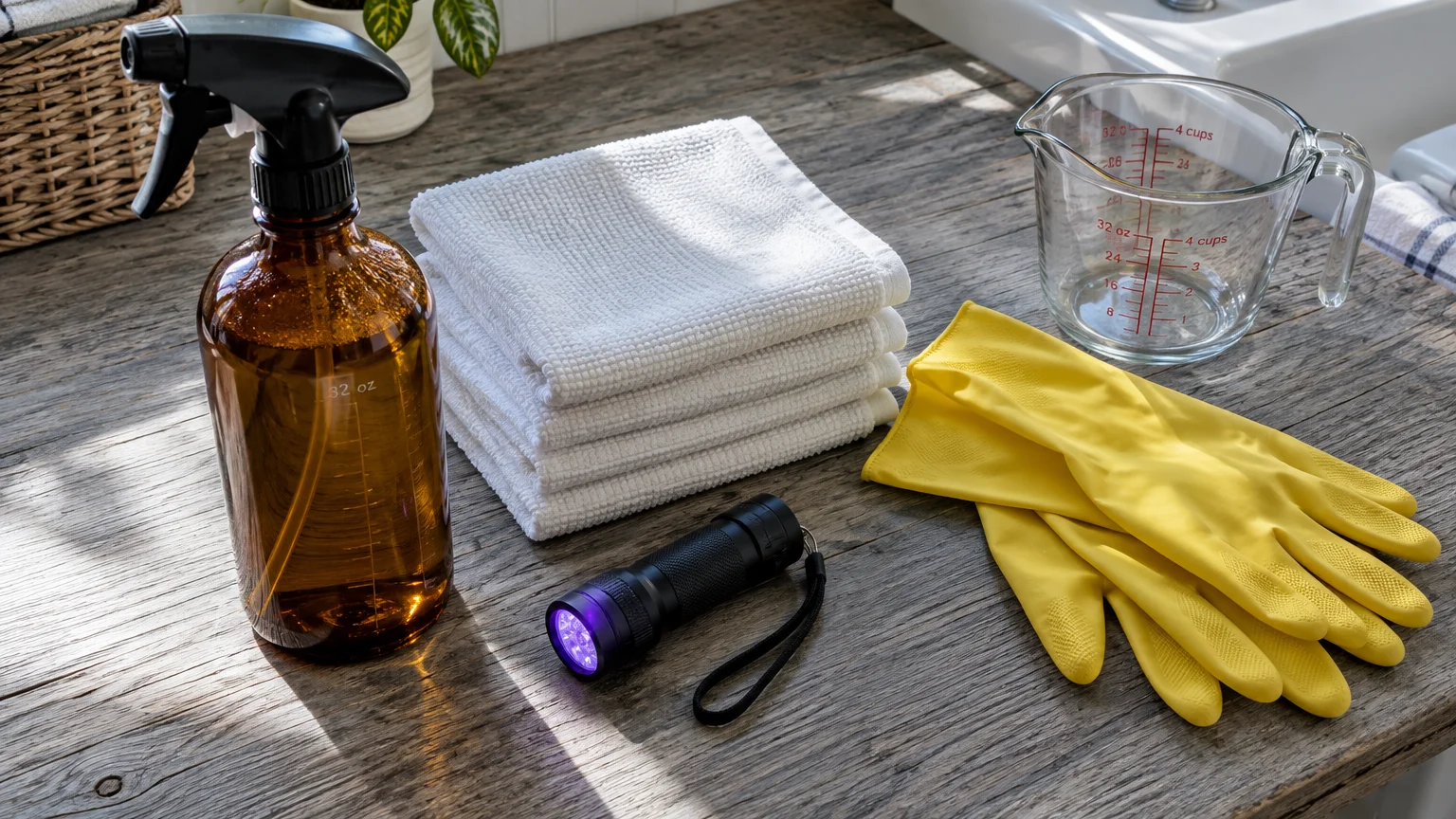
Before treating contaminated areas, assemble the proper chemical agents and mechanical equipment. Having the right gear on hand prevents accidental fiber distortion and stops stains from spreading deeper into your floor backing.
Pet stain cleaners generally fall into three distinct scientific categories: bio-enzymatic digesters, oxygenated oxidizers, and surfactant spot lifters. Understanding these mechanisms helps you choose the most effective product for your home.
Rocco & Roxie Professional Strength Stain & Odor Eliminator
This commercial-grade formula retails for approximately $17.94 for a 32-ounce spray bottle. It holds the prestigious CRI Seal of Approval, confirming its safety on residential carpets.
The solution relies on active enzymatic cultures that feed directly on ammonia and organic pet matter. It works exceptionally well on set-in carpet pet stains, delicate upholstery fabrics, and pet bedding.
Because it contains no harsh chlorine bleach, you can use it confidently around synthetic carpet weaves. Its gentle chemistry leaves no sticky chemical residue to attract dry soil later.
Spot Shot Pet Instant Carpet Stain & Odor Eliminator
Spot Shot Pet retails for approximately $5.65 for a 14-ounce aerosol can, marked down from its regular $7.99 price point. This fast-acting aerosol spray uses powerful surfactants to lift dark biological pigments immediately upon contact.
You do not need to wait hours for visible results when treating fresh surface accidents. It pushes liquid deep into carpet tufts, breaking surface tension to dislodge pet vomit, blood, and loose feces.
Keep a can in your utility room for immediate emergency response before biological liquids dry. Blot the treated surface firmly with a clean cloth to pull the loosened residue out of the carpet pile.
Carbona 2-in-1 Oxy-Powered Pet Carpet Cleaner
Carbona offers a convenient 22-ounce bottle featuring a built-in bristle brush applicator for approximately $9.94. The integrated foam applicator head lets you gently work the cleaning liquid into dense carpet textures without soaking your hands.
Its active oxygen formula oxidizes heavy organic pigments and neutralizes foul pet odors simultaneously. The effervescent bubbling action lifts trapped dirt particles up from the carpet backing to the pile tips.
This design proves ideal for high-traffic entryways, stairs, and tight hallways where pet messes frequently occur. Always rinse the applicator sponge thoroughly under warm tap water after each spot treatment.
Arm & Hammer Pet Stain & Odor Eliminator
This economical spray costs roughly $6.48 for a generous 32-ounce bottle, which breaks down to just $0.20 per fluid ounce. It leverages the natural deodorizing power of sodium bicarbonate alongside modern cleaning polymers.
The balanced formula safely loosens stubborn pet marks while neutralizing offensive acidic odors instantly. It works effectively on low-pile carpets, entryway floor mats, and durable polyester furniture.
Its accessible price point makes it an ideal staple for multi-pet households that encounter frequent minor accidents. It provides dependable spot-cleaning performance without straining your monthly maintenance budget.
Simple Solution Extreme Stain and Odor Remover
Simple Solution Extreme retails for approximately $14.99 for a 32-ounce spray bottle. This high-potency formula features a concentrated blend of pro-bacteria and specialized enzymes designed specifically for tough pet messes.
The specialized bacterial cultures produce three distinct biological enzymes that target protein, starch, and lipid residues. This triple-action biological mechanism destroys embedded urine salts and sticky organic compounds.
The bottle features a versatile multi-function sprayer that provides targeted stream, wide mist, or thick foam applications. Use the foaming setting on vertical surfaces like baseboards and couch cushions to prevent chemical runoff.
Eco Strong Enzymatic Pet Stain & Odor Remover
Eco Strong retails for roughly $17.97 for a 32-ounce trigger bottle. This professional bio-enzymatic treatment uses bioactive cultures to break down stubborn uric acid crystals and foul organic matter.
It continues digesting microscopic residues long after the initial surface application dries. The non-toxic formulation contains zero synthetic dyes, making it safe for delicate natural wool rugs and woven carpets.
Homeowners dealing with chronic territorial marking benefit significantly from this deep-penetrating liquid. It eliminates the territorial scent cues that compel dogs and cats to re-soil the exact same floor area.
Angry Orange Pet Odor Eliminator Concentrate
Angry Orange concentrate retails between $22.40 and $25.97 for a commercial-strength bottle. Derived from genuine cold-pressed orange peels, this powerful citrus deodorizer obliterates the most pungent pet urine and fecal smells.
A single concentrated bottle yields multiple gallons of active cleaning solution when diluted with clean water. It works remarkably well on concrete basement slabs, unfinished subflooring, tile grout, and outdoor pet kennels.
Because citrus oils can irritate feline respiratory tracts, allow treated surfaces to dry fully before permitting cats back into the room. It leaves behind a vibrant, natural citrus aroma rather than an artificial perfume cover scent.
Active Pet Urine Stain Eliminating Cleaner with Enzymes
Active Pet Urine Cleaner retails for roughly $24.95 for a 32-ounce bottle, discounted from its standard $27.95 retail price. This industrial-strength formula targets the stubborn yellowish pigment caused by concentrated urobilin in aged pet urine.
Its natural enzyme complexes digest embedded biological waste trapped within carpet yarns and underlying felt padding. The gentle formulation maintains a neutral pH, protecting stain-resistant chemical treatments applied at the carpet mill.
Use this solution on neglected pet stains that have dried and oxidized over several weeks. It rehydrates stubborn crusts and breaks them down into odorless carbon dioxide and water molecules.
Mister Max Anti-Icky-Poo Unscented
Mister Max Anti-Icky-Poo unscented formula retails for approximately $43.95 for a commercial one-gallon jug. Highly favored by animal shelters and veterinary clinics, this formula employs live beneficial bacteria to consume decaying biological waste.
Unlike scented cleaners that disguise odors, this unscented formulation leaves no artificial fragrance behind. It completely digests the biological source of the stench, leaving the treated environment truly neutral.
It performs reliably on carpet fibers, hardwood floorboards, ceramic tile grout, and porous crawl space subflooring. Its live bacteria continue to multiply and consume waste until their biological food source is completely exhausted.
OdoBan Pet Oxy Stain Remover
OdoBan Pet Oxy is an EPA Safer Choice-certified oxygenated spot cleaner designed for health-conscious households. It meets rigorous environmental performance benchmarks while lifting tough biological discoloration from soft floor coverings.
The fast-reacting hydrogen peroxide system releases micro-bubbles that loosen dried pet vomit, blood, and urine marks. It oxidizes stubborn organic pigments on contact without generating toxic fumes or harsh chemical residues.
This cleaner protects household indoor air quality while safeguarding sensitive family members and pets from harsh volatile chemicals. It leaves floor coverings bright, clean, and thoroughly refreshed.
Hardware, Extraction Tools, and Safety Supplies
Pairing your chosen chemical cleaner with the proper mechanical extraction equipment ensures total removal of deep pet waste. Relying on paper towels alone leaves heavy deposits behind in the subfloor.
Acquire a 395-nanometer ultraviolet blacklight flashlight to pinpoint hidden biological deposits across your home. Dried pet urine fluoresces a dull yellow-green hue under UV light, revealing the true scope of your cleaning project.
For mechanical extraction, entry-level Hoover upright spot and carpet extractors retail for under $200. These lightweight tools spray clean water and lift liquid waste from carpet pile with dependable suction.
Mid-tier steam extractors, like the Bissell Revolution HydroSteam, retail for approximately $400. These machines inject heated steam and cleaning solution deep into carpet fibers to melt sticky biological fats.
Premium smart extractors, such as the Tineco Carpet One Cruiser, retail for roughly $699. These advanced machines automatically detect dirt concentration and modulate suction power to dry floor fibers rapidly.
Keep a stack of clean white microfiber cloths, thick paper towels, and chemical-resistant nitrile gloves ready. Using plain white cloths prevents accidental dye transfer from the towel into your expensive carpet pile.
Step-by-Step Instructions
Successful stain removal requires patience, precise chemistry, and mechanical extraction. Follow these four methodical phases to eliminate stubborn pet stains without damaging your flooring materials.
Phase 1: Location and Initial Moisture Extraction
Darken the room and turn on your UV blacklight flashlight to map out every pet accident accurately. Chalk lightly around each glowing perimeter so you can locate the spots once the overhead lights are restored.
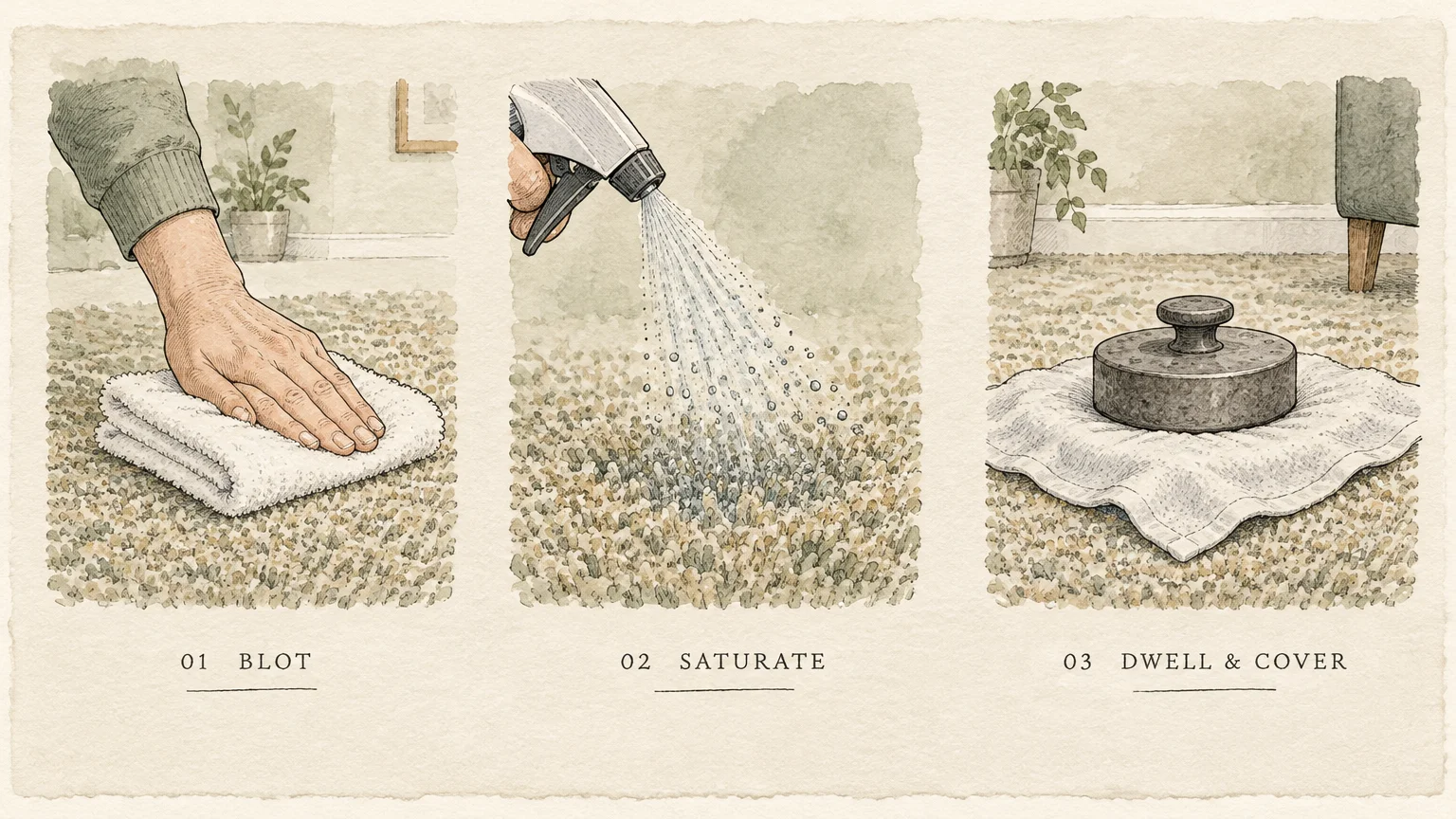
Put on your nitrile gloves to protect your skin from biological pathogens and concentrated cleaning chemicals. If the accident is fresh, immediately place dry white microfiber towels directly over the liquid pool.
Stand on the towels using your body weight to press them firmly into the carpet pile. This downward pressure forces trapped moisture up into the towel rather than deeper into the carpet cushion.
Never scrub or rub carpet fibers vigorously during this initial phase. Scrubbing frays twisted yarn tips, permanently distorting your carpet texture and grinding biological waste deeper into the backing.
Repeat the blotting procedure with fresh dry towels until no visible moisture transfers to the cloth. Removing seventy percent of the liquid mechanically makes your chemical treatment significantly more effective.
Phase 2: Targeted Product Application and Dwell Time
Before treating the main stain, test your chosen cleaner on an inconspicuous carpet scrap inside a closet. Apply three drops, wait ten minutes, and press a white towel against the test area to verify colorfastness.
Once you confirm fiber safety, saturate the entire mapped accident zone thoroughly with your chosen cleaner. Spray at least two inches beyond the visible stain perimeter to treat lateral fluid migration inside the backing.
When applying an enzyme cleaner, remember that biological enzymes require sustained moisture and warmth to consume uric acid. If the cleaner dries too quickly, the beneficial bacteria become dormant before completing their job.
Cover the saturated area with a clean, slightly damp white towel to slow surface evaporation. Leave the covered area undisturbed for a dwell time of two to four hours for standard biological messes.
For severe, aged urine spots, allow the enzymatic solution to remain moist for up to twelve hours. Keep curious dogs and cats locked out of the treated room throughout the entire chemical dwell period.
Phase 3: Deep Extraction and Neutralizing Rinse
Remove the damp towel covering the treated floor section. You will notice that biological enzymes have broken down sticky uric acid deposits into soluble liquid byproducts.
Use your carpet extraction machine filled with lukewarm tap water to rinse the treated area thoroughly. Make two wet passes while holding down the spray trigger to flush out dissolved biological residues.
Follow immediately with four slow dry passes using only the machine’s suction motor. The powerful vacuum pulls suspended dirt, residual surfactant, and contaminated water out of the carpet pad.
If you do not own a carpet extractor, fold clean dry microfiber cloths over the wet zone. Press down firmly with heavy books or a weighted bucket for thirty minutes to absorb the rinse water.
Never leave concentrated detergent residues sitting in your carpet pile. Leftover chemical surfactants act like microscopic glue, attracting dry household dirt that turns your clean spot dark within weeks.
Phase 4: Forced Evaporation and Subfloor Assessment
Position an electric box fan or high-velocity floor blower directly over the wet carpet patch. Maximum airflow accelerates evaporation, drying the carpet pile and backing within twelve to twenty-four hours.
Running a dehumidifier in the room speeds up drying times while preventing mold colonization in the damp foam cushion. Keep indoor relative humidity below fifty percent throughout the active drying process.
Once the carpet dries completely, inspect the area under your UV blacklight flashlight once again. The bright yellow-green glow should be entirely gone, confirming complete biological elimination.
If a faint pet odor reappears during humid days, the urine likely saturated the structural subfloor beneath the carpet. In that scenario, carefully unhook the carpet edge from the perimeter tack strip to inspect the pad.
Cut out and discard water-damaged foam padding beneath the contaminated spot using a sharp utility knife. Paint the exposed wood subfloor with an oil-based stain-blocking primer before installing a fresh replacement pad patch.
Style & Finishing Touches
Tackling pet stains gives you the perfect opportunity to rethink your interior finishes and floor styling. Selecting modern, pet-resilient materials helps you maintain a pristine home aesthetic without sacrificing practical daily durability.
If you plan to replace worn flooring, consider installing solution-dyed nylon or triexta carpeting. In solution-dyed fibers, color pigments are integrated directly into the molten polymer before yarn extrusion, making them virtually impervious to bleaching.
Avoid loop-style carpets like traditional Berbers if you share your living space with active cats or dogs. Animal claws easily snag woven carpet loops, unraveling entire rows of yarn and leaving unsightly pulled fibers.
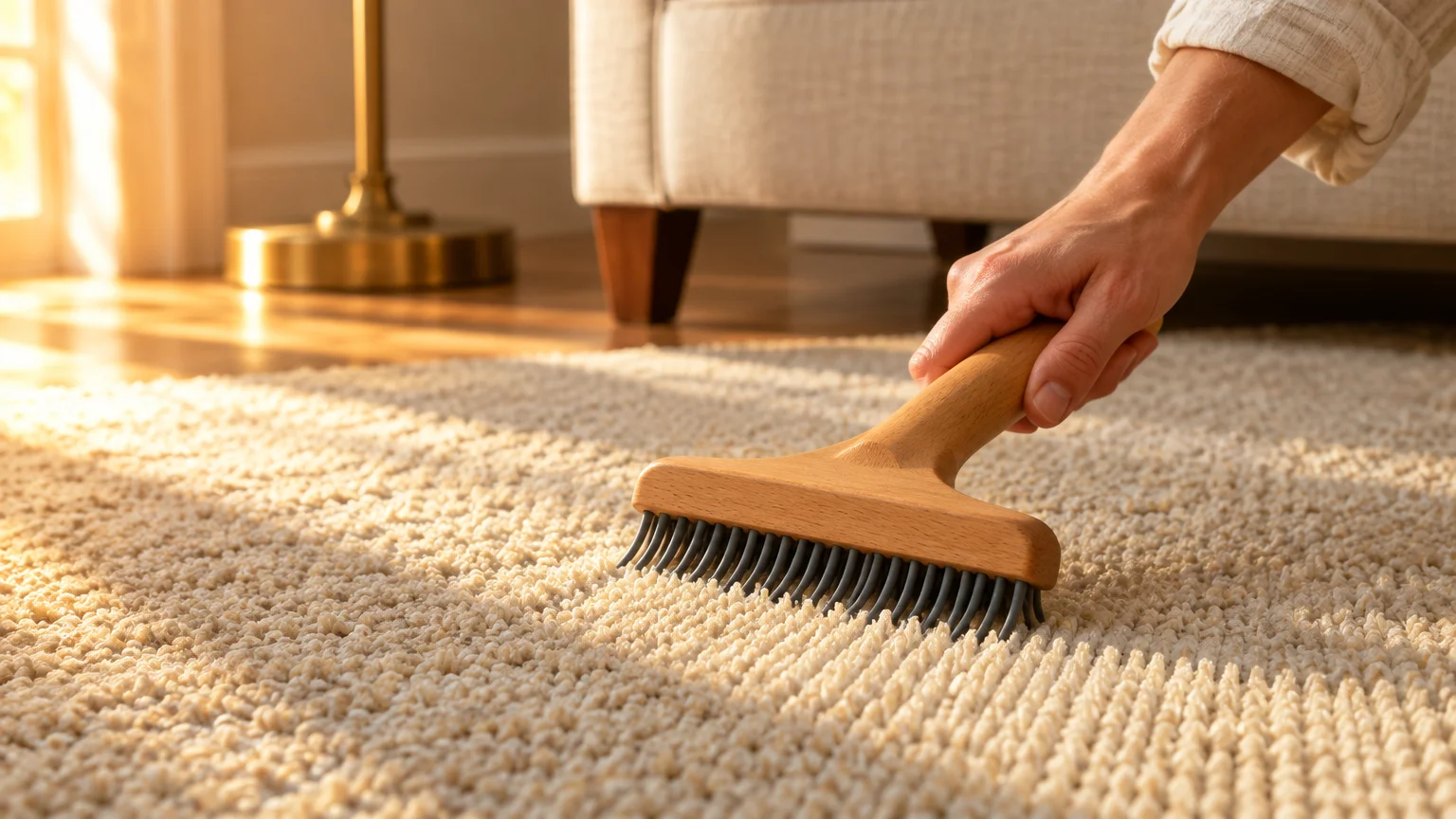
Opt for low-profile, dense cut-pile or textured saxony carpets instead. Dense textures keep pet hair and liquid spills sitting high on the fiber tips, giving you ample time to wipe up messes.
Pair your carpet with specialized spill-barrier carpet padding during your next major flooring renovation. These high-density cushions feature an impermeable top membrane that stops liquid accidents from penetrating the subfloor.
When decorating hard surface floors, choose machine-washable accent rugs backed with non-slip rubber linings. When accidents occur, you can detach the top rug layer and run it through your residential washing machine.
Select home decor color palettes that incorporate heathered neutrals, warm greys, or muted earth tones. Multi-tonal fabrics and textured woven floor coverings naturally disguise minor daily wear between your scheduled cleaning sessions.
Maintenance & Long-Term Care
Maintaining a fresh, stain-free home requires consistent upkeep alongside immediate emergency spot treatments. Establishing a proactive cleaning regimen protects your flooring investment and extends the service life of your carpets.
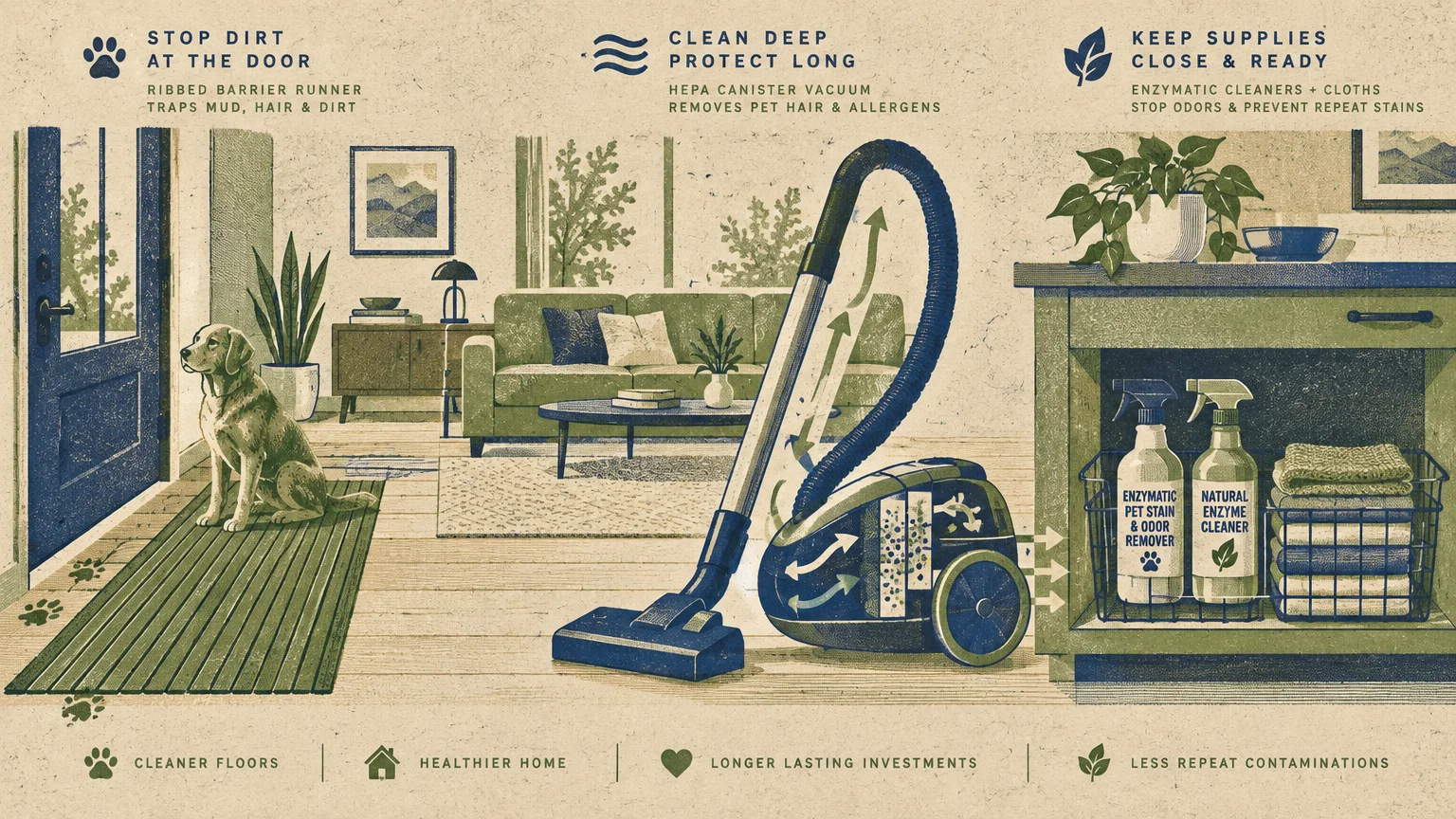
Vacuum high-traffic pet zones at least three times each week using a vacuum equipped with a certified HEPA filter. High-performance vacuums lift dry pet dander, loose fur, and gritty abrasive dirt before they grind down carpet fibers.
Treat pet accident zones promptly with an enzyme cleaner before liquid waste has time to oxidize. Fresh biological spots surrender to cleaning chemistry far more readily than aged, crusty deposits.
Schedule a comprehensive hot-water extraction cleaning every twelve to eighteen months using CRI-approved equipment. Deep professional extraction flushes out deep-seated soil, pet body oils, and environmental allergens trapped deep in the pile.
Keep your home indoor relative humidity between thirty-five and fifty percent using central air conditioning or dehumidifiers. Maintaining moderate humidity keeps latent uric acid crystals stable, preventing stale pet odors from activating inside older floorboards.
Trim your pets’ claws every three weeks to prevent them from snagging delicate carpet yarns or scratching wood sealants. Regular pet grooming drastically reduces the volume of shedding fur and oily dander deposited across your living spaces.
FAQ
Why does dried pet urine smell worse over time?
Urine contains organic uric acid salts that do not break down through natural air evaporation. As airborne moisture fluctuates, rehydrated uric acid crystals release pungent ammonia gas and sulfurous compounds continuously into your home.
Can hot water extraction lock in pet stains?
High water temperatures applied to fresh pet messes can permanently cook animal proteins into synthetic carpet fibers. Always blot fresh stains with cool or lukewarm water before introducing heated extraction machines to the carpet.
How does an enzyme cleaner differ from an oxygen-based cleaner?
Enzymatic cleaners contain biological organisms that digest organic waste, proteins, and uric acid crystals down to basic carbon molecules. Oxygen cleaners release hydrogen peroxide bubbles that oxidize pigments, bleaching away discoloration without consuming underlying protein waste.
Will pet stain cleaners ruin hardwood or subfloors?
Excessive liquid left sitting on hardwood floors causes wood planks to cup, warp, and discolor permanently. Apply cleaners lightly, avoid pooling moisture, and dry the wood surface thoroughly using fans within thirty minutes.
Does using unapproved spot cleaners void my carpet warranty?
Most major carpet manufacturers require owners to maintain floors using products tested under the CRI Seal of Approval program. Applying harsh, uncertified household chemicals can strip stain-resistant coatings and immediately void your manufacturer warranty coverage.
Takeaway & Next Steps
Tackling stubborn pet accidents does not require costly flooring replacement when you leverage the right chemical solutions. Pairing targeted enzymatic formulas with systematic extraction techniques preserves your carpets and eliminates offensive odors permanently.
Equip your home utility closet with a dedicated pet stain removal kit today. Having quality products on hand ensures you can respond to unexpected accidents before biological pigments bond with delicate carpet fibers.
Inspect your living spaces tonight using a handheld UV blacklight flashlight to map hidden pet spots. Saturate your oldest, most persistent stains with an enzyme cleaner, allowing the active cultures sufficient dwell time to digest embedded uric acid.
We want to see how these cleaning strategies transform your living spaces! Share your before-and-after pet stain restoration photos with our editorial community, and subscribe to our newsletter for weekly home renovation tips.