Step-by-Step Instructions
Tackle your project in structured phases to minimize fatigue and prevent floor damage. Select one of these six proven rearrange furniture ideas to address your specific room layout challenges.
1. The Floating Island Layout
Pull your primary sofa and companion armchairs 12 to 24 inches away from all perimeter walls. Centering your seating cluster over a generous area rug creates an intimate, modern conversation lounge.
Position your primary coffee table exactly 16 inches away from the front sofa cushions. This separation allows comfortable legroom while keeping drinks and books within natural reach.
Ground the floating arrangement by resting at least the front two legs of every seat on the rug. If the back of the sofa faces a room entry, place a slim console table behind it.
A sofa console provides a stylish transitional ledge for table lamps and decorative bowls. It also conceals the plain fabric backing of large sectional sofas from incoming guests.
2. The Angled Accent Shift
Break away from rigid boxy lines by turning your primary seating group at a 45-degree angle toward a feature corner. This angled orientation softens square room geometry and creates unexpected visual depth.
Position an attractive arched floor lamp or a tall potted plant in the triangular recess created behind the angled chair. This prevents the back corner from turning into a dead, shadowed pocket.
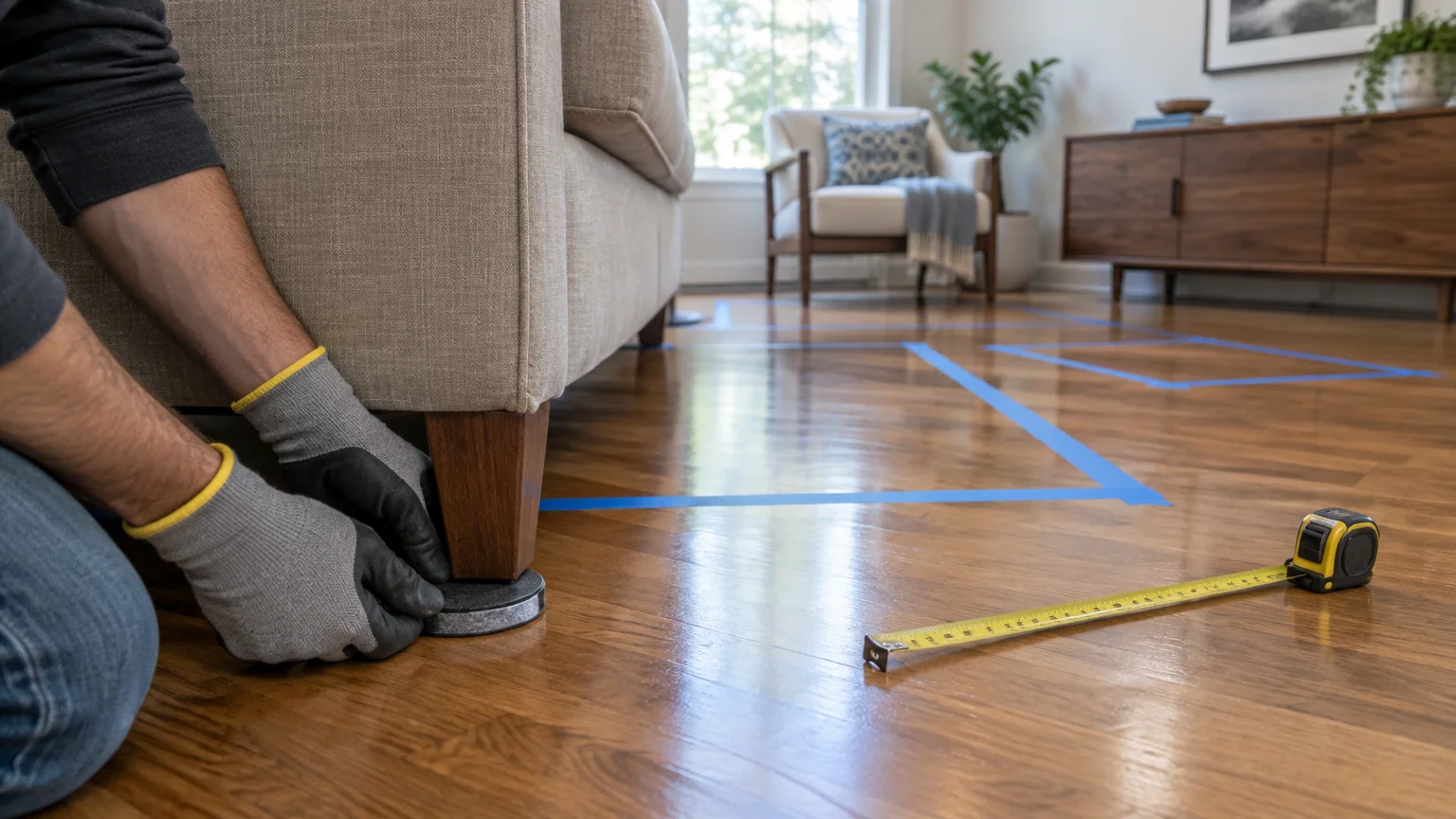
Double-check your walking boundaries with your tape measure after locking in the angle. Ensure that no projecting furniture corners infringe upon your primary 36-inch transit corridors.
3. The Dual-Zone Divide
Long, narrow living spaces frequently suffer from awkward dead zones at one far end. Divide that elongated footprint into two separate functional micro-zones to restore visual balance and purpose.
Turn your sofa perpendicular to the longest wall so its back acts as a low structural partition. Dedicate the larger section to media viewing and convert the smaller nook into a library or homework station.
Define each functional territory with its own individual area rug to reinforce the spatial separation. Keep at least 3 feet of open passage between the two zones for effortless navigation.
4. The Symmetrical Hearth Frame
Highlight an attractive fireplace or central picture window by placing two identical sofas or matching chairs directly opposite one another. This classic perpendicular layout focuses visual attention squarely on your chosen architectural centerpiece.
Center a substantial shared coffee table or cushioned storage bench midway between the opposing seats. Keep the distance between seat fronts under 8 feet so guests can converse without raising their voices.
Align the outer edges of the seating squarely with the firebox mantel or window molding. Mirroring your furnishings brings immediate calm, order, and architectural harmony to busy family gathering areas.
5. The Perpendicular Sightline Pivot
Low horizontal sofas frequently block incoming natural daylight when shoved directly against exterior window walls. Rotate your main seating perpendicular to the windows so daylight washes across the room without obstruction.
This simple rotation establishes broad sightlines toward outdoor patio views and garden beds. It also prevents harsh afternoon glare on television screens mounted on opposing interior walls.
Complete this configuration by placing low-profile armchairs opposite the window to preserve an open, airy feeling. High-backed accent chairs belong on interior walls where they will not obstruct natural light.
6. The Dedicated Corner Retreat
Empty room corners frequently turn into accidental dumping grounds for exercise gear and laundry baskets. Transform an unloved corner by floating an upholstered armchair at a 30-degree angle toward the center room.
Add a small round side table and an adjustable task lamp directly beside the armrest. You instantly carve out a peaceful reading alcove without consuming valuable floor space in your central lounge.
Safety Protocols and Troubleshooting
Tall bookcases, display cabinets, and vertical dressers present serious tip-over hazards when moved to new locations. Anchor all tall furnishings securely into solid wall studs using heavy-duty anti-tip brackets.
Follow tip-over prevention standards established by the U.S. Consumer Product Safety Commission to protect young children and pets. Never place heavy decorative items on top shelves of unanchored furniture.
Never attempt to lift or drag solid hardwood credenzas or modular sectionals alone. Enlist an assistant, bend at your knees rather than your waist, and let furniture sliders handle horizontal movement.
If your rearranged room feels crowded, your furniture scale may overwhelm the space. Try removing one nonessential side chair or swapping a bulky cocktail table for slender nesting tables.