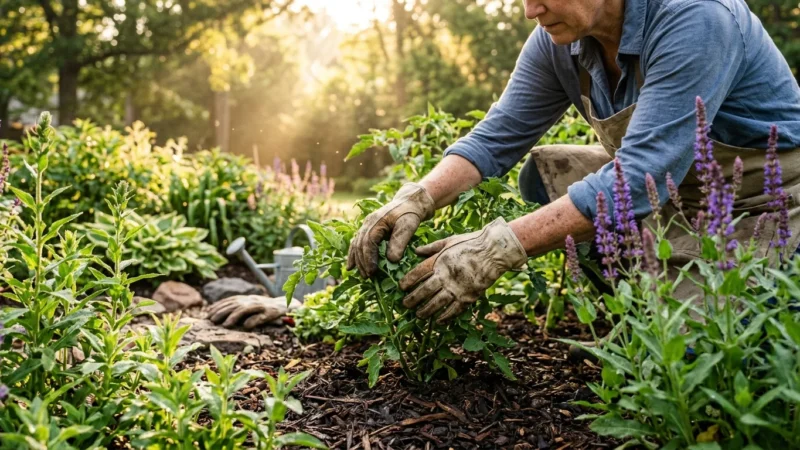
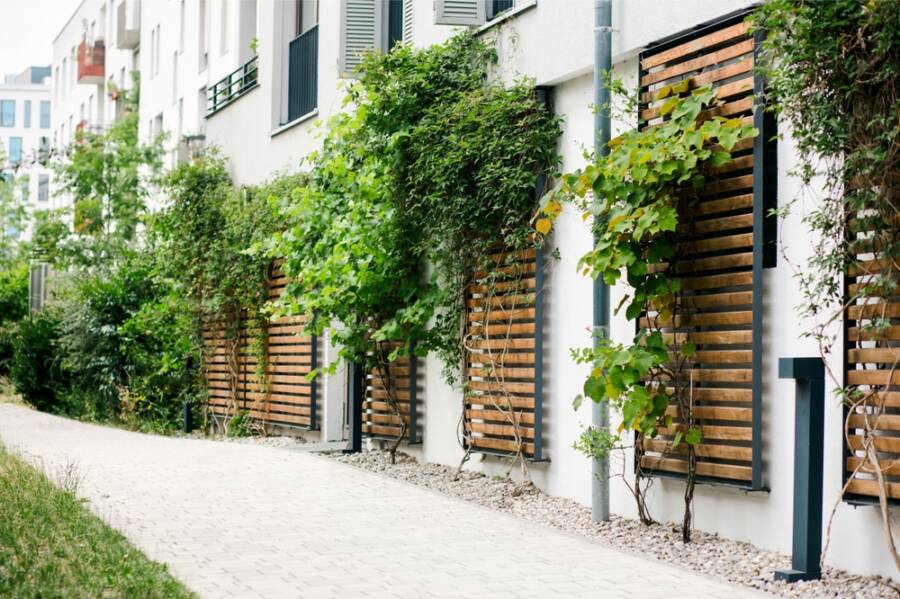
Climbing plants can enhance the beauty of your home. Discover how to use them effectively.
Climbing plants have a big impact, whether you’re trying to sell your house soon or you just want to improve the aesthetic of your house for personal delight. These cute plants are a cheap and simple method to add charm, color, and vitality.
You might be surprised to hear that many climbing plants are low maintenance and easy to cultivate, despite the belief that they are difficult to grow and care for. These five climbing plants will improve the curb appeal of your house.
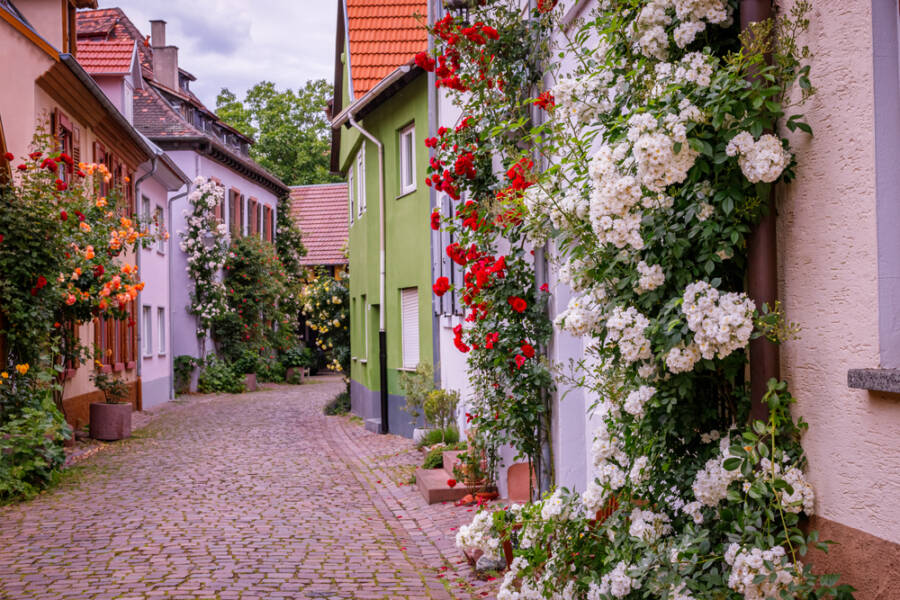
Climbing roses
Roses are loved by everybody because of their delicate look and their immense power to elevate the look of a house in the blink of an eye. Does your entrance seem dull? Climbing roses quickly spruce up a wall or trellis with their lovely scent turning any building into one similar to those from vintage cottages.
Note that these flowers need full sun to flourish, so avoid planting them in places with little sunshine! There are many alternatives, ranging from Eden roses to May Queen roses. Just pick the ones suitable for your house and the area you’re living in.
Japanese quince
One of the earliest shrubs to bloom each year, Japanese quince may be easily taught to grow up against a wall or fence by tying the branches in a fan form on horizontal wires. Before the foliage emerges, little clusters of red, pink, or white blossoms can be seen along the bare branches. It can grow in about any kind of soil, in either full sun or light shade.
Star Jasmine
Star Jasmine is yet another excellent option. It has glossy, deep green leaves that occasionally turn red in the winter, and fragrant white blooms in the summer. It will look fantastic on your porch, patio, or any other area where you like to have tea.
The exquisite aroma of star jasmine is one of its greatest qualities; it gives the ambiance a hint of enchantment. Oh, and don’t forget to add a good book to this perfect environment! Though it prefers a sunny, protected area, it may grow to a height of around 9 meters and can withstand most types of soil and environments.
Ivy
One of my favorite climbing plants is for sure the ivy. Elegant, not hard to maintain healthy, and happy, ivy is the best option for homeowners who desire full shade during summer time. Depending on where you live, ivy persists throughout the year, even in the winter when practically everything withers away.
Numerous colors of green are found in hundreds of different types of ivy, such as variegated Algerian white and green ivy and luxuriant hunter-green English ivy. One of ivy’s greatest qualities is how quickly it establishes and begins to grow.
Like a lot of climbing plants from the list, it can be trained on a trellis or almost any structure to guide the ivy to grow however you want it to. Mine also reaches the roof! The only drawback of ivy is that it might attract a few more mosquitoes during the summer, but this can be avoided by applying insect repellent or lighting some incense sticks.
If you’re a busy person who doesn’t have the necessary time to water their plants every day, you will be happy to know that ivy doesn’t need too much maintenance. It requires very little care over many years as long as it is planted in rich, permeable soil that is not clay-like.
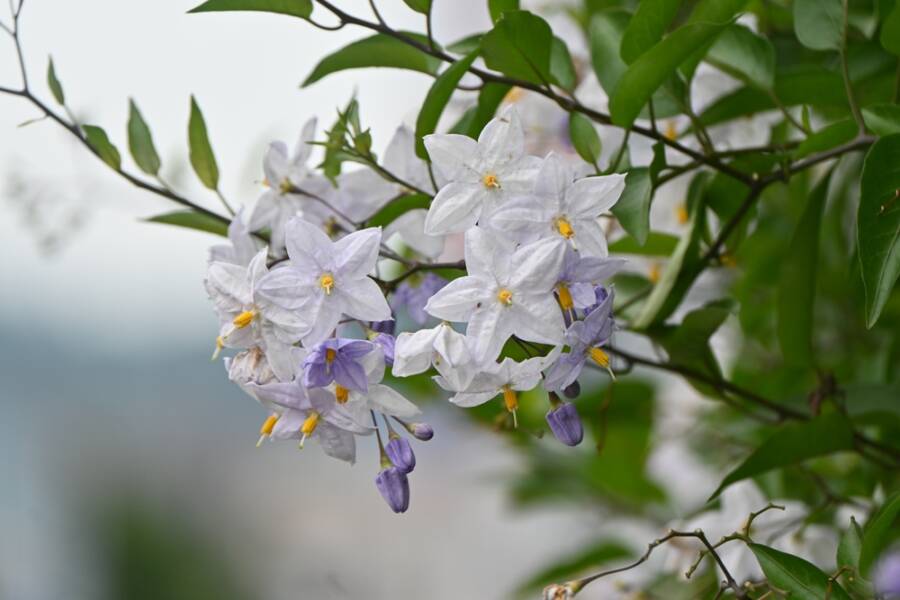
Potato vines
One of the best climbing plants to help you elevate your home’s look is solanum crispun also known as potato vines. Blooming from midsummer to late autumn, with numerous small purplish flowers, this plant can grow up to 6 meters when planted in a warm area.
Climbing Hydrangea
In addition to growing quickly, it is deciduous, which means that it may help save energy by blocking out the sun in the winter and providing shade on hot summer days. The best part is that it can withstand a wide range of climates, including the humid conditions of the South and the frigid winters of the Midwest.
Seeing these adorable climbing plants made your inner gardener happy? Then you’re going to need some handy tools. And as usual, I got your back with a set I bought myself last month and what can I say? I am completely satisfied with it. This kit is perfect for both beginners and advanced people. Buy yours for $32.99.
Chocolate vine
This plant blooms usually in April and its adorable flowers smell so spicy would bring everyone near your fence to just smell them. What I love about these flowers is that when they fade the foliage of the vine is still nice-looking. In well-drained and moist soil, this plant can reach up to 50 feet! It loves both sun and shade so don’t worry about that.
However, because of its rapid growth rate, it has been classified as an invasive species in some locations. Do your research before planting.
Creeping Thyme
Are you trying to find a bright plant to bring a splash of color into your yard? Consider planting creeping thyme. These multicolored perennial herbs bloom in clusters of white, purple, or pink blooms in the summer. This is a wonderful plant for culinary enthusiasts since, in addition to having an amazing smell, it’s also edible and can be used as a spice. Just remember that bees are drawn to creeping thyme.
Thus, it’s advisable to choose a different solution if one of your family members has an allergy. Frequently employed as a low-growing ground cover, creeping thyme may also descend from the top of low container walls or rock ledges.
Trumpet vine
Hummingbirds and butterflies adore the summer blooms of the natural Trumpet vine, which grows across the Southeast of the United States. Similar to the chocolate vine, it is regarded as invasive in certain places, so do some study before choosing to plant it.
The weight of trumpet vines needs a strong foundation because they may grow up to 40 feet in length and become rather woody. To make sure your plant is happy and thriving it needs to be pruned once in a while.
Snail vine
Attention Southerners! This is a plant that loves warm temperatures and hates frost. Its name is so intuitive and funny because it resembles a snail’s coiled shell. These vines may reach up to 20 feet if they are taken care of.
To maintain the health and vigor of the vines, regularly perform light pruning to eliminate any dead or untidy areas.
Ensure your plants are actually climbing!
As they grow, some climbing plants wrap around or hook onto their supports, while others can cling to surfaces via suckers or aerial roots. All of them, though, will often want some assistance holding on until they establish, so they should initially be carefully tied in with garden twine and guided along garden canes or pea sticks.
Install horizontal ladders of galvanized wire spaced approximately half a meter apart, secured with screw eyes, to aid heavy climbers in scaling walls or fences. Obelisks and wigwam or tepee-style tripods are excellent options for providing height and support for climbers in a garden border, especially for less aggressive species.
Now, tell me which of these climbing plants is your favorite?
Do you love flowers? If so, you would find this article pretty interesting 10 Tricks for Enhancing the Lifespan of Your Chopped Flowers.