
Recognizing the early warning signs of water heater failure saves you from catastrophic basement flooding and freezing cold showers while protecting your home improvement budget. Water heaters quietly consume up to eighteen percent of your home’s total energy, but when internal corrosion, failing heating elements, or fractured storage tanks begin to degrade system performance, utility bills spike dramatically. Catching subtle shifts in water temperature, murky rust-colored discharge, popping mineral scale, and minor plumbing leaks gives you the upper hand to plan a smooth replacement rather than facing a midnight plumbing emergency. Learn how to diagnose critical equipment warnings so you can replace your failing water heating system with confidence.
Project Overview & Why It Matters
Your water heater operates under continuous thermal stress, thermal expansion, and mineral exposure every single day. According to data published by the U.S. Department of Energy, water heating represents roughly 13% to 18% of a standard household utility bill, making it your home’s second-largest ongoing energy expense. Allowing an aging, inefficient unit to operate unchecked wastes hundreds of dollars annually in standby heat loss and inefficient fuel consumption.
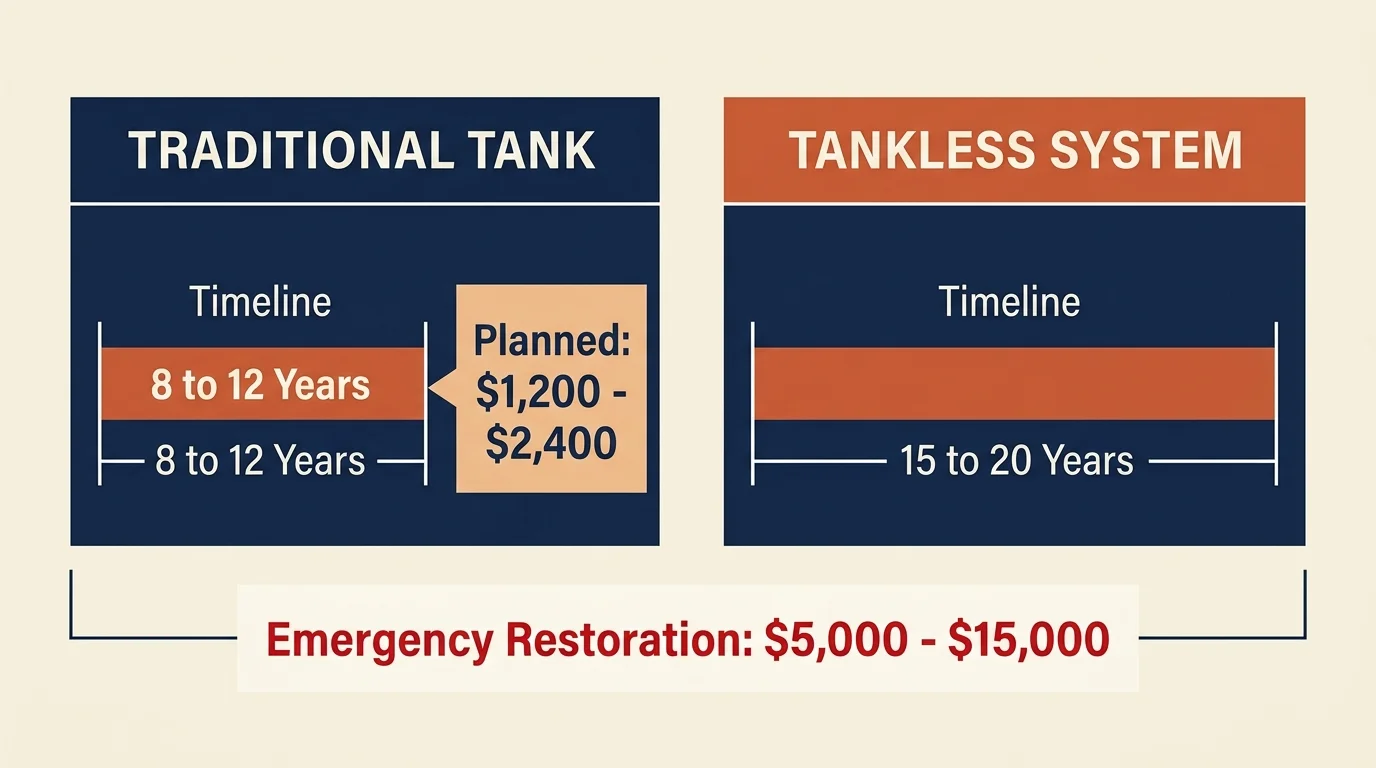
Understanding how long do water heaters last enables you to control the renovation timeline instead of reacting in a panic. Standard storage tank units deliver a reliable lifespan of 8 to 12 years, whereas high-efficiency tankless units can perform for 15 to 20 years or more. A planned replacement of a traditional storage unit averages between $1,200 and $2,400 for equipment and licensed installation; conversely, an emergency restoration following a catastrophic tank burst can easily exceed $5,000 to $15,000 in water damage remediation, drywall repairs, and mold abatement.
Proactive equipment planning also helps you prepare for evolving building and energy efficiency mandates. The Department of Energy has finalized aggressive residential efficiency standards taking effect on May 6, 2029, requiring electric units over 35 gallons to utilize advanced heat pump technology. By recognizing water heater replacement signs early, you make calculated choices regarding fuel sources, energy rebates, and storage capacities tailored specifically to your home layout.