When evaluating senior living options against staying in your home, glossy brochures often obscure the true cost of senior living. While base rates appear straightforward, secondary fees can inflate your monthly housing budget by thousands of dollars overnight. Understanding the hidden costs of retirement communities empowers you to make informed decisions before signing binding residency contracts. From surprise move-in charges to tiered care markups, unmasking these hidden expenses allows you to audit community fee schedules accurately, negotiate terms effectively, or invest strategically in aging-in-place home modifications instead.
Project Overview & Why It Matters
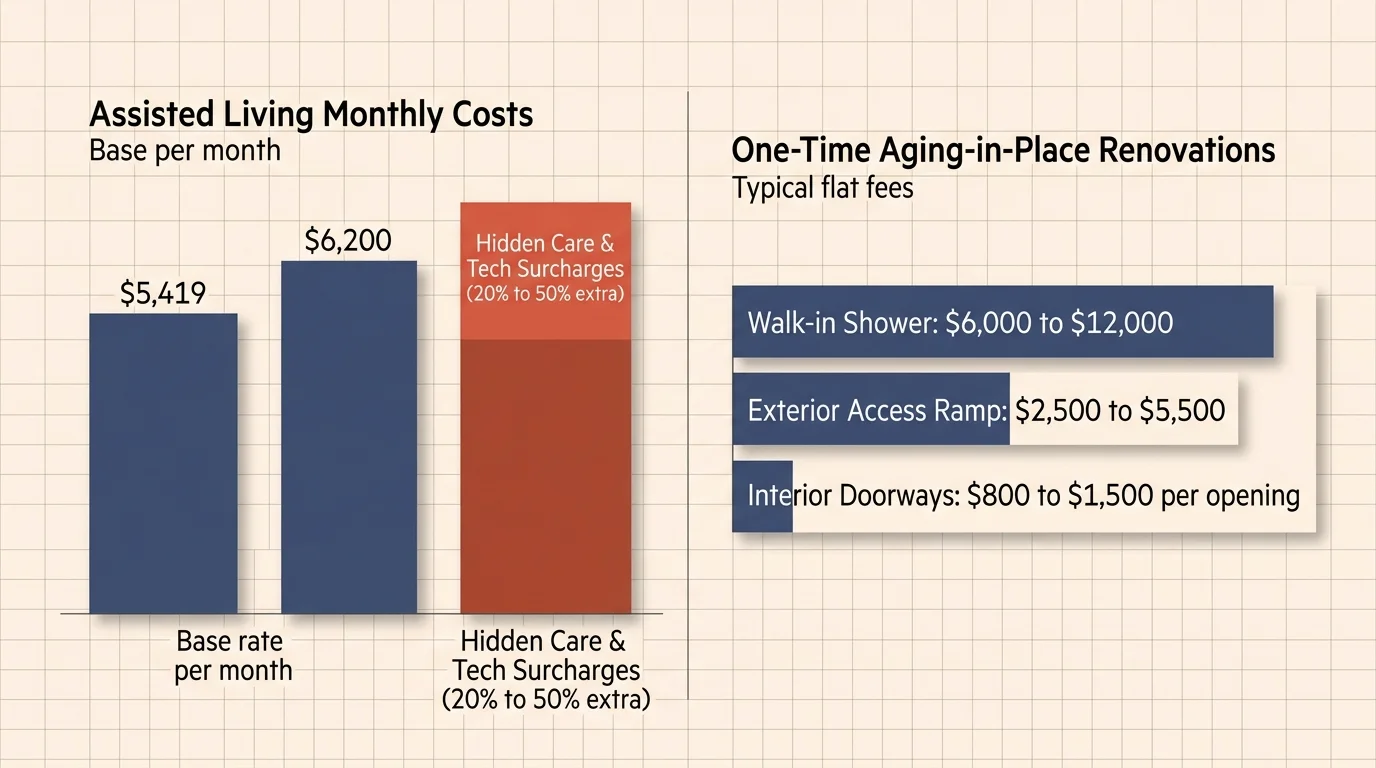
Transitioning into a senior living facility represents a major financial commitment. Sales presentations highlight landscaped gardens and restaurant-style dining; however, underlying contracts contain complex fee schedules that quickly inflate your total expenses. Recent industry research from CareScout and A Place for Mom indicates that median base costs for assisted living range from $5,419 to $6,200 per month. Crucially, this base price reflects basic accommodation rather than total care.
Homeowners who sell their houses expecting predictable monthly expenses often experience severe sticker shock. Unanticipated fees for personal care assistance, technology access, and maintenance increase monthly invoices by 20% to 50%. Understanding these retirement community hidden fees enables you to compare facility living directly against strategic home improvement projects that let you age in place safely.
Conducting a rigorous financial audit protects your hard-earned equity. Spending $10,000 to $25,000 on accessible home renovations—such as zero-threshold showers, lever hardware, non-slip tile, and entrance ramps—often proves far more cost-effective than paying thousands in compounding monthly facility surcharges.