Style & Finishing Touches
Evaluating retirement community costs often highlights the financial wisdom of upgrading your existing home. Investing in accessible home design allows you to enjoy modern style, personal comfort, and physical safety without submitting to unpredictable recurring facility surcharges.
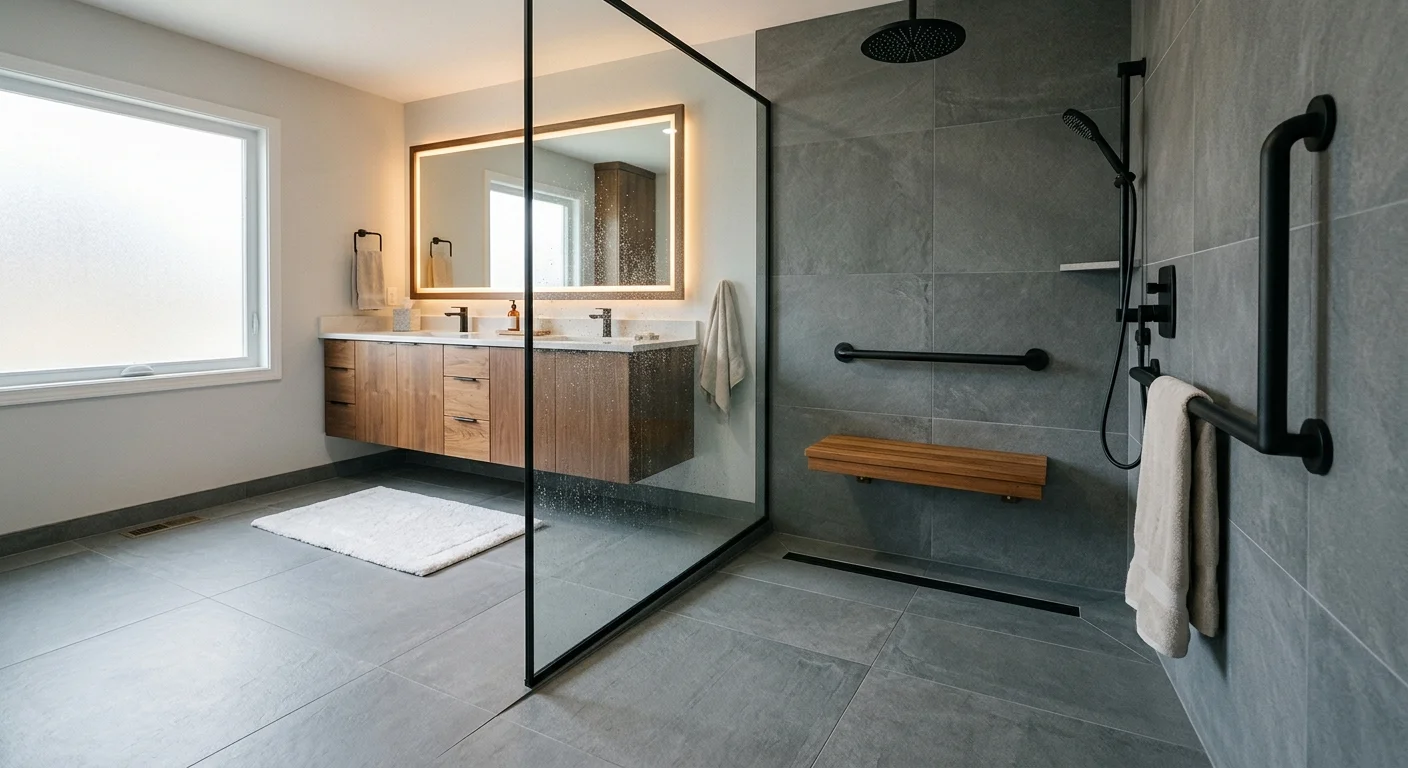
Aging-in-Place Design Variations: Modern accessibility upgrades blend safety features with elegant aesthetic appeal. Replace high-maintenance tubs with curbless, zero-threshold tile showers featuring textured anti-slip porcelain tile and linear drains. Install load-bearing grab bars that double as designer towel racks in polished chrome, matte black, or brushed brass finishes. Replace hard-to-turn door knobs with ergonomic lever handles, and widen door frames to 36 inches to accommodate mobility devices smoothly.
Color Palettes and High-Visibility Lighting: Enhance room safety through intentional interior decor choices. Paint door frames and baseboards in colors that contrast sharply with wall tones to assist spatial navigation for aging eyes. Upgrade illumination by installing recessed LED ceiling fixtures calibrated to a warm 3000K color temperature with a high Color Rendering Index (CRI), eliminating dark shadows in hallways and stairwells.
Budget-Tiered Retrofit Upgrades: Customize your home modification plan according to your current budget:
Entry-Level Tier ($500 to $1,500): Install motion-sensor hall lighting, lever door hardware, non-slip stair treads, and multi-purpose designer grab bars in bathing zones.
Mid-Range Tier ($5,000 to $15,000): Convert bathtubs into curbless showers, construct modular exterior entry ramps with handrails, install smart video doorbells, and lower selected kitchen storage shelves.
Premium Tier ($20,000+): Remodel your primary bathroom into a luxury wet room, convert ground-floor space into an accessible primary suite, widen structural doorways throughout, and install residential chairlifts or compact elevators.