Trading your sprawling single-family house for a functional duplex can secure your financial future while cutting yard work in half. Smart retirees across the country are discovering that two-unit properties solve both cash-flow worries and aging-in-place challenges.
When you live in one unit and rent out the other, you generate predictable monthly income right from your home address. You also gain immediate proximity to family or visiting caregivers without sacrificing personal privacy.
Exploring retiree real estate reveals why modern duplexes beat traditional suburban houses on maintenance, tax perks, and daily lifestyle flexibility. Making this tactical housing shift provides lasting comfort and financial peace.
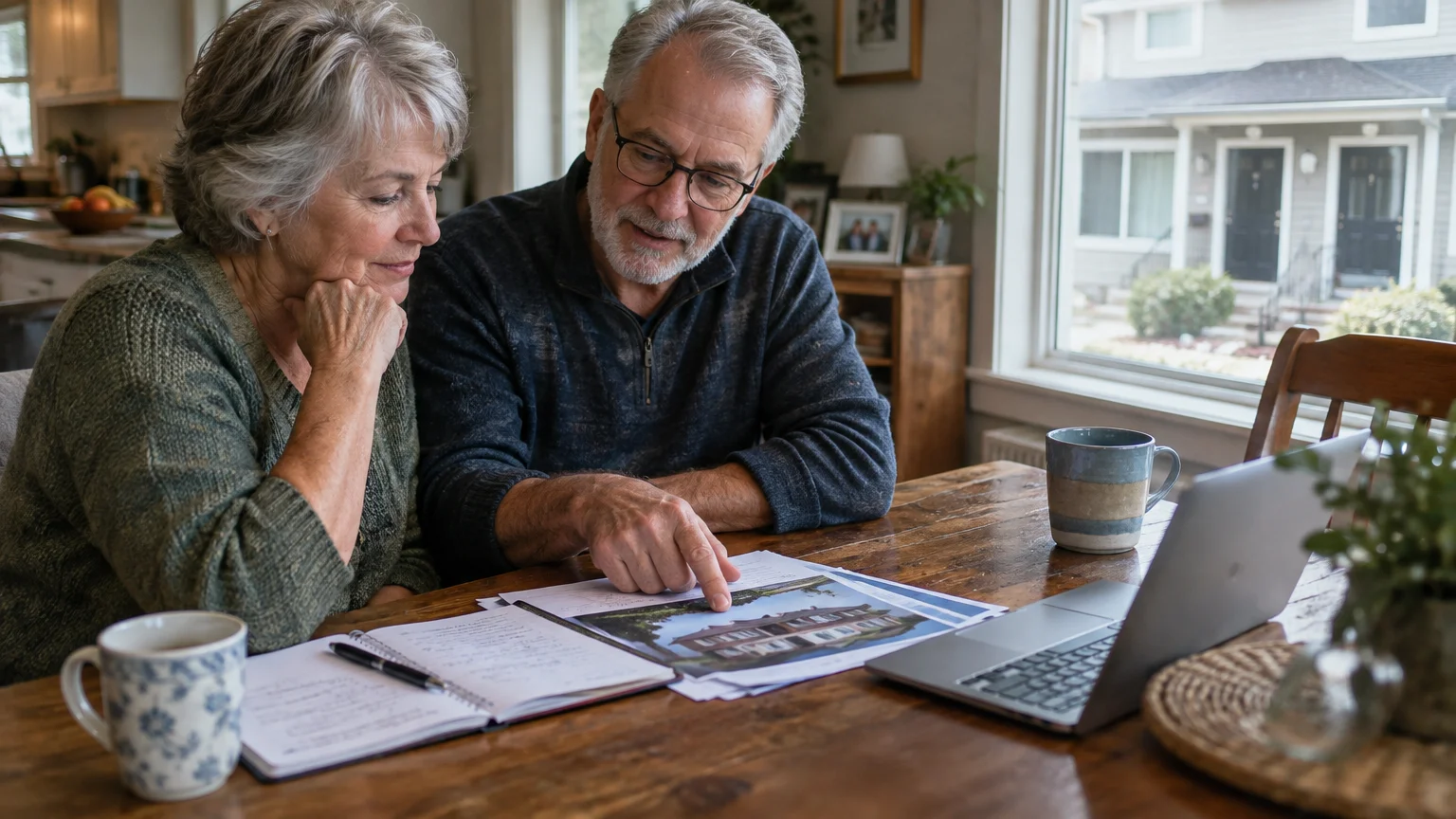
Project Overview & Why It Matters
The traditional dream of keeping a massive suburban home often clashes with the physical realities of retirement. High property taxes, drafty unused rooms, and steep stairs drain your retirement nest egg and sap your daily energy.
Transitioning to duplexes for retirees provides a strategic solution that pairs compact, accessible living with robust asset growth. Consider these nine primary drivers pushing seniors to abandon the single-family model.
Reason 1: Reliable Rental Income in Retirement
Operating a two-unit dwelling produces steady rental income in retirement, transforming your residence into a dependable wealth generator. U.S. Census Bureau data confirms tenant rent substantially offsets property taxes and insurance for aging adults.
Reason 2: Seamless Multigenerational Living
Choosing a duplex vs single-family home enables effortless multigenerational living without sacrificing personal boundaries. Adult children or grandchildren can occupy the adjacent unit, providing mutual companionship and shared childcare while preserving your quiet personal sanctuary.
Reason 3: Built-In Proximity for Caregivers
Leasing your adjoining unit to a dedicated caregiver or visiting nurse ensures immediate assistance during medical emergencies. You maintain total privacy and independence in your primary suite while keeping vital support just steps away.
Reason 4: Shared Maintenance Costs and Reduced Footprint
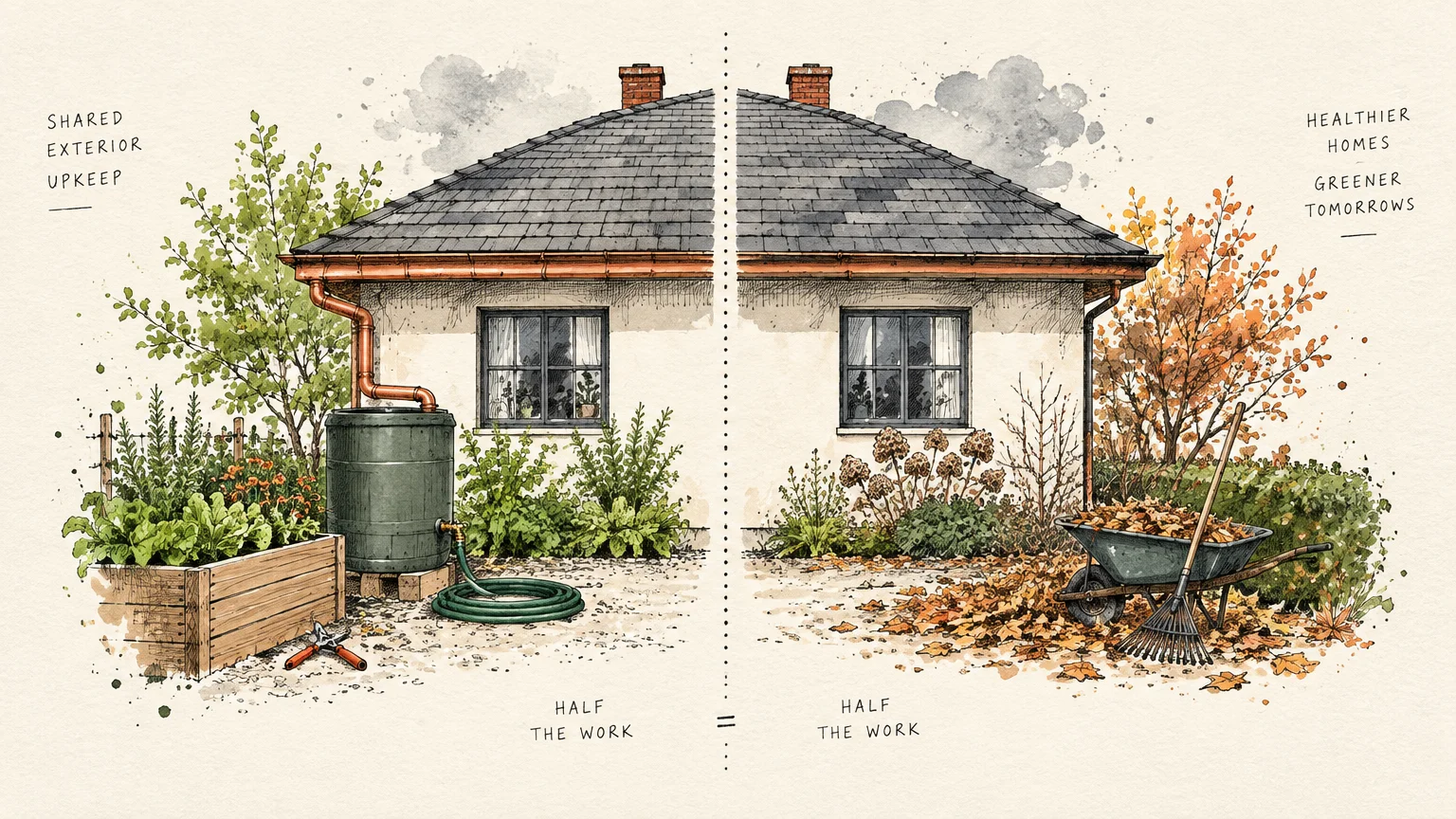
A duplex concentrates your living footprint under a single roof, cutting exterior maintenance perimeters roughly in half. Routine contractor calls for roofing, gutter clearing, and lawn care service both units simultaneously, delivering substantial economies of scale.
Reason 5: Substantial Tax Deductions and Depreciation
The Internal Revenue Service allows duplex owners to write off depreciation, repairs, and utilities against rental revenue. These generous tax shelters shield your retirement distributions from higher brackets, unlike traditional single-family homeownership.
Reason 6: Rightsizing Without Losing Land Equity
Duplex ownership lets you rightsize into an accessible flat without paying escalating homeowners association dues or special assessments. You retain complete land equity and structural autonomy without answering to rigid condominium boards.
Reason 7: Custom Single-Story Accessibility
Ground-floor duplex layouts eliminate second-story stair hazards entirely. Incorporating zero-step entries and roll-in showers satisfies National Association of Home Builders guidelines for lifelong accessibility and safety.
Reason 8: Energy Efficiency via Shared Demising Walls
Duplexes share a central insulated interior party wall that prevents conditioned indoor air from escaping. According to Energy Star guidelines, shared-wall construction significantly lowers heating and cooling bills compared to detached houses.
Reason 9: Versatile Long-Term Estate Planning
A duplex provides two distinct, income-producing units that heirs can easily divide, inhabit, or liquidate independently. Your beneficiaries inherit a valuable, cash-flowing asset rather than an expensive single-family house saddled with high upkeep costs.
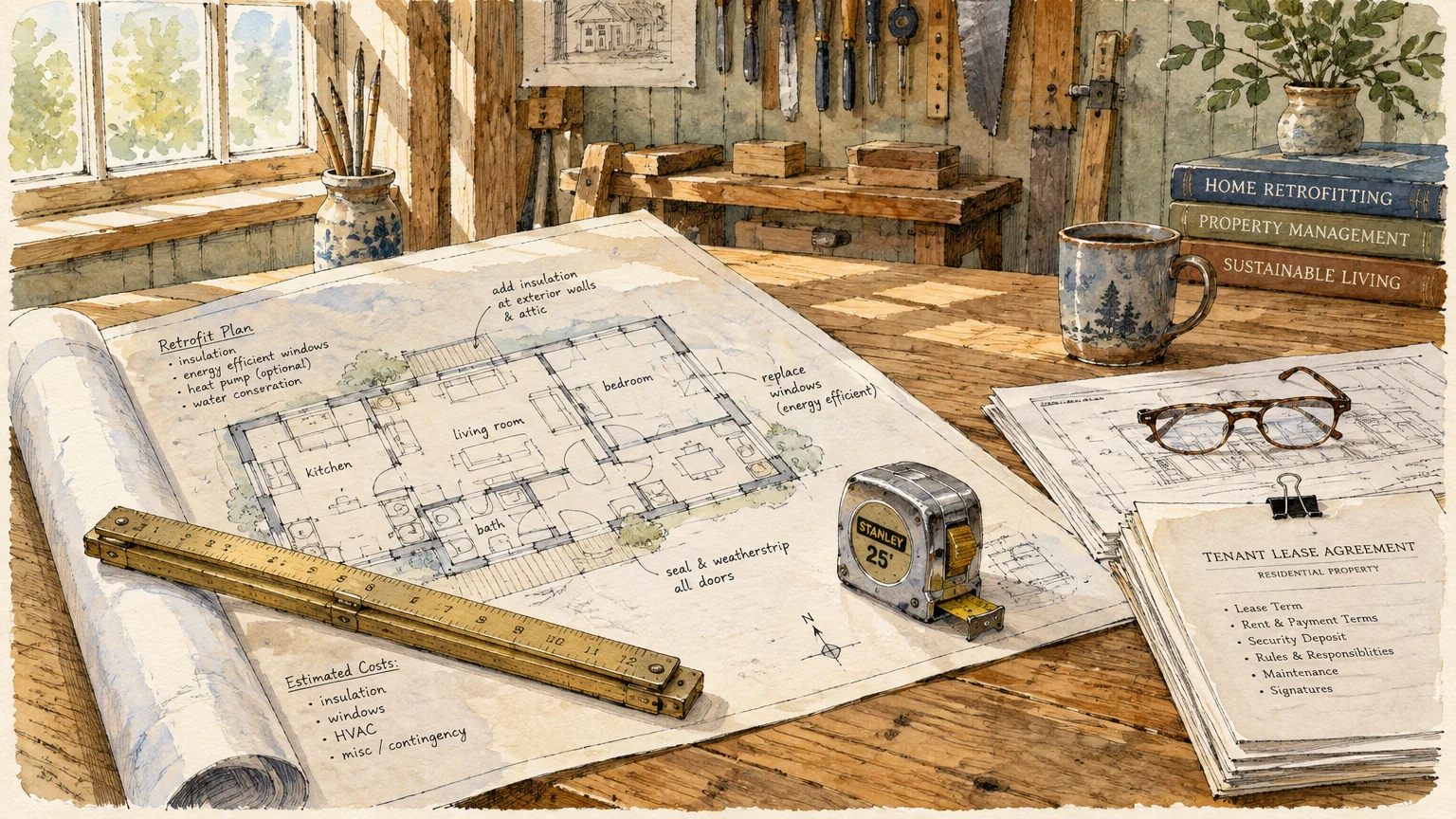
Tools, Materials, and Prep Checklist
Preparing a duplex for retirement requires thoughtful upgrades in acoustic isolation, universal design, and mechanical separation. Equipping yourself with the proper materials ensures high safety standards and durable long-term performance.
Acoustic Isolation Supplies
Green Glue Viscoelastic Damping Compound: Budget twelve 28-ounce tubes per 100 square feet of shared wall space, costing roughly 240 dollars total. This acoustic polymer shears sound vibrations between gypsum layers.
5/8-Inch Type X Fire-Rated Drywall: Purchase fifteen 4-foot by 8-foot sheets at twenty dollars each. Heavy firecore drywall adds vital mass to dampen sound transmission while boosting fire protection between units.
Acoustic Caulking Sealant: Secure six tubes at twelve dollars each. Sealing gaps around electrical boxes prevents flanking noise leaks between units.
Universal Design and Safety Fixtures
ADA-Compliant Grab Bars: Buy four 24-inch stainless steel bars rated for 500 pounds, running forty dollars apiece. You must anchor these bars directly into solid structural wall studs behind bathroom drywall.
Zero-Threshold Transition Ramps: Allocate three ramps at sixty dollars each. These beveled rubber transitions eliminate tripping hazards across exterior doorways and interior flooring junctions.
Lever-Style Passage Handles: Acquire eight brushed nickel passage levers at thirty dollars each. Lever handles allow effortless opening without wrist strain, meeting strict accessibility benchmarks.
Submetering and Essential Hardware
Secondary Electric Submeter: Budget 350 dollars for an ANSI-certified submeter unit. Separate electrical metering guarantees clean tenant billing and eliminates disputes over seasonal utility consumption.
Keyless Electronic Deadbolts: Purchase two commercial-grade touchpad locks at 110 dollars each. Digital access eliminates misplaced metal keys and allows easy temporary access for emergency responders or housekeepers.
Essential Renovation Tools
Digital Stud Multi-Scanner: Spend fifty dollars on an advanced multi-scanner with AC wire detection. Pinpointing hidden framing studs prevents accidental contact with live electrical wiring during grab bar installation.
Cordless Impact Driver Kit: Plan for 120 dollars for an eighteen-volt driver kit. High torque drives structural timber screws into framing members cleanly without stripping screw heads.
Step-by-Step Instructions
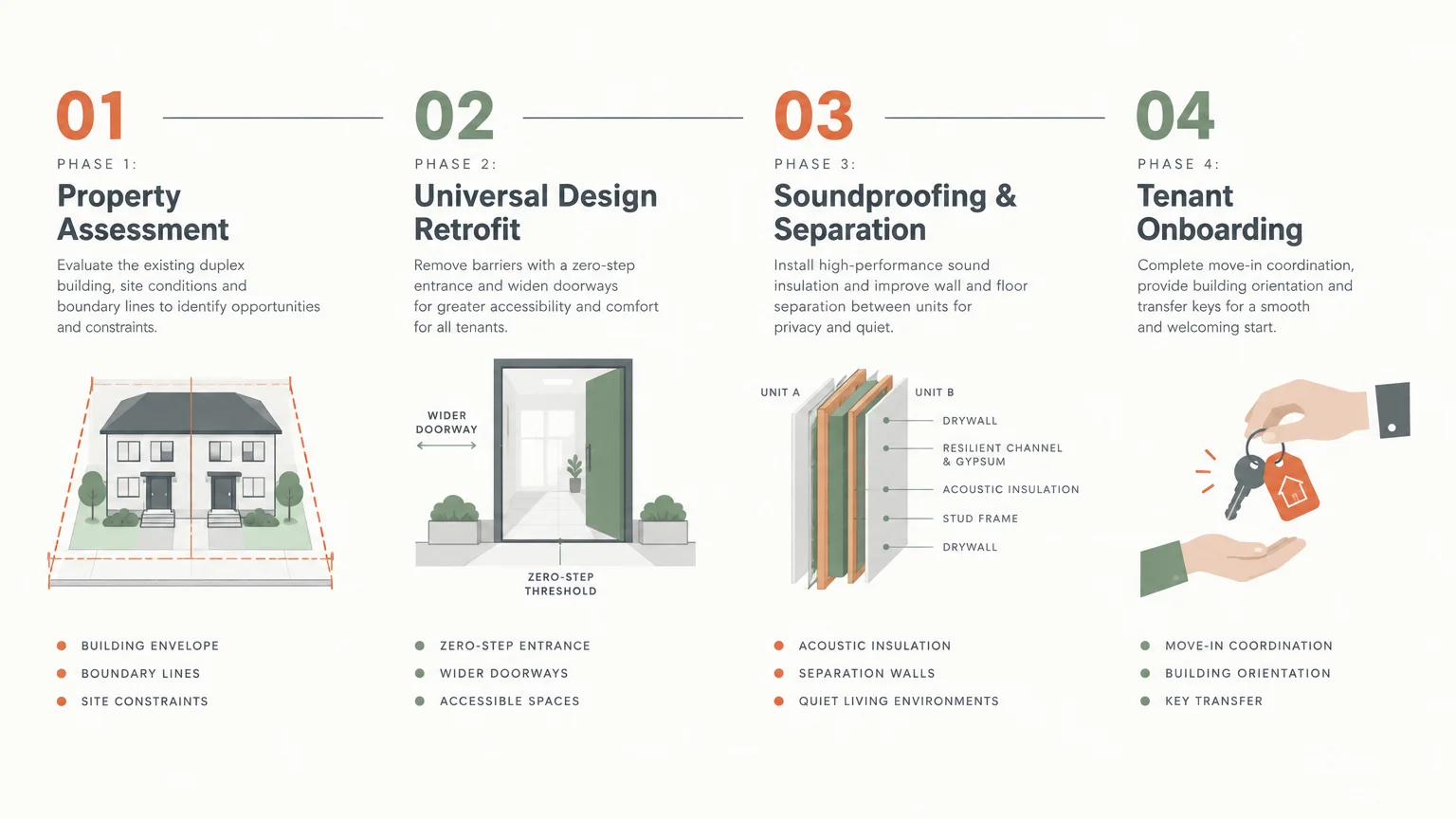
Systematically upgrading your duplex guarantees structural safety, acoustic isolation, and barrier-free access. Follow these four sequential phases to maximize your living comfort and rental market appeal.
Phase 1: Party Wall Acoustic Isolation
Remove baseboards along the shared party wall to expose the bottom framing plate. Vacuum away all dust and drywall debris to guarantee proper adhesive bonding.
Apply two liberal beads of acoustic sealant along the seam where existing drywall meets the subfloor. Sealing this boundary halts flanking noise paths that travel beneath your finished floorboards.
Apply Green Glue compound randomly across the rear face of your 5/8-inch Type X drywall. Fasten the sheets directly over existing drywall with 1-5/8-inch drywall screws driven into wall studs.
Safety Warning: Turn off electrical branch circuits at the breaker panel before cutting drywall around outlet boxes. Use an insulated voltage tester to verify all lines remain dead before working.
Phase 2: Universal Design and Bathroom Retrofits
Locate structural studs inside your bathroom using your digital wall scanner. Mark stud centers thirty-three to thirty-six inches above the finished floor.
Fasten your stainless grab bars into studs using three-inch structural screws. Test each bar with your full body weight to verify stability.
Replace standard turn-knob faucets with single-lever ceramic disc models that glide effortlessly under light pressure. Follow official ADA standards to position controls within comfortable reaching distances.
Safety Warning: Never anchor bathroom grab bars solely into hollow drywall or tile using plastic expansion plugs. Hollow anchors fail under dynamic load and trigger disastrous falls.
Phase 3: Utility Separation and Submetering
Hire a licensed electrician to inspect your existing service panel configuration. You must divide shared branch circuits so every light fixture and receptacle routes to its designated unit meter.
Mount an approved submeter downstream of the main disconnect switch to measure tenant power accurately. Label every breaker switch inside both distribution panels using a bold, permanent labeling tool.
Install secondary shutoff valves on domestic cold and hot water branches serving the secondary apartment. Dedicated shutoff valves let you service tenant plumbing without cutting water to your personal living quarters.
Phase 4: Exterior Separation and Private Entry Zoning
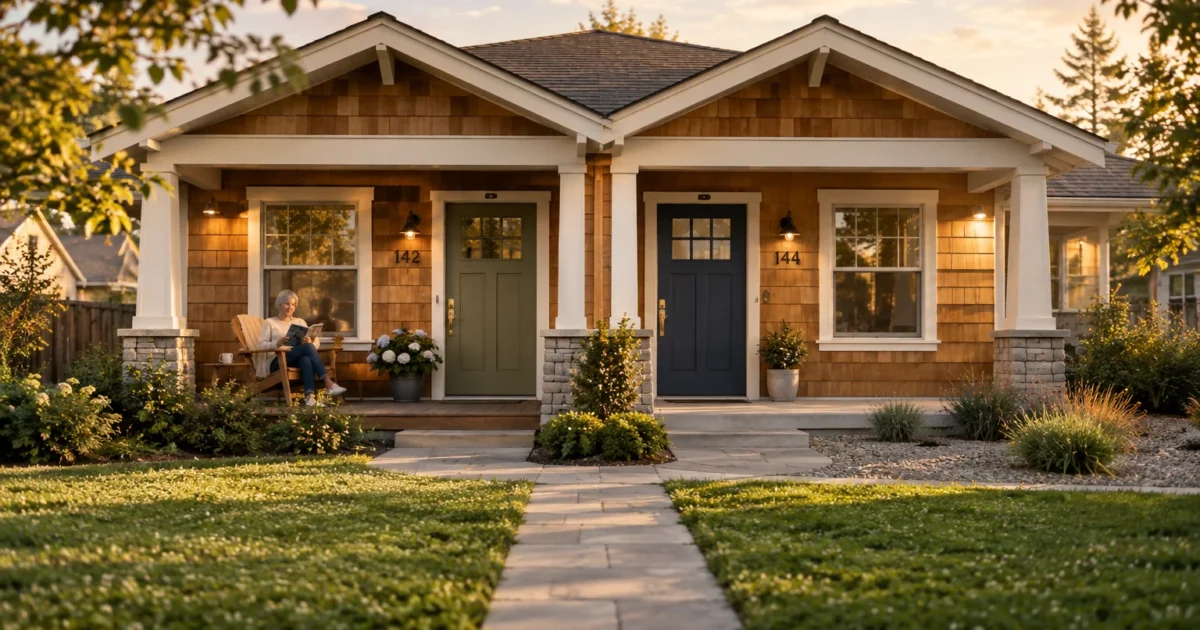
Construct separate covered entryways to provide distinct architectural identity for both units. Individual walkways and defined porches maintain personal privacy and eliminate unwanted tenant foot traffic outside your bedroom windows.
Install keyless electronic deadbolts on exterior access doors and set custom numeric codes. Program permanent codes for yourself, separate codes for your tenants, and temporary codes for maintenance contractors.
Install exterior motion-sensor LED lighting along all pathways, entry stoops, and parking bays. Bright illumination deters intruders, highlights surface transitions, and protects aging eyes from nighttime missteps.
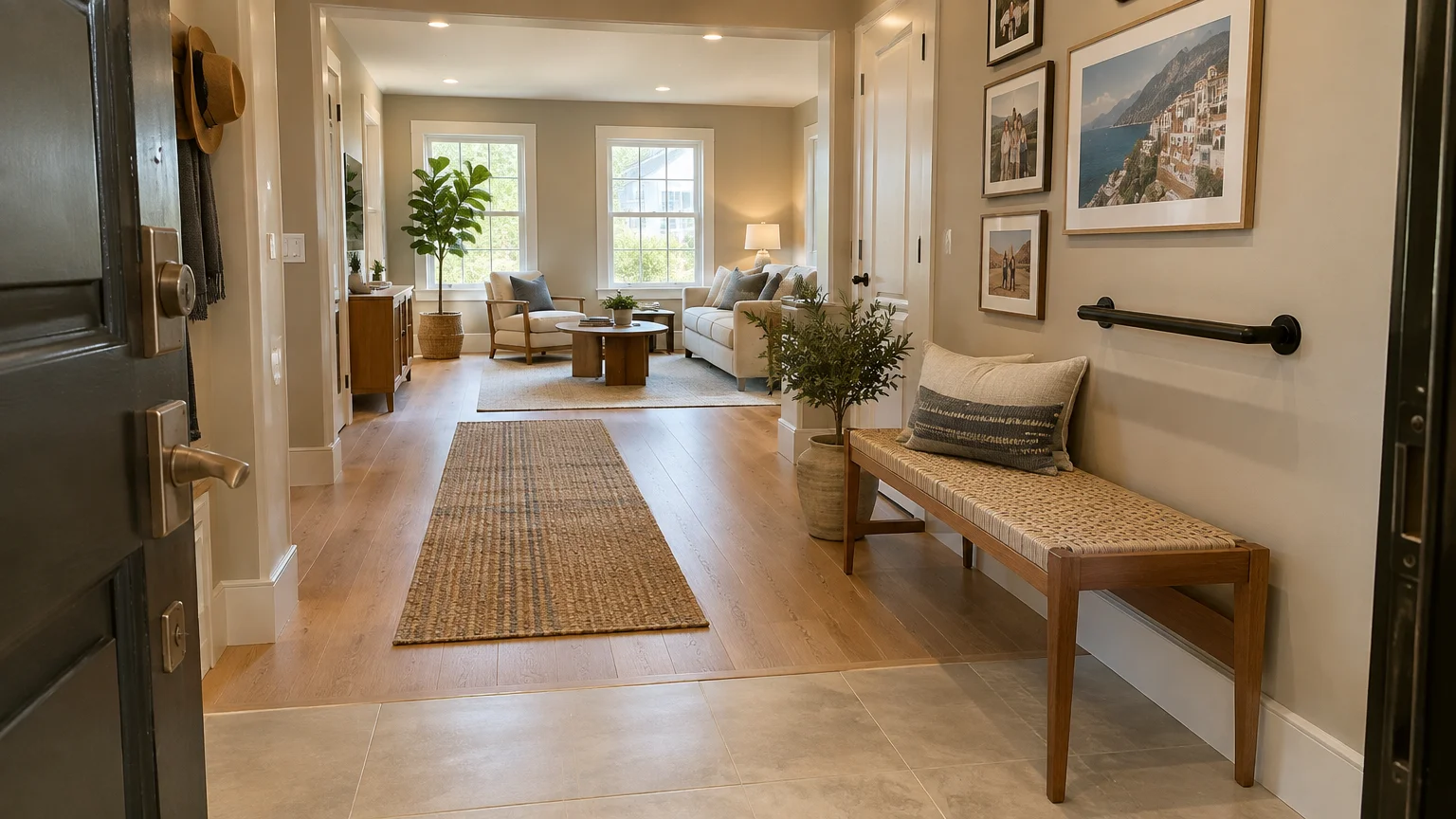
Style & Finishing Touches
Harmonizing functional accessibility with elegant design prevents your duplex from feeling clinical or institutional. Thoughtful aesthetic finishes create a welcoming sanctuary that attracts premium tenants and nurtures your daily wellbeing.
Curated Neutral Color Palettes
Paint shared foyers and living spaces in warm, light-reflective neutrals such as creamy alabaster or soft greige. These luminous tones reflect natural sunlight, brightening hallways and making compact floor plans feel remarkably open.
Choose durable eggshell or satin sheens for interior walls rather than flat finishes. Washable sheens resist scuffs from mobility walkers, laundry hampers, and moving boxes without dulling over time.
Cohesive Flooring and Transitions
Install commercial-grade luxury vinyl plank flooring with a minimum 20-mil wear layer across both units. Realistic wood-grain vinyl resists water spills, handles pet traffic effortlessly, and provides continuous flat traction without thick carpets.
Maintain matching flooring materials throughout your living spaces to create smooth, flush transitions between rooms. Eliminating raised wooden transition thresholds removes dangerous trip edges and creates an expansive, uninterrupted visual plane.
High-Value Budget Upgrades
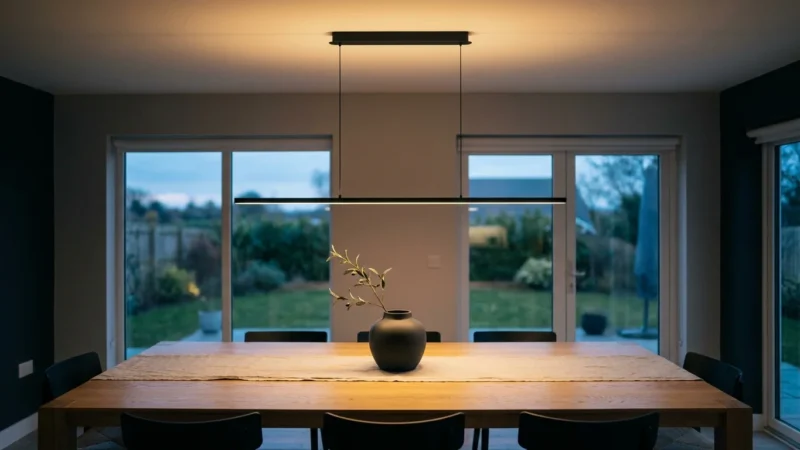
For budget-friendly updates under 500 dollars, swap yellow incandescent lightbulbs for 3000K warm-white LED fixtures. Upgraded lighting improves visual acuity for seniors while slashing common-area electricity usage.
If your budget allows 2,000 dollars, upgrade all interior doors to solid-core construction. Solid wood doors block internal noise transfer between bedrooms and convey unmistakable luxury to prospective tenants.
Maintenance & Long-Term Care
Consistent maintenance protects your physical safety and safeguards your property valuation over decades of retirement. Establishing seasonal routines keeps small maintenance items from escalating into expensive structural repairs.
Seasonal Exterior and HVAC Servicing
Clear all roof gutters and downspouts every spring and autumn to prevent moisture intrusion. Direct downspout extensions at least five feet away from foundation walls to prevent basement dampness and settling.
Replace furnace and heat pump air filters every ninety days in both living units. Clean filters maintain optimal indoor air quality, protect blower motors from overheating, and trim monthly energy costs.
Plumbing Upkeep and Tenant Workflows
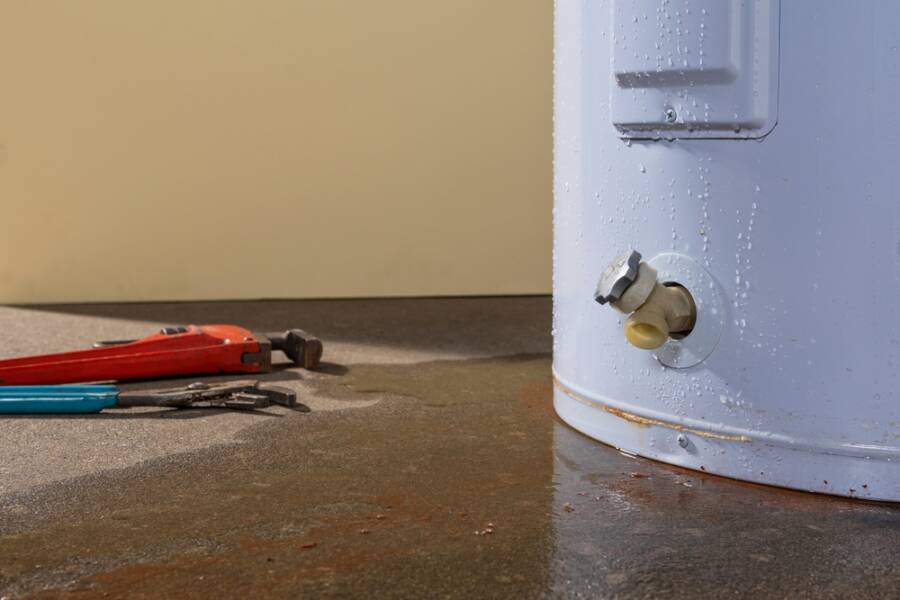
Flush your water heater storage tanks annually to clear corrosive sediment and mineral buildup. Removing mineral deposits extends appliance lifespan, maintains heating speed, and prevents premature tank failure.
Establish clear, written maintenance protocols in your residential lease agreement before signing any tenant. Specify that tenants must report plumbing leaks and running toilets immediately to preserve structural integrity.
FAQ
Can I purchase a duplex with a standard residential mortgage?
Lenders finance duplexes under standard conventional and FHA programs. You can even apply up to 75 percent of projected tenant rent toward loan qualification.
How do I handle tenant noise through shared party walls?
Applying a secondary layer of 5/8-inch Type X drywall with acoustic damping compound resolves sound transmission issues. Establishing quiet hours between 10 PM and 7 AM in your lease terms also guarantees mutual privacy.
Is landlord property management too stressful during retirement?
Careful tenant screening based on credit scores and rental histories eliminates most routine landlord friction. If self-management ever feels burdensome, local property managers handle daily operations for roughly eight percent of collected rent.
Does a duplex require specialized property insurance?
You need a landlord dwelling policy covering liabilities and lost rental income. Premiums run slightly higher than standard homeowners insurance, but incoming rent easily covers the difference.
Takeaway & Next Steps
Choosing a duplex gives you absolute control over your physical environment while unlocking steady passive income. You gain freedom from excessive home maintenance without surrendering the benefits of whole-property ownership.
This housing strategy strikes the ideal balance between financial independence, generational togetherness, and long-term physical accessibility. Take these three immediate steps to turn this retirement blueprint into reality today:
Action 1: Evaluate Local Duplex Markets: Research local duplex listings and review zoning regulations through your county assessor database to understand neighborhood price points.
Action 2: Conduct an Accessibility Audit: Walk your current residence to identify stair hazards and narrow doorways that duplex living can permanently eliminate.
Action 3: Consult Your Financial Advisor: Model how rental income and tax write-offs from a two-unit dwelling would supplement your existing retirement distributions.
Have you recently upgraded or moved into a two-unit home? Share your renovation photos and personal experiences in the comments below, or subscribe to our newsletter for weekly home improvement guides.