
You can slash your monthly housing overhead by taking control of rising homeowners association costs. Strategic participation and smart community audits allow retirees on fixed incomes to protect their savings without sacrificing property values.
Escalating maintenance contracts and unchecked reserve funds often push monthly dues higher each year. Learning how to navigate HOA budgeting gives you direct leverage over these recurring neighborhood expenses.
These practical financial strategies and hands-on maintenance solutions will lower your neighborhood dues; they stop surprise assessments in their tracks while preserving community beauty.
Project Overview & Why It Matters
Monthly HOA dues represent one of the fastest-growing expenses for fixed-income homeowners. Understanding the mechanics of your community budget allows you to protect your retirement capital.
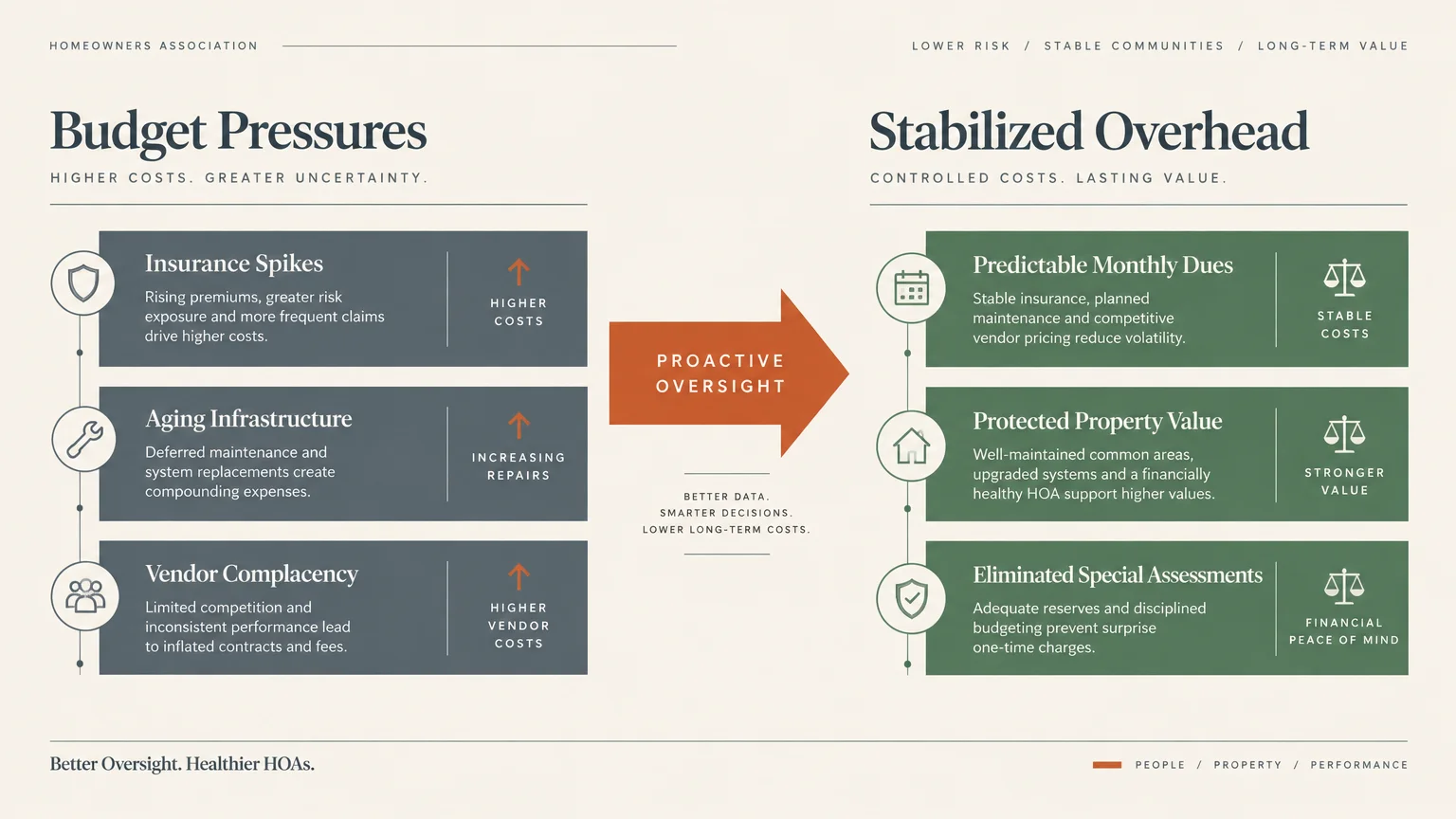
Nationwide, homeowners association costs have climbed dramatically due to rising property insurance rates and aging infrastructure. Retirees feel this pinch acutely because fixed investment yields rarely keep pace with sudden fee hikes.
You do not have to accept automatic annual increases as an inevitable cost of living. Proactive owners can step in and optimize shared operations to save on HOA fees.
Unchecked community budgets often suffer from vendor complacency and administrative bloat. When service contracts go unexamined for years, your neighborhood overpays for routine amenities.
Addressing these budget discrepancies directly helps stabilize monthly dues for everyone. Keeping dues predictable also boosts neighborhood property values by making units attractive to prospective buyers.
Furthermore, active oversight prevents sudden special assessments for deferred infrastructure repairs. Strategic planning ensures the association maintains structural safety standards while avoiding financial strain.
Many master-planned communities carry high recurring costs simply because nobody investigates alternative solutions. By taking an active interest in fiscal governance, you transform passive overhead into disciplined community stewardship.
Financial clarity creates a safer, more unified neighborhood for every resident involved. Smart management protects structural integrity and keeps your hard-earned retirement nest egg intact.
Tools, Materials, and Prep Checklist
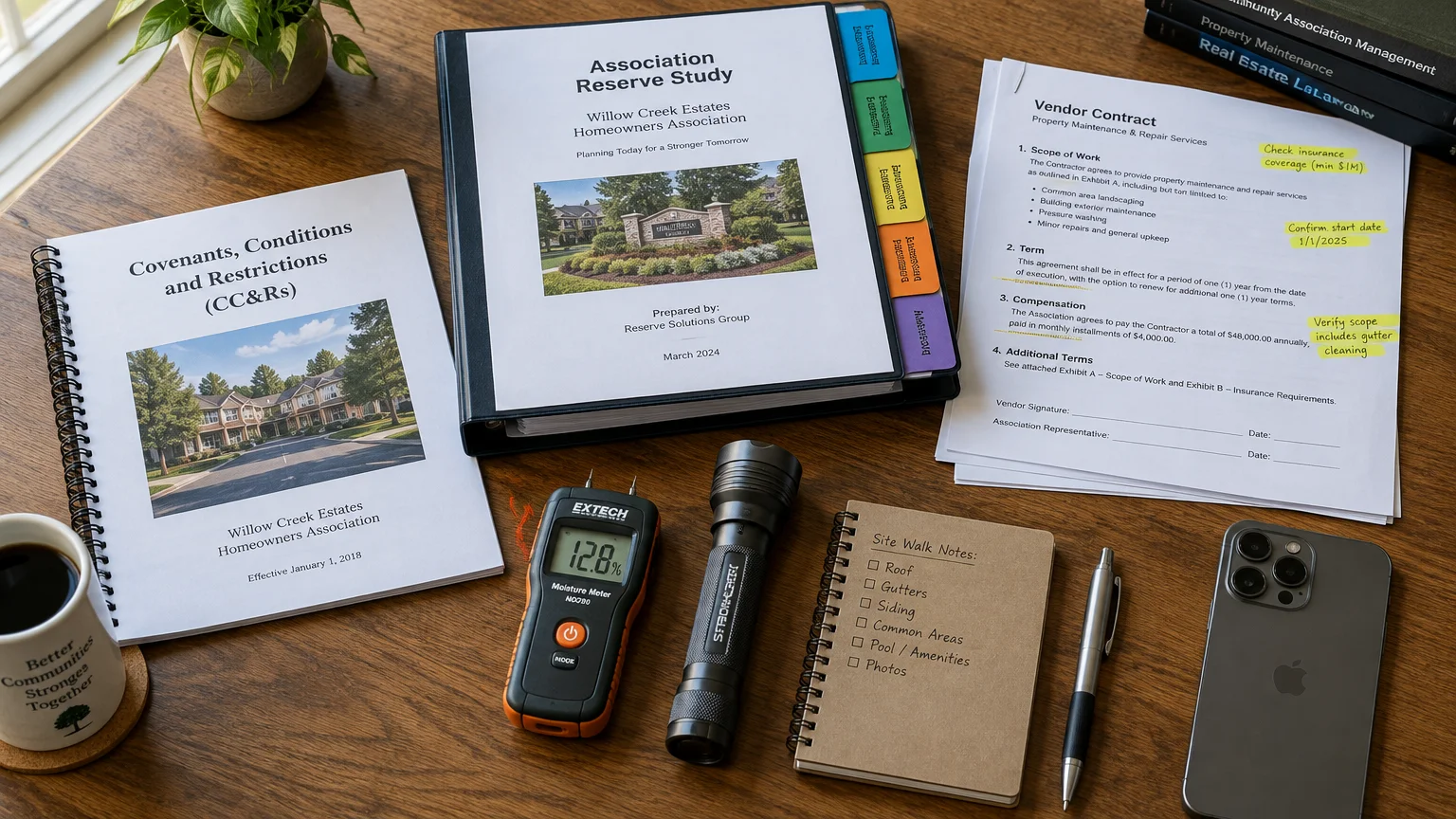
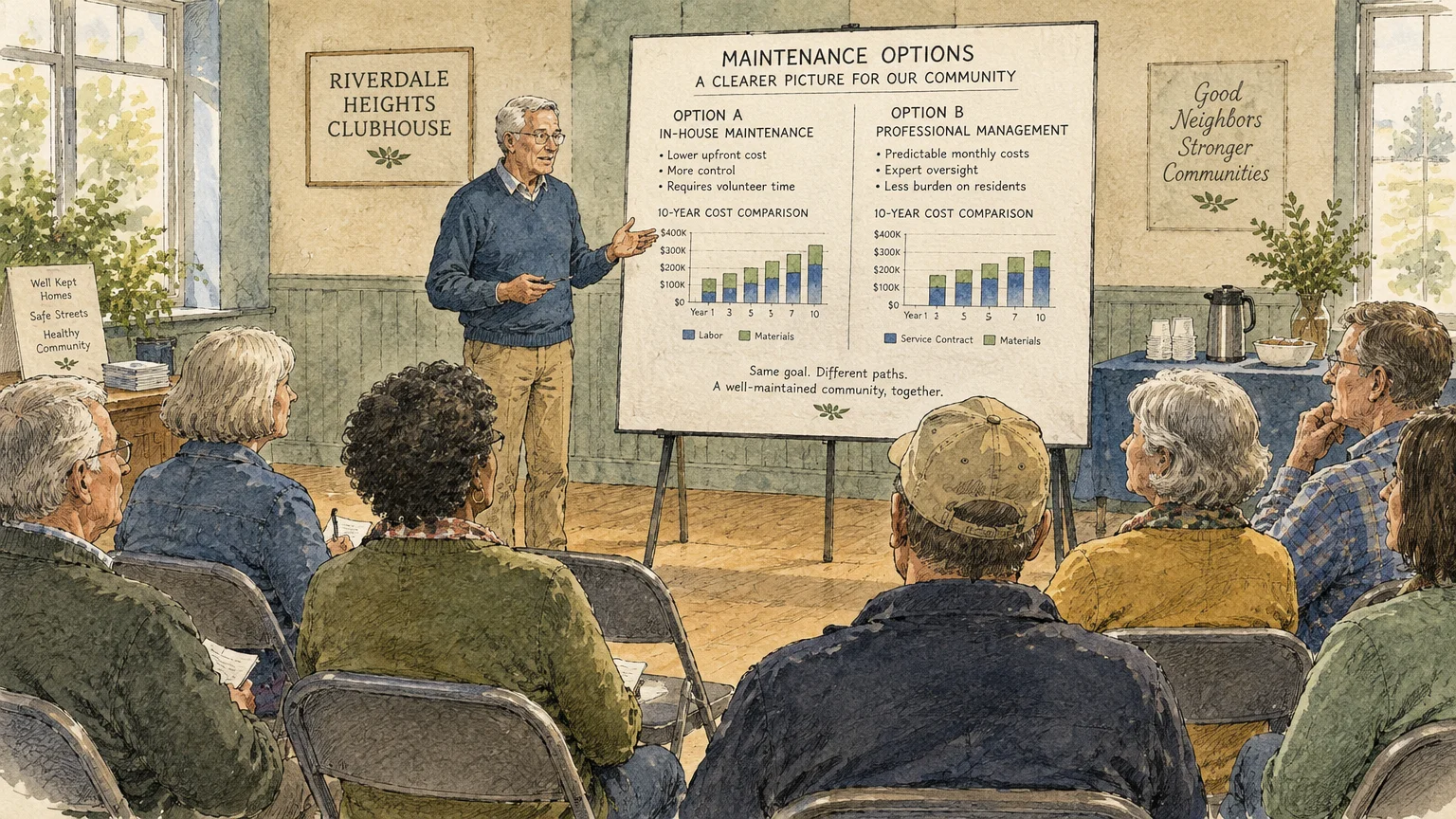
Gathering the proper documentation is your first task before proposing budget adjustments. You need clear financial records and architectural guidelines to present credible arguments to your board.
Governing Documents: Obtain the current Covenants, Conditions, and Restrictions (CC&Rs) alongside the association bylaws. These documents define exact financial obligations, spending caps, and homeowner voting rights.
Reserve Study: Request the association’s latest 30-year reserve analysis. Reviewing this document reveals whether capital savings are adequately funded according to Community Associations Institute standards.
Vendor Contracts: Gather current agreements for landscaping, pool maintenance, trash removal, and property management. Compare these contracted rates against local market benchmarks to identify inflated billing.
Financial Records: Download the last three years of audited association balance sheets and general ledgers. Organizing these line items in a spreadsheet helps highlight irregular spending surges.
Building Codes: Familiarize yourself with the International Code Council guidelines for residential structures. Knowing safety standards helps you evaluate whether proposed capital projects are legally required.
Inspection Equipment: Keep a moisture meter, a commercial flashlight, and a 25-foot tape measure on hand. These simple tools help you inspect shared building envelopes during community walkthroughs.
Thorough preparation separates productive community initiatives from disorganized complaints. Showing up with verifiable data guarantees the board will take your proposals seriously.
Step-by-Step Instructions
1. Dissect the Annual Reserve Study
Begin by analyzing the association’s reserve fund balance and depreciation schedule. A healthy reserve fund prevents sudden special assessments for roofs, elevators, and street paving.
Check if your reserve funding level falls between 70% and 100%. If funding exceeds 100%, the association may be hoarding capital rather than keeping dues balanced.
Ask the board when a qualified reserve specialist last updated the physical property inspection. Outdated studies rely on rough financial guesswork rather than real-world material conditions.
Look closely at component lifespans listed in the report. Extending a roof replacement timeline by three years through preventative coating saves tens of thousands in immediate reserves.
2. Join the Board or Key Committees
Running for an open seat on your board gives you direct voting power over expenditures. Board members draft budgets, choose vendors, and negotiate renewal contracts.
If a board seat is unavailable, join the finance or architectural review committee. These advisory panels shape major spending recommendations before the board casts official votes.
Retirees bring decades of career management and practical trade experience to association governance. Your personal expertise can quickly identify wasteful spending habits and administrative inefficiencies.
Attending regular board meetings also gives you access to the floor during open homeowner forums. Consistent attendance ensures board members remain accountable to the community they serve.
3. Re-Bid Longstanding Vendor Contracts
Associations frequently auto-renew service contracts for years without testing the open market. This complacency leads to inflated fees for landscaping, janitorial, and management services.
Propose issuing competitive requests for proposals (RFPs) for every vendor contract older than three years. Soliciting three blind bids typically cuts ongoing service expenses by 10% to 20%.
Always verify vendor insurance, workers’ compensation, and trade licenses before signing agreements. Cutting homeowners association costs must never compromise contractor safety or workmanship quality.
Negotiate performance-based penalty clauses for missed service dates in new vendor agreements. Holding contractors accountable for deliverables ensures your neighborhood receives the full value of its contracts.
4. Modernize Common Area Landscaping
Thirsty turf lawns demand thousands of dollars annually in commercial watering and mowing services. You can reduce HOA fees by converting non-essential grassy zones into drought-tolerant xeriscaping.
Replace high-maintenance annual flowers with perennial native shrubs and organic wood mulch. Native plant choices eliminate synthetic fertilizer costs and cut weekly labor requirements significantly.
Consult resources from the EPA WaterSense program to identify water-efficient irrigation controllers. Smart weather-based timers stop wasteful sprinkler cycles during rainy periods.
Many local water utility authorities offer cash rebates for removing commercial turf grass. Applying these municipal rebates offsets initial installation costs and delivers immediate operational savings.
5. Unbundle Redundant Community Services
Many older associations force all residents into expensive bulk packages for cable television and landlines. Today, most homeowners stream entertainment and rely entirely on mobile devices.
Survey the community to measure true resident usage of shared amenities and bundled packages. Presenting survey data helps the board cancel outdated services that inflate HOA fees retirees pay.
Negotiate bulk agreements down to basic high-speed internet or an a la carte structure. Allowing homeowners to choose their own television providers immediately lowers mandatory neighborhood dues.
Evaluate underutilized common facilities such as saunas or outdated business centers. Repurposing or scaling back maintenance on unused amenities stops unnecessary utility drain.
6. Organize Resident Volunteer Workdays
Routine cosmetic tasks do not always require expensive commercial contractor billing. Organizing monthly volunteer sessions allows capable residents to handle minor upkeep safely.
Focus volunteer efforts on low-risk tasks like repainting community benches, planting spring bulbs, and pressure-washing walkways. These community projects build social bonds while saving substantial money.
Never allow volunteers to handle hazardous tasks like high ladder work, electrical repairs, or tree trimming. Leave complex structural work to licensed, insured tradespeople to avoid association liability.
Verify association general liability policies before scheduling any community volunteer event. Ensuring your policy covers volunteer activities protects both the participants and the neighborhood treasury.
7. Coordinate Master Insurance Deductibles
Commercial property insurance premiums have surged across community associations nationwide. Reviewing the master policy deductible allows your board to balance premium savings with risk tolerance.
Raising the community master deductible can significantly lower the association’s annual premium overhead. The board must then notify owners so they can adjust their individual HO-6 insurance policies.
Adding loss assessment coverage to your personal homeowner policy protects you from unexpected deductible pass-throughs. This affordable insurance rider delivers vital security on a fixed retirement budget.
Work with an independent commercial insurance broker who specializes in common-interest developments. Specialist brokers shop multiple carriers to uncover competitive rates without sacrificing essential structural coverage.

Style & Finishing Touches
Cost-effective neighborhood upgrades do not require sacrificing community visual appeal. Thoughtful design choices preserve luxury aesthetics while lowering long-term upkeep expenses.
Upgrade clubhouse and exterior lighting fixtures to commercial-grade warm LED fixtures. LEDs lower electrical bills immediately and last up to 50,000 hours without replacement labor.
Select fixtures that comply with International Dark-Sky Association standards to minimize light pollution. Shielded fixtures direct illumination downward onto walkways, improving pedestrian safety while using lower-wattage bulbs.
Establish a unified architectural paint palette featuring durable exterior acrylic coatings. Quality UV-resistant paints protect siding from weathering and stretch repainting intervals to a full decade.
Install composite decking on shared gazebos and pool decks instead of pressure-treated lumber. Composite materials eliminate annual sanding, staining, and splinter repairs entirely.
Cohesive styling choices enhance neighborhood character while protecting every homeowner’s equity. Smart visual upgrades prove that fiscal discipline can walk hand-in-hand with stunning architectural design.
Maintenance & Long-Term Care
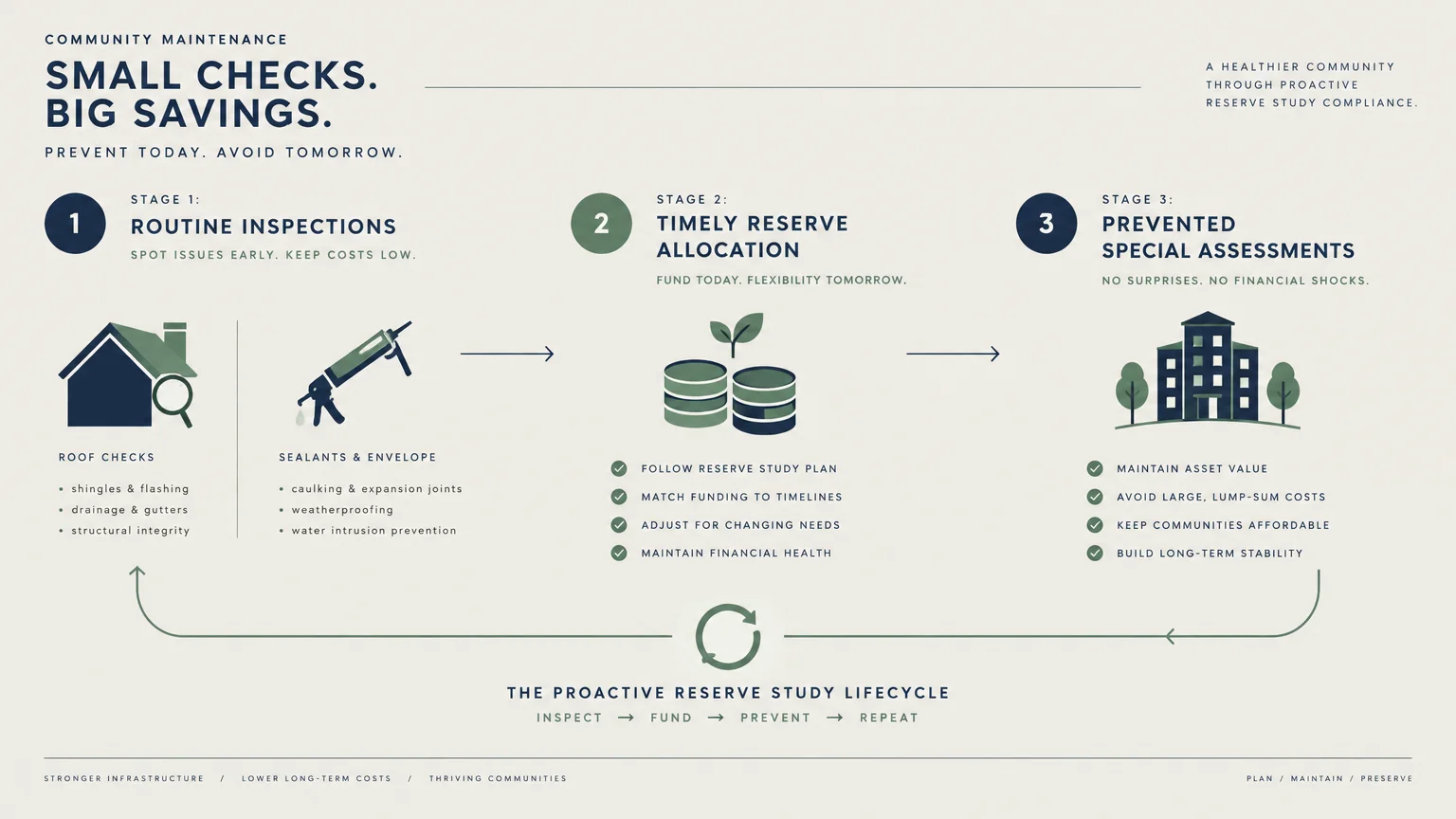
Preventative maintenance represents the single best defense against aggressive HOA budgeting increases. Minor repairs completed early eliminate the need for catastrophic emergency assessments later.
Establish a seasonal inspection checklist for building envelopes, retaining walls, and common roofs. Catching small roof leaks or mortar cracks early prevents extensive structural decay inside wall cavities.
Clear common stormwater drains and gutters before every winter storm season. Ensuring water flows cleanly away from foundations prevents expensive structural settlement repairs.
Seal cracks in common asphalt parking areas and walking paths every two years. Applying commercial sealcoat stops moisture penetration and extends asphalt lifespan by over a decade.
Ensure the property management firm maintains a detailed digital maintenance log for every shared asset. Clear service records help technicians diagnose problems quickly without redundant diagnostic fees.
Regular preventative care preserves community assets and keeps reserve withdrawals predictable. Proactive maintenance ensures your community remains structurally sound and financially resilient for decades.
FAQ
Can an HOA legally raise dues without homeowner approval?
Yes, most state statutes and association bylaws empower elected boards to increase dues up to a specific annual limit. Increases beyond that statutory cap typically require a formal vote from the membership.
Always consult your state’s common-interest ownership acts to verify specific percentage caps for your area.
What is the best way to contest an unfair special assessment?
Review your association bylaws regarding emergency spending powers and special assessment voting procedures. If the board failed to follow statutory protocols, you can organize a petition to challenge the vote.
Request an open meeting with the board to present alternative financing options, such as low-interest community bank loans.
How much money should a healthy HOA have in its reserve fund?
A financially sound association maintains a reserve funding level of 70% or higher. Anything below 50% indicates significant underfunding and signals a high risk of incoming special assessments.
Reserve funding levels above 100% may mean the community is over-collecting dues from current owners.
Will cutting HOA dues harm neighborhood property resale values?
Cutting dues prudently by trimming administrative waste enhances property marketability without hurting home values. Prospective buyers look favorably on well-managed communities with reasonable, stable dues.
Neglecting vital physical maintenance just to lower fees, however, will quickly depress buyer demand and property appraisals.
Can retirees receive fee discounts based on age or income?
Most association governing documents require all owners to pay equal dues based on assigned ownership shares. While direct age discounts within HOAs are rare, some municipal programs offer property tax credits.
You can also inquire whether your state offers senior utility rebates to help offset monthly housing expenses.
Takeaway & Next Steps
Taking control of your neighborhood association fees protects your retirement assets and revitalizes your community. Proactive financial engagement yields lasting dividends for your personal balance sheet.
First, request and review the latest annual operating budget and reserve analysis from your board. Identifying discrepancies gives you actionable data to present at the next meeting.
Second, join the finance or architectural committee to advocate for sensible maintenance solutions. Your professional experience can steer your neighborhood toward cost-effective capital improvements.
Third, organize neighbors to review vendor contracts and propose sustainable landscaping transitions. Collective action turns community budgeting into a collaborative success story.
We want to hear about your community improvement victories. Share your project photos with our editorial team or subscribe today for weekly renovation ideas and money-saving homeowner tips.