You can double the visual footprint of undersized windows without knocking down structural exterior framing. Smart exterior home upgrades create optical illusions that expand glass dimensions while boosting curb appeal immediately.
Strategic millwork, bold paint placement, and dimensional hardware fool the eye into reading small openings as grand architectural focal points. These targeted improvements cost a fraction of full window replacements.
Whether you own a modest ranch or a classic colonial, exterior accents deliver transformative scale and character. Here is how you can make windows look bigger using nine proven design features.
Project Overview & Why It Matters
Standard builder-grade windows often look disproportionately small on large exterior walls. Adding dimensional elements resolves this visual imbalance and brings balance to your home facade.
Expanding rough wall openings requires cutting studs, modifying load-bearing headers, and pulling costly municipal building permits. You can bypass that expensive structural surgery by applying exterior window trim ideas instead.
Data from the National Association of Home Builders shows exterior renovations consistently yield some of the highest returns on investment for homeowners. Curb appeal directly influences perceived property value.
These exterior updates create shadow lines and horizontal spread, tricking the human eye into seeing broader glass. You gain commanding architectural presence while spending a modest sum on materials.
Most of these enhancements take only a weekend to execute with straightforward carpentry techniques. You will dramatically upgrade your home exterior with minimal disruption to your daily routine.
Tools, Materials, and Prep Checklist
Proper planning ensures your installation runs smoothly and safely from start to finish. Gather your tools and supplies before beginning any exterior modifications.
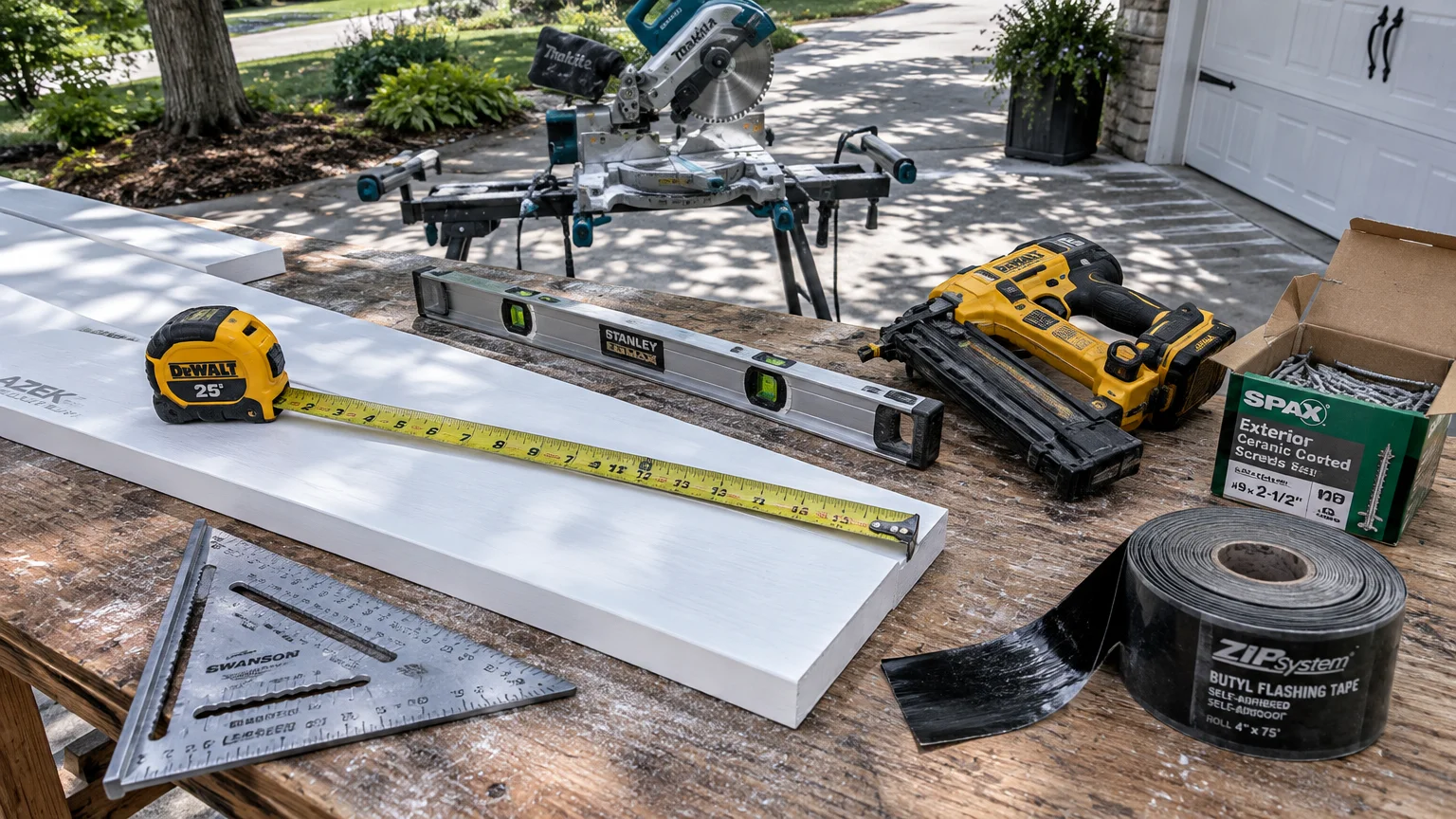
For cutting and measuring, you will need a 10-inch compound miter saw, a 25-foot tape measure, and a 4-foot aluminum level. A speed square ensures accurate angles on every trim piece.
Fastening requires an exterior-rated 16-gauge finish nailer or a cordless drill with exterior-grade ceramic-coated screws. You should also keep a sturdy hammer and nail punch close at hand.
Material selections depend on your climate and budget. High-density cellular PVC boards from retailers like The Home Depot resist moisture rot, insect infestation, and seasonal warping.
If you prefer traditional wood, select clear cedar or treated finger-jointed pine. Expect to budget between two hundred and six hundred dollars per window for premium trim and hardware.
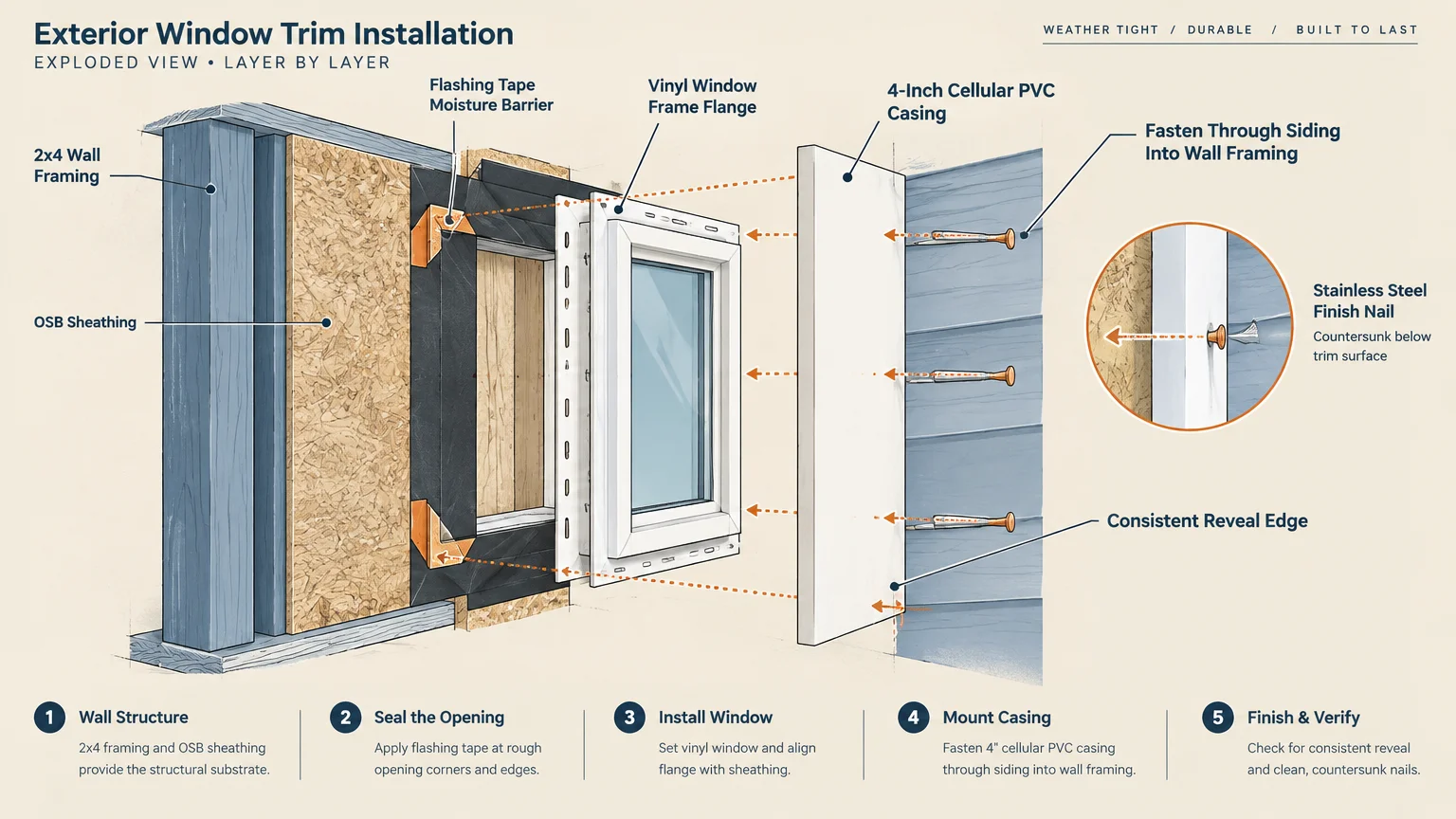
Always inspect the existing siding and substrate for dry rot or moisture intrusion before mounting new elements. Repair soft sheathing and apply flashing tape to protect your wall cavities.
Safety remains paramount whenever you work above ground level. Set your extension ladder on firm, level ground, and wear ANSI-approved eye protection and work gloves throughout the process.
Step-by-Step Instructions
Execute each exterior enhancement methodically to ensure structural durability and clean visual alignment. These nine features work independently or together to maximize your home architectural balance.
1. Install Wide Exterior Trim and Casings
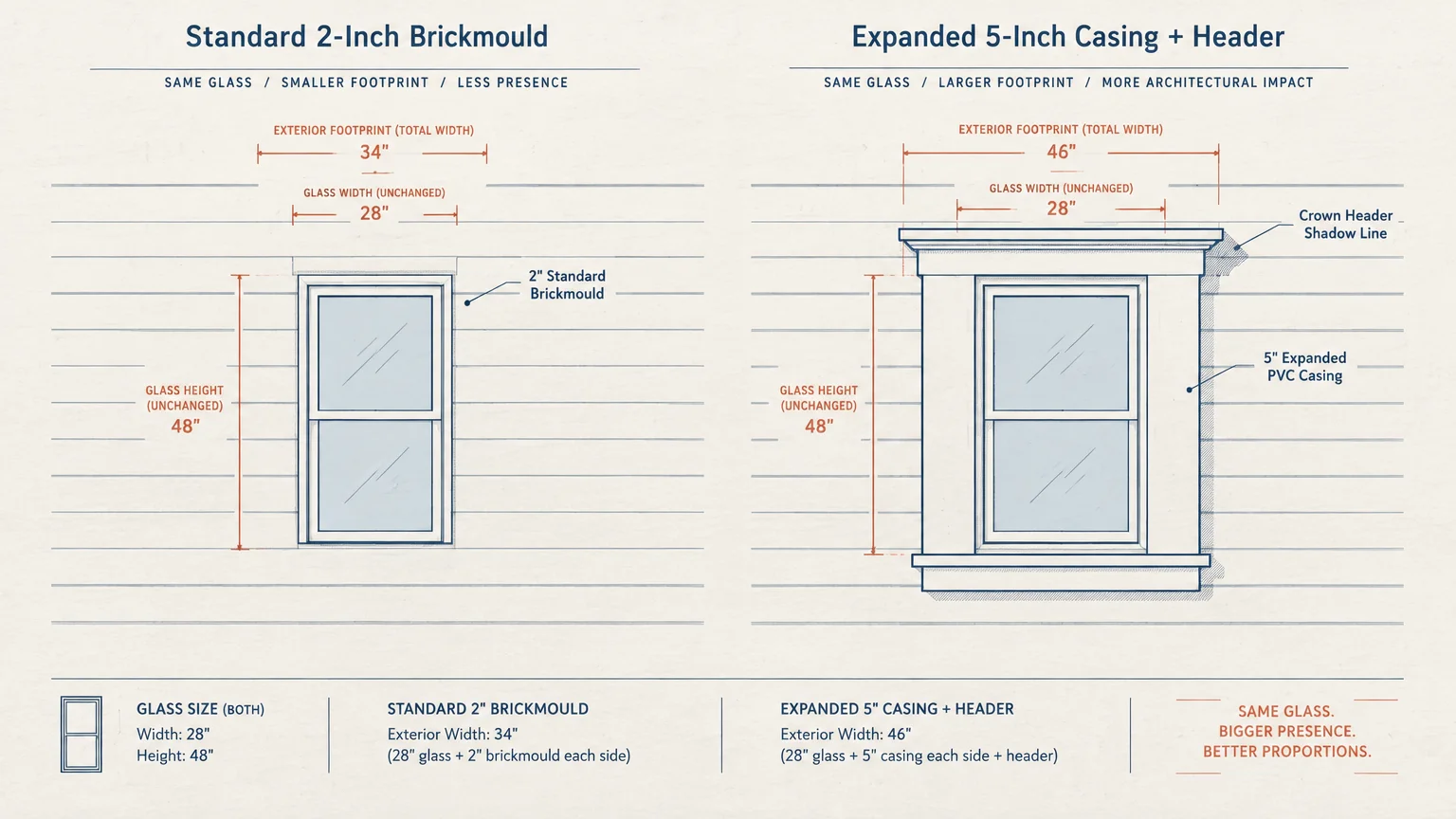
Standard brickmould measures roughly two inches wide, which provides very little visual weight. Upgrading to four-inch or six-inch cellular PVC casing immediately broadens the window profile against your siding.
Measure the perimeter dimensions and cut your side casings to sit flush against the exterior sill. Fasten the boards through the siding directly into the wall framing using stainless steel finish nails.
Keep your reveals consistent across every corner joint for a tailored appearance. Seal all exterior butt joints with paintable polyurethane sealant to keep moisture out of the wall structure.
2. Add Architectural Pediments and Extended Headers
A decorative pediment or an oversized crosshead placed above your window draws the eye upward. This technique makes your windows look taller and commands visual authority on two-story facades.
Select a header that extends one to two inches past the outer edge of the side casings. This deliberate overhang establishes an authoritative classical cornice profile.
Secure the pediment into the structural wall header using three-inch exterior wood screws. Install metal Z-flashing above the crown molding to direct water runoff away from the building envelope.
3. Mount Sized-to-Fit Exterior Shutters
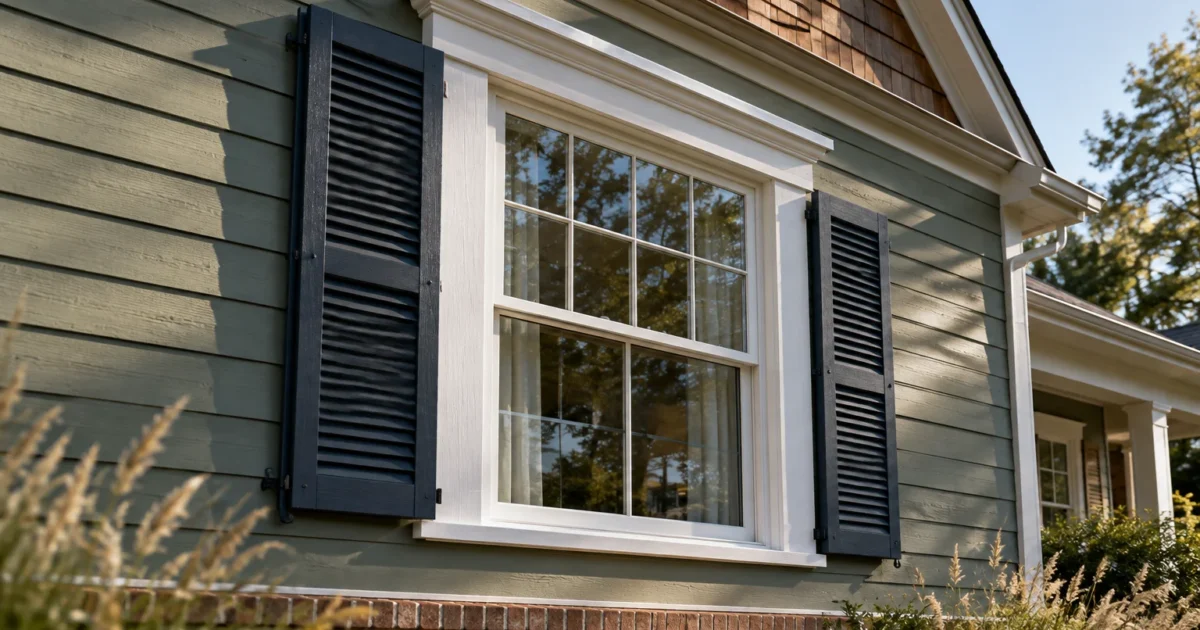
Undersized shutters make windows look tiny and look visibly out of proportion. Window shutters curb appeal hinges on selecting panels that measure exactly half the total width of the window frame.
Even if you plan to keep the shutters fixed, install authentic mounting hinges and shutter dogs. This hardware introduces depth and realistic shadow lines that expand the window visual zone outward.
Position the shutters directly alongside the outer casing rather than overlapping the glass. This simple placement makes your brain perceive the entire combined shutter-and-glass assembly as one giant opening.
4. Build Deep Sills with Extended Sill Horns
Most modern builder windows omit a traditional projecting sill, leaving the bottom edge visually flat. Adding a substantial two-inch-thick sill creates a grounding base that widens the perceived bottom boundary.
Cut the new sill so that the ends—known as sill horns—extend horizontally past the side casings by two inches. This horizontal wing detail anchors the window and stretches its perceived width.
Slope the top surface of the sill slightly downward at a five-degree angle to shed rain. Fasten a matching apron board directly beneath the sill to complete the substantial bottom profile.
5. Hang Overhung Low-Profile Window Boxes
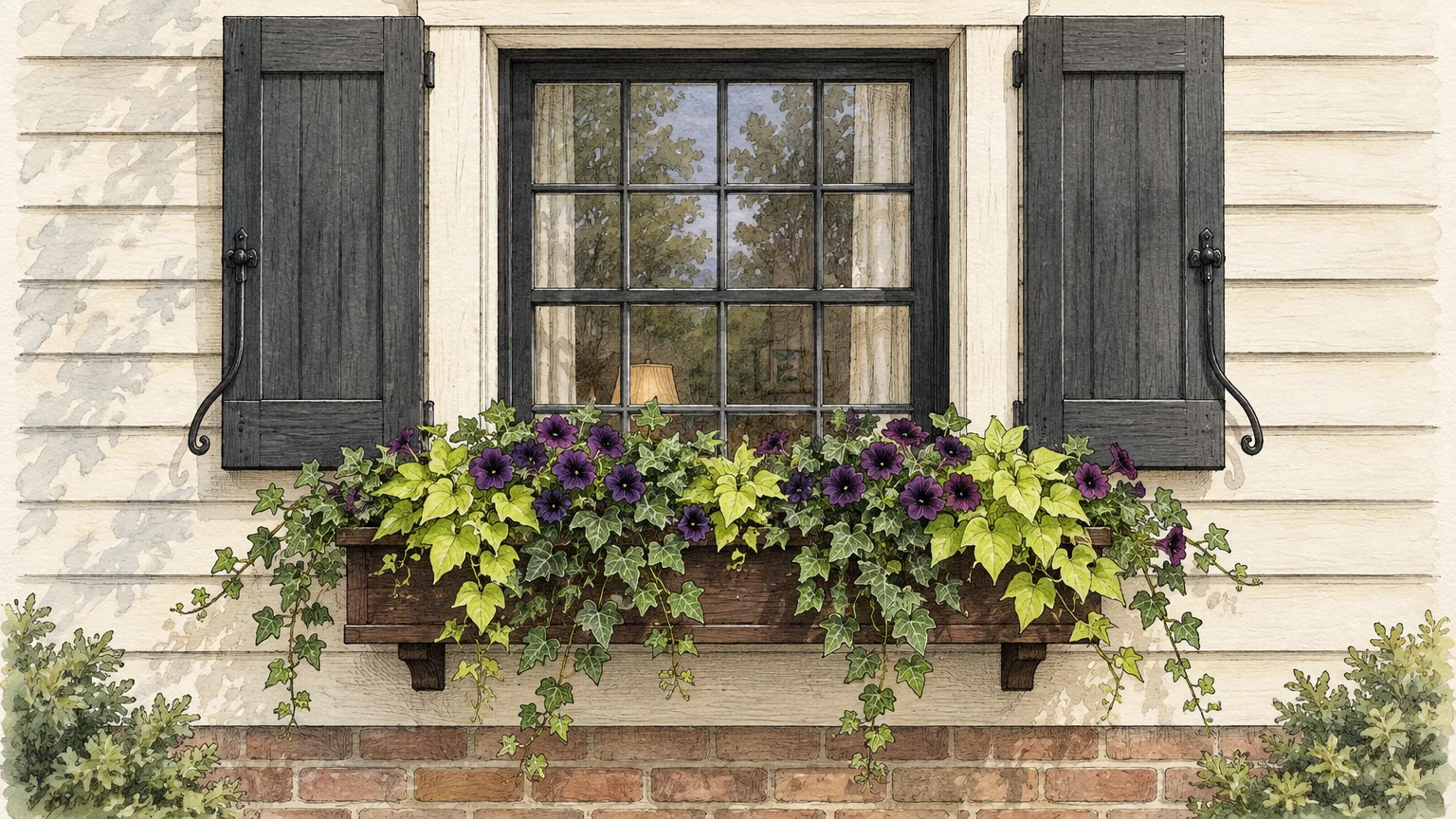
Lush window boxes add immediate organic color and horizontal mass to your home exterior. They trick the eye into grouping the plantings and glass into a single, cohesive focal feature.
Build or purchase boxes that measure four to six inches wider than the window casing on each side. The overhang carries the eye beyond the frame edge, creating an expansive illusion.
Mount the planter box securely into wall studs using heavy-duty galvanized lag bolts. Always drill drainage holes in the bottom and line the interior with a removable liner to prevent rot.
6. Install Metal or Fabric Awnings
A structured canvas awning or standing-seam metal canopy expands the window footprint outward from the wall. This projection adds genuine depth, cast shadows, and architectural volume to flat facades.
Select an awning width that matches or slightly exceeds the outer edges of your window trim. Keep the pitch shallow enough to preserve sightlines and optimize natural sunlight entering your living spaces.
Fasten the supporting brackets directly into structural wall framing using exterior lag screws. Inspect your installation according to the International Code Council guidelines for exterior attachments.
7. Apply High-Contrast Trim and Sash Paint
Monochromatic paint schemes cause windows to blend into the surrounding siding and vanish. Applying deliberate, high-contrast exterior paint breaks up flat walls and highlights window dimensions dramatically.
Paint your window sashes in a deep hue like charcoal or dark bronze, and coat the surrounding trim in crisp white. This bold juxtaposition pushes the frame outward while pulling the glass forward.
High-grade exterior acrylic latex paint from Sherwin-Williams withstands UV degradation and preserves sharp margins for years. Always apply two thin, even coats over a dedicated exterior bonding primer.
8. Simplify or Remove Exterior Grille Patterns
Dense, busy grille grids visually segment your glass into tiny boxes, making the total window opening appear cramped. Replacing complicated grids with clean glass creates an expansive, uninterrupted surface.
If your window units feature removable exterior snap-in grilles, unclip them carefully during your next cleaning session. You will instantly gain modern, open sightlines that make the entire opening feel airy.
For traditional homes requiring grilles, choose a two-over-two or six-over-one pattern instead of a twelve-light grid. This subtle shift preserves historical charm while dramatically maximizing visible glass area.
9. Install Exterior Accent Uplighting and Downlighting
Architectural lighting ensures your windows retain their expansive presence long after sunset. Well-placed exterior luminaires cast sweeping light cones across your trim, exaggerating the window vertical and horizontal scale.
Mount low-voltage LED downlights in soffits directly above window banks, or position directional uplights in nearby landscaping beds. Aim the light beams across the trim reveals to accentuate shadow lines.
Keep your color temperature between 2700K and 3000K for a warm, welcoming illumination. Use an automated smart timer to regulate your lighting schedule and conserve electrical energy efficiently.
Style & Finishing Touches
Tailor your exterior millwork and accent selections to match your home overarching architectural pedigree. Farmhouse designs thrive with clean square-edged trim, flat frieze boards, and dark bronze accents.
Craftsman homes benefit from wide tapered casings, deep sill horns, and rich earth tones like sage green or warm chestnut. These sturdy organic profiles ground the windows naturally against stone or shake.
For modern or mid-century ranch homes, eliminate decorative crowns and opt for slim, projecting aluminum picture-frame casings. High-contrast matte black paint delivers crisp perimeter lines without ornamental clutter.
Coordinate your window box hardware and shutter tie-backs with exterior door handles and porch light fixtures. Repeating metal finishes across multiple exterior elements creates intentional, polished design cohesion.
Integrate trailing greenery like creeping fig, English ivy, or sweet potato vine into your window planters. Cascading foliage softens hard siding edges and extends the visual boundary downward.
Maintenance & Long-Term Care
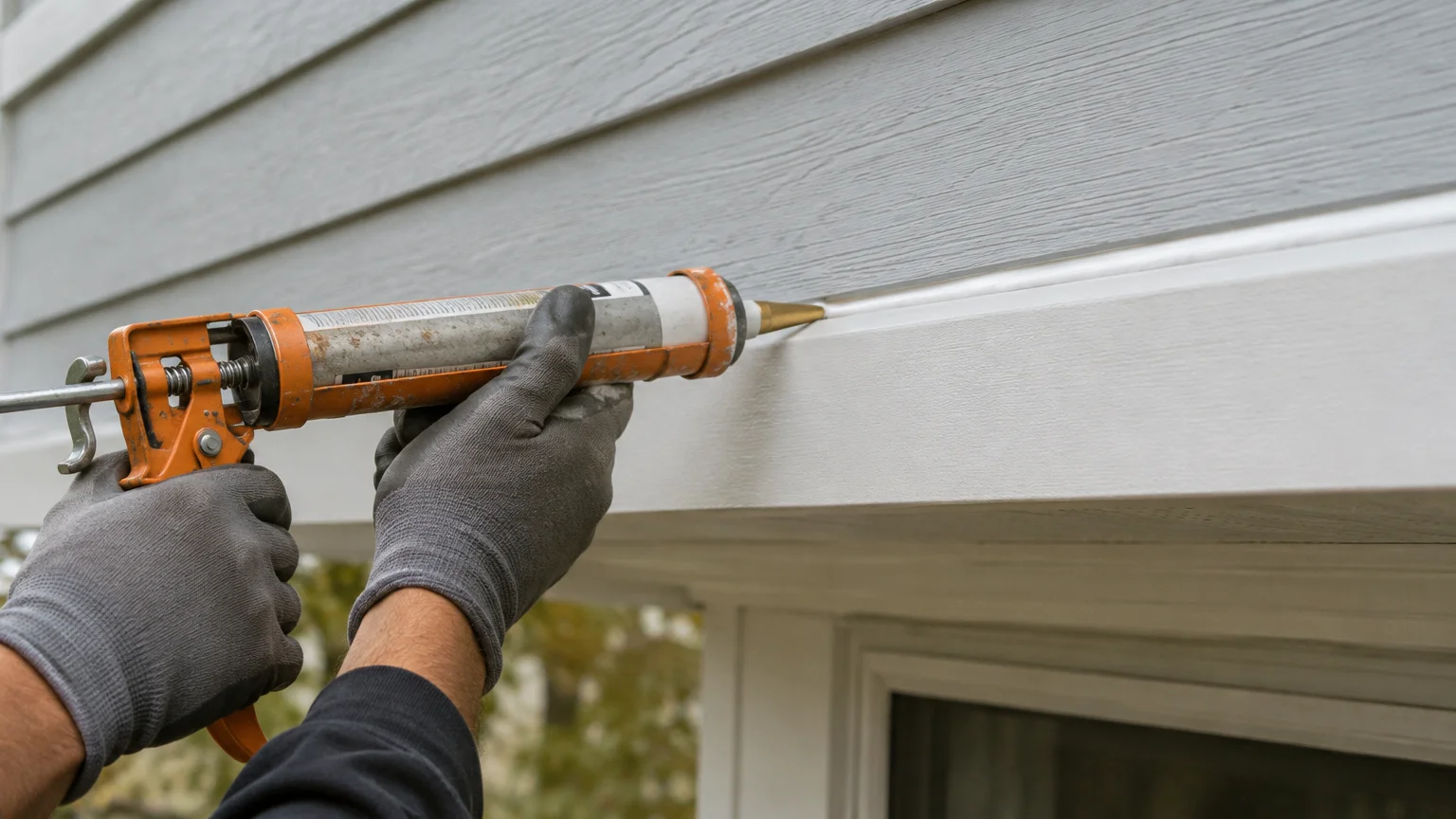
Routine maintenance keeps your exterior upgrades looking pristine and protects your home against weather damage. Inspect all exterior caulk joints every spring for cracking, peeling, or gaps.
Slice away deteriorated sealant using an oscillating multi-tool or razor scraper, and reapply an elastomeric exterior caulking. Maintaining a watertight seal prevents moisture from infiltrating the wall cavities behind your trim.
Wash your window boxes, trim surfaces, and shutters twice each year with mild soap and water. Avoid using high-pressure power washers at close range, which can scour paint and damage caulking.
Repaint painted wood features every five to seven years to prevent moisture absorption and grain cracking. Composite PVC materials require much less maintenance, needing only occasional surface cleaning to remove dust.
Clear out decaying organic matter and standing water from planter boxes before winter freezes arrive. Expanding frozen soil can split wooden planters and pull mounting anchors loose from your siding.
FAQ
Can wide exterior trim make my window glass look smaller?
No, wide exterior trim expands the total architectural footprint, making the entire window assembly register as much larger. The human eye interprets the trim and glass together as a single focal unit.
Do I need a building permit to add exterior window trim?
Surface-level additions like trim, shutters, and window boxes do not require municipal building permits. Permits are generally only necessary if you cut structural studs to widen the physical wall opening.
What is the most durable material for exterior window trim?
Cellular PVC and fiber cement offer the highest resistance to rot, insect damage, and moisture swelling. High-density composite materials outlast natural lumber and hold exterior paint finishes significantly longer.
How wide should exterior window shutters be?
Shutters should equal exactly half the width of your window glass opening. Even decorative, fixed shutters must appear wide enough to close completely across the opening to look visually authentic.
Will adding window boxes damage my home exterior siding?
Window boxes will not harm your siding if you install rubber standoffs and drive lag screws directly into studs. Standoffs allow rainwater to drain freely behind the box, preventing trapped moisture rot.
Takeaway & Next Steps
Expanding the visual scale of your windows delivers high-impact curb appeal without the expense of major structural demolition. Thoughtful exterior trim, bold paint, and dimensional accents create dramatic architectural balance.
First, measure your current window casing reveals and evaluate whether four-inch or six-inch replacement trim fits your wall spacing. Calculate the linear footage of material you need for one prominent window.
Second, pick up your lumber or cellular PVC boards and matching exterior-grade fasteners from your local building supply yard. Start your project on a single ground-floor window to master your technique.
Third, apply a fresh coat of high-contrast exterior paint to your sash and casing to finalize the transformation. You will immediately notice how much larger and more commanding your home facade appears.
We want to see your curb appeal transformations! Share your before-and-after project photos in the comments below, or subscribe to our newsletter for weekly practical home improvement tutorials.