
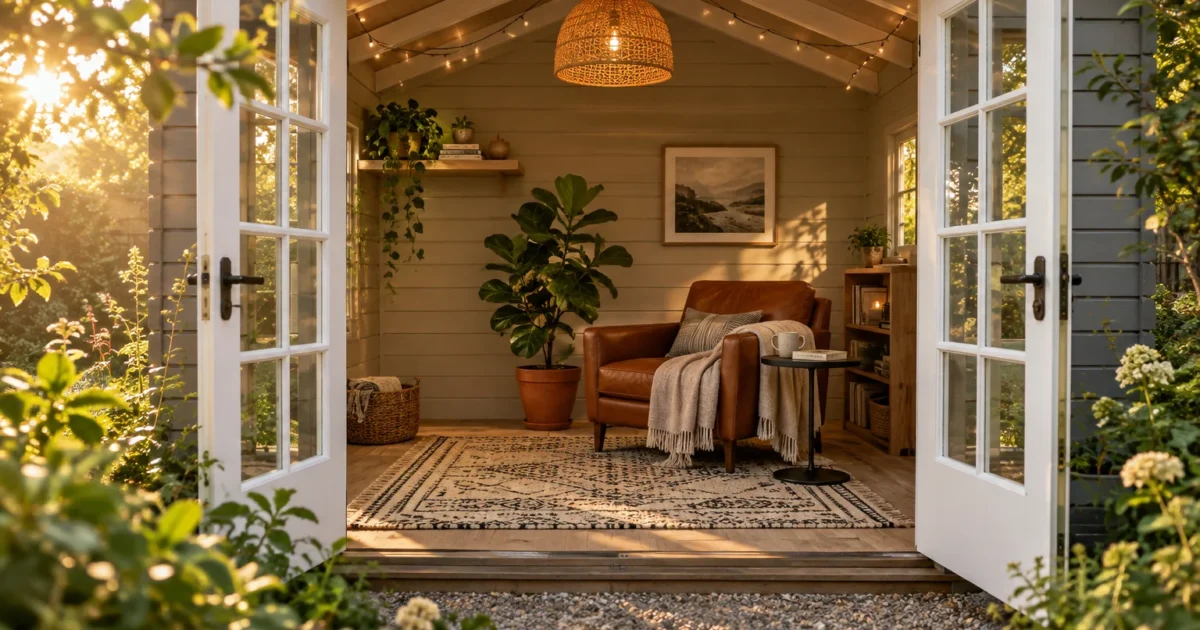
You can transform a dusty storage shed into a personal sanctuary this weekend without spending thousands on structural renovations. Thoughtfully chosen furnishings and smart design accents quickly turn utilitarian wood studs into a peaceful haven.
Whether you want a quiet home office, an art studio, or a comfortable reading nook, intentional styling bridges the gap between raw outbuilding and luxury living space.
Discover the essential decor items that maximize every square foot, elevate comfort, and turn basic garden outbuildings into stunning backyard getaways.
Project Overview & Why It Matters
Converting an outbuilding into functional living space delivers high-value square footage without the disruption of a major home addition. Most backyard shed retreat ideas focus on aesthetic warmth and ergonomic function.
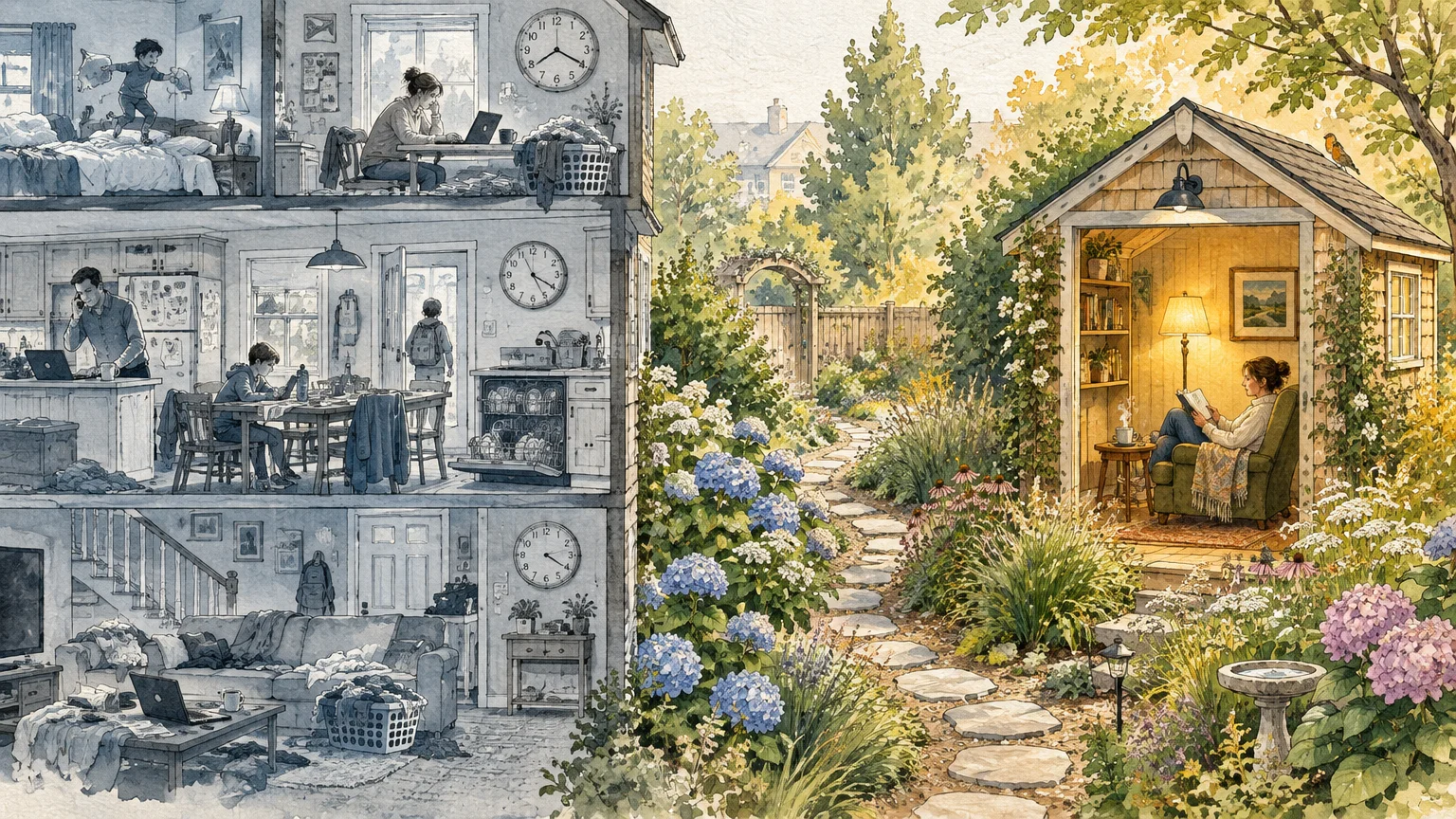
Dedicated detached spaces provide psychological separation between demanding domestic chores and genuine relaxation. A backyard retreat gives you an isolated environment to read, paint, or practice yoga uninterrupted.
Recent real estate surveys indicate that functional outdoor living structures substantially boost overall property appeal. Buyers consistently favor finished accessory structures that serve flexible lifestyle purposes.
Modern she shed decor techniques eliminate the drafty, unfinished ambience typical of basic garden storage. By addressing flooring, lighting, and textiles, you establish a climate of comfort.
Before buying furnishings, verify that your shed structure remains sound, weathertight, and pest-free. Installing decor inside a leaky envelope ruins expensive fabrics and invites destructive mildew.
Consult local municipal guidelines through the International Code Council to verify setback rules and accessory structure codes before starting extensive interior modifications.
Tools, Materials, and Prep Checklist
Gather your equipment before purchasing your decorative elements. Having the right installation tools on hand speeds up your project and prevents cosmetic installation errors.
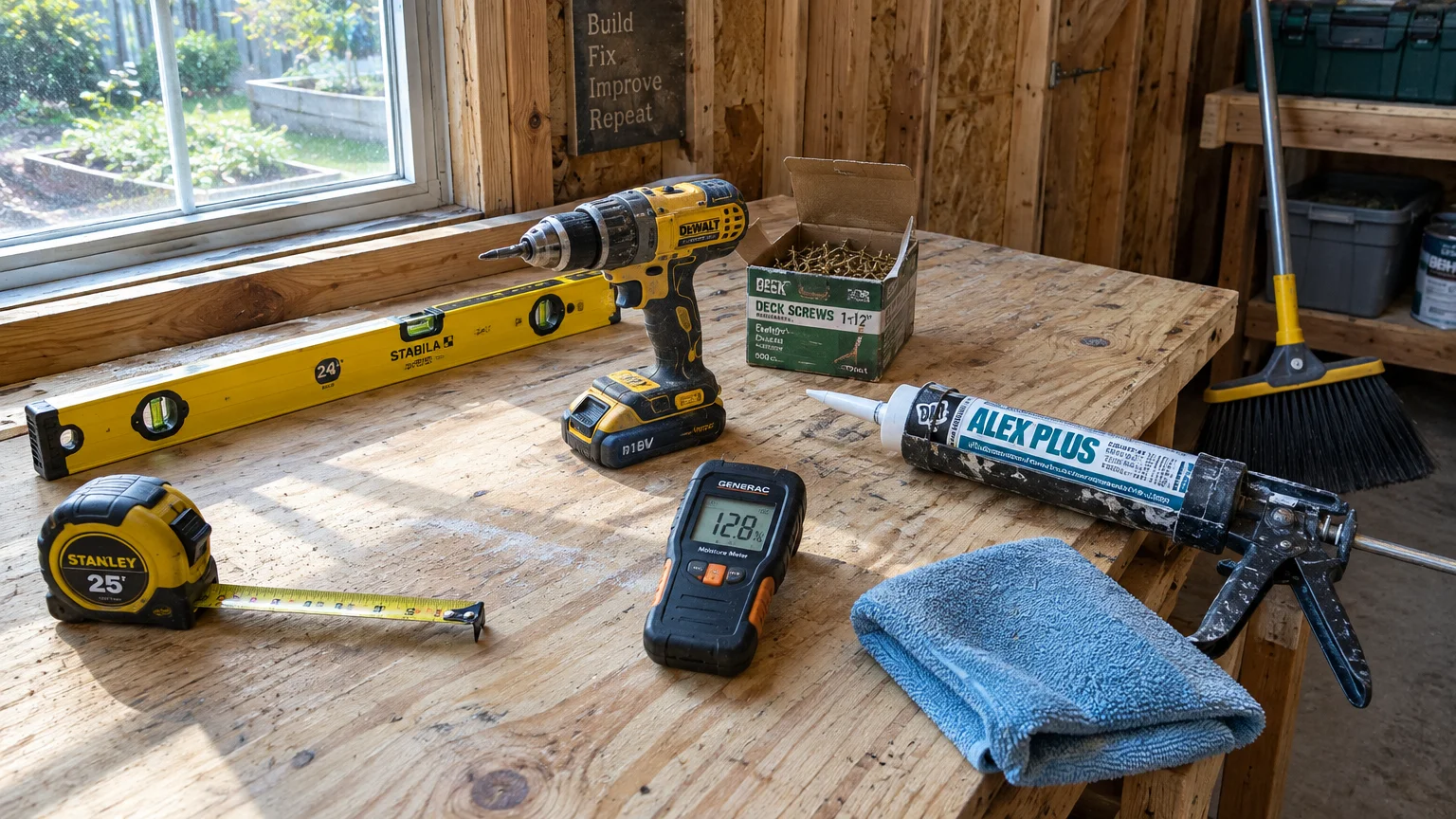
Measuring Tape and Level: A 25-foot locking tape measure and a 24-inch bubble level ensure proper furniture placement and straight wall hangings. Budget approximately $25 for quality hand tools.
Cordless Drill and Fasteners: Use a 12-volt or 18-volt cordless driver equipped with assorted driver bits. Stock 1-1/2-inch wood screws and drywall anchors, which cost around $15 per contractor box.
Digital Pinless Moisture Meter: Test exterior walls and subfloors for hidden water intrusion before mounting textiles or wall art. Reliable digital meters cost between $35 and $50.
Surface Prep Cleaning Supplies: Pick up heavy-duty trisodium phosphate (TSP) cleaner, microfiber towels, and a stiff-bristle shop broom. Thorough cleaning materials generally total under $30.
Core Decor Investment: Budget between $500 and $1,500 for the ten decorative items highlighted in this guide. Sourcing vintage pieces or repurposing home furnishings significantly reduces out-of-pocket costs.
Prep the interior by vacuuming ceiling corners, clearing exposed framing bays, and sealing minor wall gaps with exterior-grade acrylic caulk. Clean surfaces ensure adhesive strips and hardware mount securely.
Step-by-Step Instructions
Phase 1: Ground-Level Foundation and Climate Layers
Item 1: Weather-Resistant Indoor/Outdoor Area Rug. Anchor your floor plan with an oversized flatweave polypropylene rug. Raw shed floors often feature unsealed plywood or stained concrete that feels cold underfoot.
Choose an 8×10-foot or 5×7-foot rug that extends beneath all primary seating legs. High-traffic polypropylene fibers resist moisture absorption, fight mold formation, and clean easily with a vacuum.
Lay down a thick, moisture-resistant felt rug pad beneath the decorative layer. This pad provides underfoot cushion, insulates against ground chill, and prevents the rug from shifting on slick surfaces.
Item 2: Floor-Length Thermal Curtains. Hang insulated linen-look drapery panels over shed windows and single-pane entry doors. Standard shed windows lose ambient heat rapidly during cool evenings.
Mount curtain rods four to six inches above window frames near the roofline to create the illusion of taller walls. Extend rods six inches past window casings so opened drapes do not block daylight.
Select curtains with acrylic thermal backings to block solar heat gain during summer and stop chilly drafts in winter. Neutral cream, oatmeal, or sage tones soften utilitarian framing.
Phase 2: Seating, Storage, and Primary Focal Points
Item 3: Multi-Functional Daybed or Loveseat. Anchor your main wall with a compact loveseat or twin-size wood-frame daybed. Deep seating invites extended afternoon naps, reading sessions, or guest relaxation.
Select durable performance upholstery fabrics such as solution-dyed acrylic or crypton. These textiles resist fading from direct sunlight entering shed windows and withstand accidental drink spills.
Leave at least twenty-four inches of clearance around walkways so you can navigate the interior comfortably. Avoid bulky overstuffed recliners that overwhelm small garden shed interior design footprints.
Item 4: Compact Electric Stove or Fireplace. Introduce an infrared electric stove unit to serve as both an architectural focal point and supplemental heating source. Realistic flame effects deliver instant cabin charm.
Review clearance specifications from the U.S. Consumer Product Safety Commission to maintain safe operational distances from fabrics. Keep heating elements at least three feet from drapery and bedding.
Confirm your electrical supply can handle heater wattage without tripping circuit breakers. High-output heaters require dedicated circuits rated for continuous electrical draw.
Item 5: Freestanding Privacy Screen or Canvas Divider. Conceal utility corners, garden tools, or storage bins using a three-panel folding wood or canvas screen. Visual clutter instantly ruins your retreat atmosphere.
Position the divider diagonally across a back corner to hide folding chairs, mini-fridges, or lawn gear. Woven rattan, carved mango wood, or canvas panels add rich architectural texture.
Phase 3: Vertical Scale, Greenery, and Reflection
Item 6: Oversized Architectural Wall Mirror. Mount a large arched or grid-pane accent mirror opposite your main window. Mirrors visually double your perceived square footage by bouncing natural light into dim corners.
Locate wall studs using a magnetic or electronic stud finder before hanging heavy decorative mirrors. Secure mounting brackets directly into solid dimensional framing using heavy-duty structural wood screws.
Never rely on lightweight drywall anchors in uninsulated sheds with thin wall paneling. Severe seasonal temperature shifts can loosen lightweight anchors over time.
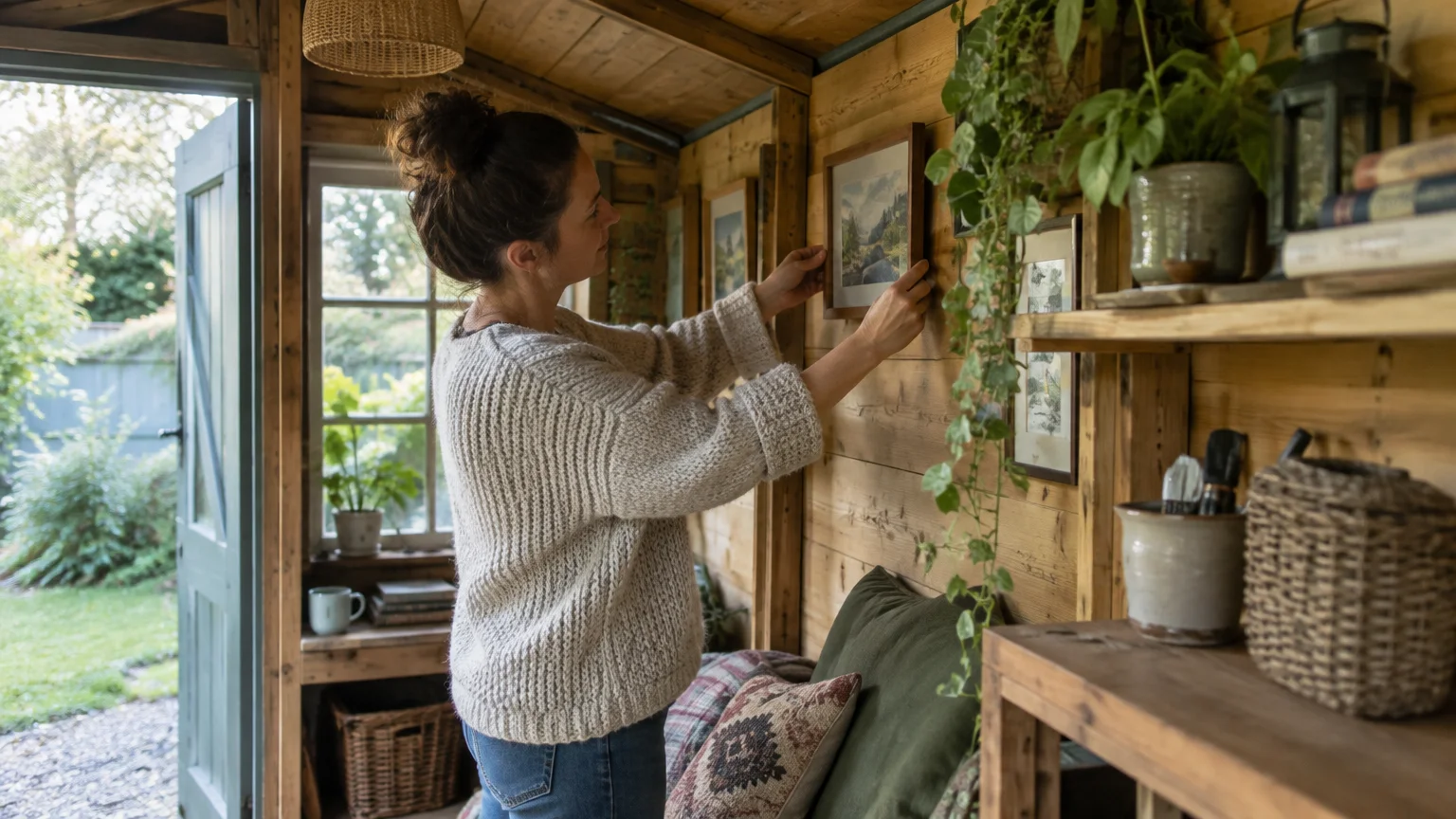
Item 7: Modular Floating Wall Shelves. Install two or three thick natural wood floating shelves above your seating area or desk. Floating shelving utilizes vertical wall real estate without sacrificing valuable floor space.
Mount shelf brackets with three-inch screws driven directly into wall studs. Display curated pottery, vintage hardcovers, and framed prints to showcase your personal design sensibilities.
Limit shelf styling to items with varied heights and textures. Leave ample empty space between objects to prevent visual crowding in compact quarters.
Item 8: Vertical Wall Planters and Trailing Greenery. Bring outdoor vitality inside with wall-mounted ceramic planters and suspended macrame hangers. Lush botanicals bridge the transition between your yard and shed interior.
Choose low-light, drought-tolerant houseplants such as golden pothos, snake plants, or ZZ plants. These resilient varieties thrive inside outbuildings that receive inconsistent direct sun.
Water plants over protective plastic basins to avoid dripping moisture onto subfloors or furniture cushions. Excess water runoff damages structural wood framing beneath decorative rugs.
Phase 4: Illumination, Texture, and Sensory Styling
Item 9: Dimmable Warm-Spectrum Pendant Lighting. Replace harsh overhead fluorescent tubes or bare bulbs with warm, dimmable ambient light fixtures. Soft ambient lighting shapes an inviting, relaxed evening environment.
Install plug-in rattan woven pendant lights or vintage Edison string lights along exposed rafters. Select bulbs with a color temperature rating between 2200K and 2700K for cozy, warm-toned illumination.
Check electrical safety recommendations provided by the National Fire Protection Association regarding outbuilding circuits and cord safety. Always secure extension cables along baseboards using insulated staples.
Item 10: Layered Chunky Knit Blankets and Accent Pillows. Dress your daybed or accent chairs with a combination of textured throw pillows and breathable wool blankets. Layered textiles soften stiff timber lines.
Mix diverse fabric textures, including washed linen, chunky boucle, velvet, and ribbed cotton knits. Varying fabric surfaces generates tactile warmth and visual depth.
Incorporate removable, machine-washable cushion covers to simplify regular seasonal upkeep. Washable slipcovers let you eliminate dust, pollen, and outdoor dirt easily.
Style & Finishing Touches
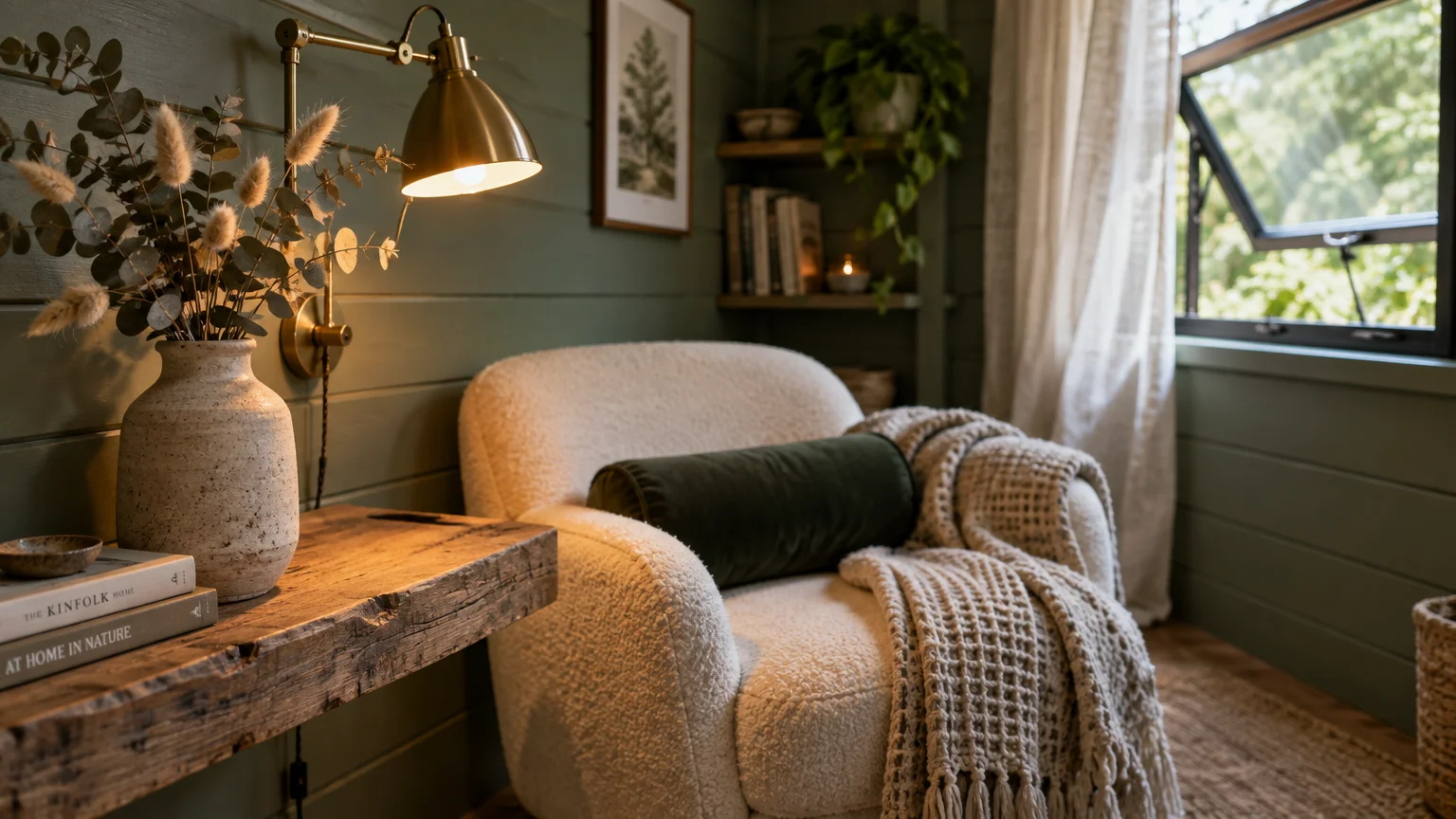
Cohesive color palettes elevate casual shed makeover ideas into magazine-worthy living spaces. Limit your core palette to three coordinated shades: one dominant neutral, one secondary color, and one metallic accent.
For a Modern Farmhouse aesthetic, combine bright alabaster walls with matte black hardware and honey-toned natural oak. This classic combination keeps small interiors feeling airy and expansive.
For a Coastal Garden look, blend muted slate blues, crisp white drapes, and woven sea grass textures. Natural fibers complement surrounding backyard landscape plantings beautifully.
Incorporate acoustic dampening elements if your shed features metal roofing or uninsulated exterior cladding. Heavy canvas wall tapestries, full-length drapes, and dense floor rugs significantly reduce outside rainfall noise.
For budget-conscious homeowners spending under $300, concentrate your funds on the area rug, string lighting, and thrifted daybed cushions. These three elements immediately redefine room comfort.
If you have a $1,500 upgrade budget, invest in custom-fitted thermal curtains, an infrared fireplace stove, and custom floating shelving. Premium materials guarantee years of enduring comfort.
Maintenance & Long-Term Care
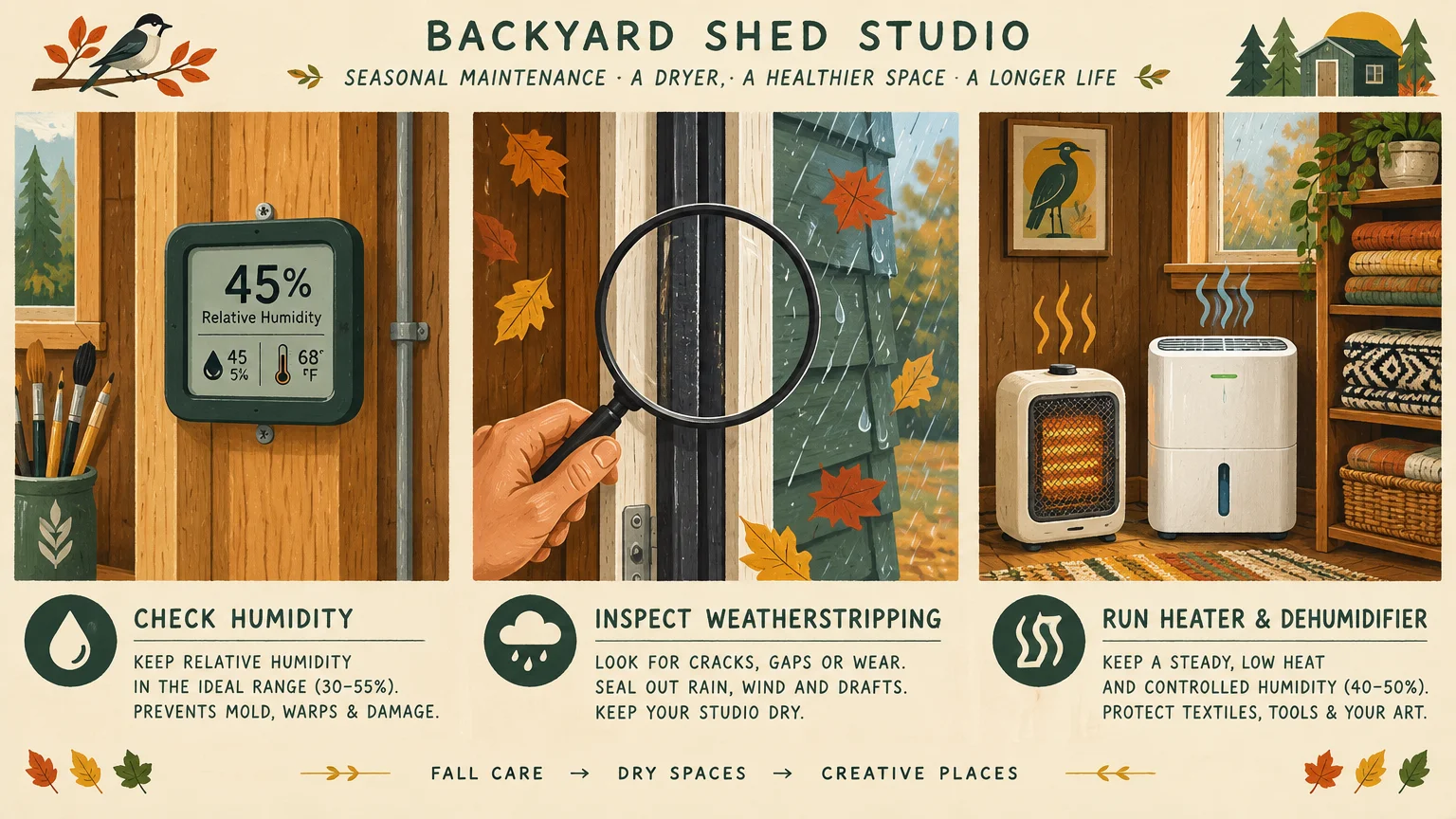
Outbuildings experience broader temperature swings and higher relative humidity than main residential homes. Protecting your decor requires a proactive seasonal maintenance routine.
Mount a small digital hygrometer to monitor interior moisture levels continuously. If relative humidity exceeds 60%, run a compact compressor dehumidifier to prevent mildew on fabrics.
Check appliance energy ratings through Energy Star to maintain reasonable electricity costs while conditioning your retreat space. Efficient dehumidifiers protect wood furnishings economically.
Inspect window weatherstripping and door sweeps every spring and autumn. Replace cracked seals immediately to block outdoor dust, moisture infiltration, and insect entry.
Store delicate throw pillows and high-pile wool blankets in airtight cedar storage bins during prolonged winter freezes. Storing textiles protects natural fibers from nesting garden pests.
Clean your outdoor-grade area rug every six months using a mild detergent solution and garden hose. Allow the rug to dry completely in the sun before reinstalling it inside.
FAQ
Do I need a building permit to furnish and decorate an existing shed?
Permits are generally not required for interior furnishings, cosmetic painting, or portable decor. However, installing permanent electrical subpanels, plumbing, or structural walls usually requires municipal permits.
How can I keep my shed retreat warm in the winter without central HVAC?
Combine insulated thermal curtains, thick area rugs with insulated pads, and an infrared electric space heater. Ensure the heater features tip-over safety switches and automated shut-off timers.
Can I use standard indoor furniture inside a backyard shed?
You can use standard furniture if your shed is fully insulated, air-sealed, and climate-controlled. In unconditioned sheds, select outdoor-rated materials like powder-coated metal, treated teak, and performance fabrics.
How do I stop bugs and spiders from nesting in my she shed decor?
Seal perimeter foundation gaps with expanding foam and install fine-mesh window screens. Spray botanical cedar or peppermint oils along perimeter baseboards to repel pests naturally.
What is the best type of flooring decor over raw plywood subfloors?
Layered indoor/outdoor polypropylene rugs over heavy vapor-barrier felt pads work best. This combination blocks drafts, absorbs footsteps, and resists accidental moisture damage without requiring costly flooring installation.
Takeaway & Next Steps
Transforming your outbuilding with creative backyard hideaway decor creates a luxurious personal haven steps from your backdoor. Thoughtful layout planning and performance-grade materials deliver long-lasting year-round comfort.
Start your transformation today with these three actionable steps:
1. Measure your interior dimensions: Record precise wall lengths, ceiling rafter heights, and window clearances before ordering rugs or furniture pieces.
2. Check moisture levels: Use a digital moisture meter to confirm wall panels and subfloors remain dry and ready for styling.
3. Select your design concept: Choose your cohesive color scheme and source your primary statement anchor rug.
Have you completed an outbuilding renovation or styled a cozy garden retreat? Share your project photos with our community or subscribe to our newsletter for weekly home renovation inspiration.