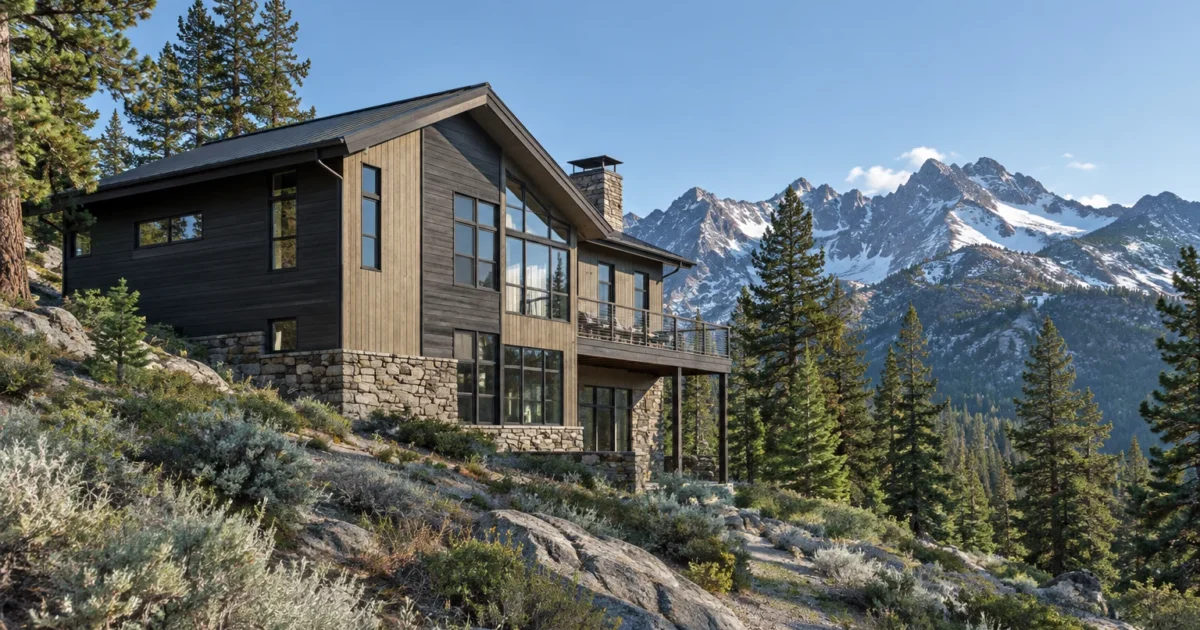
Choosing the right exterior paint colors mountain home designs require elevates your property value while harmonizing with rugged alpine terrain. The right palette protects your siding from punishing high-altitude weather and satisfies strict municipal guidelines.
High elevations bombard mountain cabin colors with intense ultraviolet rays and dramatic freeze-thaw cycles. Smart pigment choices preserve your exterior surfaces and prevent premature fading.
This guide reveals nine durable house colors for mountains, backed by environmental performance data and professional application practices. You will gain actionable steps to transform your retreat with lasting confidence.
Project Overview & Why It Matters
Mountain homes exist in extreme microclimates that punish exterior finishes. Selecting appropriate rustic exterior colors involves balancing visual harmony with specialized technical durability.
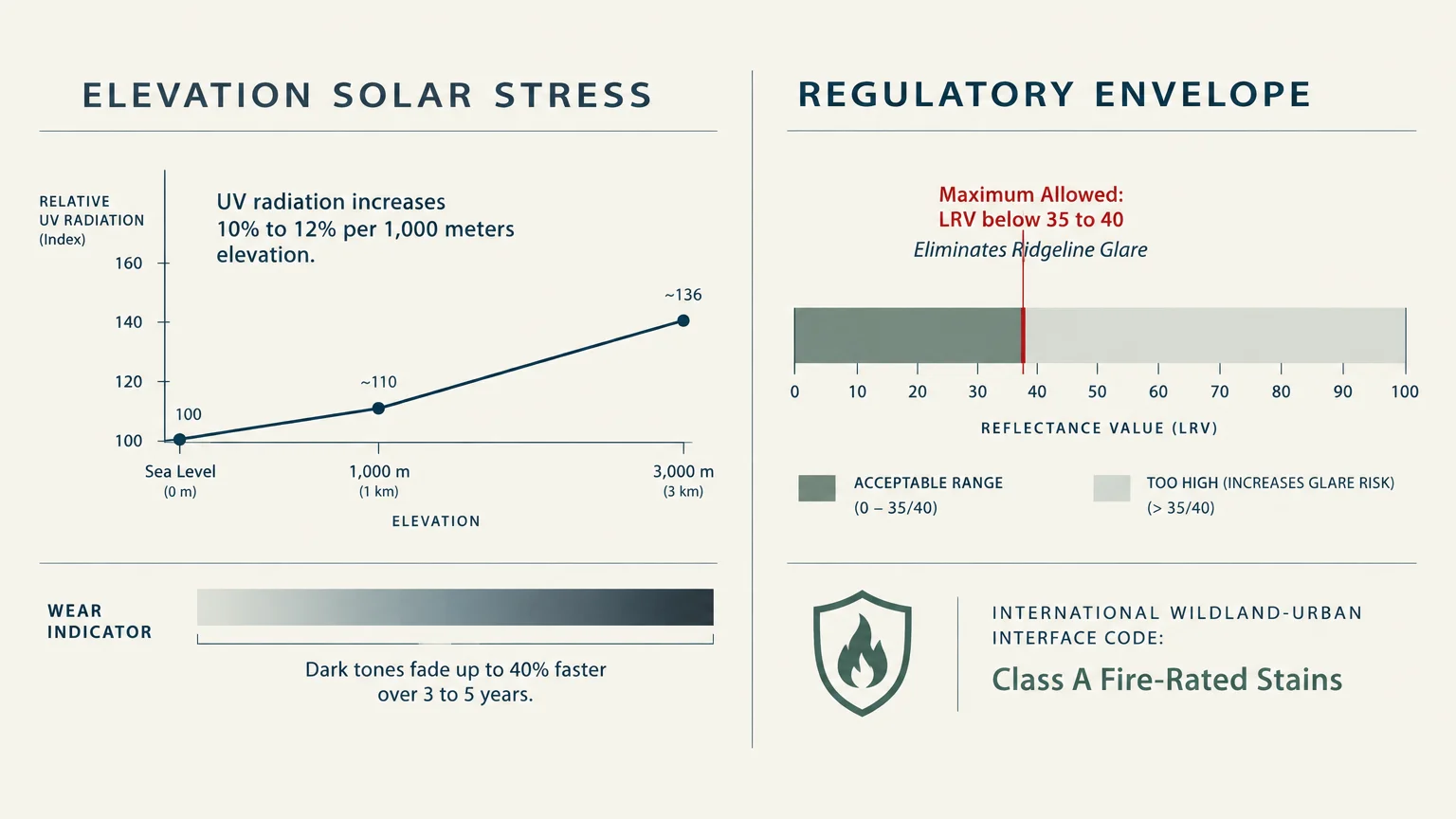
Elevation accelerates solar degradation significantly. Ultraviolet radiation increases by 10% to 12% for every 1,000 meters of elevation, which breaks down chemical paint binders rapidly.
Dark, highly saturated tones absorb thermal energy and fade up to 40% faster over three to five years than identical coatings at sea level. Choosing quality pigments prevents frequent repainting.
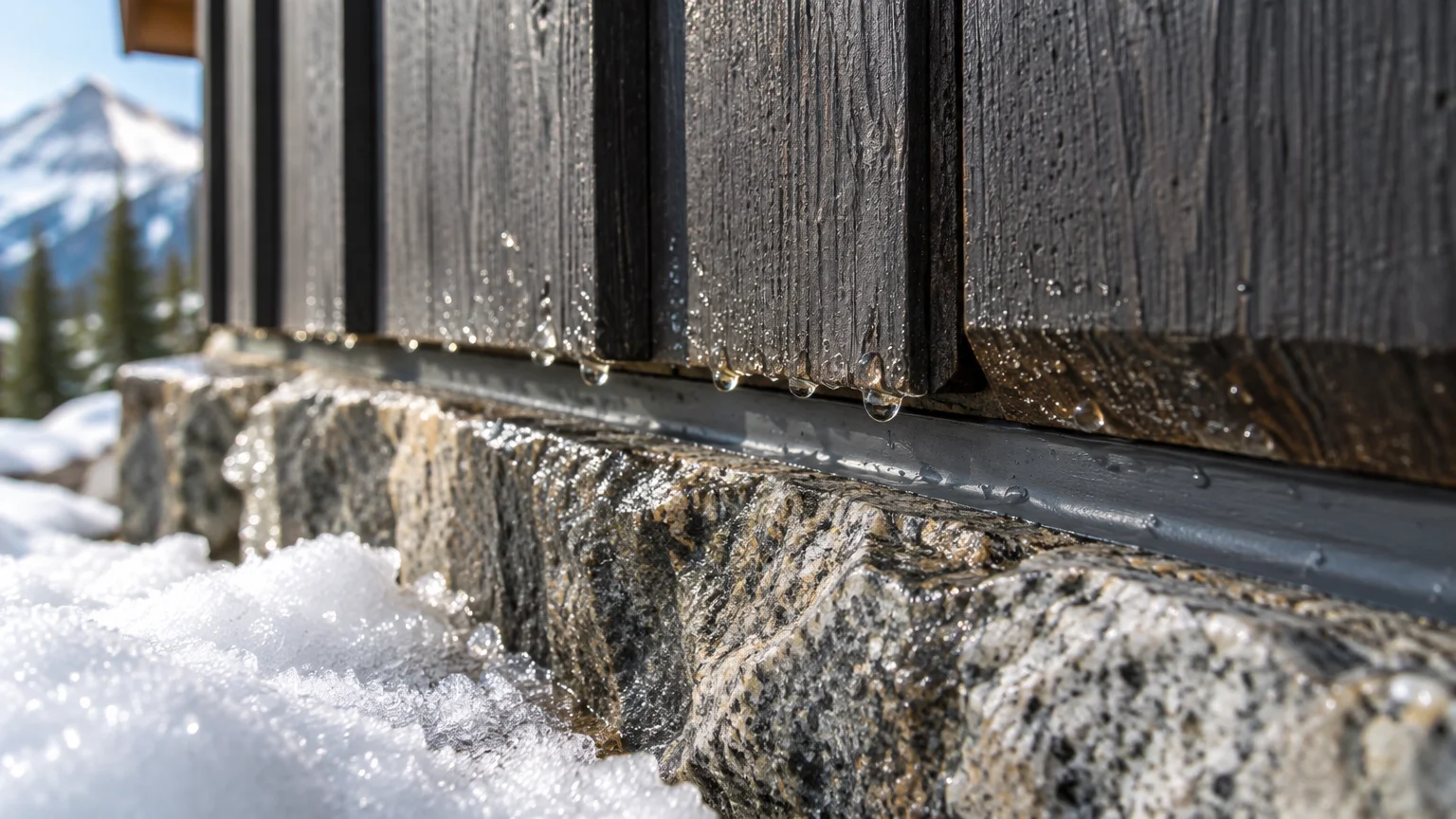
Alpine regions also experience severe freeze-thaw cycles. Moisture penetrates compromised paint films, expands during freezing nights, and peels the coating away from raw siding substrates.
Local zoning boards and homeowners associations frequently regulate exterior color palettes. Many mountain jurisdictions cap Light Reflectance Value (LRV) below 35 to 40 to eliminate ridgeline glare.
Wildfire safety codes also govern structural coatings. Standards like the International Wildland-Urban Interface Code encourage Class A fire-rated stains and non-combustible fiber-cement sidings over volatile oil finishes.
Tools, Materials, and Prep Checklist
Executing a durable paint project at high elevation requires commercial-grade equipment and specialized materials. High-performance weather coatings cost between $50 and $100 per gallon.
Hiring a professional painting contractor typically costs between $1.50 and $4.00 per square foot. Single- to two-story residential repaints generally average between $3,200 and $7,500 total.
If you tackle the job yourself, gather the following essential tools and supplies before beginning your prep work.
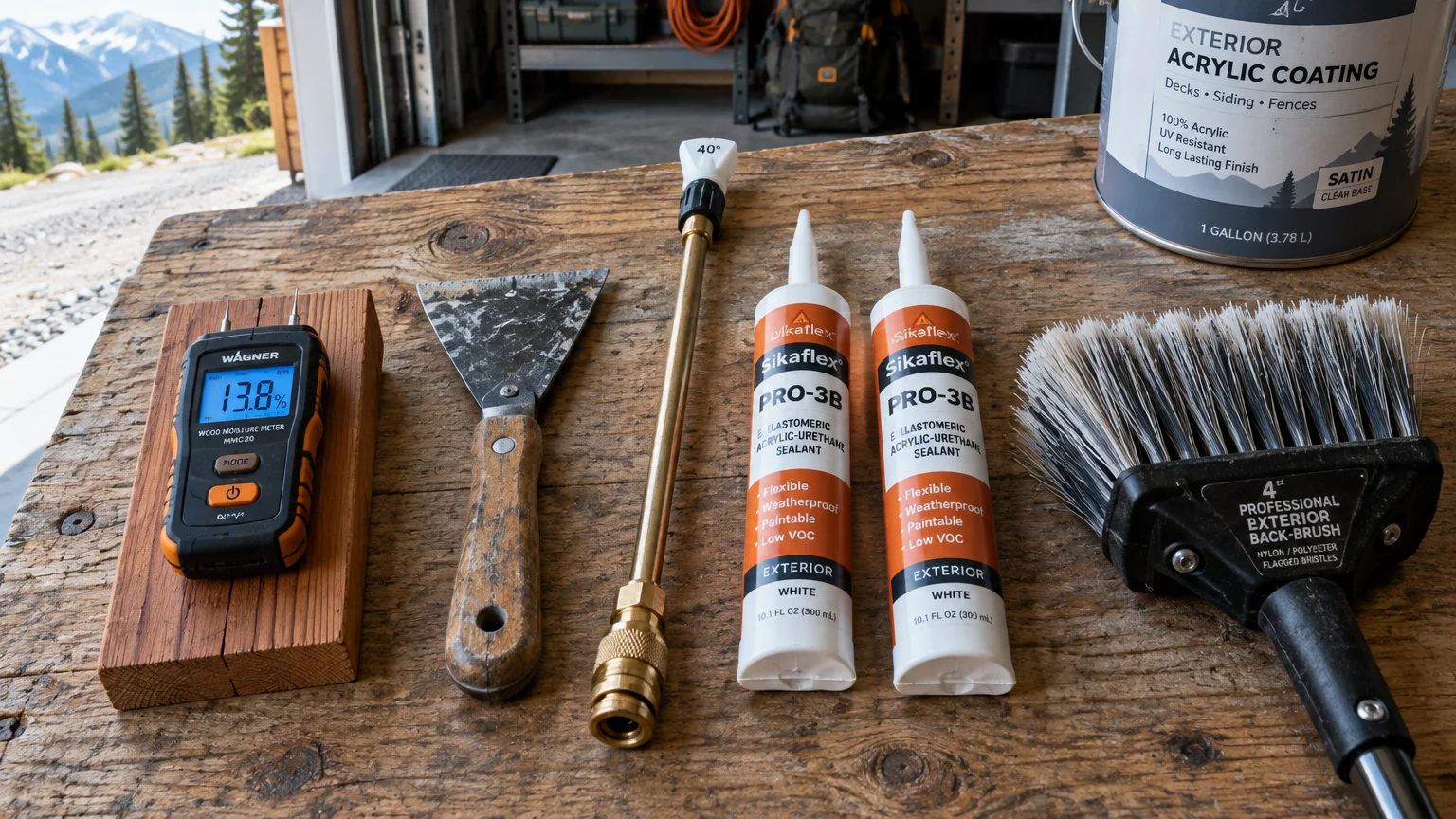
Pressure Washer: Secure a 2,500 to 3,000 PSI unit with a 40-degree spray tip to wash siding without gouging soft wood fibers.
Carbide Scrapers and Sanders: Use heavy-duty scrapers alongside 80-grit random orbital sanders to feather out peeling edges and smooth weathered substrates.
Moisture Meter: Keep a digital pin-type moisture meter handy to confirm wood saturation remains below 15% prior to coating application.
Airless Paint Sprayer: Rent or purchase a commercial sprayer supporting a 0.015- to 0.019-inch reversible tip for continuous paint delivery.
Stiff Back-Brushes: Buy 4-inch professional nylon-polyester masonry or exterior brushes to work atomized paint directly into deep grain fissures.
Elastomeric Exterior Caulk: Purchase twelve to twenty tubes of flexible acrylic-urethane sealant capable of handling joint movement during thermal swings.
High-Durability Exterior Acrylic: Order 100% acrylic latex or Class A fire-rated exterior stain engineered with high-altitude UV inhibitors.
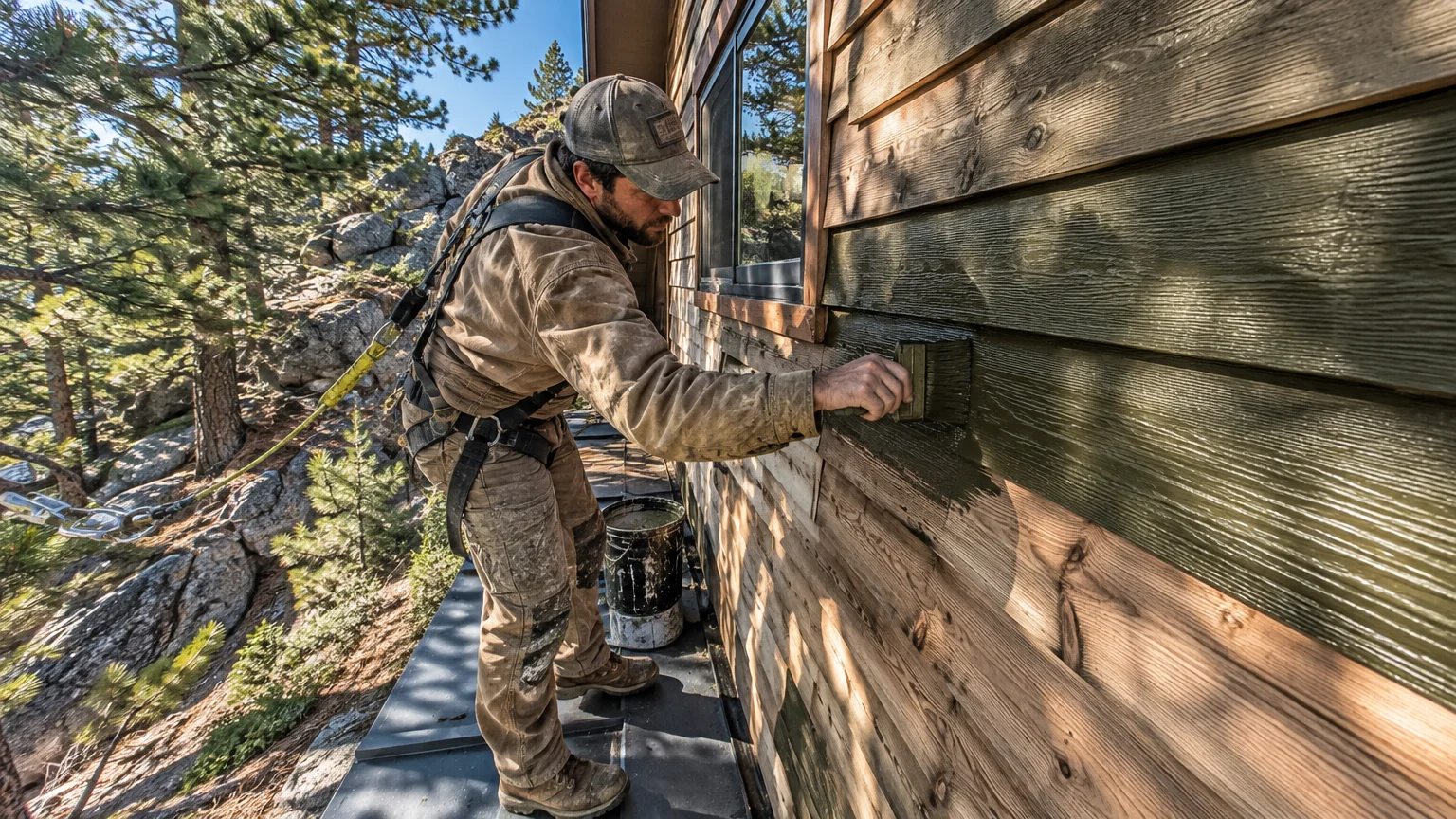
Safety Fall Arrest System: Equip yourself with an OSHA-compliant safety harness, roof anchors, and sturdy ladder stabilizers for steep alpine pitches.
Step-by-Step Instructions
Phase 1: Surface Assessment and Code Review
Begin by reviewing municipal guidelines and neighborhood covenants for LRV limits. Confirm that your proposed rustic exterior colors comply with local visual management corridors.
Inspect the building perimeter for wood rot, pest intrusion, or moisture damage. Replace damaged boards with non-combustible fiber-cement or pre-treated cedar before applying fresh paint.
Phase 2: Thorough Surface Cleaning
Wash all siding thoroughly using an eco-friendly oxygenated bleach solution to dissolve mildew, pollen, and airborne dirt. Never aim high-pressure water directly into horizontal siding laps.
Allow the exterior structure to dry completely over forty-eight hours of clear weather. Verify that surface moisture levels measure well under 15% using your digital meter.
Phase 3: Scraping, Sanding, and Caulking
Scrape away loose, flaking paint down to a sound substrate using carbide pull scrapers. Sand glossy transitional edges smooth to promote mechanical adhesion for your primer coat.
Spot-prime exposed bare timber with an exterior stain-blocking bonding primer from reputable makers like Sherwin-Williams. Seal all window frames, door casing joints, and trim intersections using paintable elastomeric sealant.
Phase 4: Base Coat Application
Apply your coating when ambient temperatures remain steadily between 50°F and 85°F. Avoid painting in direct high-altitude sunlight; follow the shade around the house throughout the day.
Spray the siding evenly using an airless sprayer, holding the tip twelve inches away. Have a partner immediately back-brush wet paint into deep crevices to ensure uniform surface contact.
Phase 5: Finish Coat and Accent Detailing
Allow the initial application to cure for a minimum of twenty-four hours before recoating. Apply the second coat across the entire structure to build the manufacturer’s specified wet film thickness.
Cut in contrasting trim bands, corbels, and soffits using angled sash brushes. Clean equipment thoroughly and inspect the perimeter for complete coverage and crisp architectural lines.
Style & Finishing Touches
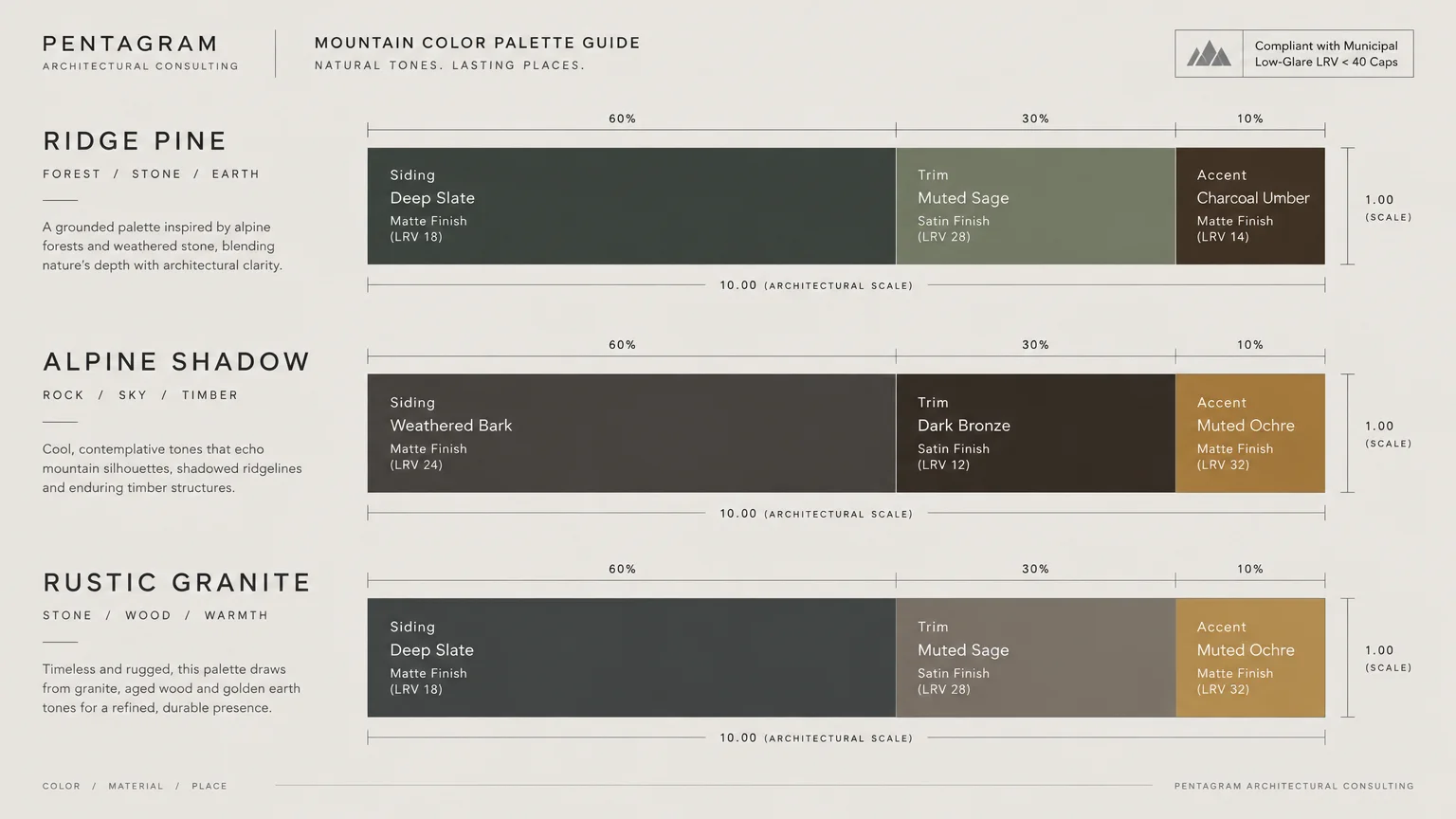
These nine exterior color ideas combine timeless alpine beauty with climate resilience. Each selection complements natural surroundings while honoring regional light-reflectance requirements.
1. Deep Forest Pine
Deep Forest Pine echoes the dark needles of lodgepole pine and Douglas fir canopies. With an LRV around 14, this shade eliminates ridgeline glare completely.
Pair this organic hue with natural cedar trim, copper rain gutters, and rugged fieldstone foundations. It integrates sprawling mountain chalets directly into dense evergreen woodlands.
2. Weathered Bark Brown
Weathered Bark Brown mirrors mature ponderosa tree trunks and weathered timber posts. This rich earth tone carries an LRV of 16, creating an inviting, grounded profile.
Accent this traditional mountain cabin color with charcoal fascia boards and matte black iron light fixtures. It hides trail dust and pine pollen exceptionally well throughout dry summers.
3. Slate Ridge Gray
Slate Ridge Gray captures the cool, enduring minerality of exposed granite cliffs. Holding an LRV near 22, it provides contemporary elegance without looking sterile or industrial.
Complement this neutral gray with stained cedar soffits and off-white window casings from Benjamin Moore. The crisp contrast highlights complex gables and steep roof pitches.
4. Muted Sage Ochre
Muted Sage Ochre reflects high-desert sagebrush flats and subalpine meadows. Its soft green-gray balance registers at an LRV of 34, falling safely below community reflectance caps.
Combine sage tones with creamy stone veneer, bronze window sashes, and dark olive trim. This color softens sharp modern rooflines while reflecting intense summer afternoon heat.
5. Charcoal Timber
Charcoal Timber draws direct inspiration from traditional Japanese yakisugi, or charred cedar siding. Boasting an ultra-low LRV of 9, this blackened hue provides dramatic modern mountain aesthetics.
Because deep charcoal absorbs significant thermal radiation, apply high-grade acrylic formulations containing heat-reflective pigments. Pair it with honey-toned white oak accents and expansive insulated glass walls.
6. Warm River Rock Greige
River Rock Greige merges cool gray foundations with warm limestone undertones. Operating at an LRV of 31, this versatile exterior paint colors mountain home exteriors with understated warmth.
Pair this balanced greige with espresso trim, river cobble masonry, and timber framing posts. It brightens shaded forest plots without clashing against evergreen understories.
7. Autumn Ochre Ember
Autumn Ochre Ember evokes high-altitude aspen stands during late September foliage peaks. This warm, muted terracotta carries an LRV of 24, providing cozy warmth amidst alpine snowfalls.
Use this rust-infused tone on board-and-batten siding accented by charcoal metal standing-seam roofing. It provides exceptional curb appeal for cabins nestled within mixed deciduous groves.
8. Smoky Shadow Navy
Smoky Shadow Navy draws from distant alpine peaks silhouetted against twilight horizons. Featuring an LRV near 12, this muted navy creates depth and sophisticated modern appeal.
Contrast deep navy siding against warm douglas fir timber brackets, brushed bronze sconces, and pale bluestone walkways. It performs beautifully on contemporary A-frame cabins.
9. Weathered Driftwood Tan
Weathered Driftwood Tan simulates sun-bleached alpine logs and dry mountain grasses. With an LRV around 33, it reflects midsummer solar heat while maintaining a relaxed rustic presence.
Blend driftwood siding with moss-green accents, rough-sawn cedar corbels, and flagstone patios. It offers remarkable durability and minimizes the visible impact of high-altitude pigment fading.
Budget-Friendly Finishing Upgrades
Elevate your newly painted exterior by updating outdoor illumination with dark-sky compliant fixtures. Downward-directed bronze sconces preserve mountain night skies while illuminating your siding colors effectively.
Add heavy timber gable brackets or metal address plaques to modernize older mountain cabins. These targeted accents produce high visual returns without requiring major structural renovations.
Maintenance & Long-Term Care
Extreme weather accelerates coating degradation across alpine zones. While temperate structures hold paint for seven to ten years, mountain homes require repainting or resealing every five to seven years.
Inspect southern and western elevations each spring for microscopic chalking or hairline splits. High-altitude UV rays batter these exposed aspects far harder than sheltered northern walls.
Wash down exterior siding annually using a low-pressure garden hose and a soft bristle brush. Removing accumulated soot, road grime, and tree sap prevents mold growth within paint pores.
Clear heavy snowbanks away from bottom siding boards throughout winter months. Constant contact with melting drifts pushes moisture behind the paint barrier, triggering wood rot and blistering.
Maintain a five-foot defensible space perimeter around the foundation by removing dead needles and combustible brush. Consult guidelines from the U.S. Forest Service to safeguard your property.
FAQ
What is the best exterior paint sheen for a mountain home?
Satin or low-lustre finishes provide the ideal balance between moisture resistance and surface forgiveness. Flat finishes absorb dirt too easily, while high-gloss sheens exaggerate siding flaws and reflect harsh glare.
Why do mountain HOAs enforce Light Reflectance Value limits?
Local municipalities and associations cap LRV ratings below 35 to 40 to preserve ridgeline scenery. High-reflectance whites and bright pastels create visual scars that disrupt the natural landscape from distant vistas.
How often should you repaint an exterior at high elevation?
Expect to repaint siding every five to seven years due to extreme freeze-thaw cycles and UV exposure. Solid color stains on natural wood require renewal every three to five years.
Can I paint directly over weathered cedar siding or logs?
Never paint over gray, weathered wood fibers without thorough mechanical preparation. Sand surfaces to sound timber and apply an oil-based stain-blocking primer before your 100% acrylic latex topcoat.
Do dark exterior paint colors increase wildfire risk?
Color pigments do not alter flammability ratings, but material composition matters significantly. Select Class A fire-rated intumescent coatings or non-combustible fiber-cement sidings to comply with Wildland-Urban Interface standards.
Takeaway & Next Steps
Choosing appropriate house colors for mountains protects your investment against harsh alpine weather while elevating architectural character. A cohesive, low-reflectance palette bridges natural surroundings with durable home protection.
Take these three immediate steps to launch your mountain exterior painting project successfully.
Review Local Regulations: Check your HOA guidelines or municipal design codes for maximum LRV restrictions and approved palette lists.
Test Large Color Swatches: Paint eight-square-foot sample boards and evaluate them on all sides of your home across varying daylight conditions.
Assess Moisture and Substrate Health: Probe siding edges with a digital moisture meter and repair rotted boards before ordering materials.
Have you recently transformed your cabin exterior? Share your project photos with our community below, or subscribe to our newsletter for weekly renovation guidance and expert home improvement tips.