Tools, Materials, and Prep Checklist
Evaluating your foundation requires simple, reliable diagnostic tools rather than expensive specialty gear. Gather these basic measuring devices to track movement accurately before calling in engineers or foundation contractors.
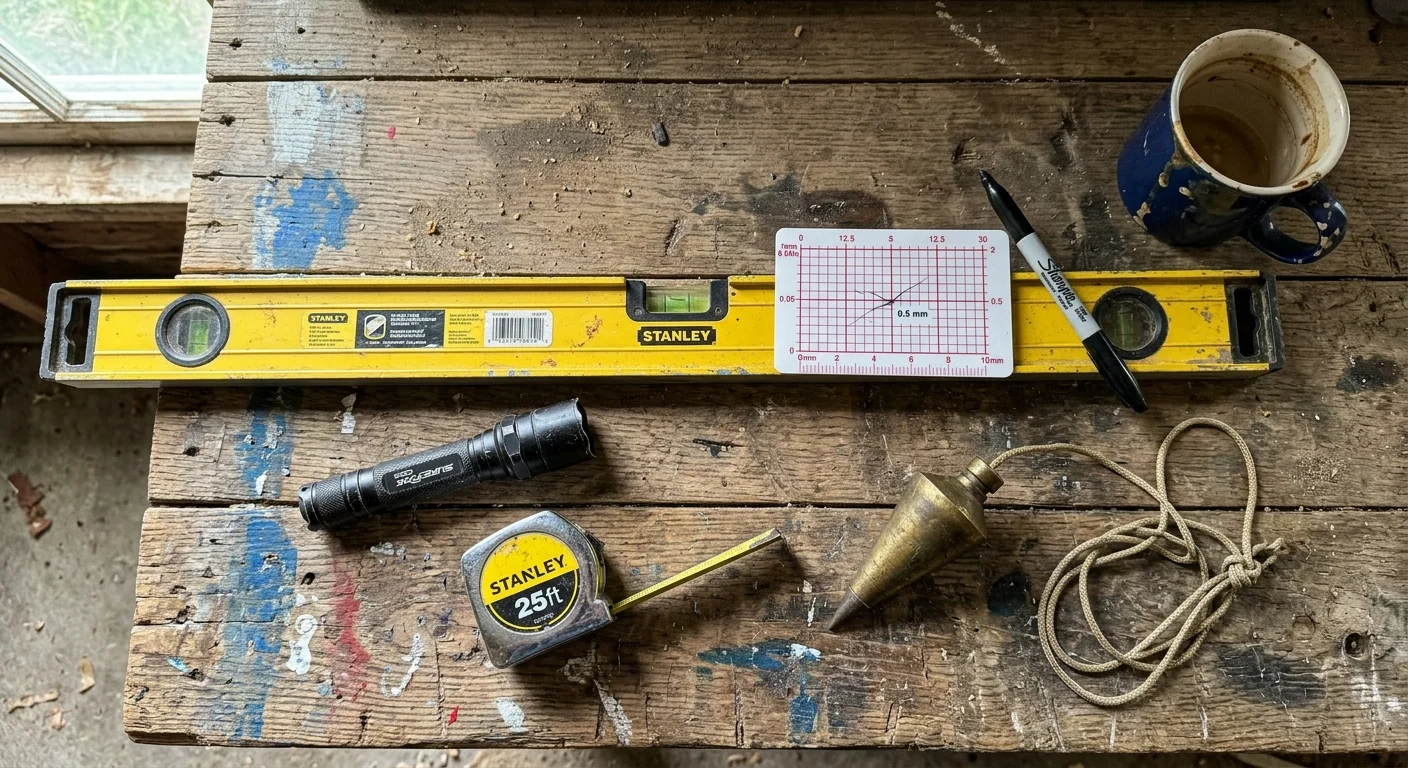
Acrylic Crack Monitor or Caliper ($15 to $35): Mountable acrylic crack cards or digital vernier calipers measure crack width and displacement down to 0.5 millimeters (0.02 inches). They provide documented data on whether a fissure remains stationary or expands over time.
4-Foot Spirit Level or Digital Box Level ($25 to $60): A quality 48-inch aluminum level from The Home Depot or Lowe’s reveals floor pitch, sloping surfaces, and inward wall deflection across long foundation spans.
High-Lumen Inspection Flashlight ($20 to $40): A 300-lumen to 500-lumen LED flashlight casts shallow, raking light across concrete block and poured walls to highlight subtle bulging, hairline cracking, and surface efflorescence.
25-Foot Locking Steel Tape Measure ($10 to $20): Essential for measuring framing gaps, diagonal crack spans, and room-to-room floor elevations.
Pinless Concrete Moisture Meter ($40 to $80): Pinless capacitance meters determine whether damp basement or crawlspace walls stem from elevated exterior hydrostatic pressure or minor ambient humidity.
Plumb Bob with Braided Line ($10 to $15): A heavy brass plumb bob provides a foolproof vertical baseline against exterior brick veneer, chimneys, and interior foundation walls.
Personal Protective Equipment ($15 to $30): Prioritize your personal safety before entering unconditioned basements or low crawlspaces. Wear an N95 respirator mask to protect against airborne mold spores, safety goggles, durable leather work gloves, and knee pads.
Inspection Preparation: Clear brush, dense landscaping, and stored firewood at least 24 inches away from your exterior perimeter. Clean dirt off suspicious concrete sections with a stiff-bristle nylon brush so you can inspect bare masonry surfaces clearly.