Step-by-Step Instructions
Follow these deck safety inspection tips to systematically evaluate your structure from the ground up. Addressing these eight deck repair warning signs promptly prevents accidents and restores your outdoor living space to peak condition.
1. Soft, Spongy, or Rotting Wood
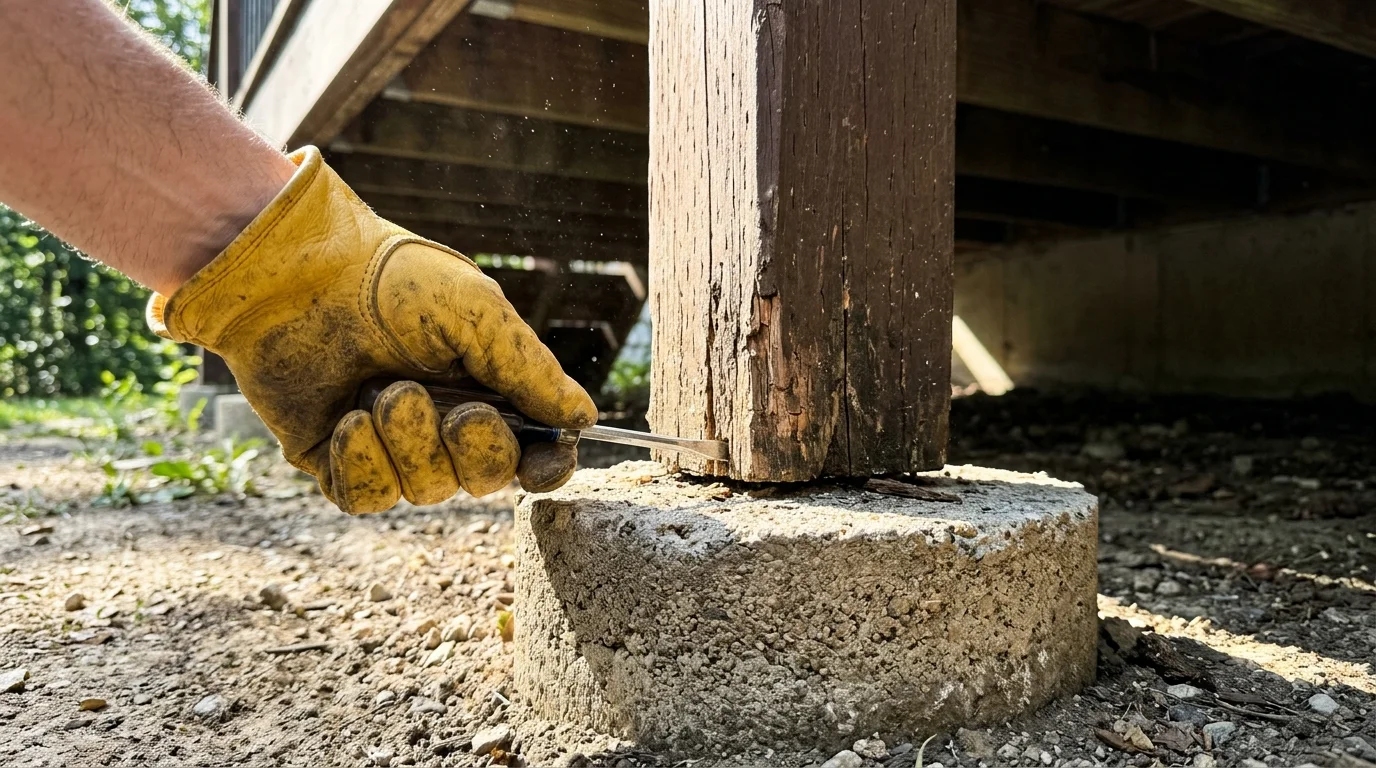
Wood rot represents the leading threat to timber deck frames. Press a flathead screwdriver or awl firmly into support posts, framing beams, stair stringers, and joist ends. If the metal tip sinks more than 1/4 inch into the timber without significant resistance, wood rot is actively destroying the structural fiber. Surface mold requires cleaning, but soft structural wood demands immediate removal and replacement with pressure-treated lumber rated for ground contact.
2. Loose, Wobbly Railings and Weak Guardrails
According to the International Residential Code (IRC Section R312.1.1), any deck with a walking surface higher than 30 inches above the surrounding grade requires a protective guardrail at least 36 inches high. Push firmly against your railing posts; the IRC mandates that guardrails resist a concentrated load of at least 200 pounds of force in any direction. If your posts wobble, tighten loose mounting bolts or reinforce the perimeter joists with structural blocking and heavy-duty corner tie brackets.
3. Openings That Violate the 4-Inch Sphere Rule
Check the spacing between your railing balusters and beneath the bottom guardrail. The IRC Section R312.1.3 enforces the 4-inch sphere rule, meaning a solid 4-inch ball must not pass through any opening in the railing system. For stair risers and the triangular gap beneath stair guardrails, the code allows a maximum 6-inch opening. Wide gaps pose a severe entrapment hazard for young children and pets, requiring you to reinstall loose balusters or add intermediate infill spindles.
4. Rusted, Corroded, or Missing Fasteners
Inspect the metal connectors, joist hangers, and framing fasteners underneath your deck using a bright flashlight. Moisture and modern copper-based wood treatments rapidly corrode standard zinc-plated hardware. Replace heavily rusted joist hangers, brittle framing nails, and corroded screws with hot-dip galvanized or 316-grade stainless steel equivalents. Never rely on standard drywall or interior screws, which lack the shear strength necessary for structural framing.
5. Ledger Board Separation and Flashing Decay
The ledger board anchors your deck framework to your home’s rim joist. Current residential building codes strictly prohibit fastening ledger boards using only nails; code requires staggered 1/2-inch lag screws, through-bolts, or engineered structural wood screws with protective flashing installed above. Look closely at the connection point: if you spot daylight between the ledger and the house siding, rusted lag screws, or missing aluminum Z-flashing, stay off the deck and reinforce the connection immediately.
6. Sinking, Shifting, or Heaving Support Posts
Support posts carry the live and dead loads of your entire deck structure directly down to concrete footings. Use your 4-foot level to verify that all 4×4 or 6×6 vertical posts remain plumb. Look for concrete piers that are cracking, sinking into soft topsoil, or lifting due to winter frost heave. Posts resting directly on bare soil rot quickly; lift the framing with temporary hydraulic jacks, pour deeper concrete footings extending below your local frost line, and secure posts using elevated galvanized post bases.
7. Cracked, Warped, or Cupping Deck Planks
Inspect surface decking boards for severe splintering, deep longitudinal splits, and cupping edges that pool standing water. Minor surface checks are normal for outdoor wood, but severe warping pulls fasteners loose and creates trip hazards. Back out fasteners, flip reversible boards, or remove compromised planks entirely. Secure new boards using color-matched exterior deck screws driven flush with the walking surface, maintaining a consistent 1/8-inch to 1/4-inch drainage gap between planks.
8. Loose Stair Treads and Unstable Stringers
Stairs endure intense dynamic stress and experience higher accident rates than any other part of a deck. Step firmly onto each stair tread, checking for flex, squeaks, and loose fasteners. Examine the stair stringers—the diagonal framing boards that support the steps—for structural cracks, rot at the base where they meet the ground, or separation from the upper framing deck. Secure loose treads with structural screws and reinforce weakened stringers with sistered lumber and heavy-gauge steel stair angles.