
Tools, Materials, and Prep Checklist
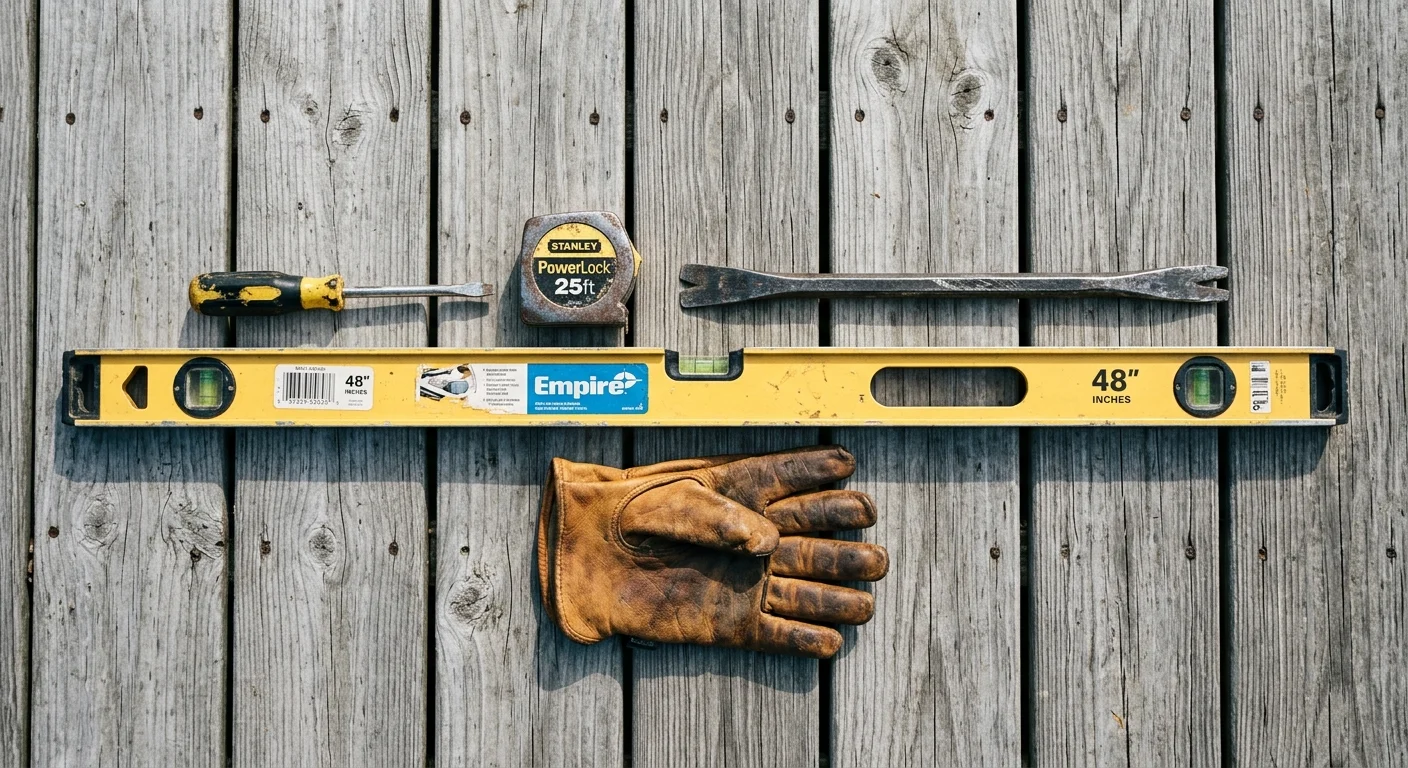
Before starting your diagnostic evaluation, gather the right inspection gear. You will need a standard flathead screwdriver or carpenter awl, a high-lumen flashlight, a 4-foot carpenter level, a 25-foot tape measure, an impact driver with structural driver bits, a socket set, a claw hammer, and a heavy-duty pry bar. Protect yourself during testing by wearing thick leather work gloves, impact-rated safety glasses, and sturdy work boots.
If your inspection uncovers damage, stock up on code-compliant structural hardware and repair materials. Keep a supply of 1/2-inch hot-dip galvanized or 316-grade stainless steel carriage bolts, code-approved structural framing screws, heavy-gauge joist hangers, corrosion-resistant framing nails, aluminum Z-flashing, and exterior wood preservative. For surface fixes, keep replacement dimensional lumber, matching composite planks, exterior wood filler, and premium penetrating exterior sealer on hand.
Prepare your workspace thoroughly to gain unobstructed access to all framing members. Clear away patio furniture, planter boxes, outdoor rugs, and storage bins. Sweep away packed winter leaves, pine needles, and moss deposits trapped between decking boards. Ensure the ground beneath the substructure is dry and clear of heavy vegetation so you can inspect footings, joists, and beams without physical obstructions.