
Tools, Materials, and Prep Checklist
A comprehensive insulation assessment and localized remediation project require proper diagnostic tools, high-performing materials, and appropriate personal protective equipment (PPE). Assemble these supplies before venturing into your attic, basement, or crawlspace.
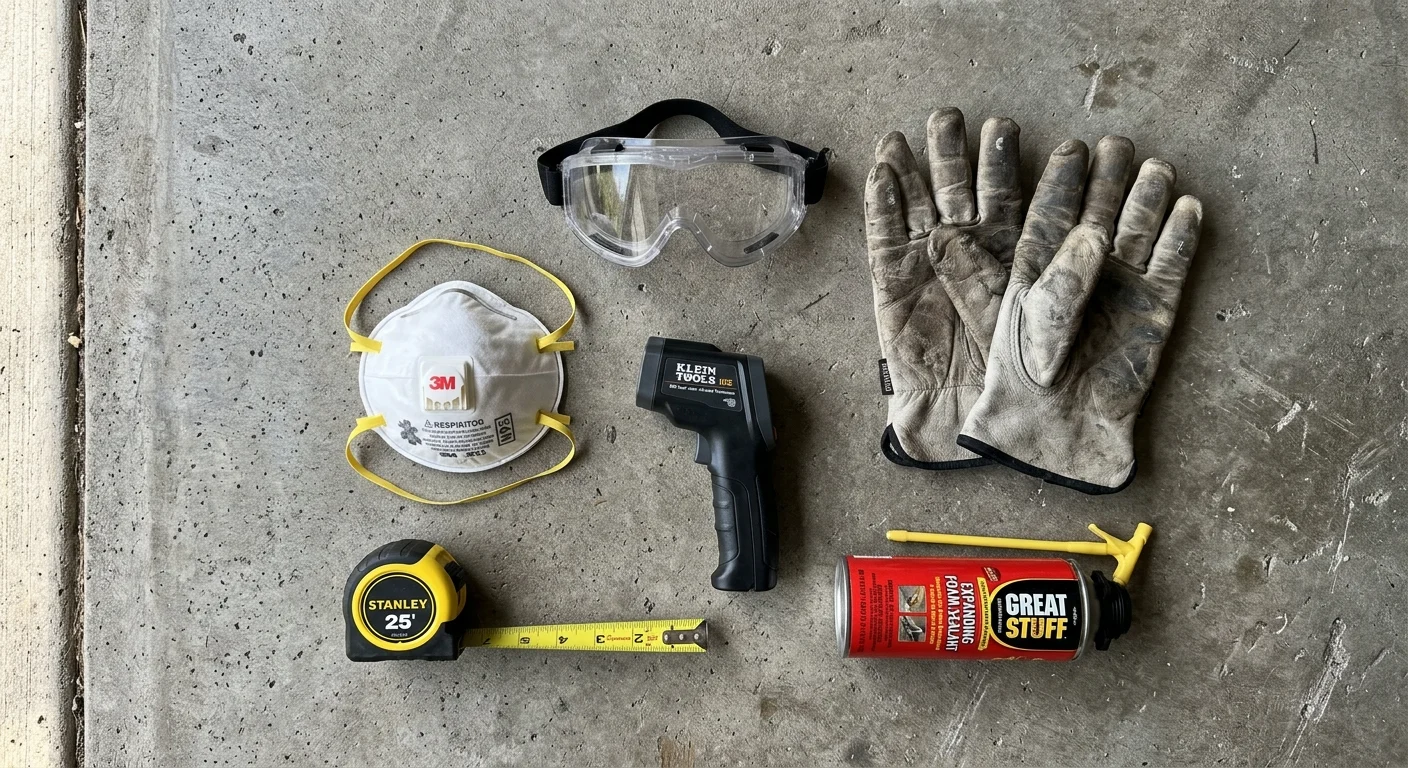
Safety Gear and PPE: Wear a well-fitted N95 or dual-cartridge P100 respirator to prevent inhaling loose fibers, dust mites, and rodent dander. Use heavy-duty work gloves, impact-resistant safety goggles, a disposable Tyvek suit with a hood, and knee pads for crawling across structural joists.
Diagnostic and Measuring Tools: Keep a standard 25-foot tape measure handy to determine insulation depth. Use an infrared laser thermometer or thermal imaging smartphone attachment ($40 to $250) to detect wall and ceiling cold spots. Carry a high-lumen headlamp, a pinless moisture meter, and an expandable inspection mirror for tight framing cavities.
Core Materials and Consumables: Stock expanding polyurethane foam sealant cans for penetrations under 3 inches wide; use foil-faced polyisocyanurate rigid foam boards ($25 to $45 per 4×8-foot sheet) for attic access hatches and rim joists. For bulk thermal improvements, select unfaced fiberglass rolls, rockwool batts, or loose-fill cellulose. Keep fire-rated expanding foam and acoustic sealant ready for sealing ceiling wire penetrations and plumbing chases.
Site Preparation Steps: Before climbing into the attic, lay 3/4-inch plywood walking boards across the ceiling joists so you never step directly on the fragile drywall ceiling below. Clear out stored items, vacuum accumulated dust with a HEPA shop vacuum, and verify that all electrical junction boxes possess secure metal or plastic covers.