
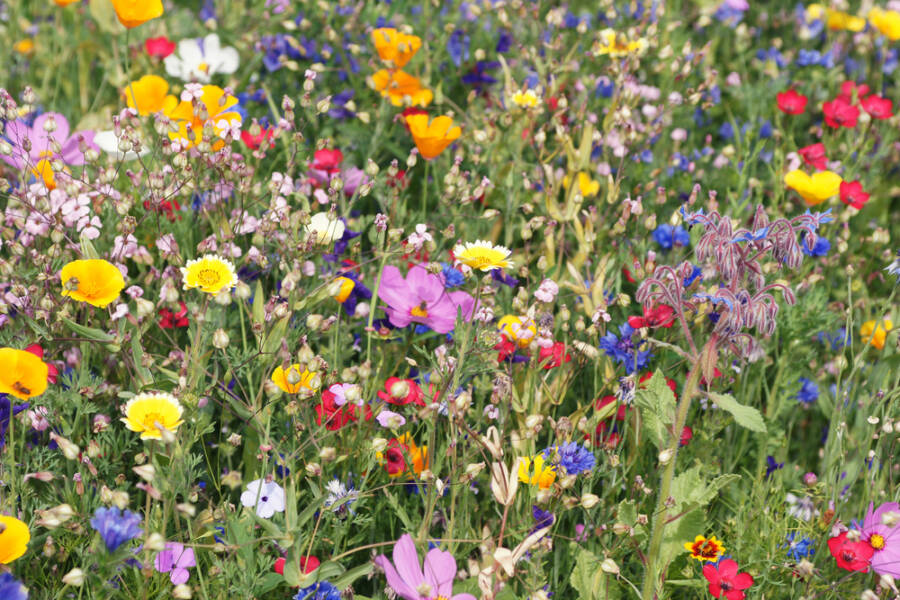
If you’ve never heard of it, it’s not something we call a garden that seems to have been forgotten. And no, chaos gardening is not a new concept. It has been around for quite some time now, and it brings a free-spirited approach to gardening.
In fact, it encompasses various elements of spontaneity and natural growth patterns. This style generally implies using old seeds, encouraging self-seeding plants, and also embracing a more relaxed and organic gardening method.
It also fosters a deep connection with nature, which is simply beautiful. It’s a very fun way to express yourself by embracing the beauty of randomness and the joy of seeing the unexpected simply unfold.
Chaos gardening also involves scattering a wide blend of seeds across your outdoor space and observing the natural selection process of plants competing for sunlight, space, and nutrients.
That’s the main idea around chaos gardening. Instead of organizing your plants neatly in rows, you embrace random colors and shapes and allow them to form organically and have a natural wildflower-like appearance.
This beautiful gardening movement gained a lot of popularity as a viral trend in the last year, especially on social media platforms.

The benefits of chaotic gardening
Chaos gardening goes way beyond a gardening technique. We would dare to say it’s a philosophy. First, it promotes embracing unpredictability and also allowing nature to take its course in your garden.
This type of approach could lead to a resilient ecosystem, due to diverse plant species that arise and could better withstand pests, diseases, and changing climate conditions.
Besides, chaos planting attracts a wide range of pollinators, which also enhances local biodiversity. Adding a series of native plants will also benefit biodiversity in the future.
Native plants are quite adapting to your local soil type. They also require less maintenance and fewer fertilizers. By choosing native species, gardeners can easily support local wildlife, such as insects, and birds, which would further contribute to the health of local ecosystems.
What types of environments are the best suited when it comes to chaos gardening?
The most exciting part about chaos gardening is knowing how to adapt your seeds to thrive in almost any planting environment. Chaos gardening really flourishes in diverse conditions, especially those that value natural diversity and require minimal intervention.
The ideal settings also include native landscapes that are rich in biodiversity, low-maintenance areas like wildflower meadows, pollinator gardens, and also suburban lots where a blend of order and wildness fosters a harmonious balance.
All these environments make room for the spontaneous growth of different plant species, promote ecological resilience, and create a more vibrant, thriving ecosystem without needing strict control or excessive maintenance.
You need to make sure to check the updated USDA Plant Hardiness Zone and decide on plants that are well-suited for your own region. Selecting the right plants for full sun or shade is also advised, especially if you want your chaos planting to fully thrive.
The biggest challenges when you start a chaos garden
One of the first challenges is letting go of control and simply surrendering to the unpredictability of the garden’s development. Starting a chaos garden also entails a series of challenges like balancing diverse plants with different needs, which can be quite daunting.
Seed and plant selection are definitely fun but also require a bit of homework because you need to learn about the growth habits of the plants.
It’s also important to understand that some plants are extremely prolific and can easily take over an entire area, which would make them a poor choice for random planting.
Letting your plants grow freely is an essential aspect of chaos gardening, and it also increases the risk of weeds, which would require proactive control measures.
Effectively using the space without overcrowding or neglecting your plants is essential for success. Besides, transitioning from traditional gardening methods all the way to embracing chaos gardening could involve a learning curve for gardeners.

Some of the biggest misconceptions about chaos gardening
There are plenty of misconceptions about chaos gardening, like the belief that it won’t require any maintenance. While this can be quite a low-maintenance approach, some care, like soil health management, thinning after planting, and even occasional weeding, is needed.
The next big misconception is that chaos gardening doesn’t require any type of planning. Unlike guerilla gardening, which sometimes involves spontaneous and unauthorized cultivation in public spaces, chaos gardening needs a more thoughtful approach. If you’re passionate about soils and chaos gardening, you need to check out this book!
While it also embraces a more organic and spontaneous planting method, chaos gardening still needs strategic decision-making, especially when it comes to plant selection, spacing, and environmental considerations.
Another big misconception is that chaotic gardens are quite messy. Well, this isn’t always the case. Taylor explained that when it’s managed well, these gardens can be extremely beautiful and vibrant.
Moreover, with the acquired thoughtfulness in design and some genuine care, chaos gardens can easily transform into captivating landscapes that would easily capture the essence of wild beauty while also maintaining a sense of order and allure.
What you might need to get started with a chaos flower garden
One of the best things about starting a chaotic garden is not needing too many garden tools. In fact, it doesn’t cost much to get started. As with any garden, the best results come when you start from the ground up.
One of the most important factors in the success of any garden is learning how to enhance your soil’s organic matter. Adding some compost and humate will enrich the soil, building active and stable forms of organic matter that improve soil structure.
This step is mandatory for supporting the diverse plant life in a chaotic garden. As soon as the soil is ready, you can select a diverse chaos garden seed mix with seeds for flowers, vegetables, and of course, herbs, including new and older seeds from previous seasons.
You can plant according to seed pack directions. Also, make sure you don’t forget about regular watering and maintenance of the garden to fully promote germination and ongoing growth. And pay attention to watering and weeding when needed.
Takeaways
A chaos garden is basically a living work of art. The most beautiful part about is that it’s constantly in motion. While this concept might seem dreamy (and it is, to a certain degree), it still requires some proper planning.
But the results are so worth it, and so stunning. Try to picture your garden as a canvas, where instead of carefully portraying every detail, you unleash your creativity and scatter plenty of colors across the space in a manner that resembles Jackson Pollon’s art.
Because here’s the thing: if you know how to “haphazardly” sow seeds, you also make room for an emergence of unforeseen color combinations and textural contrasts, which will result in a garden that undergoes a full metamorphosis from week to week and year to year.
This ever-changing landscape will also promise an ongoing sense of wonder and delight for the gardener, and of course, the local wildlife.
Now, there’s much to know about gardening. We could easily talk for days about it, and there would still be something to be added. So if you’d like to read more about it, here’s what you should read next: 5 Colors That Go With Brown Furniture, According to Designers