Choosing the right exterior color combinations instantly transforms your home and safeguards your investment against harsh weather. Proven siding and trim colors deliver enduring curb appeal while resisting premature fading caused by intense ultraviolet exposure.
Modern coating chemistry allows you to establish a timeless aesthetic that endures across shifting seasons. A cohesive exterior palette also creates an inviting first impression that measurably enhances your property value.
This guide reveals nine long lasting exterior colors and professional application strategies to refresh your home with lasting confidence.
Project Overview & Why It Matters
Selecting durable siding and trim colors does far more than refresh outdated architecture. A quality color palette seals your building envelope against moisture intrusion, wind-driven rain, and solar breakdown.
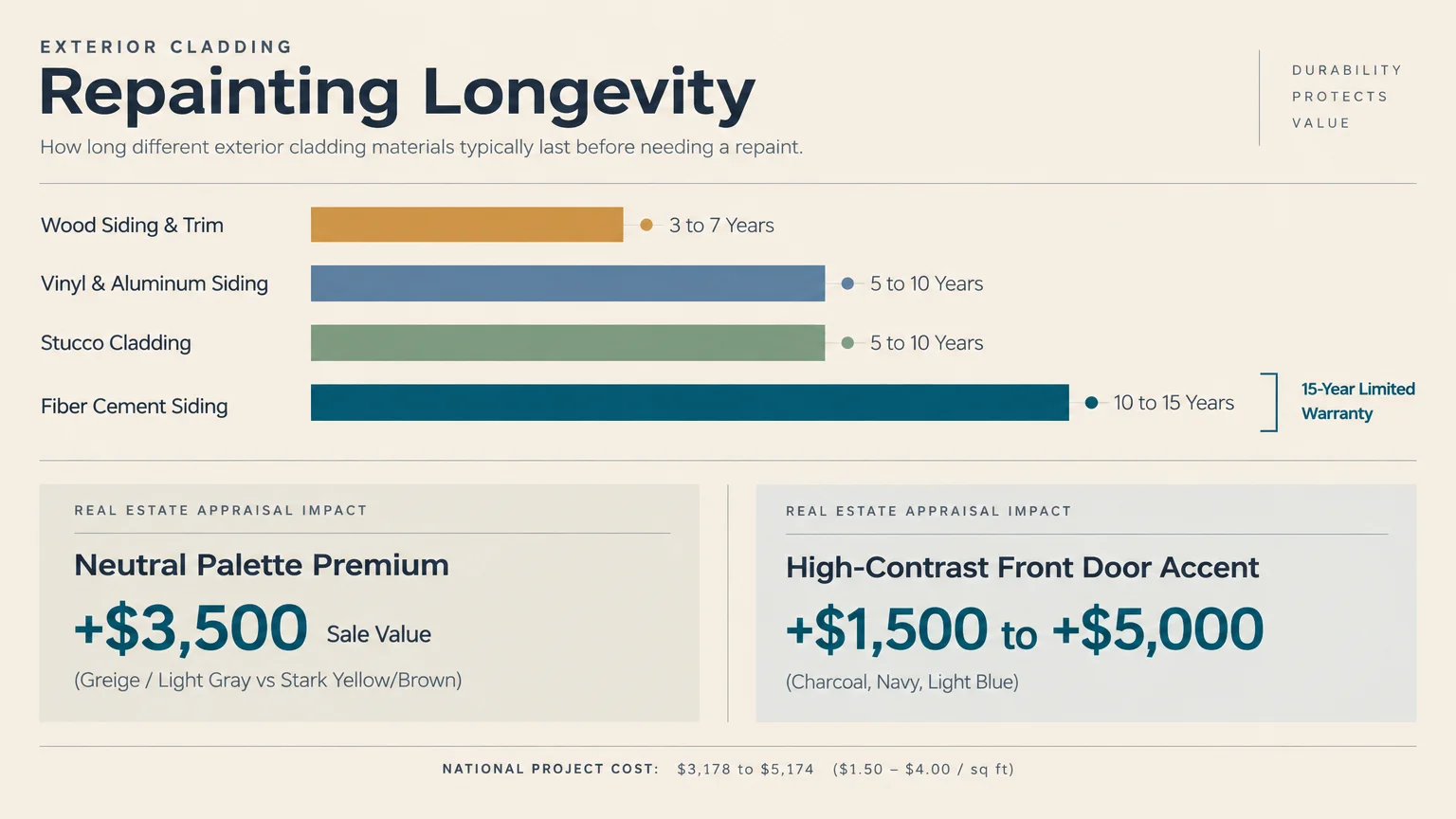
Your color choices directly affect appraisal and resale outcomes. Real estate research indicates that neutral exterior palettes like greige or light gray yield sale premiums of roughly $3,500 over stark yellow or brown tones.
Adding high-contrast front door accents like charcoal, navy, or light blue boosts buyer offer values by $1,500 to over $5,000. These focal points catch buyer attention while allowing primary siding to stay balanced.
Budgeting accurately helps you avoid mid-project compromises. Professional exterior painting generally costs between $1.50 and $4.00 per square foot across the United States.
Painting a 2,500-square-foot home professionally runs between $5,000 and $9,300 depending on regional labor and story height. Overall national project averages across all home sizes fall between $3,178 and $5,174.
Your exterior cladding material dictates repainting frequency. Wood siding and trim require fresh coats every 3 to 7 years due to natural expansion and contraction.
Vinyl and aluminum siding hold 100% acrylic latex paint for 5 to 10 years without peeling. Traditional stucco surfaces maintain their color integrity for 5 to 10 years between recoats.
Fiber cement siding offers extraordinary longevity, lasting 10 to 15 years before requiring a new topcoat. Factory-applied finishes on fiber cement boards frequently carry 15-year limited warranties against peeling.
Tools, Materials, and Prep Checklist
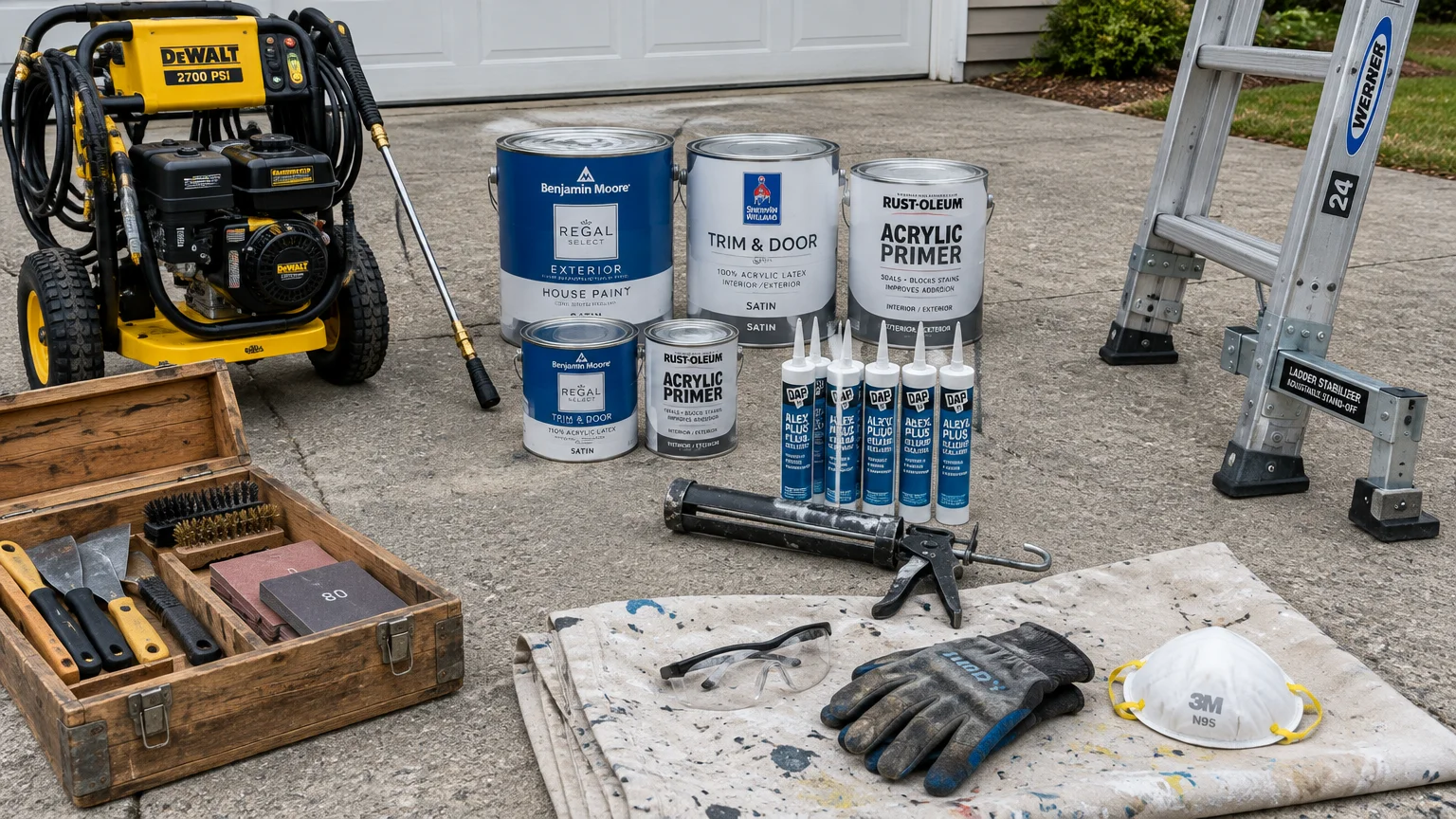
Successful exterior painting requires high-grade equipment and premium coatings engineered for outdoor resilience. Gathering your materials before cleaning day prevents expensive project delays.
Paint and Primer: Budget for 7 to 10 gallons of body paint ($45 to $85 per gallon) and 2 to 3 gallons of trim paint. Purchase 4 to 6 gallons of acrylic primer at $30 to $50 per gallon.
Cleaning and Scraping Gear: Rent a 2,500 to 3,000 PSI pressure washer for approximately $70 to $100 per day. Secure carbide scrapers, wire brushes, and 80-grit sanding blocks for roughly $35.
Caulk and Applicators: Stock 6 to 10 tubes of polyurethane or elastomeric sealant at $7 to $12 each. Buy angled sash brushes, microfiber roller covers, and canvas drop cloths for $80.
Ladders and Safety Equipment: Rent or purchase a 24-foot aluminum extension ladder with an adjustable standoff stabilizer for $250 to $350. Equip yourself with ANSI-rated safety glasses, an N95 dust mask, and slip-resistant work boots.
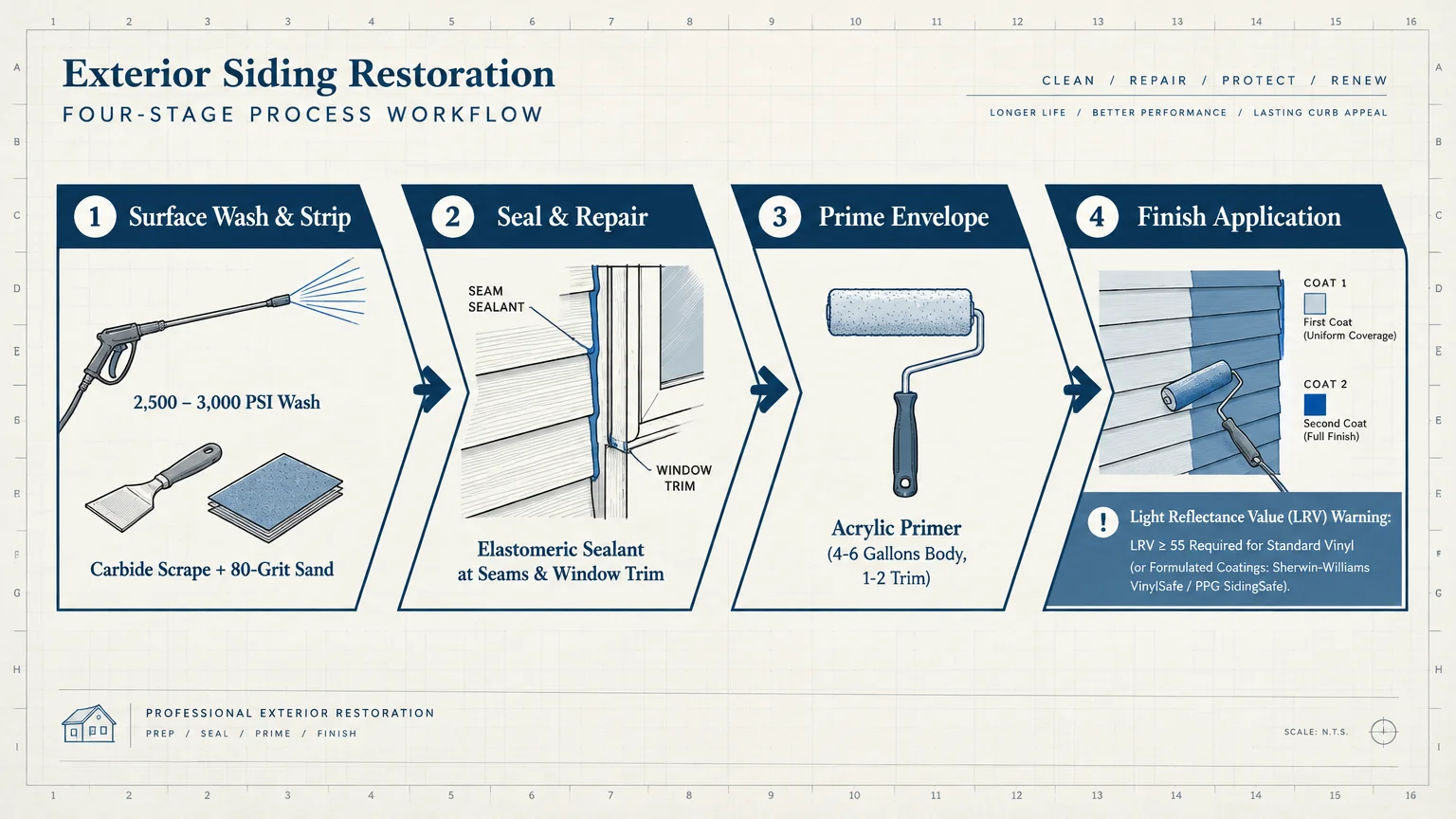
Always check the Light Reflectance Value (LRV) before applying dark paint to vinyl siding. Standard vinyl requires paint with an LRV of 55 or higher to prevent excessive solar heat absorption and warping.
If you desire dark tones on vinyl siding, purchase formulated coatings like Sherwin-Williams VinylSafe or PPG SidingSafe. These specialized lines omit carbon black pigments, reflecting heat safely.
Step-by-Step Instructions
Exterior transformation demands methodical execution. Follow these sequential phases to complete your paint project safely and achieve professional results.
Phase 1: Secure Architectural Approvals
Verify your neighborhood covenants before buying supplies. If your property belongs to a Homeowners Association, submit paint swatches to your Architectural Review Committee (ARC).
ARC review processes typically require 2 to 4 weeks for formal evaluations. Obtain written approval before applying paint, even when repainting existing color schemes.
Phase 2: Wash the Exterior Surfaces
Clear away loose grime, pollen, and chalking paint with your pressure washer. Keep the spray nozzle at least 12 inches away from the siding surface at a downward 45-degree angle.
Avoid spraying high-pressure water directly into horizontal siding laps or soffit vents. Allow exterior cladding to dry completely for 48 hours before applying primers or paints.
Phase 3: Scrape, Sand, and Repair Substrates
Strip all loose, flaking paint with a carbide pull scraper. Feather the bare edges with 80-grit sandpaper to create a flush, uniform transition for topcoats.
Test homes built before 1978 for lead-based paint using an EPA-recognized test kit before disturbing old layers. Replace rotted trim boards with moisture-resistant cellular PVC or treated cedar.
Phase 4: Caulk Trim and Mask Fixtures
Run a continuous bead of elastomeric sealant along vertical trim joints, window casings, and door surrounds. Never caulk the horizontal bottom laps of horizontal siding, which allow trapped moisture to escape.
Mask window glass, outdoor light fixtures, and hose bibs using UV-resistant painter’s tape and plastic masking film. Cover nearby landscaping and concrete walkways with breathable canvas drop cloths.
Phase 5: Apply Primer and Finish Coats
Spot-prime all bare wood, patched masonry, and exposed metal using an acrylic bonding primer. Priming seals the porous substrate and creates an even foundation for your topcoat.
Apply your body siding paint first using an airless sprayer or high-density roller, back-brushing wet paint into siding grooves. Finish trim boards with a 2.5-inch angled sash brush in shaded conditions between 50 and 85 degrees Fahrenheit.
Style & Finishing Touches
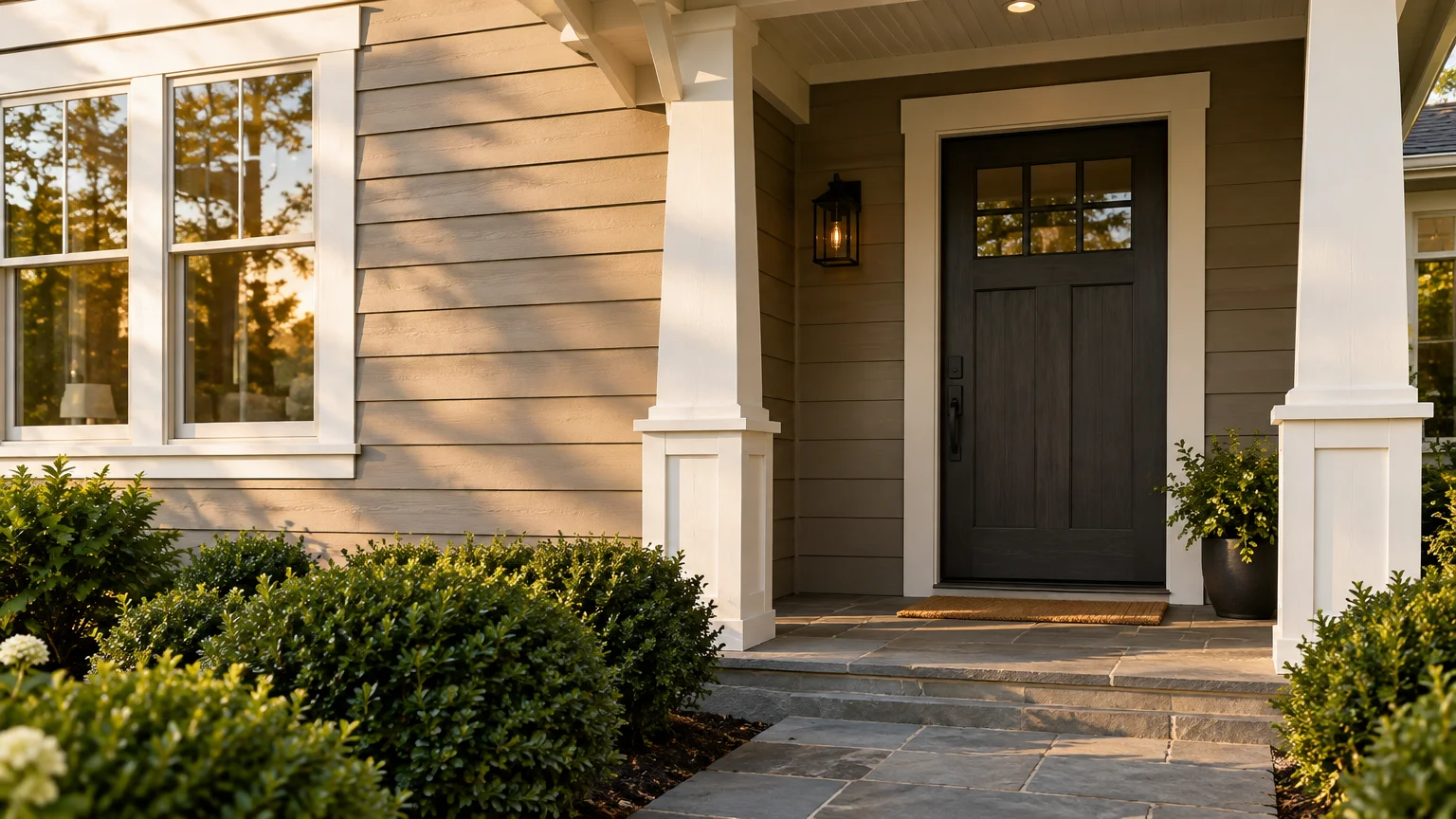
A balanced exterior relies on a 60-30-10 distribution rule: 60 percent siding, 30 percent trim, and 10 percent accent color. Explore these nine proven exterior color combinations engineered for longevity.
When researching house trim color ideas, select shades that frame your architectural features without overwhelming the street view.
1. Warm Greige Siding with Crisp Bright White Trim
Greige blends warm beige and cool gray, producing an adaptable neutral for craftsman and colonial homes. Bright white trim accentuates window dimensions and roof pitch.
Pair this scheme with a rich navy front door for instant visual depth. Greige resists intense sun fading while disguising airborne dust.
2. Classic Navy Blue Siding with Alabaster Trim
Deep navy siding establishes a dramatic, commanding presence on coastal homes and modern farmhouses. Soft alabaster trim prevents harsh contrast, grounding the deep blue body with warmth.
Select high-performance acrylic formulas containing inorganic pigments to minimize UV fading across dark surfaces. A natural stained oak front door creates an inviting entrance.
3. Forest Olive Green Siding with Warm Cream Trim
Earthy olive green blends effortlessly into wooded surroundings and established garden landscapes. Warm cream trim softens the rich green, generating an inviting, organic exterior feel.
This combination looks magnificent on cedar shake, fiber cement boards, and rustic craftsman bungalows. Complement olive siding with a deep chestnut stained door or burnished bronze light fixtures.
4. Charcoal Slate Siding with Warm Off-White Trim
Dark charcoal siding delivers sleek, contemporary sophistication to modern ranches and updated split-levels. Off-white trim keeps the look approachable without casting the cold glare of stark white.
When painting vinyl siding this shade, verify your paint uses vinyl-safe technology to prevent heat warping. A cedar front door or vibrant saffron accent door adds magnificent character.
5. Warm Coastal White Siding with Pitch Black Trim
High-contrast monochrome designs deliver immediate visual punch to modern farmhouses and transitional cottages. Creamy off-white siding softens exterior glare while deep black window sashes frame your view.
Black trim requires premium semi-gloss exterior paint to resist rapid UV breakdown. Add a rich natural wood front door to infuse organic warmth into this stark design.
6. Desert Taupe Siding with Soft Bronze Trim
Desert taupe offers a soothing, dust-tolerant base that suits Mediterranean, southwestern, and prairie-style structures. Deep bronze trim anchors rooflines and soffits with understated luxury.
This earth-toned exterior paint scheme masks rain spatter and atmospheric dust better than nearly any other combination. A turquoise or rust-red front door provides a striking southwest focal point.
7. Muted Slate Blue Siding with Pure White Trim
Slate blue contains gray undertones that prevent siding from looking overly bright or pastel in direct sunlight. Pure white trim highlights decorative corbels, porch columns, and window headers.
This combination suits coastal homes, cape cods, and traditional colonials looking for breezy curb appeal. Pair it with a gloss black or deep cherry front door for visual punch.
8. Earthy Terracotta Siding with Cream White Trim
Terracotta siding introduces warmth and Mediterranean authenticity to stucco and horizontal siding profiles. Creamy white trim balances the rich reddish-orange body without overwhelming neighboring properties.
This color resists visible wear in hot, sunny climates where bright whites show glare and dark grays fade. Complete the arrangement with aged copper gutters and an olive green entry door.
9. Cool Dove Gray Siding with Jet Black Trim
Dove gray acts as an elegant, neutral canvas that complements both traditional stonework and sleek modern metal accents. Jet black trim delineates rooflines, garage doors, and window casings with sharp authority.
This pairing holds its value exceptionally well, maintaining an upscale appearance across changing neighborhood trends. Bright crimson entry doors deliver captivating accent contrast against the gray backdrop.
Maintenance & Long-Term Care
Protecting your exterior paint investment requires routine inspection and light annual upkeep. Catching minor wear early prevents costly full-house repainting down the road.
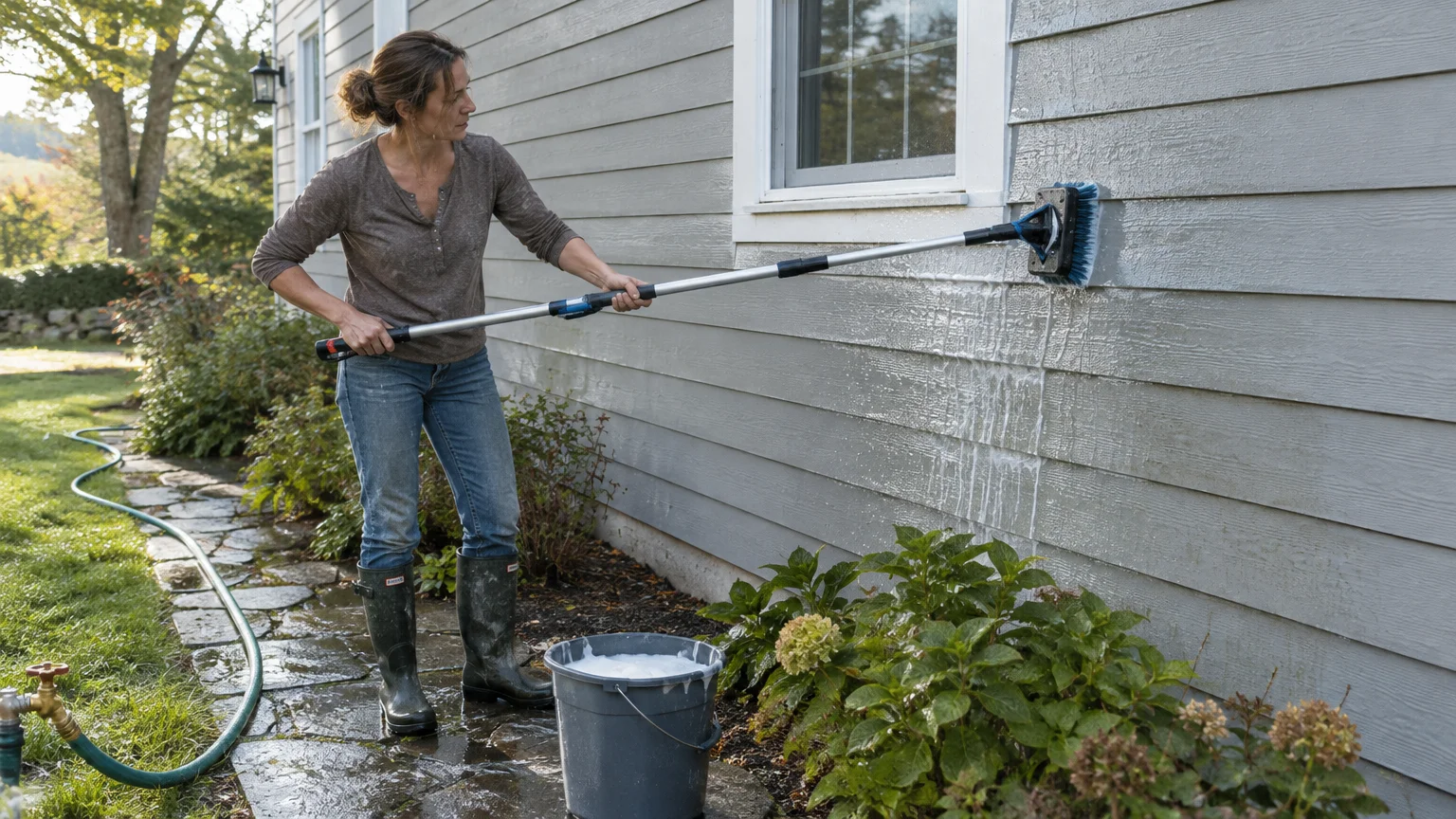
Rinse your exterior siding once every twelve months using an ordinary garden hose and mild exterior soap. Removing salt deposits, pollen, and roadway dust prevents fungal growth and extends coating life.
Inspect caulked joints along window casings, corner boards, and flashing every spring. Slice away cracked sealant with an oscillating multi-tool and tool fresh polyurethane caulk into open joints immediately.
Trim shrubs and overhanging tree branches at least 18 inches away from your exterior walls. Proper vegetative clearance eliminates abrasive rubbing and allows siding to dry quickly following heavy storms.
Store leftover paint in tightly sealed metal or plastic cans inside a climate-controlled garage or basement. Label each can with the application room, date, and custom color formula for effortless touch-ups.
FAQ
How do I know if a paint color is safe for vinyl siding?
Standard vinyl siding warps if painted in dark shades that absorb excessive solar heat. Verify your chosen color carries an LRV rating of 55 or higher before applying standard acrylic paint.
If you prefer dark colors, specify proprietary vinyl-safe formulas from major manufacturers. These custom paints omit carbon black pigments, allowing dark hues to reflect solar heat safely.
Which exterior paint sheen lasts the longest on siding and trim?
Satin and eggshell finishes work best on exterior siding panels, shedding dirt while concealing minor imperfections. Use semi-gloss paint on trim, doors, and window casings to provide durable moisture resistance.
How much money do you save by painting your exterior yourself?
Professional exterior painting costs $1.50 to $4.00 per square foot, running $5,000 to $9,300 for a 2,500-square-foot home. Painting the property yourself reduces expenses to roughly $800 to $1,500 for paint and rental equipment.
However, DIY painting requires significant physical stamina, ladder safety skills, and multiple full weekends. Weigh these labor demands against the potential $4,000 to $7,000 in labor savings.
How does regional climate affect exterior paint longevity?
Intense ultraviolet rays degrade paint binders and accelerate color fading across southern and western regions. In northern climates, freeze-thaw cycles cause wood expansion, requiring flexible 100% acrylic latex paints that resist cracking.
When should you hire a professional painter instead of tackling it yourself?
Hire a licensed professional if your home stands more than two stories high or sits on steep terrain. You should also hire certified contractors when remediating hazardous lead-based paint or extensive structural rot.
Takeaway & Next Steps
Investing in durable siding and trim colors elevates your home’s character while sealing structural elements against harsh weather. Cohesive palettes yield higher resale valuations and provide years of maintenance-free pride.
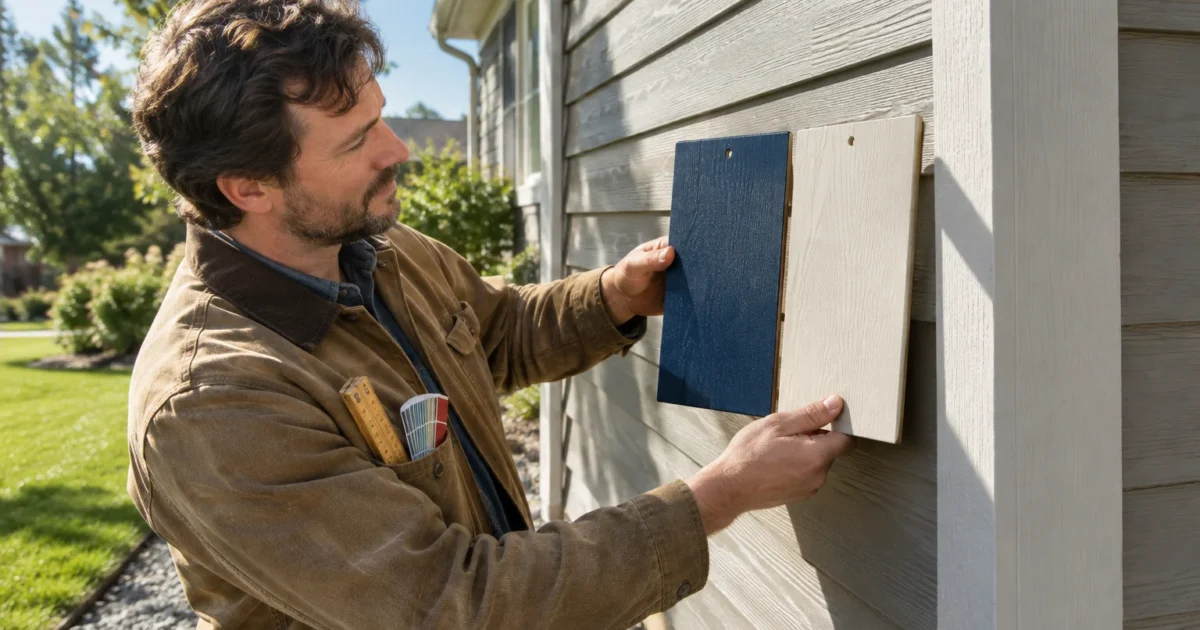
Start by testing sample swatches on different sides of your home to observe shifts in natural sunlight. Check your HOA guidelines and gather proper tools to ensure a smooth, rewarding exterior transformation.
Action 1: Purchase three color sample pots and paint 2×2-foot test patches on both the sunny south and shaded north walls of your house.
Action 2: Submit your color scheme to your local HOA or Architectural Review Committee to begin their 2-to-4-week review window.
Action 3: Inspect your exterior siding laps and window casings, measuring linear footage to calculate accurate caulk and paint quantities.
Have you completed an exterior makeover recently? Share your project photos with our community or subscribe to our weekly newsletter for more expert home improvement guidance.