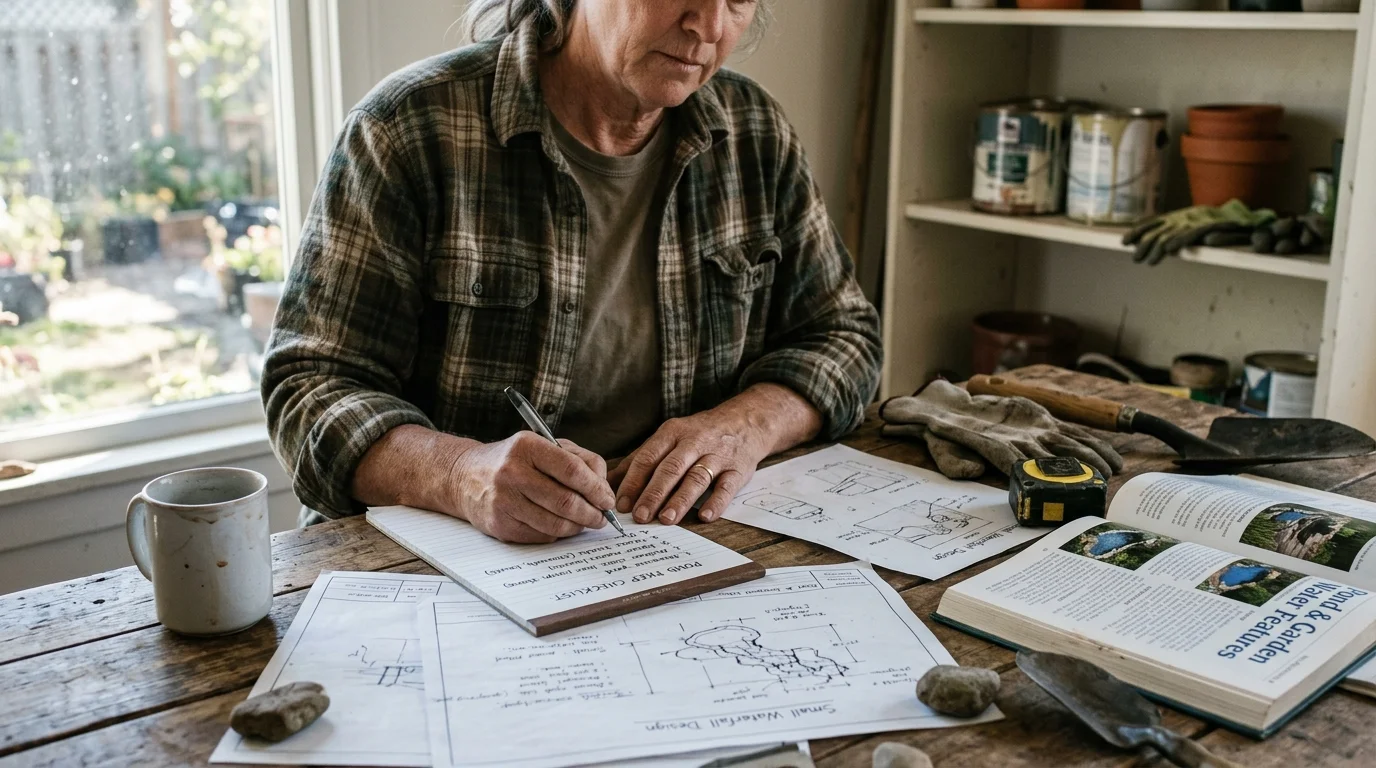
Tools, Materials, and Prep Checklist
Every successful pond project starts with safety and utility verification. You must contact Call 811 at least 2 to 3 business days before excavating your yard.
Utility technicians will mark buried gas, electric, and water lines across your property at no charge. Striking an underground power line causes severe safety hazards and expensive utility repair bills.
Check your local municipal building codes before selecting a depth. Many U.S. jurisdictions classify ponds deeper than 18 to 24 inches under swimming pool barrier codes.
These municipal ordinances legally mandate a perimeter safety fence at least 4 feet high with a self-latching gate. Keeping your water feature under 18 inches deep avoids costly fencing permits.
Primary Materials:
45-Mil EPDM Liner: The gold standard for flexible water retention is 45-mil EPDM rubber. This heavy-duty membrane resists UV degradation and lasts 20 to 30 years.
Geotextile Underlayment: Heavy non-woven fabric cushions the EPDM rubber against sharp subsurface rocks, roots, and burrowing pests.
Submersible Waterfall Pump: Sizing your pump correctly ensures optimal visual appeal and biological health. Calculate 100 GPH per inch of spillway width for a smooth sheet of water.
Choose a pump rated at 150 to 200 GPH per inch for a turbulent, noisy cascade. Your pump must also turn over the pond’s entire volume every 1 to 2 hours.
Plumbing and Spillway: You need 1.5-inch or 2-inch kink-free flexible PVC tubing, stainless steel hose clamps, and a biological waterfall filter box.
Rock and Masonry: Gather assorted granite boulders, flat stacking flagstone, smooth river pebbles, and black expanding waterfall foam sealant.
Required Tools:
Equip yourself with a round-point shovel, trenching spade, wheelbarrow, 4-foot carpenter level, line level, utility knife, and tamper.
Ensure you have access to a GFCI-protected exterior electrical outlet installed by a licensed electrician to safely power your pump.