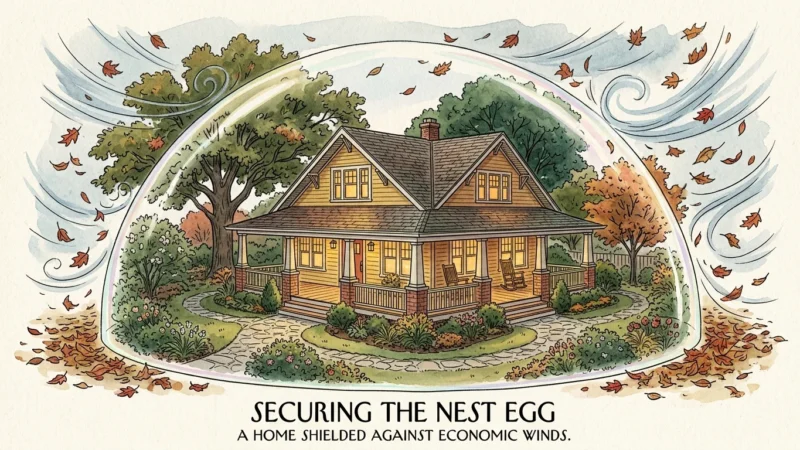
When it comes to your house, one of the most important things is to create a safe home environment where both you and your family can grow and thrive. While there are some serious safety hazards hiding in the average house, most of these risks can actually be lowered and even removed.
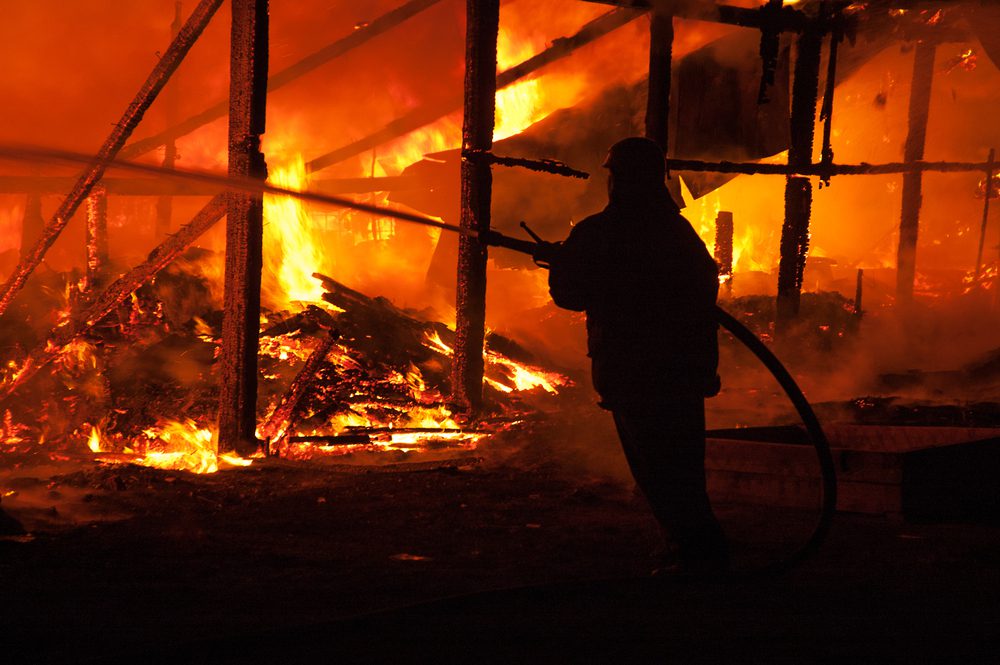
Unfortunately, in 2017, house fires across the US killed more than 3,000 people and caused $23 billion worth of damage. But the good news is that you can minimize those risks of fire and protect both your loved ones and your house. But how can you do that? Well, first of all, you need to know exactly if there are any potential fire hazards hidden in your house.
If you don’t know exactly where to look, don’t worry! We are here to help you! Once you find the things that put your house at risk, you have to plan ahead to see how you can minimize those risks.
Make sure you are doing everything you can to keep your family secure at home. We’ve written this article as a guide to 18 common fire hazards hiding in your house to find simple and quick solutions for achieving maximum safety at home.

1. Smoke Detector
A smoke detector shouldn’t be one of those objects around your house you probably take for granted. Of course, most of the time, you don’t even know you have one. Unless it’s beeping an alarm or emitting that annoying chirping sound that indicates it’s time to change its battery.
However, you shouldn’t underestimate the smoke detector you have in your house. The truth is, it’s one of the most important things in your home. In case of a fire hazard, it can save your life, drawing your attention to the fire so you and your loved ones have time to leave the area safely.
So, to make sure your smoke detector is doing its job, you should know it needs some basic routine maintenance. Make sure you replace the batteries every six months. Another important step is to check its functionality. The U.S. Fire Administration gives us some advice on how to do that and recommends repeating the same step monthly to keep any fire hazards at bay.
2. Potential Cooking Fire
Do you know that cooking fires are the main cause of house fires and house fire injuries? A large number of kitchen fires are caused by the ignition of the most common household items such as plastic bags, curtains, wall coverings, paper, and so on. The thing is that all of these underestimated household items can easily turn into fire hazards. Here are the most common causes of kitchen fires:
- Unattended cooking
- Leaving combustibles too close to a heat source
- Not turning off or unintentionally turning on the kitchen appliances.
Make sure your towels or curtains aren’t hanging too close to your stove as they can ignite. Here is some useful data: cooking fires cause 23% of home fires and 9% of deaths. An unattended frying pan filled with oil can become a fire hazard and ignite nearby combustibles, which then ignite cabinets, curtains, or anything else in proximity.
3. Potential Extension Cord Fire
Faulty connections, overload extension cords, and other inappropriate use of electrical devices can turn into a fire hazard, causing wire insulation to melt and creating a fire. According to some data, electrical equipment is responsible for 9% of home fires and 10% of deaths. Bad connections, hidden electrical shorts, overload extension cords, and oversized fixtures and bulbs can ignite surrounding combustible items and burn down your home.
Also, cords kept under rugs can overheat much faster, especially if those wires begin to deteriorate due to trampling. This weakens the cord’s ability to transmit current, making it hot. Furthermore, studies show that most cord overheating cases happen in the middle of the night when everyone in the house is fast asleep.
4. Gas Water Heater
Leaving clothes nearby a gas water heater can make them catch fire when the water heater is turned on, especially if the gas burners’ protective doors are missing. Appliances (gas water heaters and clothes dryers) cause 7% of house fires and 4% of deaths. Alongside problems with heaters and stoves, the most common causes of appliance fires are combustible items near gas water heaters and lint in dryers.
Many folks neglect and ignore their water heaters until they have issues or malfunctions. This is a terrible idea that can lead to serious fire hazards in the long run. It’s usually a good idea to get your water heaters checked by professionals annually.

5. Cooking on High Heat
Turning up the heat too high can be dangerous, even if don’t leave the kitchen while cooking. According to statistics, kitchen fires caused by cooking oil on high heat are the most damaging and destructive types of home fires. If you must use oil, ensure it can handle high temperatures.
Furthermore, cleaning your oven or stove on a regular basis will remove any accumulated grease, which reduces the chances of a fire hazard. Pay attention while frying food. If you notice smoke while the grease is boiling, remove the pan from the heating source, making sure the burner is turned off.
6. Having a Dirty Stove While Cooking
A minor kitchen fire can easily turn into a fire hazard if the stove is covered with grease that’s built up and other flammable grime. Before turning on the stove, make sure it’s clean and clear. You may say that some grease on your stovetop won’t hurt anyone, but safety experts will disagree, calling it dangerous and even life-threatening.
If an oil or grease fire occurs, don’t try to put it out with water. Adding water to a grease fire can only make it worse. Instead, use a nearby cookie sheet or pan lid to put out the fire and keep it from spreading.
7. Fireplace Safety
In the US, fireplaces and other types of home heating systems are usually the second major cause of home fires.
The National Fire Protection Association recommends having your home’s chimney swept at least once a year. This fire safety practice will help remove debris and soot that could cause a fire hazard.
When using the fireplace, make sure you keep any combustible items — such as curtains, rugs, and blankets — away from it. Also, never leave kids alone and unsupervised near a working fireplace. The US Fire Administration warns that a small flame can easily turn into a home fire in just 30 seconds.
8. Sawdust
Sawdust is one of the most flammable items (it’s basically particles of wood and we all know from a young age that wood is a combustible material) and should not be left in the shop or around the garage. There are many things such as a small spark from metal objects striking, chemicals used in woodworking projects, and electrical wiring that can quickly and easily ignite a sawdust pile.
Home improvement DIYers and amateur woodworkers know that sawdust is an unavoidable consequence of their projects. However, allowing sawdust to accumulate can be dangerous and lead to a fire hazard. Here’s our advice: make sure you clean up any sawdust from your working area using a vacuum designed to collect combustible dust.
9. Loose Outlets
The wire behind the panel is what causes an outlet to get “loose.” Basically, a high-energy discharge occurs between two loose blades found within the outlet itself. This is known as an arc fault, and it results in a large amount of heat being released in a very short time.
Well, this kind of electrical issue can turn into a fire hazard that you may not be aware of. Even worse, a small fire caused by a loose outlet starts inside the wall itself, and there is plenty of combustible material that has the potential to spread considerably before you notice.
To stay safe and away from any fire hazards, make sure you get any loose outlets fixed.

10. Antiques
Antique appliances may feature outdated wiring that makes them a fire hazard because it becomes brittle and dries out, which could potentially fuel a fire. If you love having vintage light fixtures, make sure you know some things about the wiring such as how old it is, whether it’s American or European, and whether it has been replaced.
For a quick reference to decide if the wiring is safe, look for an Underwriters Laboratories (also known as UL) label that can be found somewhere on the wiring. The lighting fixtures are tested for safety by UL. Rewiring the fixtures is usually the safest option to minimize the risks of a fire hazard.
11. Laptops
Laptops have caused many house fires in the past. An NBC Washington report showed that in 2013, a Manassas, Virginia, condo burned down due to a running laptop. The device was kept on a bed for almost 18 hours straight with a recalled battery. It appears that the battery triggered the fire and not the laptop itself. The house fire started with the comforter and blankets igniting, and soon after that the flames spread to the whole condo.
Most laptops you find nowadays include an automatic shutdown feature that prevents overheating, but this doesn’t mean your laptop can’t become a fire hazard. The probability of a house fire caused by a laptop is indeed slim, but keep in mind that those laptops with broken, short-circuited, or overcharged batteries can cause a fire.
12. 9-Volt Batteries Stored in Junk Drawers
It is known that some steel wool and 9-volt batteries don’t go well together if you want to avoid accidental fires in your home. This means you shouldn’t keep batteries, especially 9-volt ones, in the same junk drawer where you store metal items. That’s because the metal has the potential to short out a 9-volt battery and spark a fire. To keep any fire hazard at bay, we advise you to keep batteries in their original packaging or cover the posts with tape.
Check with your local officials to find out how to properly dispose of 9-volt batteries. Oh, and one more thing! Make sure you never keep a 9-volt battery in your pocket where you most likely also have some coins.
13. Exposed Lightbulbs
Do you have an exposed lightbulb in your closet? If the answer is yes, then your closet lighting source may turn into a fire hazard. According to experts, a 60-watt light bulb won’t reach more than 175 degrees Fahrenheit under normal conditions. However, under some conditions, it could reach between 290-500 degrees, hot enough to ignite nearby things such as table tennis balls, which burn up easily, according to a table tennis equipment manufacturer.
Closets that are commonly filled with lots of clothes and other combustible materials, and incandescent bulbs, especially halogen lights, can become extremely hot. Compact fluorescent lights, which use significantly less energy than traditional halogen and incandescent bulbs, can get closer to stored objects without becoming a fire hazard.
14. Paper
It goes without saying that paper can very easily turn into a fire hazard. Unfortunately, a lot of people don’t store papers properly in their homes. For instance, most house fires happen because people store newspapers in the garage, where they also keep the gas tank of a lawn mower.
You should also never throw magazine paper or dyed/colored paper in your fireplace. Paper burns extremely quickly, causing flames to shoot up and burn up creosote in your chimney, posing a flue fire risk. Bits of burned paper may potentially float out of your fireplace, turning into a fire hazard to your roof or nearby surroundings.

15. Dryer Lint
Almost 25,000 dryer fires occur during a four-year span, causing hundreds of injuries and dozens of deaths across the US. A dryer fire starts when built-up lint near the gas burners, motor, or heating elements ignite. The flames have the potential to spread and ignite lint found in the vent pipe.
How often should you clean the dryer lint screen? Well, some people say that a once-a-month cleaning should work, while others agree that you should clean it once a week. Whilst either option is better than nothing, it would be better if you cleaned the lint after every load. Not only will this prevent a fire hazard, but it will also help your laundry dry faster.
16. Massage Oil
According to studies, massage oils could pose a fire hazard especially when they seep into towels which can spontaneously ignite in your storage or dryer. Some massage oils contain linseed or flaxseed that have a lower smoke point (around 225 degrees Fahrenheit). These two common ingredients can linger on towels if you don’t properly clean them.
You should wash those towels saturated in massage oils at a water temperature of at least 104 degrees Fahrenheit. Lower temperatures may not have the power to sufficiently mix with the detergent in order to break down those oils, which may lead to a potential fire in the dryer.
17. Garage Smoking
The US Fire Administration’s data is quite alarming: about 6,600 garage fires are reported each year. Unfortunately, this kind of home fire causes, on average 400 injuries and 30 deaths.
Maybe you don’t want to smoke in your house or you’re not allowed to smoke in someone’s house. Either way, don’t refuge in the garage to light your cigarette. Since the garage is the place where most people store various flammable materials and liquids, smoking in there is definitely a fire hazard.
If you don’t have heat alarms installed in your garage, you should get one. They are used in places where smoke alarms could accidentally activate, such as in laundry rooms, kitchens and garages. However, regardless of the type of alarm, it’s important to check them on a regular basis to ensure they function properly.
18. Dust Bunnies
Dusting is an important household task for a very significant reason. When those dust bunnies come into contact with a spark, they ignite and spread the fire swiftly. Dust bunnies near electrical sockets and a space heater are quite a huge fire hazard. It takes just a few sparks to fly towards them and they catch fire immediately, potentially spreading the fire towards nearby furniture.
That’s why it’s important to vacuum under beds and other pieces of furniture on a regular basis to remove this small fire hazard. Pay attention to the space behind your entertainment center and any crevices and gaps that might collect dust.
Expecting Guests? Here’s What They Usually Notice in a Dirty Home!