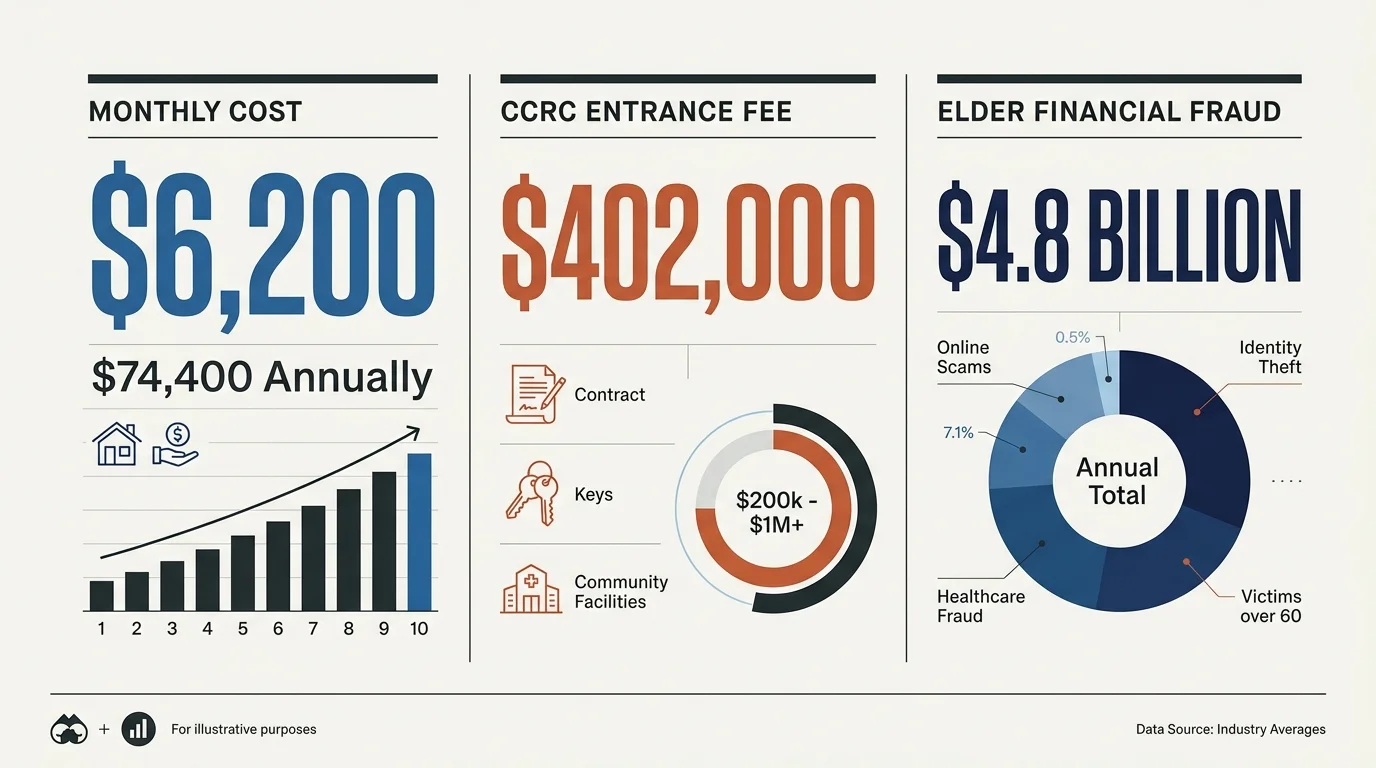
Choosing a senior living environment requires the same decision-making criteria you bring to buying or renovating a home, yet hidden contract traps and deferred maintenance often slip past eager families. Inspecting a property thoroughly protects both your life savings and your loved ones’ independence, preventing costly relocation headaches down the road. With national median assisted living costs climbing to $6,200 per month and continuing care entrance fees averaging $402,000, spot-checking physical safety features and operational transparency is vital. By identifying major retirement community red flags early—from deceptive pricing schemes to structural access barriers—you ensure your long-term housing investment yields comfort, dignity, and real financial security.
Project Overview & Why It Matters
Evaluating senior housing options demands the same structural, safety, and financial scrutiny you apply to a major residential remodel. You are not simply purchasing monthly rent; you are investing in personal safety systems, structural accessibility, routine maintenance, and long-term care infrastructure. Treating a community walkthrough like a comprehensive home inspection exposes operational flaws that glossy marketing brochures routinely conceal.
The financial stakes in senior living reach historic highs. Industry metrics from the Genworth Cost of Care Survey show national median assisted living expenses standing at $6,200 per month—totaling $74,400 annually—while Continuing Care Retirement Community (CCRC) entrance fees average $402,000 and easily exceed $1,000,000 in premium markets. When facilities charge high rates while cutting back on routine building maintenance or care staff, residents pay the price in compromised safety and rapid care degradation.
Recognizing the subtle warning signs retirement communities project allows you to protect your family from severe financial exploitation and unsafe physical environments. According to Federal Bureau of Investigation cyber crime reports, elder financial fraud losses reached $4.8 billion annually, with millions linked to aggressive real estate deposits and deceptive billing schemes. Spotting early physical deferred maintenance—such as malfunctioning call-button infrastructure, cracked wheelchair ramps, or improperly regulated water heaters—correlates directly with larger administrative breakdowns. Uncovering key retirement community red flags before signing agreements saves you from emergency relocations, financial disputes, and compromised care quality.