
Step-by-Step Instructions
Conducting a thorough evaluation requires systematic progression through physical, operational, and financial inspection steps. Execute this step-by-step audit to uncover critical vulnerabilities and protect your housing investment.
Phase 1: Outer Building and Accessibility Inspection
Begin your audit at the physical perimeter. Inspect outdoor concrete walkways, parking structures, and building entrances for tripping hazards, uneven joints exceeding a quarter-inch, or inadequate slope ratios on handicap ramps. Verify that exterior lighting fixtures illuminate all parking areas, entry doors, and outdoor walking paths with at least 5 foot-candles of light. Test automatic sliding doors to ensure sensors detect approaching walkers and wheelchairs promptly. Examine exterior building cladding, gutters, and rooflines; visible dry rot, water staining, or flaking paint signals widespread deferred maintenance across the entire property.
Phase 2: Interior Layout and ADA Compliance Audit
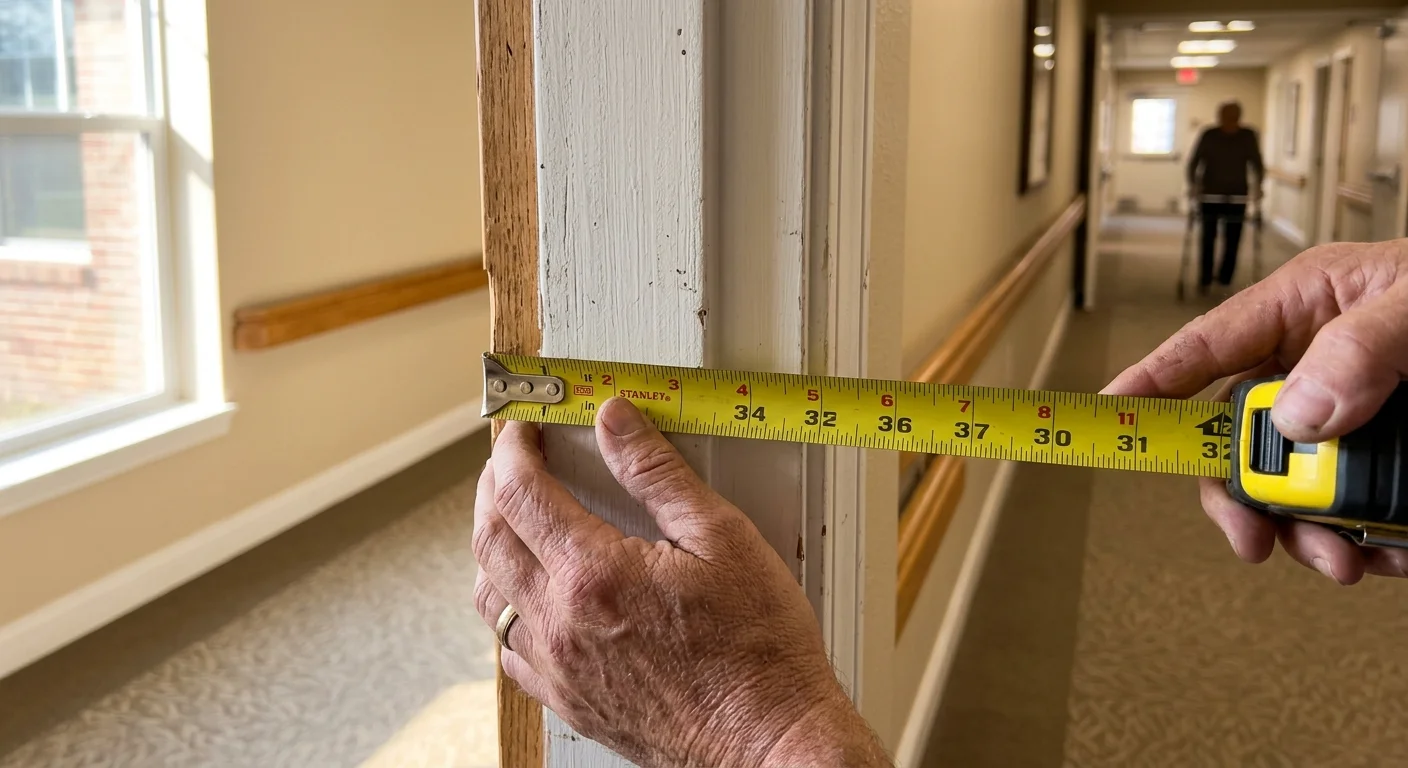
Transition inside to evaluate interior structural design and living quarters. Measure clear opening widths on corridor doors and residential entryways; proper accessibility requires a minimum 32-inch clear width, though 36 inches provides superior clearance for mobility devices. Verify that hallway corridors offer at least 48 to 60 inches of unobstructed width equipped with sturdy, continuous handrails mounted securely to wall studs on both sides.
Inside private apartments, test bathroom safety hardware. Confirm that grab bars mount directly into wall blocking rather than lightweight drywall anchors. Step into showers to verify zero-threshold entries and check water temperatures using a quick-read thermometer; water temperatures exceeding 120°F indicate improperly calibrated commercial mixing valves and serious scalding risks. Check flooring transitions between carpet and tile; raised thresholds exceeding a half-inch invite fall hazards.
Phase 3: Operational Dynamics and Staffing Audits
Observe daily living conditions and staff interactions carefully. National data from the Centers for Medicare & Medicaid Services reveals annual direct-care staff turnover rates between 50% and 85%, with understaffed facilities experiencing higher accident rates and delayed emergency care. Watch how long call lights or emergency pull cords illuminate in hallways before care staff respond; response times exceeding 5 to 7 minutes signal severe understaffing.
Observe employee body language, fatigue levels, and interactions with residents. Are staff members addressing residents by name with patient, clear language, or are they rushing frantically between rooms? Take note of indoor odor control and ventilation systems; persistent urine or stale odors reflect poor sanitation schedules and neglected HVAC filtration systems.
Phase 4: Financial Scrutiny and Contract Evaluation
Examine the financial contract with extreme caution to protect yourself from retirement community scams and predatory clauses. Request an itemized service catalog that defines exact cost structures for medication management, laundry, meal plan modifications, and personal assistance. Be alert for unbundled pricing traps, where reasonable base rates balloon with hundreds of dollars in micro-fees for basic services.
Review entrance fee refundability terms in Continuing Care Retirement Community contracts. Ensure the document specifies concrete refund timelines—such as payment within 90 days of unit re-occupancy—rather than indefinite payout delays. If sales representatives use high-pressure tactics, claim limited availability, or demand non-refundable wire transfer deposits before providing full legal contracts, walk away immediately. Consult an experienced elder law attorney to review all contract documents before signing.